 Global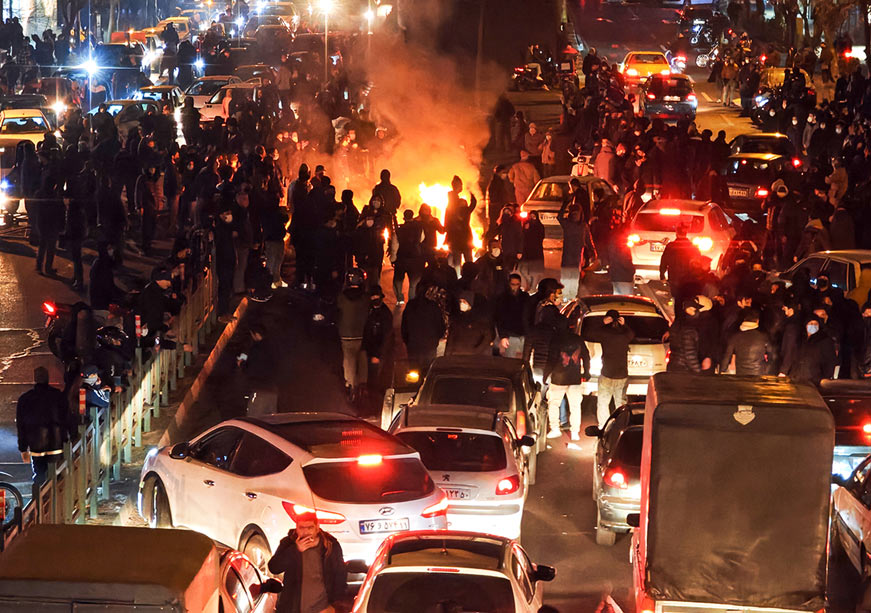
Expert Speak | 23 January, 2026
A Stable Iran Serves Gulf Interests Better Than Chaos
As Trump threatens Iran and protests spread, Gulf states face a dilemma: a weakened Iran serves their interests better than a power vacuum. Stability in Tehran—however diminished—beats the chaos of regime change.
As the protests engulfing Iran abate, the United States (US) President Donald Trump has now backed down from his previous threats of military intervention to defend Iranian demonstrators. Yet US carrier movements, bomber activity at Diego Garcia, and assessments of regional air traffic in the Gulf all indicate that American vigilance—and intent to strike—has far from dissipated. Trump’s latest cryptic remarks, stating in an interview that “it’s time to look for new leadership in Iran,’’ are further proof of the situation’s unpredictability. One need only look back to last June, when the President’s posture shifted after spending the first months of his term holding back the decision to hit Iran’s nuclear programme, before mobilising military aircraft to bomb three nuclear facilities. From an Iranian perspective, Trump could well be calling their bluff again.
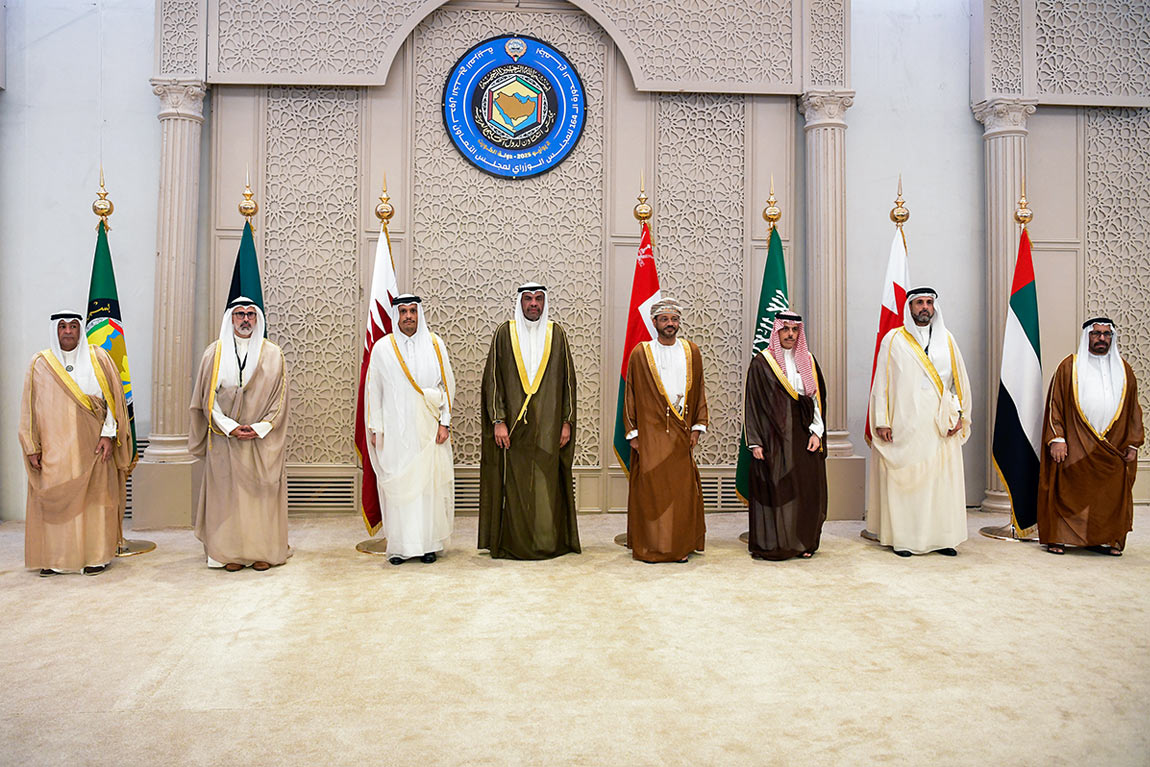
What proved significant was how regional states—particularly the Gulf Arab states –—leveraged their access to both Trump and top Iranian officials. As Tehran began its crackdown on protesters, phone diplomacy intensified: Emirati and Qatari foreign ministers engaged directly with their Iranian counterparts, whilst Oman’s foreign minister made a point of visiting Tehran in person. Reports later emerged that four states—Saudi Arabia, Qatar, Türkiye, and Oman—were part of a last-minute lobbying campaign to dissuade Trump from striking Iran. Similarly, last June, as Israel and Iran exchanged blows, Gulf Arab leaders appealed to Trump to pressure Tel Aviv into a ceasefire.
As Tehran began its crackdown on protesters, phone diplomacy intensified: Emirati and Qatari foreign ministers engaged directly with their Iranian counterparts, whilst Oman’s foreign minister made a point of visiting Tehran in person.
The reality is that a weakened yet reintegrated Iran better serves regional stability in an area already rife with fragile and failed states. For Gulf Arab states, in particular, a power vacuum in Iran—or the volatility of regime change—could prove far more dangerous.
Tehran’s calculated restraint
While Iran was considered a belligerent state actor armed with parastatal organisations—more widely known as the “Axis of Resistance”—the events that followed 7 October 2023 have reconfigured the regional balance of power. Israeli operations have severely degraded the leadership of Iranian proxies, from Hamas to Hezbollah. Notable casualties include Hassan Nasrallah (Hezbollah’s Secretary-General), Haytham Ali Tabatabai (Hezbollah’s Chief of Staff), Ismail Haniyeh (Hamas’ former political chief), and Yahya Sinwar (Hamas’ leader in Gaza), among others.
Israeli surgical tactics, including covert operations that eliminated military and scientific personnel, damaged Tehran’s missile infrastructure and neutralised early warning systems, were designed as a prelude to the finishing blow. Operation Rising Lion, marking the 12-day of the Iran-Israel war in 2025, sought to decisively degrade Iran’s military capabilities and regional influence. The result was a weakened yet resilient Iran—not least because Trump intervened to enforce a ceasefire.
Notably, as Iran’s position weakened, the regime chose calibrated escalation to signal resolve without inviting total war. In typical fashion, Tehran threatened to attack US bases across the region last June following the joint Israeli-American strikes on Iranian soil, just as it has now threatened to do so in retaliation against Trump’s recent threats. Yet when the Islamic Republic acted on its words, launching missiles at Al-Udeid—America’s largest military base in the Middle East—there was a catch. Iranian retaliation was pre-orchestrated as satellite imagery showed aircraft at the Qatar-based installation had been repositioned before the attack. The damage proved minimal, with Trump dismissing the attack as “weak”. This was not without precedent. During Trump’s first term, after the assassination of Qassem Soleimani, commander of the IRGC’s Quds Force, Tehran warned Washington before striking the Iraq-based Ain al-Asad airbase.
Iranian retaliation was pre-orchestrated as satellite imagery showed aircraft at the Qatar-based installation had been repositioned before the attack.
The Qatar episode, however, shifted regional perceptions in a way the Ain al-Asad incident had not: between longtime rivals Israel and Iran, the former was now increasingly regarded as the greater threat.
More telling, however, is how the Gulf Arab states—despite condemning Iran’s strikes on Al-Udeid—showed equal intent on sustaining their mended ties with Tehran. Two weeks after the Iran-Israel ceasefire, Saudi Crown Prince Mohammed bin Salman hosted Iran’s Foreign Minister, Abbas Araghchi, for talks in Jeddah. Qatari and Emirati officials maintained direct communication with their Iranian counterparts, while Oman went a step further, asserting that Israel had “triggered” the escalation. Strategic pragmatism prevailed: better a weakened but calculable Iran than an emboldened and unrestrained Israel.
Managing Iran
The détente between Iran and the Gulf Arab states in recent years is ultimately driven by the latter’s conviction that they must take ownership of their own security. Previously content with isolating Iran—even backing Trump’s maximum pressure policy—Gulf Arab states have pivoted since 2022. The United Arab Emirates (UAE) restored diplomatic ties with Iran that year. Then came the landmark China-brokered Saudi-Iran normalisation in March 2023.
For Gulf leaders, America’s indecision as a security guarantor—and Trump’s unpredictability in particular—remains an enduring concern. The memory of Washington’s muted response to Iranian proxy attacks lingers when Houthi strikes on Saudi oil facilities and UAE ships were met with inaction. Trump’s words from his first term have defined Gulf calculations ever since: “That was an attack on Saudi Arabia, and that wasn’t an attack on us.” His successor, President Biden, also proved equally hesitant when he sent a senior general only 22 days after a 2022 Houthi drone assault killed three in Abu Dhabi.Trump’s second term is marked by the Gulf’s awareness of the President’s penchant for dealmaking. Washington’s acquiescence—implicit or otherwise—to Israeli strikes on Doha just three months after the 12-Day War offered further proof that Gulf leaders cannot afford to outsource management of the adversary in their backyard. Gulf engagement with Iran has delivered tangible results. Since restoring ties, their territories have remained untouched by Iranian proxies, particularly the Houthis. This explains why Gulf governments distanced themselves from the US-UK retaliation against Houthi assault on international shipping in January 2024.
The UAE and Oman are Iran’s second- and fourth-largest trading partners, respectively. Dubai alone hosts an 800,000-strong Iranian community, while serving as a vital hub for shipping and trade with Iran.
Regime change in Iran poses concrete risks for Gulf states. Economic ties run deep: the UAE’s Minister of Foreign Trade has described Iran as one of the “main providers and suppliers” of multiple commodities, particularly food products. The UAE and Oman are Iran’s second- and fourth-largest trading partners, respectively. Dubai alone hosts an 800,000-strong Iranian community, while serving as a vital hub for shipping and trade with Iran. Qatar shares the North Dome-South Pars gas field with Tehran; any leadership change would inevitably disrupt this critical energy partnership. These interdependencies explain Gulf caution, even as a cash-strapped Iranian economy navigates sanctions and Trump’s latest 25 percent tariff on countries doing business with Tehran.
Given Iran’s role as the leading Shia-majority state, regime change would carry profound religious and security implications across the region. As author Vali Nasr argues in his latest monograph, Iran’s “sacred defence” doctrine—forged during the Iran-Iraq War of the 1980s—binds Iranian nationalism to Shiism, making religious identity inseparable from state security. A significant number of Shia Muslims, including expatriates and citizens in Bahrain, Kuwait and parts of Saudi Arabia, follow the religious authority of Iran’s Supreme Leader or senior Iranian clerics such as the Qom-based Grand Ayatollah Hossein Wahid Khorasani. This presents a considerable, if unspoken, national security concern for Gulf states. In extremis, regime change could trigger calls for jihad against Western interests. At minimum, it risks heightened sectarianism and internal opposition, particularly if certain segments perceive Gulf governments as complicit in Tehran’s fall.
The Case for Stability Over Chaos
The recent protests across Iran reflect a dire economic crisis that demands attention. Yet the pertinent question remains: would a regime change solve this problem? Iran is by no means absolved of its actions—particularly its mobilisation of the Axis of Resistance prior to 7 October 2023—but these proxies no longer pose the existential threat they once did. For Gulf Arab states, a stable Iran aligns with their stability-for-development premise, where ambitious national projects require peaceful neighbours. What Iran needs is economic revitalisation, which in turn requires reforms from its leadership. This demands deploying economic incentives to extract meaningful reforms—including credible limits on Iran’s nuclear programme and restraints on its ballistic missile arsenal. Instead ofsimply forcing Tehran into “strategic submission,” as Chatham House’s Director Sanam Vakil described Trump’s strategy..
Trump appears convinced that Tehran has consistently underestimated American resolve. Yet the reverse is equally true. Iran has proved more resilient than anticipated, having weathered Trump’s maximum pressure campaign in his first term. For Gulf Arab states, the risks of regime change next door may well prompt further diplomatic overdrive—using their access to Trump more strategically to shape outcomes that serve regional stability rather than court the chaos of collapse. With Israel now asserting itself as the region’s unchallenged power, Arab states, Iran, and Türkiye increasingly need one another to establish a counterbalance.
Clemens Chay is Senior Fellow for Geopolitics at the Observer Research Foundation Middle East.