 Global
Commentaries | 31 October, 2026
Beyond the 123 Agreement: Safeguarding Non-Proliferation in the Middle East
The US-Saudi nuclear agreement risks weakening non-proliferation standards in the Middle East by permitting greater fuel-cycle flexibility, underscoring the need for rigorous verification and regional cooperation rather than geopolitical bargaining
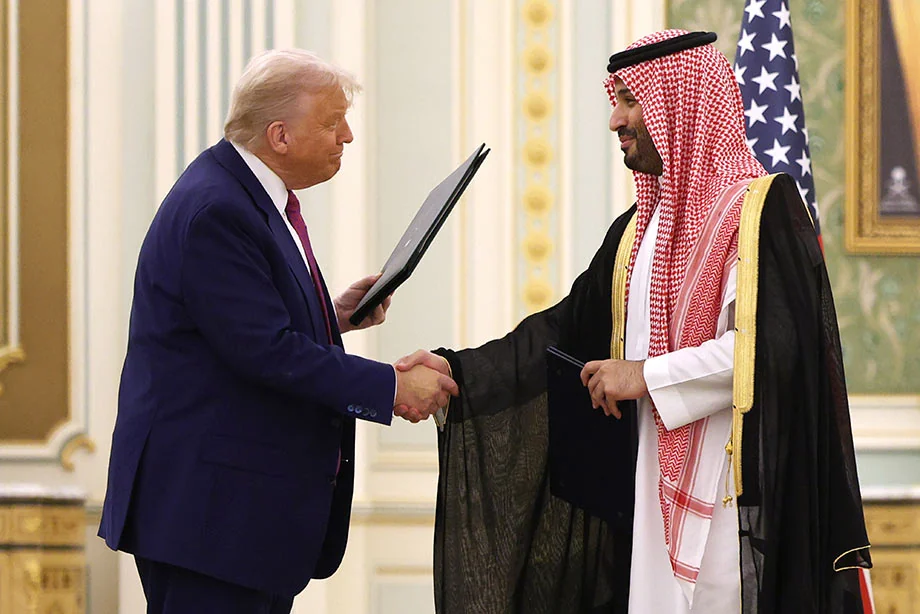
A new phase of civilian nuclear cooperation between the United States (US) and Saudi Arabia is beginning to take shape. Signed in July 2026, the agreement sets out the terms of US cooperation with Saudi Arabia’s nuclear programme.
Popularly called the ‘123 agreement’ after Section 123 of the US Atomic Energy Act of 1954, the document outlines the terms under which nuclear materials, reactors, equipment, and technology may be transferred, along with non-proliferation requirements. Its importance extends beyond the nuclear industry. Nuclear energy is another dimension of Saudi Arabia’s diversification strategy, as well as another means of deepening the US strategic partnership and economic interests in a region where China and Russia have expressed a vested interest.
However, the agreement was signed at a complex stage in Middle East nuclear policy, when Iran’s nuclear programme remained a key factor in regional security and Saudi nuclear policy depended on developments there. In addition, the administration of US President Donald Trump has tied the agreement to Saudi rapprochement with Israel. The US-Saudi civilian nuclear accord should be viewed not merely as another step in bilateral collaboration but as a precedent-setting instrument that would determine the future course of nuclear affairs in the Middle East. By allowing Saudi Arabia more flexibility than the United Arab Emirates (UAE) accepted under its 2009 nuclear pact to develop its own uranium enrichment and reprocessing capabilities, the US risks damaging the credibility of its non-proliferation standards and contributing to the escalation of nuclear hedging in the region. Consequently, the US should focus on rigorous verification, consistent restrictions on fuel-cycle activities, and regional cooperation rather than on geopolitical calculations.
The UAE Precedent
Under the UAE’s 2009 nuclear cooperation agreement with the US, the country renounced its right to domestic uranium enrichment and spent fuel reprocessing. Thus, the UAE became a ‘gold standard’ for US cooperation in civil nuclear programmes because it restricted activities permitted under the NPT that could potentially lead to a nuclear weapons programme.
The UAE has implemented its civil nuclear programme without developing domestic uranium enrichment capacity. This suggests that a Gulf country can implement a nuclear power programme by accepting additional limitations. Unlike the UAE, Saudi Arabia is traditionally reluctant to follow this example. The country demands the exercise of its right to the peaceful use of nuclear energy under the NPT and seeks to create its own fuel cycle.
There is nothing inherently suspicious about Saudi Arabia pursuing a nuclear energy programme, and uranium enrichment does not necessarily indicate a nuclear weapons programme. However, the regional situation has raised concerns among experts. Iran has demonstrated the importance of a national enrichment programme, and Saudi Arabia recognises the impact of Iran’s situation. Iran’s case shows that domestic enrichment can give a country greater leverage over its nuclear programme by reducing reliance on other states and increasing technical proficiency. For Saudi Arabia, then, Iran’s nuclear achievements will concern not only non-proliferation but also strategy. Riyadh could see developing its own fuel-cycle technology as necessary to keep pace with Iran and remain independent in a volatile region. In doing so, however, Saudi Arabia risks exacerbating the threats Iran perceives. The problem is distinguishing between the need for civilian nuclear power and the regional security consequences of its development.
The Enrichment Question
The agreement’s conclusion makes this issue even more important. Instead of merely failing to resolve Saudi Arabia’s status, it provides the opportunity to enrich its civilian nuclear programme in some way. The initial enrichment level, as provided by the agreement, amounts to only 5 percent uranium-235, with further studies and consultations able to lead to enrichment of up to 20 percent.
Civilian enrichment is permitted under the NPT, and non-weapons-grade enrichment is not evidence of a weapons programme. However, there is a marked difference between the agreement with Saudi Arabia and the UAE’s. The UAE’s agreement obliges it not to establish indigenous enrichment and reprocessing infrastructure. Saudi Arabia has no such obligation.
Several experts and critics have therefore called on Washington to consider not only what Saudi Arabia intends to do now but also what a future Saudi government might intend to do with an established fuel-cycle capability.
Congressional Review and Political Bargaining
The July signing did not end the US-Saudi nuclear agreement process. The agreement was then sent to the US Congress for evaluation. Representatives introduced H.J. Res. 217, which sought to disapprove the agreement, on 16 September. Filed in the House Foreign Affairs Committee, the resolution addressed concerns that the agreement did not include a clause barring Saudi Arabia from enriching uranium and reprocessing fuel domestically or from agreeing to sign the International Atomic Energy Agency (IAEA) Additional Protocol.
The standards for nuclear energy should be separated from political bargaining. Non-proliferation considerations should guide the conditions for any sensitive nuclear technologies.
This move highlighted the inherent dilemma of the US-Saudi civilian nuclear cooperation agreement: whether Washington can deepen its strategic alliance with Riyadh without diluting non-proliferation norms. In Congress, the discussion has largely centred on the lack of renunciation of enrichment and reprocessing, as well as the absence of an Additional Protocol requirement. The agreement also has a political dimension. Donald Trump has made the agreement contingent on Saudi Arabia joining the Abraham Accords and normalising ties with Israel. This could make nuclear agreements subject to geopolitical bargaining.
To avoid this, the standards for nuclear energy should be separated from political bargaining. Non-proliferation considerations should guide the conditions for any sensitive nuclear technologies.
Verification and the Regional Dimension
Verification is important for ensuring the peaceful use of nuclear material. Thus, after the signing of this US-Saudi accord, tough verification measures are needed, including Saudi Arabia’s signing of the IAEA Additional Protocol and greater inspector access to information and facilities.
Saudi Arabia’s signing of the Additional Protocol will ease global concerns about the diversion of declared nuclear material. Capability building may make future intentions even less predictable. Tough verification measures may not solve all proliferation concerns, but they will reduce uncertainty in a region with high threat perceptions.
However, one cannot regard the programme as purely bilateral, between the US and Saudi Arabia. Iran’s capabilities will affect Saudi decision-making; similarly, Saudi decision-making will affect Iran. The UAE’s example matters for the region, and the US’s relationship with Israel and security considerations also play a role. Other nations, such as Turkey and Egypt, may in time rethink their own nuclear programmes. Any long-term strategy must account for regional cooperation involving Saudi Arabia and the UAE, as well as other interested states, and international verification, as well as potentially multinational control over sensitive fuel-cycle facilities.
Regional cooperation must become more attractive than hedging. If countries decide that strategic independence will require enrichment capacity, technologies that may be individually valid but collectively dangerous will develop within the region.
A New Nuclear Bargain for the Middle East?
The US-Saudi agreement is thus occurring at a crucial time. Iranian capabilities can shape Saudi threat perceptions; Saudi capabilities can shape Iranian calculations; and both can shape Israeli security considerations. This could create a situation in which insecurity incentivises further nuclear development.
Iranian capabilities can shape Saudi threat perceptions; Saudi capabilities can shape Iranian calculations; and both can shape Israeli security considerations.
Washington must therefore follow the UAE precedent on enrichment and reprocessing, enhance the IAEA’s verification systems, separate nuclear safeguards from political bargaining, and create regional institutions that remove the incentives for national fuel cycles. For Saudi Arabia, this presents an opportunity to show that an important Arab nation can develop a civilian nuclear energy programme without causing another proliferation dilemma.
For India, the agreement matters beyond West Asia. India has rising civil nuclear aspirations and has favoured access to nuclear technology for developing countries. It also has a strategic interest in avoiding new proliferation problems in its extended region. India can help promote Saudi Arabia’s civil nuclear programme while advocating strict international standards to prevent regional nuclear fuel-cycle competition. Access to civil nuclear technology and non-proliferation are not inherently contradictory.
The success of the US-Saudi nuclear agreement cannot be assessed in terms of plant building, business considerations, or the broader bilateral relationship, but rather by the precedent it sets for nuclear development.
The success of the US-Saudi nuclear agreement cannot be assessed in terms of plant building, business considerations, or the broader bilateral relationship, but rather by the precedent it sets for nuclear development. While the UAE shows how US nuclear cooperation can include serious limitations on sensitive fuel-cycle activities, the new agreement with the Saudis represents a very different case – opening the door to enrichment and leaving many issues related to verification and fuel-cycle development unanswered. Washington must therefore decouple the standards governing nuclear cooperation from the strategic calculus of Saudi-Israeli normalisation and other security ties.
This commentary originally appeared in Observer Research Foundation.