
 Global
The Middle East Crisis in the Eyes of Europe
14
Apr2026
A day into the Israeli–US offensive in Iran, a drone strike targeted the Akrotiri base on the island of Cyprus, signalling that the Middle East conflict could spread into the territory of a European Union (EU) member state. In the days that followed, Iran’s effective closure of the Strait of Hormuz exposed the global economy—particularly European countries—to the largest energy supply shock in history. A decade after the 2015 crisis, renewed pressure on the Iranian state, the risk of internal collapse, and the potential weaponisation of human flows have raised the prospect of mass migration towards Europe.
The Iran–Israel–US war is taking place in the shadow of the dual strategic shock Europe has endured: Russia’s invasion of Ukraine and the strain placed on the transatlantic alliance during the Trump administration. In practice, Europe has been compelled to increase spending on both defence and energy, placing stress on industrial bases, public finances, and social contracts. Against this backdrop, political debates over migration—framed as a threat to national identity and security—have intensified polarisation.
Meanwhile, Europe’s voice in the Middle East has been difficult to discern. The EU has appeared divided and indecisive, particularly regarding ceasefire enforcement in Gaza and Lebanon. Its actions have often seemed driven by short‑term objectives, especially migration control. Nevertheless, both the EU and major member states such as France and Italy have sought to advance a broader Mediterranean agenda encompassing the Middle East and the Gulf Cooperation Council. On Iran – a security partner of Russia, Europe has attempted a more assertive posture. The “E3” (France, Germany, and the United Kingdom) triggered the snapback mechanism to reimpose sanctions in August 2025, and the Council designated the Islamic Revolutionary Guard Corps as a terrorist organisation in February 2026.Yet Europe now finds itself with limited leverage over the trajectory of the conflict, while simultaneously facing pressure from President Trump to join the military campaign.
In a new webinar, ORF Middle East will bring together leading European experts to discuss Europe’s perceptions, priorities, and role in the current Middle Eastern crisis.
Panelists

Julien Barnes-Dacey
Director, Middle East and North Africa Programme, European Council on Foreign Relations

Leo Goretti
Head, Italian foreign policy Programme, Istituto Affari Internazionali

Dorothée Schmid
Head, Turkey/Middle East Program, French Institute of International Relations
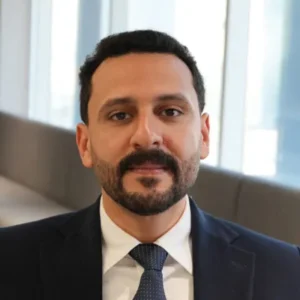
Akram Zaoui (Moderator)
Associate Fellow, Geopolitics, ORF Middle East


