 Global
Expert Speak | 18 March, 2026
Moscow and Beijing’s Divergent Interests in the Middle East Conflict
Spotlight
- China and Russia are seen as Iran’s natural partners in a complex big-power competition brewing. However, Tehran has got limited overt tactical support till now from Beijing and Moscow.
- China’s approach to the conflict is underpinned by economic interests. It has mobilised humanitarian aid and diplomacy as core response mechanisms and not mobilising militarily despite being Iran’s largest oil buyer.
- Russia has had close relations with Iran over matters such as Syria but has its own baggage to manage regarding the Ukraine conflict. Both China and Russia continue to have strategic agreements with Iran.
In 2015, when Iran signed the nuclear deal (officially called the Joint Comprehensive Plan of Action or JCPOA) following intense negotiations with the United Nations Security Council members along with Germany (collectively known as the P5+1), both Beijing and Moscow were aligned to the objective of preventing Tehran from acquiring nuclear weapons. However, much has changed since as the ongoing conflict in the Middle East enters a phase of ambiguous political and strategic objectives. Within this, the role of China and Russia are increasingly scrutinised for their proximity to Tehran within the construct of big power competitions.
Iran is close to both the countries and is regarded as an important geopolitical power in managing the region’s complexities especially in relation to Washington.
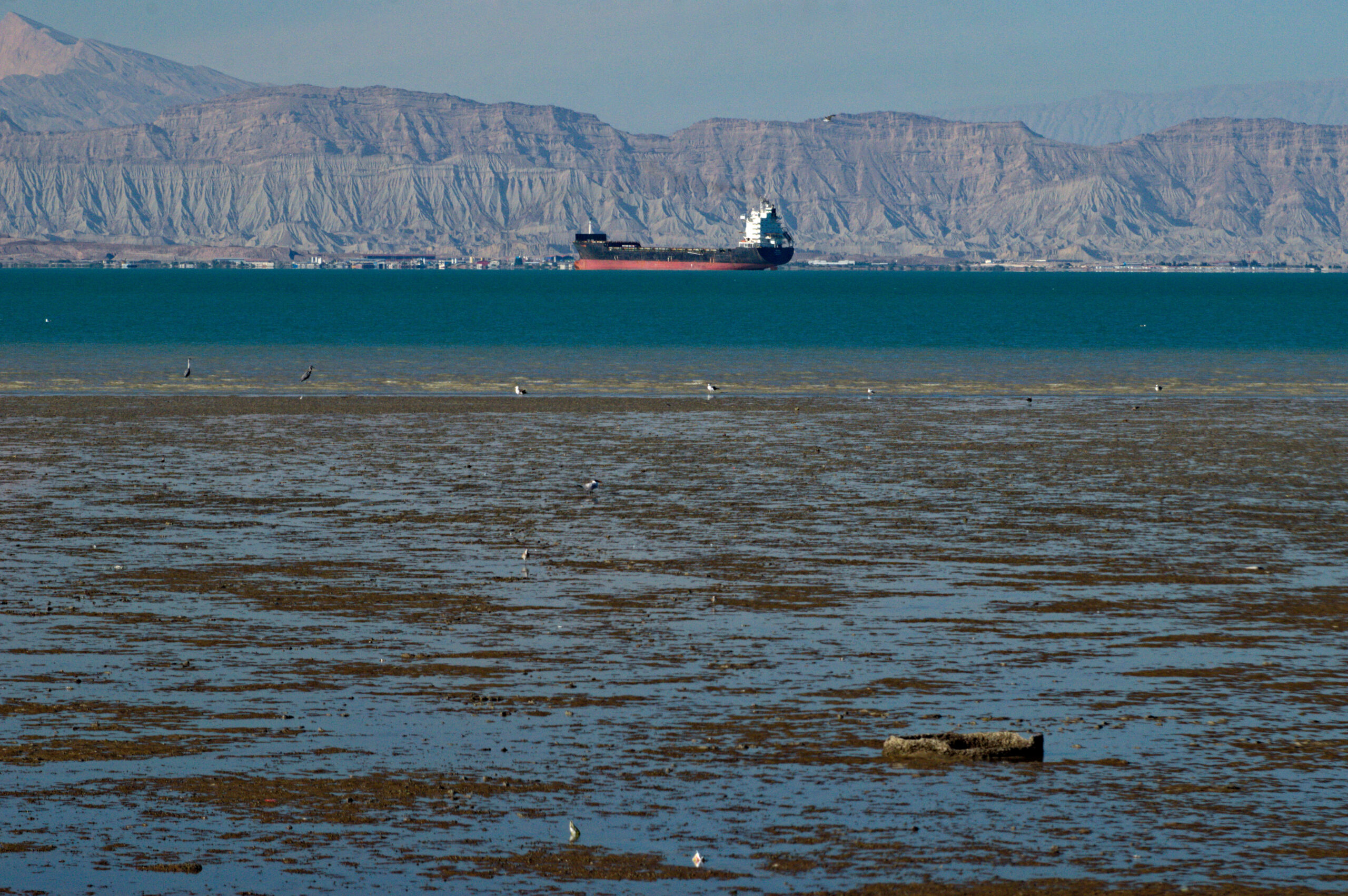
Some reports have suggested an increasing role of both China and Russia in supporting an isolated Iran. Iran’s Foreign Minister Abbas Araghchi has hinted that Beijing and Moscow have engaged in “military cooperation”. These remarks come as the Strait of Hormuz, one of the world’s most vital and volatile waterways responsible for carrying over 20 percent of the global oil supplies, has been weaponised following the war between Israel, the United States (US) and Iran. The conflict, now in its third week, has a substantial impact on the global economy. Both oil supplies and prices have entered a period of uncertainty as Iran’s Islamic Revolutionary Guard Corps (IRGC) decided to strategically regionalise the war following the assassination of Iran’s Supreme Leader Ayatollah Khamenei in an airstrike.
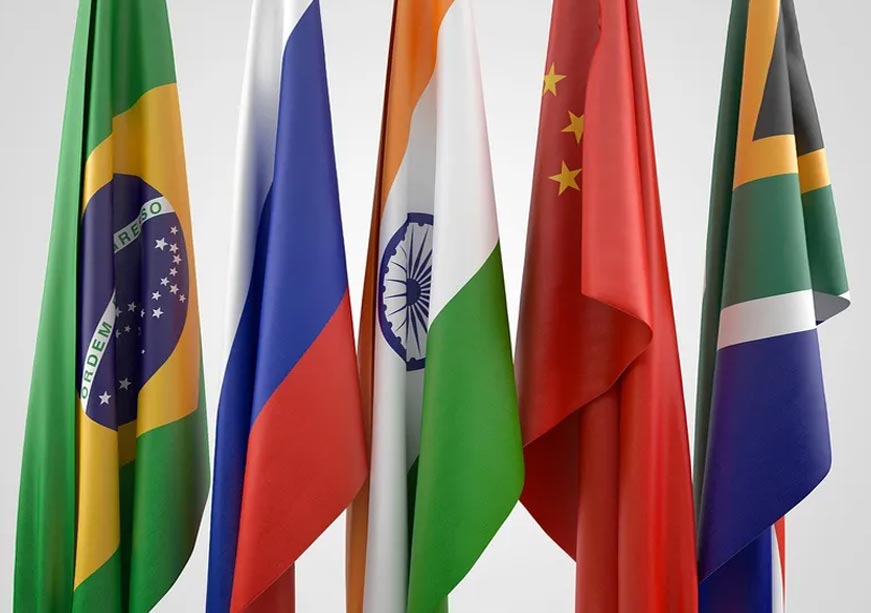
Russia and China are frequently grouped together in a soft alliance with Iran (and North Korea) as the new proverbial ‘Eastern bloc’. The relationship between Beijing and Moscow has deepened further following Russia’s conflict in Ukraine and the subsequent tensions with both Europe and the US. However, this deepening is widely regarded as asymmetrical, with Russia becoming increasingly dependent on China’s economic weight after its energy supplies to Europe were terminated. Within the broader category of great powers, one that Moscow still espouses largely on the basis of its nuclear arsenal, despite the relative weakness of its economy, both Russia and China positions themselves as contesting within a revised framework of ‘east’ verses the ‘west’.
Iran is close to both the countries and is regarded as an important geopolitical power in managing the region’s complexities especially in relation to Washington. However, China and Russia also have distinct, and often divergent interests and approaches toward the region. While both have common interests in containing the US, Russia has adopted a more visible military posture in the Middle East whereas China has relied on economic leverage and the diplomatic influence that accompanies it.
Russia had benefited from its cooperation in the Middle East over the years, particularly in Syria, the only country where it continues to maintain a direct military presence on the country’s Mediterranean coast.
Russia had benefited from its cooperation in the Middle East over the years, particularly in Syria, the only country where it continues to maintain a direct military presence on the country’s Mediterranean coast. Since the onset of its conflict with Ukraine, the bases in the Latakia province have assumed greater importance. Tehran and Moscow shared the objective of keeping the regime of former Syrian president Bashar Al Assad from collapsing as Damascus represented a stronghold for both countries and their strategic requirements. Russia entered the Syrian conflict in 2015 to preserve its status as a global power. Losing its only military base not just in the Middle East but the larger Mediterranean region would render it to a mere Eurasian player and a prisoner of its geography. Following the fall of Assad’s rule, even Hay’at Tahrir Al Sham’s Ahmed Al Sharaa, supported by US, Türkiye and other Gulf states despite a very chequered past as Syria’s new president, had to balance his bets and visit Moscow to negotiate the presence of Russian military assets. Today, in a more subdued form, the bases remain, representing a significant win for the Kremlin.
For China, the calculations have been different. Iran’s role as a disruptor of US influence in the Middle East has been utilitarian for Beijing. It has supported Iran in exchange for cheap oil supplies with over 80 percent of Iran’s shipped oil finding home in China. Due to years of sanctions, other traditional buyers, such as India, had to curtail their imports bringing them almost to zero. In 2021, Beijing and Tehran signed a 25-year long strategic partnership estimated to be worth hundreds of billions of dollars. The agreement stood on the shoulders of Iran’s previous treaties with the erstwhile Soviet Union signed in 1920 and 1940 respectively. However, mobilising this deal has been slow, and before the current conflict, Iran’s President Masoud Pezeshkian in a rare moment had criticised China for the slow pace of its intended investments in the country.
For China, the calculations have been different. Iran’s role as a disruptor of US influence in the Middle East has been utilitarian for Beijing.
While China perceives strategic benefit in supporting Iran, its economic ties with Gulf states such as Saudi Arabia and the United Arab Emirates are considerably deeper. Although Beijing has maintained a sustained and long term pro-Arab policy emitting from a post-colonial posture, especially on the issue of Palestine, it has no intention of entering the Middle East militarily in support of any side. Scholar Yun Sun has noted that Chinese analysts have found Iran’s power weak when confronted with major military challenges ranging from the 2020 assassination of celebrated military leader Qassem Soleimani of the Quds Force, the foreign wing of IRGC to the 12-day war which took place in 2025 targeting Iran’s nuclear facilities. At the end of it all, for China, Iran’s oil remains of paramount importance. Previously, Iran had helped China in the Red Sea by negotiating with Yemen’s Houthis to not target Chinese vessels. A similar arrangement may surface in the ongoing crisis in the all-vital Strait of Hormuz as well, where US President Donald Trump has even asked China to send its warships to secure the Strait from Iranian control. A request unlikely to be accepted in Beijing.
Finally, beyond their individual objective and complexities, Russia and China share a common interest: ensuring that the US becomes strategically, politically, and tactically entangled in the Middle East once again. This eventuality could undermine any American plans of an ‘Asia pivot’ or even further consolidation of frameworks such as the ‘Quad’ and Indo-Pacific strategies designed to constrain Chinese power in Asia. On the other spectrum, for Russia, reorientation of military power towards the Middle East means a welcome distraction away from Ukraine. A win-win for China and Russia despite their divergent strategic interests within the construct of the Middle East.
Kabir Taneja is the Executive Director, ORF Middle East.