 Global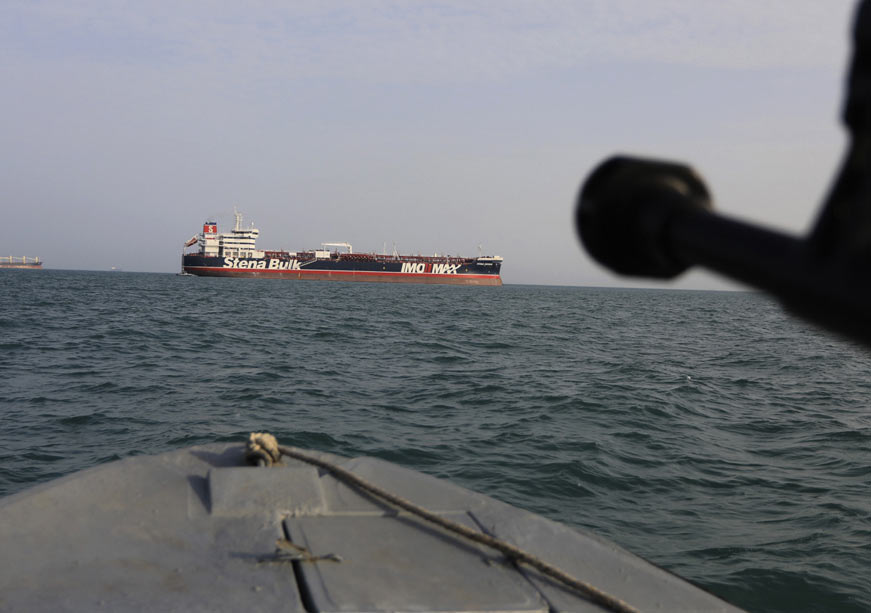
Expert Speak | 20 March, 2026
The US–Israel–Iran Conflict: Energy, Climate & Food-Water Impacts
Nearly 20 million barrels of globally traded petroleum transit the Strait of Hormuz daily, of which 14.8 million barrels of oil per day lack access to an alternative route. The situation is even more acute in gas markets which have less flexibility and limited storage options.
Energy underpins virtually every sector of the global economy whether as a feedstock or through transportation. The conflict has driven oil and gas prices sharply upward, sending shockwaves across global markets. Estimates suggest, that the global GDP loss could range from US$770 billion – if the conflict endures 4-6 weeks with Brent crude prices between US$100-120 – upto US$2.2 trillion if the conflict persists for 3-6 months, with prices rising above US$130.
Yet, the consequences extend far beyond energy and the economy indicators. The ensuing crisis is also intensifying food and water insecurity, climate systems and agricultural production.
The Climate and Energy programme from the Observer Research Foundation (ORF) Middle East provided concise analysis of these impacts and reflections on potential pathways forward.
The Energy Security Trifecta: Securitisation, Resilience and Transition
Governments and Institutions must reconsider how energy security is defined and managed in the twenty-first century. Just as the aftermath of the 1973 oil crisis led to the establishment of the International Energy Agency (IEA) which encouraged oil consuming countries to set up strategic petroleum reserves (SPRs) and coordinate emergency responses to manage future supply disruptions, the current Hormuz crises represents another significant inflection point for the global energy system.
The lessons learnt from the emerging crisis highlight the need for a more comprehensive framework for energy security – one that balances securitisation, resilience, and transition : what might be termed the trifecta of energy security.
Energy infrastructure of national strategic importance – should be treated as critical national security assets with protections comparable to military installations.
Firstly, securitisation and risk management will become central. Maintaining significant stockpiles of oil and gas reserves will be increasingly essential. Energy infrastructure of national strategic importance – should be treated as critical national security assets with protections comparable to military installations. Besides physical and military safeguards, cybersecurity measures are equally important in the current techno-digital age.
Secondly, resilience should be strengthened through decentralisation and diversification of energy sources, trade routes and partnerships, thereby, ringfencing the energy systems from volatile pricing and sudden supply chain disruptions. Systems capabilities are also important considerations in this regard, including satellite surveillance, risk shipping insurance, reinsurance mechanisms, payment systems and real time supply chain intelligence.
Finally, the energy transition agenda is closely tied to energy sovereignty and must be viewed as a pillar of long-term energy security. Investments in in renewables with storage, nuclear energy, and grid optimisation are likely to gain momentum. Securing strategic reserves of crucial critical minerals will be key to avoiding the vulnerabilities and dependencies characteristic of the oil and gas era.
Mannat Jaspal, Director & Fellow, Climate and Energy, ORF Middle East
Anticipating the weaponisation of energy
The effective weaponisation of energy has been the disruptive throughline of the conflict in the Middle East. The first form has been structural weaponisation representing the destabilising continuum of targeted attacks on energy infrastructure across production, generation, distribution, utility and storage capabilities in the region. The second kind has been the weaponisation of access by extorting leverage over the Strait of Hormuz. A combination of both has exported energy and ancillary vulnerabilities globally.
Short of a perpetual – and, entirely unsustainable – state of military readiness and provision of air defense around each, there is objectively no way to achieve fool-proof protection against kinetic attacks on energy assets and conduits during a conflict. Anticipating imminent weaponisation, however, helps prepare for faster recovery.
Structural resilience of oil and gas energy infrastructure could be improved by factoring in redundancies of alternate and distributed storage and power such as rechargeable generators, transformers, components to repair damaged infrastructure, and mobile power generation plants. Although an expensive proposition, such stockpiling is essential because energy systems, like energy markets, cannot deliver on security beyond their engineered parameters, and stress-testing risk-insurance for energy infrastructure must factor this in. Additionally, robust cybersecurity could guard against digitised breaches that compromise systems resilience.
Structural resilience of oil and gas energy infrastructure could be improved by factoring in redundancies of alternate and distributed storage and power such as rechargeable generators, transformers, components to repair damaged infrastructure, and mobile power generation plants.
Access weaponisation could be partly addressed by diversification of both sources and forms of energy, factoring in cost, time and compatibility calculations. Concerted expansion of strategic storage capacities of fuel, must simultaneously be accompanied by a robust industrial policy focused on electrification. Finally, although the susceptibility of renewable infrastructure to either the access-based weaponisation of entrenched supply-chain monopolies, or structural weaponisation through kinetic attacks cannot be ruled-out, investing in renewables as a viable long-term hedge against access weaponisation must be prioritised. The diversification and stockpiling of its feedstock such as transition hardware, critical minerals and technologies, the building of decentralised microgrids, and the creation of responsive cybersecurity guardrails could serve as potential levers of mitigation.
Cauvery Ganapathy, Fellow, Climate and Energy, ORF Middle East
Rethinking Global Fertilizer Security: Lessons from Hormuz Crisis
Iran’s near-total shutdown of the Strait of Hormuz has disrupted about one-third of the world’s seaborne fertilizer trade, including nearly half of all global urea exports. Within a week of the conflict’s outbreak, Qatar suspended the production and shipment of Liquefied Natural Gas (LNG) and urea, and fertilizer prices rose by 27 percent and are up 57 percent compared to the same period last year. The crisis could worsen given that China is restricting its exports to prioritise domestic market until August 2026, and Russia has imposed export quotas.
Within a week of the conflict’s outbreak, urea prices rose by 27 percent and are up 57 percent compared to the same period last year.
Building alternative export corridors and relocating part of production capacity to politically more stable locations are long-overdue investments.
With the war in its third week, this fertilizer crisis offers important lessons for both the Gulf region and the rest of the world. For the Gulf Cooperation Council (GCC) countries, this implies that petrochemical diversification alone does not create economic resilience as long as production and exports share the same geographical vulnerability. Saudi Arabia, for instance, has an east-west pipeline for oil. Yet, no comparable alternative exists for fertilisers. Building alternative export corridors and relocating part of production capacity to politically more stable locations are long-overdue investments.
Countries in Social Security Agreements (SSA) and South Asia — which import a large portion of their nitrogen fertilizers, for instance, India (41 percent), Sudan (54 percent), Tanzania (31 percent), Kenya (26 percent), Thailand (71 percent), and South Africa (67 percent) — should ultimately build strategic reserves, similar to what most governments are already doing for crude oil. Furthermore, accelerated investment is needed in local and regional fertiliser production, supported by renewable energy. Green ammonia, though still costly, offers precisely this independence from fossil fuel supply chains and geopolitical bottlenecks.
At the multilateral level, a coordinated mechanism for fertiliser supply security is long overdue, comparable to the IEA emergency reserve coordination for crude oil. A global crisis reserve for agricultural inputs, combined with transparent early-warning systems for supply shocks, would mitigate the worst effects of future disruptions.
The Strait of Hormuz crisis have demonstrated that fertiliser security and energy security cannot be considered in isolation. Focusing solely on oil prices while ignoring the fertiliser supply chains undermines the true extent of geopolitical vulnerability.
Arnold Musungu, Associate Fellow, Climate and Energy, ORF Middle East
The War on Climate
Climate change is often overlooked in the discussions of war. When the loss of human lives and survival are at the forefront, deprioritising climate concerns may seem justified. While that may be true in the short-term, the long-term impacts of war on climate change will be detrimental and profound—particularly in the Middle East—a region disproportionately affected by accelerated warming and an increase in extreme weather events, with summer temperatures expected to rise by 4°C and 118 days of heatwaves per year predicted by 2100.
Direct strikes on oil facilities, in addition to the attacks on Iranian nuclear and uranium infrastructure in June last year, result in a significant release of toxins pollutants, such as particulate matter, carbon monoxide, and sulphur dioxide that affect the environment and public health, with increased cases of cardiovascular illness, respiratory damage, and headaches.
The protracted US-Israel war on Iran is proving to be costly for the climate. Military operations – especially the deployment of aircrafts and missiles – emit harmful emissions. Direct strikes on oil facilities, in addition to the attacks on Iranian nuclear and uranium infrastructure in June last year, result in a significant release of toxins pollutants, such as particulate matter, carbon monoxide, and sulphur dioxide that affect the environment and public health, with increased cases of cardiovascular illness, respiratory damage, and headaches. Moreover, strikes on vessels and offshore infrastructure in the Gulf threaten marine life and biodiversity, with repercussions that will likely last decades.
The closure of airspace over parts of the Middle East and the disruptions in shipping through the Strait of Hormuz, down from 100 ships daily to 21 in total since the war began. This will lead to a significant increase in aviation and shipping emissions as planes and ships are rerouted. This could in the long-term, however, motivate countries to abandon fossil fuels and pursue clean energy alternatives.
The cumulative environmental effects of the war;release of toxic pollutants, the increase of greenhouse gas emissions, ecological damage,are expected to fast track drought like conditions and extreme heatwaves in the region, and contribute to soil degradation, reduced land fertility and water contamination.
Houraa Daher, Associate Fellow, Climate and Energy, ORF Middle East
Testing Limits of Food Resilience: Gulf to Globe
Increasing hostilities around the Strait of Hormuz— a maritime chokepoint at the helm of global fuel and fertiliser trade—have subsumed regional and global food systems under pressure. Similar to COVID-19 and the Russia-Ukraine war, the current conflict challenges logistical capacity, supply chain fluidity, and global food reserves. While the Gulf can safeguard its food security through storage, logistics, and diversified trade corridors, the rest of the world must brace for elevated food prices and potential shortages.
While the import-dependent Gulf has found momentary relief through backup gateways in Jeddah, Oman, and the UAE’s east coast, these lack capacity to absorb full trade diversion. Sustaining trade momentum, low prices, and stocked shelves is the next challenge. With summer approaching and food transiting through longer and costlier routes like the Cape of Good Hope, the Gulf’s recent investments in cold chain logistics will become crucial to preventing spoilage. Pairing the region’s logistics strategies with its established food corridors—such as DP World’s investments in India and Africa—will help sustain food supply, especially if the conflict extends beyond the region’s six month grain reserve.
While the Gulf can safeguard its food security through storage, logistics, and diversified trade corridors, the rest of the world must brace for elevated food prices and potential shortages.
Although immediate impacts have been localised, a narrow window remains to prevent massive global shocks to food availability and pricing. Maintaining open trade, avoiding protectionist measures, and ensuring physical and economic food access is paramount. The FAO’s Food Import Financing Facility (FIFF) provides emergency financing for food-import dependent countries during global crises. In vulnerable countries, targeted cash transfers can mediate temporary shocks by improving food consumption and access. Humanitarian donors are also pursuing alternate transit corridors to ensure food reaches conflict zones.
A persisting conflict will once again test the bounds of food systems resilience. In an era of compounding crises, integrated systems of diversified trade, logistics, and financial resilience mechanisms will help ensure that countries reap the benifit of sustained food security.
Leigh Mante, Junior Fellow, Climate and Energy, ORF Middle East
Maximising Water Security: National Capacity, Regional Cooperation
The targeting of critical desalination infrastructure in Bahrain amid the ongoing US-Israel-Iran conflict underscores the growing reality of water weaponisation in times of war. This is of vital concern across Gulf countries, the majority of which are water-scarce and rely on domestic desalination to meet water needs. Dependency ranges from 42-90 percent, with the region collectively producing approximately 40 percent of global desalinated water. Disruptions therefore pose immediate risks to water availability, as alternatives remain limited.
Against this backdrop, continued reliance on centralised, country-level water strategies exposes structural vulnerabilities, reinforcing the need to move beyond a purely domestic approach. Enhancing and safeguarding water security will depend on striking a balance between national sovereignty and regional interdependence, notably during extreme disruptions.
Advancing wastewater reuse – through improved technologies, expanded networks, and public awareness, offers a less resource-intensive supply option.
At the national level, resilience requires a continued shift towards efficiency and diversification. Strategies should move beyond supply expansion and embed risk distribution within system design. Expanding water reserves while decentralising and distributing desalination can reduce exposure to single point failures. Advancing wastewater reuse – through improved technologies, expanded networks, and public awareness, offers a less resource-intensive supply option. Integrating adaptation measures, such as sustainable demand-side management, across all strategies is essential to preventing water overuse and groundwater overexploitation, both of which undermine water security efforts.
Beyond national measures, water security can be advanced through regional cooperation and regional contingency measures. Revisiting the GCC Unified Water Strategy (2016-2035) presents an opportunity to bolster integrated resource planning and revive transboundary water management efforts that have historically stalled. Advancing toward a binding framework could support tangible progress. In the near term, the upcoming 2026 UAE-Senegal-led UN Water Conference offers a timely platform to reintroduce discussions on shared emergency water reserves and the expansion of cross-border water transfer systems.
As water systems become increasingly digitalised and vulnerable to cyberwarfare, risk management remains critical at both national and regional levels. Reinforcing the cybersecurity of water assets, particularly in already water stressed environments, is essential to maintaining operational reliability.
Reem Sagahyroon, Research Assistant, Climate and Energy, ORF Middle East