 Global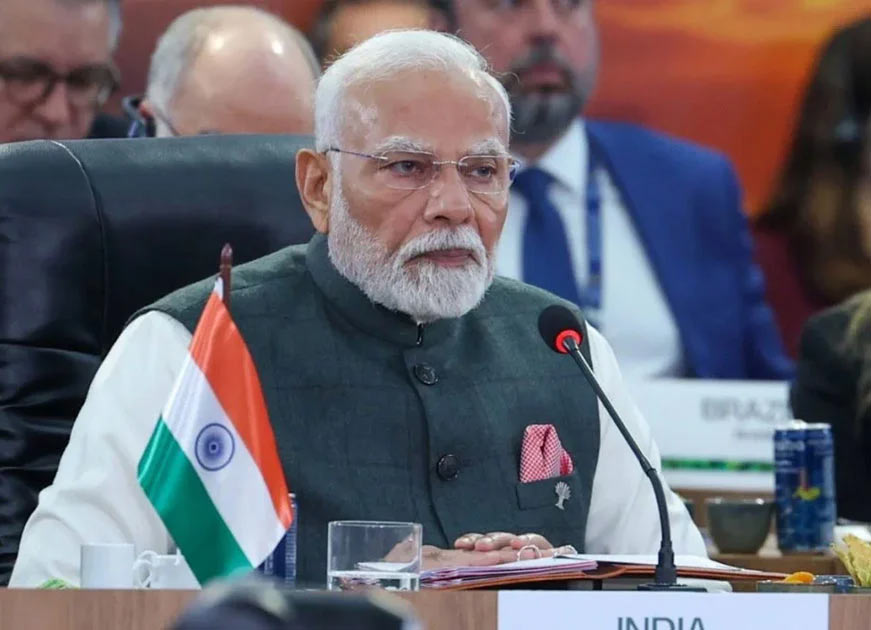
Commentaries | 12 September, 2026
Measuring Success: BRICS 2026 and India’s Presidency
2026 has been a tumultuous year for multilateralism and trade. Prolonged war in West Asia and trade disruptions caused by chaos in the Strait of Hormuz are just the starting point. Energy, trade, and insurance costs have all been affected, compounded by unpredictable tariff policies from the United States (US).
Yet, BRICS has held together as a platform for dialogue and communication. As a group, discussions remain issue-based and diverse, making space for pointed interventions in development cooperation without being bogged down by international and bilateral interests.
BRICS has always positioned itself as a non-Western order, not an anti-Western one.
This year has been uniquely difficult for BRICS, since both Iran and the United Arab Emirates (UAE) are new members, creating a particular complication for consensus-building when one country has been caught in the crossfire of the other’s war. Consensus, after all, is the underlying principle of all BRICS agreements and understandings.
BRICS remains relevant because it gives its members space for strategic autonomy in policymaking.
The challenge for BRICS arises when there is external pressure to speak with a single voice on issues of international concern. The group does not, and is unlikely ever to, agree on a common understanding across the wider spectrum of issues in international geopolitics. That is also not a stated aim, or even a desired outcome, for BRICS.
BRICS remains relevant because it gives its members9 space for strategic autonomy in policymaking. This means that member states will sometimes agree to disagree on issues that may be the subject of intense discussion outside the bloc but have no direct bearing on the bloc itself or its aims.
Trading and Trade-offs
BRICS accounts for 26 percent of world trade, and 40 percent of world GDP. It is no surprise then that some of the most work has happened in the trade track.
During the Indian presidency, the discussion in the trade track has been on four key issues. These include i) revitalising the multilateral trading system, especially the World Trade Organization (WTO); ii) affordable trade financing for Micro, Small, and Medium Enterprises (MSMEs); iii) building a shared BRICS understanding on Global Value Chains (GVCs); and iv) BRICS principles for cross-border digitally delivered services. These issues have been presented in the Chair’s Statement and Outcome Document of the BRICS Trade Ministers’ Meeting. The topics shortlisted reflect a mix of India’s interests and an attempt at issue-based collaboration in areas where constructive dialogue is possible despite competing interests within BRICS.
Given that cooperation in BRICS is issue-based and diversified, BRICS has extended its Strategy for BRICS Economic Partnership, previously valid until 2025, to 2030. The new text, expected to be formalised at the Leaders’ Summit, will be influenced by the four agreed annexures mentioned above.
It is important to remind ourselves that BRICS does not operate as a cohesive economic grouping, so any reform proposals are framed as voluntary rules to support trade facilitation and ease of doing business.
This might mean some trade-offs between BRICS and BRICS partners to allow for more interoperable standards, but it is likely to have a beneficial impact if it enables greater trade within the bloc.
It is important to remind ourselves that BRICS does not operate as a cohesive economic grouping, so any reform proposals are framed as voluntary rules to support trade facilitation and ease of doing business. A case in point, in terms of customs rules, is the Voluntary Workplan for Authorised Economic Operators (AEOs) signed this year.
Issues like energy cooperation, technology transfer, and critical mineral cooperation tend to involve more nuanced discussion than straightforward issues like infrastructure development and connectivity. For example, the bloc has agreed this year on “BRICS Guiding Principles of Smart Grids and Energy Storage”.
The key outcome would be the conclusion of the economic strategy, providing a roadmap for cooperation, since a central goal of BRICS members has become increasing and diversifying intra-BRICS trade beyond traditional sectors. More clarity on the ability of the New Development Bank (NDB) to offer trade finance beyond infrastructure finance is likely to be of interest to new members.
Of Currencies and Competition
There is a layered understanding of working with local currencies to complement the dollar system and ensure currency stability. Countries are seeking to reduce their overreliance on the dollar because it creates dependence within the system. Creating competition and using floating currencies to their full advantage can help manage trade flows and reduce transaction costs arising from foreign exchange losses.
BRICS is not attempting de-dollarisation. Several BRICS economies remain deeply enmeshed in the dollar-based financial system. What is being discussed is the development of alternative payment mechanisms, such as trade in local currencies, to reduce currency risk and associated costs. It is impractical to assume that the dollar is replaceable. It is also alarmist to suggest that any move towards using alternative financial systems for international settlements is a move to replace the existing system. If overdependence on the dollar is a vulnerability, so too would be overdependence on any third currency or even the creation of a new currency. The aim is to create greater competition, which could lead to better economic outcomes for all parties. A clear framework, including guidance on how to operationalise local currency trade, would be a welcome step for BRICS.
Consensus as the Measure of Success
Regardless of international and bilateral undercurrents, BRICS has several issues it agrees on, including trade facilitation, development cooperation, and Sustainable Development Goal (SDG) cooperation (including but not limited to health, climate, energy, and alternative energy sources). Delivering consensus on these areas will be the true measure of success for India’s BRICS chairship.
The success of India’s presidency should not be measured by whether BRICS speaks with one voice on every geopolitical issue, but by whether it can sustain consensus where cooperation is possible and translate it into practical outcomes.
Regardless of international and bilateral undercurrents, BRICS has several areas of convergence, including trade facilitation, development cooperation, and Sustainable Development Goal (SDG) cooperation across health, climate, energy, and alternative energy sources.
The success of India’s presidency should not be measured by whether BRICS speaks with one voice on every geopolitical issue, but by whether it can sustain consensus where cooperation is possible and translate it into practical outcomes. If India’s chairship can strengthen this approach, it will reinforce BRICS as a platform where diverse interests can coexist while advancing shared economic and developmental priorities.
This commentary originally appeared in Observer Research Foundation.