 Global
Policy Briefs | 30 March, 2026
South Asia’s Integrated Grid and Clean Energy Transition
A regionally integrated grid is central to South Asia’s clean energy transition. Cross-border electricity trade (CBET) in the Bangladesh–Bhutan–India–Nepal (BBIN) subregion has nearly tripled from 7.8 TWh in 2013 to 21 TWh in 2024, yet remains far below its potential. An integrated grid can harness the region’s diverse clean energy resources, lower system costs, enhance energy security, and support decarbonisation. Recent milestones, including Nepal–Bangladesh trilateral trade via India and market-based trading, signal a shift toward deeper cooperation. However, challenges persist, including limited transmission interconnections, high investment requirements, evolving institutional frameworks, and geopolitical risks. This brief traces the evolution of CBET in South Asia and outlines a pathway to unlock its full potential.
Attribution: Monali Zeya Hazra, “South Asia’s Integrated Grid and Clean Energy Transition,” ORF Issue Brief No. 866, Observer Research Foundation, March 2026.
Introduction
On 15 June 2025, Nepal began exporting 40 megawatts (MW) of electricity to Bangladesh through India’s transmission network. The three countries had signed a trilateral agreement in October 2024 and ceremonially launched the partnership with token trading in November 2024. The June 2025 commencement established the framework for seasonal electricity flow from Nepal to Bangladesh via India for the next five years. For South Asia, where cross-border electricity trade (CBET) has been limited to bilateral arrangements, this marked a historic moment.
South Asia, despite being one of the fastest-growing economies with rising energy demand, remains among the least connected. Currently, the electricity grids of Bangladesh, Bhutan, India, and Nepal (BBIN) subregions are interconnected, and discussions to connect Sri Lanka’s grid to India are at an advanced stage. Given that grid interconnection currently exists only among the BBIN countries, CBET remains largely limited to this subregion.
Electricity trade between India and Nepal began in the 1970s, and in the 1980s between India and Bhutan through government-to-government (G2G) arrangements. The turning point came in 2013, when the electricity grids of India and Bangladesh were interconnected and trade began on commercial terms. Since then, CBET in the BBIN subregion has nearly tripled, from 7.8 terawatt hours[1] (TWh) in 2013 to 21 TWh[2] in 2024, while trading capacity increased from 1400 MW in 2010 to 5273 MW in 2023.[3]
Why Integration Matters
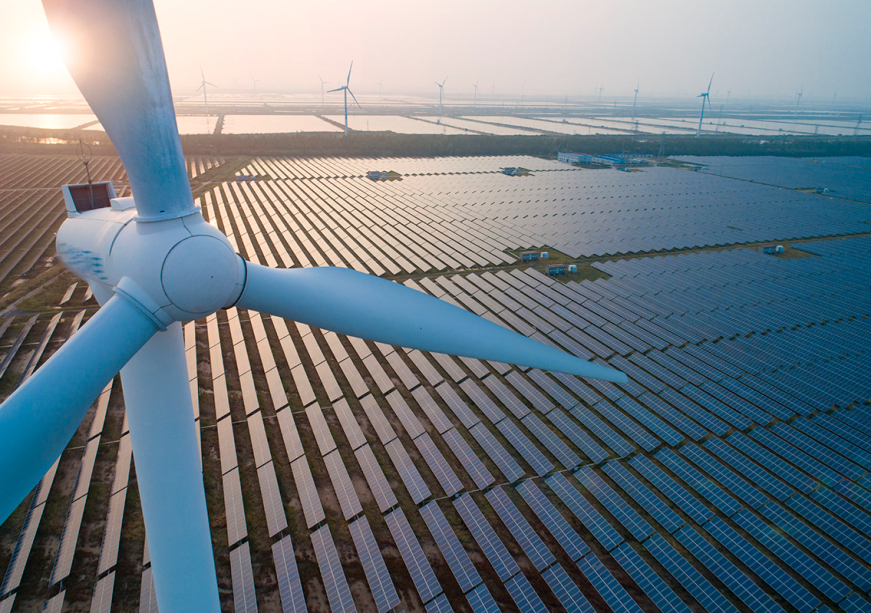
A regionally integrated grid in South Asia is both logical and necessary. It allows countries to leverage diverse energy resources and complementarities in demand. Nepal and Bhutan are rich in hydropower, while India and Sri Lanka have abundant renewable resources. The region holds over 350 gigawatts (GW) hydropower potential, 1,000 GW of solar, and 1,289 GW of wind potential.[4] By interconnecting grids, countries can share these resources, balance supply and demand, and reduce the region’s carbon footprint. Such integration directly supports national clean energy transition goals. For example, India views Nepal and Bhutan’s hydropower as a vital balancing resource to enable it to achieve its target of 500 GW of non-fossil energy by 2030.[5] Similarly, Bangladesh will need to draw on hydropower from Bhutan and Nepal, as well as India’s renewable potential, to meet its target of 30 percent renewable energy by 2040.[6]
Regional integration also reduces the need for costly reserve capacity, allowing countries to redirect resources towards social and developmental priorities. An analysis by the South Asia Regional Initiative for Energy Integration (SARI/EI) programme estimated that integration could save Bangladesh, India, and Nepal a combined US$17 billion in capital expenditure through efficiency gains due to integration.[7] A 2017 World Bank study projected that regional integration in South Asia could save US$94 billion and reduce GHG emissions by 8 percent[8] between 2015 and 2040. Beyond cost savings, an integrated grid enhances energy security by diversifying resources and strengthening resilience during crisis. An analysis by SARI/EI showed the benefits of regional energy cooperation during the COVID-19 epidemic, where Bangladesh and Nepal[9] adjusted their imports from India to meet their reduced demand, but India maintained its imports from Bhutan since hydropower is crucial for Bhutan’s economy.
The relevance of CBET is particularly pronounced for smaller economies. Power exports accounted for roughly 16 percent of Bhutan’s Gross Domestic Product in 2021 and constituted a major revenue source for Nepal. For example, the Nepal Electricity Authority earned a net profit of NPR 4.57 billion from electricity trade in the fiscal year 2024–25.[10] For Bangladesh, CBET offers access to competitively priced electricity compared to domestic fossil-fuel-based generation, especially during peak periods. While CBET represents only a small fraction of India’s overall power supply, its strategic value is significant. For India, CBET has emerged as an instrument of regional energy diplomacy, strengthening economic ties with neighbours while supporting its broader clean energy transition goals.
Current Policy Environment
Recognising the value of energy cooperation, countries in the region are stepping up. India has taken the lead in advancing regional integration, a role consistent with its central location, size, and evolving energy sector. Under the Modi government, India has strengthened the policy architecture for CBET in South Asia.
India’s CBET guidelines of 2016, updated in 2018, established a policy framework, designated a nodal authority, opened Indian Power Exchanges to neighbouring countries, and enabled trilateral trade. India’s foreign policy further reinforces these measures. The Neighbourhood First policy prioritises energy cooperation with its South Asian neighbours, while the Act East policy extends this vision towards the Bay of Bengal Initiative for Multi-Sectoral Technical and Economic Cooperation (BIMSTEC) and the Association of Southeast Asian Nations (ASEAN), where energy connectivity is seen as a bridge between South Asia and Southeast Asia. Together, these frameworks provide diplomatic scaffolding for regional energy integration.
Other BBIN countries have embedded CBET in their policy frameworks. For example, Nepal’s Hydropower Policy and Electricity Act laid the foundational framework, and more recently it signed an MoU with India to export 10,000 MW of power over the next decade.[11] While Bhutan has been strategically exporting 70 percent of its hydropower to India,[12] CBET was incorporated in its Sustainable Hydropower Development Policy 2021 and subsequently formalised in the recently adopted National Energy Policy 2025. Meanwhile, Bangladesh’s Power Sector Master Plan 2025 recognises cross-border electricity imports as a strategy to meet its demand and clean energy targets.
Despite periodic political shifts in the BBIN region, CBET has largely persisted, reflecting policymakers’ recognition of its strategic value. Though challenges remain, the continuity of recent trilateral and bilateral exchanges suggests a growing resilience in regional energy cooperation.
Market-Based Trade: A New Era
While the policy environment has evolved favourably, the transition toward market-based mechanisms represents another crucial development. This has largely been enabled by the Government of India’s policies. In 2021, Nepal became the first neighbouring country to sell power in India’s day-ahead market and later also to buy during dry seasons. Bhutan followed, buying power to cover winter shortages caused by maintenance-related shutdowns of key plants. Both Nepal and Bhutan are selling and buying power in the day-ahead and real-time markets of the Indian Energy Exchange, marking a departure for Bhutan from its traditional G2G model. Bangladesh also explored accessing India’s power markets through the exchange platform by using the marginal capacity in the existing Baharampur–Bheramara transmission interconnection link but ultimately prioritised the available capacity for the Nepal–India–Bangladesh trilateral trade.
While market-based trade currently accounts for a small share of the total CBET in South Asia, it represents a meaningful structural shift. It introduces transparency, short-term flexibility, and price discovery absent in conventional bilateral contracts and could lay the foundation for a regional power pool.
In parallel, India is undertaking several reforms in the power market domain, which will ultimately benefit its South Asian neighbours. Initiatives like market coupling and the introduction of products like ancillary services are expected to deepen the market depth and improve system efficiencies. These market reforms will create new opportunities for regional participants.
What South Asia and the Middle East can Learn from Each Other
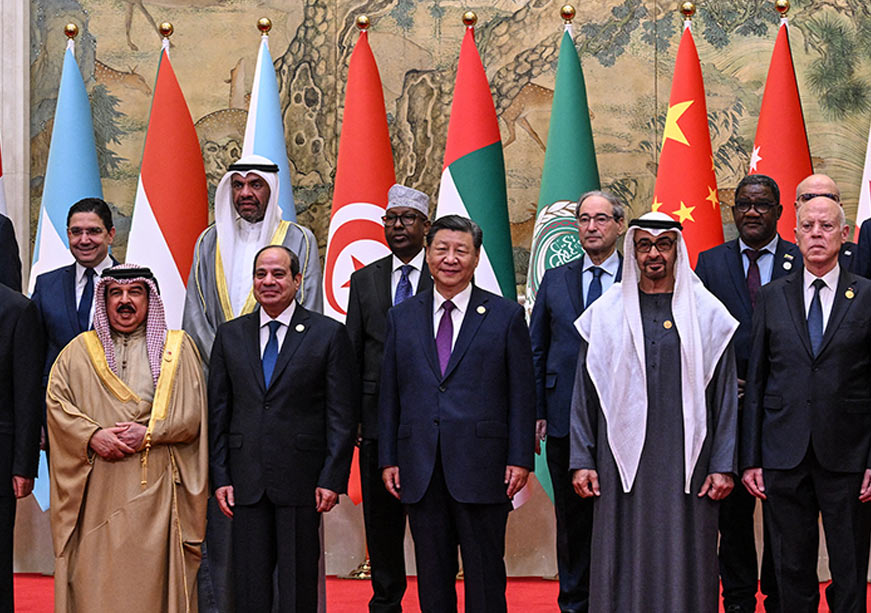
Both South Asia and the Middle East can draw lessons from each other’s regional integration efforts. Although South Asia lacks a formalised regional structure, the volume of power trade, spurred by hydropower bilateral agreements and market-based power trade, is significantly higher than in the Middle East. By contrast, electricity trade in the Middle East remains limited despite strong physical interconnections. Cross-border exchanges are largely confined to emergency support and reserve sharing, with commercial energy trade estimated at around 1.098[13] TWh annually.
In South Asia, power flows began under bilateral—and now trilateral—arrangements even before common grid codes or markets were established. Hydropower exports from Bhutan and Nepal through long-term contracts sustained cross-border power flows and justified transmission investments. Market-based mechanisms were introduced gradually, complementing rather than replacing these contracts. Another distinctive feature is the complementarity of resource endowments and differences in system size: hydropower-rich countries export clean, firm power, while larger systems provide transmission corridors and market access.
At the same time, South Asia can draw lessons from the Middle East, particularly the Gulf Cooperation Council (GCC)’s emphasis on institutional clarity and operational reliability. The establishment of a dedicated regional entity with a clear mandate has enabled high levels of grid stability and rapid emergency response. South Asia’s integration efforts, by contrast, remain institutionally fragmented and heavily dependent on ad hoc coordination.
| Energy Storage in the Context of Regional Cooperation in South Asia
Energy storage will play a growing role in South Asia’s power systems as renewable penetration increases. India alone would require 61 GW of energy storage by 2030 as per a study by the India Energy & Climate Centre, with additional storage needs emerging across other neighbouring systems to manage variability and provide short-duration flexibility. Various analyses establish that storage complements CBET by enhancing the utilisation of regional interconnections and enabling more efficient regional dispatch. When combined with hydropower-based flexibility in Nepal and Bhutan, coordinated planning of storage and transmission can significantly improve system reliability and reduce overall system costs in South Asia. |
The GCC experience also highlights the value of proactive regional transmission planning. Early investment in interconnections, standardised operational protocols, and coordinated system operations reduced congestion risks and enhanced reliability. As CBET volumes grow in South Asia, stronger regional planning institutions and closer coordination, particularly for transmission development and system operations, will become increasingly important.
Challenges to Scaling CBET
Despite recent milestones, CBET in South Asia remains far below its full potential, which stands at 43.8 GW by 2043[14] as per a study by the SARI/EI programme. This gap reflects a set of challenges that continue to constrain regional integration.
- Transmission Bottleneck: Cross-border transmission is central to integration, yet expansion in the BBIN subregion is constrained by limited corridors. Most existing interconnections operate near capacity, while new links remain under construction or in planning. Progress is frequently stalled by financing constraints, right-of-way disputes, and disagreements over sharing development costs. The India–Sri Lanka interconnection illustrates these challenges. Though the pre-feasibility studies were undertaken in 2002 and the MoU signed in 2010, the project could not advance because the two countries could not agree on the cost allocation.
- Policy and Market Harmonisation: An interconnected grid requires common grid codes, operating standards, and market rules. Some progress has been made, such as the adoption of the common minimum grid code (CMGC) under the South Asia Infrastructure Regulations (SAFIR), which is intended to provide baseline standards across the region. However, the CMGC remains voluntary in nature and does not have a legal mandate. Moreover, market maturity across the region remains uneven. While India operates a sophisticated power market, other BBIN countries continue to rely on single-buyer models, creating challenges to market integration.
- Geopolitics: Political tensions and instability remain significant impediments. The prolonged impasse between India and Pakistan has prevented potentially low-hanging projects, such as the Amritsar–Lahore transmission link. Even within BBIN, political turbulence—first in Bangladesh and then in Nepal—has delayed and heightened risk perceptions. China’s growing involvement in South Asian hydropower and transmission projects under the Belt and Road Initiative further adds to the geopolitical complexity.
- Finance and Private Sector Engagement: Regional integration projects are resource intensive and require significant investments. A World Bank study estimated that South Asia would need US$1,390 billion for adding 750 GW of electricity generation[15] during 2015–2040. Another SARI/EI study projected US$1,056 billion in investments needs for generation[16] for the BIMSTEC region by 2030. India alone requires about US$385 billion over the next decade, as per its National Electricity Plan.[17] So far, most funding is from the public sector and development banks like the Asian Development Bank. Private sector participation remains limited, largely due to concerns over bankability, political stability, and returns.
- Public Consensus: Beyond technical and financial hurdles, public opinion can make or break regional projects. In Nepal, for instance, the US$500 million Millennium Challenge Corporation Compact faced significant resistance despite its clear benefits, largely due to narratives shaped in political and media circles. Without trust-building and transparent engagement of civil society, legislators, and the media, regional projects risk prolonged delays or outright rejection.
- Regional Institutions: Experiences from the European Union and other regions demonstrate the importance of strong, legally mandated institutions to anchor integration. South Asia lacks such an institutional anchor. The SAARC energy framework has been largely ineffective, primarily due to political mistrust. As a result, subregional platforms such as BBIN and alternative groupings like BIMSTEC have emerged as more practical vehicles for cooperation, but they remain limited in capacity.
The Way Forward
Despite persistent constraints, regional integration within the BBIN subregion can be accelerated through a structured, multidimensional strategy addressing institutional, financial, technical, and social challenges. The following priorities can guide these efforts:
- Expand and Jointly Plan Transmission Infrastructure: To realise CBET’s potential, the BBIN region must accelerate the build-out of 400 kV and HVDC interconnections. A Regional Transmission Master Plan, jointly developed and owned by all BBIN countries, would optimise costs, reduce redundancies, and identify high-impact corridors. This process should be anchored by a dedicated transmission utilities forum, drawing on global best practices. Integration of the BBIN grid with Sri Lanka, Southeast Asia, and the Middle East must also be actively pursued to position South Asia as an energy hub. Equally important is the development of transparent cost-sharing and tariff methodologies, which will reduce disputes and give confidence to private investors in cross-border projects.
- Harmonise Policies, Regulations, and Grid Operations: Stronger transmission corridors alone cannot deliver integration unless regulatory and operational rules are aligned. The CMGC provides a foundation, but its provisions need to be incorporated into domestic grid codes to ensure consistency in scheduling, settlement, and system operations. A regional regulatory task force—under SAFIR or another empowered body—could monitor compliance, resolve disputes, and oversee alignment of rules. Over time, these voluntary measures should evolve into binding agreements, drawing lessons from Europe, where minimum standards gradually transformed into enforceable EU network codes under the European Network of Transmission System Operators for Electricity (ENTSO-E).
- Roadmap for Regional Power Market Integration: Transitioning from bilateral G2G contracts to competitive market-based trade requires a phased roadmap. In the short term, countries should adopt flexible power purchase agreements (PPAs) that allow the sale of surplus electricity in regional exchange platforms. Cross-border participation in India’s markets should be scaled up, providing neighbouring countries access to different products, such as green day-ahead markets and ancillary services markets. In the medium term, efforts should focus on creating a regional power exchange where BBIN countries hold equity stakes. The SARI/EI programme demonstrated the feasibility of such an exchange, highlighting substantial efficiency gains.[18] Over the long run, market coupling across national platforms and the eventual establishment of a South Asian power pool would deepen integration, enhance liquidity, and provide price signals that attract private investments.
- Mobilise Private Sector Finance: Achieving integration at scale will require significant capital beyond public and multilateral sources. Innovative financing mechanisms such as blended finance, partial risk guarantees, and green bonds must be mainstreamed to lower risk perceptions and crowd in private capital. A dedicated regional investment facilitation forum, comprising Development Financial Institutions (DFIs), financial institutions, investors, regulators, and policymakers, should be created. The forum can build a robust pipeline of projects, design standardised risk-mitigation tools, create separate funds for regional projects, leverage donor technical assistance, and build capacities. It could also pilot digital innovations, including AI/ML-enabled monitoring and reporting platforms, thereby increasing transparency and investor confidence. Successful models of regional public–private partnership should be widely showcased to build momentum and crowd in further investment.
- Strengthen Regional and Subregional Institutions: Even with infrastructure, rules, and financing in place, integration will falter without strong institutional anchors. Global experience underscores that legally mandated institutions are indispensable for sustained cooperation. Empowering BIMSTEC or establishing a dedicated BBIN Secretariat with a legal mandate could provide the necessary coordination platform. These institutions should not only plan and monitor projects but also serve as neutral arbiters for dispute resolution. Parallel to this, specialised forums for regulators, system operators, transmission utilities, and market operators can enhance technical coordination.
- Engage Civil Society and Build Public Support: Technical and institutional reforms must also be matched by social acceptance. Proactive engagement of civil society, media, academia, and legislators is essential to build trust and share a positive narrative on regional energy cooperation. Initiatives such as the South Asia Regional Parliamentary Forum, established with support from SARI/EI and the South Asia Regional Energy Partnership (SAREP), illustrate the potential of bipartisan networks of parliamentarians to act as champions of regional integration. Expanding such networks and equipping them with robust evidence of economic, environmental, and social benefits will help foster an enabling political environment.Equally important is early and transparent engagement with local communities on issues related to right-of-way, land acquisition, and the environmental and social impacts of transmission corridors and hydropower projects. Clear compensation frameworks, credible grievance redress mechanisms, and consistent application of environmental and social safeguards will be critical to building public confidence and sustaining support for cross-border electricity infrastructure.
- Launch Flagship Regional Projects and Strengthen Data Sharing: Finally, the BBIN region must move beyond discussions to implementation by launching a few flagship joint projects, whether generation plants or transmission interconnections, that clearly demonstrate cost- and benefit-sharing arrangements. Such proof-of-concept projects will provide practical lessons, build confidence, and establish replicable models for future initiatives. Equally important is institutionalising data sharing. Transparent and accessible information will improve regional planning, support analysis and modelling of future scenarios, and foster a culture of evidence-based policymaking. Tools like the South Asia Energy Database should be further strengthened to include real-time data on trade flows, market prices, and grid operations.
An integrated grid would enable South Asia—particularly the BBIN subregion, to harness wind, solar, and pumped storage while ensuring reliability. Deeper integration within BBIN and BIMSTEC can move to market coupling and eventually to a regional power pool. Emerging initiatives such as the India–Middle East–Europe Economic Corridor (IMEC) and ‘One Sun, One World, One Grid’ could connect South Asia to other regions like Southeast Asia and the Gulf. By connecting solar-rich geographies across time zones, renewable power can flow seamlessly across borders. Regional integration is not only a tool for cost savings and energy security but also a strategic enabler of the clean energy transition.
As South Asia stands at the threshold of a clean energy revolution, regional integration offers a pathway to transform not just how countries generate and trade power, but how they cooperate on their shared sustainable future. An integrated grid is no longer optional but essential for a resilient and sustainable South Asia.
Monali Zeya Hazra is an independent regional energy specialist with over a decade of experience advancing regional energy cooperation and cross-border electricity trade in South Asia.
All views expressed in this publication are solely those of the author, and do not represent the Observer Research Foundation, either in its entirety or its officials and personnel.
Endnotes
[1] Rajiv Ratna Panda, “Clean Energy Transition in South Asia: Current Scenario and Future Outlook” (Presentation, SAGE-RIS-USAID-SAREP Workshop, New Delhi, India, June 17–19, 2023).
[2] Namrata Mukherjee et al., “International Best Practices on the Business and Financial Models for Developing Cross-Border Electricity Transmission Infrastructure,” USAID and South Asia Regional Energy, August 2024.
[3] Monali Zeya Hazra, “South Asia Power Trade and Markets”(Presentation, Deep Dive Workshop on Enabling Frameworks for Renewable Energy, Multi-lateral Power Trade (RE-MPT), Asia Clean Energy Forum, Manila, Philippines, June 2024), https://asiacleanenergyforum.adb.org/wp-content/uploads/2024/06/Monali-Zeya.pdf.
[4] Maitreyi Karthik and Rajiv Ratna Panda, “How South Asia’s Massive Renewable Energy Potential Can Boost Green Hydrogen Production,” Down to Earth, January 24, 2023, https://www.downtoearth.org.in/renewable-energy/how-south-asia-s-massive-renewable-energy-potential-can-boost-green-hydrogen-production-87307.
[5] Government of India, “The Solar Surge: India’s Bold Leap Toward a Net Zero Future,” August 18, 2025, https://www.pib.gov.in/PressNoteDetails.aspx?ModuleId=3&NoteId=155063®=3&lang=2.
[6] “Renewable Energy, Accelerating Energy Delivery for Growing Economy”, Bangladesh Investment Development Authority, https://investbangladesh.gov.bd/investment-sector/renewable-energy.
[7] Dr Probal Ghosh et al., “Gains from Multilateral Electricity Trade Among BBIN Countries,” South Asia Regional Initiative for Energy Integration, Integrated Research and Action for Development (IRADe), 2018, p. 21, https://irade.org/Gains%20from%20Multilateral%20Electricity%20Trade%20among%20BBIN%20Country.pdf.
[8] Michael Toman and Govinda Timilsina, “The Potential Gran from Regional Electricity Trade in South Asia,” World Bank, March 16, 2017, https://blogs.worldbank.org/en/developmenttalk/potential-gain-regional-electricity-trade-south-asia.
[9] Dr. Jyoti Parikh et al., “Learning from Covid-19 Experience – A Framework for a Resilient Regional Electricity Grid for Bangladesh, Bhutan, Nepal and India,” Energy Insights, 2020, https://irade.org/IRADe%20Operating%20the%20BBIN%20grid%20druing%20the%20COViD%20pandemic%20-%20lessons%20learnt.pdf.
[10] “Nepal Earns NPR 4.57 Billion Profit from Power Trade in FY 2024-25,”Asia Pacific News, August 17, 2025, https://globaltransmission.info/nepal-earns-npr4-57-billion-profit-from-power-trade-in-fy-2024-25/.
[11] Gopal Sharma, “India to Import 10,000 MW of Hydroelectricity from Nepal Over 10 Years,” Reuters, January 4, 2024, https://www.reuters.com/world/asia-pacific/india-import-10000-mw-hydroelectricity-nepal-over-10-years-2024-01-04/.
[12] “Bhutan’s Hydropower Sector: 12 Things to Know,” Asian Development Bank, https://www.adb.org/features/bhutan-s-hydropower-sector-12-things-know.
[13] Namrata Mukherjee and Rajiv Ratna Panda, “Conference Proceeding: Deepening Cross Border Electricity Trade and Regional Electricity Market Development for Sustainable Energy in the South Asia Region,” South Asia Forum for Infrastructure Regulations (SAFIR) and South Asia Regional Energy Partnership (SAREP), 2024, https://www.safirasia.org/sites/default/files/SAFIR%20-SAREP%20Conference%20Proceedings%202023.pdf.
[14] Pankaj Batra et al., “Prospects for Sustainable Energy Infrastructure Development and Role of Cross-Border Energy Trade in South Asia: Challenges, Opportunities and Way Forward,” Integrated Research and Action for Development (IRADe), March 2021, https://irade.org/Sustainable-Energy-Infrastructure-Development-REPORT.pdf.
[15] Govinda R. Timilsina et al., “How Much Could South Asia Benefit from Regional Electricity Cooperation and Trade,” World Bank, 2015, https://openknowledge.worldbank.org/server/api/core/bitstreams/bb4188a2-202c-53aa-8bda-2adedf7dcaa5/content.
[16] V.K. Kharbanda et al., “BIMSTEC Energy Outlook 2030,” Integrated Research and Action for Development (IRADe), December 2017, https://bimstec.org/images/publication_pdf_file/1696657299_SARI-EI%20Report%20on%20BIMSTEC%20Energy%20Outlook-2030,%20low%20res,%2012th%20March,2018%20-Rajiv%20-SARI-EI-IRADe.pdf.
[17] Archana Rao, “India’s Growing Power Sector in 2025: Investor Outlook,” India Briefing, March 3, 2025, https://www.india-briefing.com/news/indias-power-sector-in-2025-investor-outlook-36367.html.
[18] S.K. Ray and Gaurav Jain, ”Integrated Research and Action for Development (IRADe),” South Asian Regional Power Exchange (SARPEX) Mock Exercise – Key Findings, https://irade.org/South%20Asian%20Regional%20Power%20Exchange%20%28SARPEX%29%20-%20Key%20Findings.pdf.