
 Global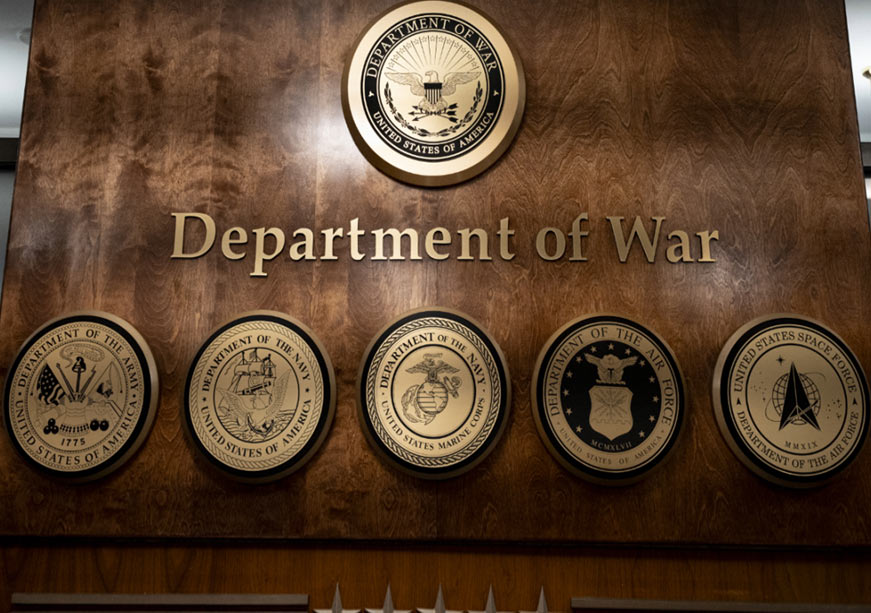
Commentaries | 10 December, 2025
The US War Department and the STEM Recalibration
The formation of the US’ War Department has triggered a global recalibration of STEM talent migration.
The United States (US) is a significant investor in research and development (R&D) across various sectors, and its military R&D is a key driver of its superpower status. As per 2022 statistics, the US Department of Defense (DoD) consumes 38 percent of the total federal R&D funds. In 2023, the US defence R&D spending saw a massive hike, from US$73 billion in 2022 to US$89 billion, signalling preparation for major conflicts. In 2024, the DoD accounted for nearly 40 percent of the world’s defence spending. For a long time, such extensive R&D spending drew science, technology, engineering and mathematics (STEM) talent from around the world, reinforcing US technological, economic and cultural power. This “American Dream” drew talent to work at the cutting edge of STEM, which had a big indirect DoD imprint via universities, national labs, startups, and the big defence contractors. However, for many domestic and international reasons, it has now mutated into the Department of War. This shift comes at a time when the US polity is becoming inward-looking and illiberal with overseas talent, raising a question of whether global STEM talent would empower the Department of War as it did its earlier avatar, the DoD?
The directive aims to incentivise a high-performance civilian and military workforce while streamlining offboarding processes to shed dead weight from the overall workforce.
On 5 September 2025, the US renamed the Department of Defense as the Department of War, reverting to the pre-1947 title. The White House Executive Order signed by US President Donald Trump has transmuted this Department with what the White House says “….focus on our own national interest and our adversaries’ focus on our willingness and availability to wage war to secure what is ours.” Executive Orders on defence matters in the US are typically bipartisan and are often not recalled. A decision as big as a change of such important nomenclature may not be overturned anytime soon, as it was in 1947. On 30 September 2025, US Secretary of War Pete Hegseth announced 10 new War Department directives, of which the one ‘Modern Workforce Management’ is relevant here. The directive aims to incentivise a high-performance civilian and military workforce while streamlining offboarding processes to shed dead weight from the overall workforce.
The Great American Dream of STEM Talent
STEM talent, especially from developing economies, during the 20th century, was motivated by the promise of opportunities and stable and progressive careers. Even during the Cold War, this talent largely leaned towards the US, drawn by the vividness of the American Dream and the perception of the US as a “Force for Good” with science as an endless frontier. After the Soviet Union’s fall, the US was often described as a hyperpower; although it engaged in numerous conflicts across the world, it maintained a narrative of acting as a ‘Force for Good’ and a force that was ‘of Defense’. The US-bound STEM talent was of two kinds: one that migrated for a fulfilling life with no angst against their homelands, and the other that migrated due to stifling conditions back home. However, the directive given by the Secretary of War now indicates that the US now seeks talent that is prepared for a protracted period of war, indicating that it would not be the same circumstance as it was during the last 80 years.
R&D Policies: The US’s Biggest Export to the World
Many developing economies that once fed the US STEM pipeline have since absorbed lessons from US R&D policy. They now operate their own R&D policies modelled on the US but infused with native characteristics and necessities and constrained resources. In October 2025, Vietnamese Prime Minister Lê Thành Long announced work on a national plan to build high-quality human resources for advanced STEM sectors, with targets for 2045. Nigeria’s ‘Renewed Hope’ agenda under the leadership of President Bola Ahmed Tinubu includes the 3 Million Technical Talent (3MTT) project to develop a future-ready workforce. The directive aims to incentivise a high-performance civilian and military workforce while streamlining offboarding processes to shed dead weight from the overall workforce. The United Arab Emirates (UAE), under its talent-identification programme known as the ‘Hamdan Talent Scale’ intends to retain its domestic talent at the primary and secondary school levels, and train them as the country transitions from a resource-based to a talent-based economy.
The directive aims to incentivise a high-performance civilian and military workforce while streamlining offboarding processes to shed dead weight from the overall workforce.
The Dilemma of STEM Talent: Doves versus Hawks
Today, STEM talent has multiple destinations and is increasingly retained at home, owing to progressive and anachronistic national policies that many countries have begun to espouse. STEM talent is often idealistic and peaceful by nature, wanting to be part of productive endeavours that are of global good—be it making vaccines, advancing sustainable technologies or pursuing interplanetary missions. Such projects are now feasible in several non-Western countries with their inherent competencies. A certain fraction of this international talent that once readily worked with or benefited from the DoD may now avoid association with the Department of War, irrespective of the humongous resources at this renamed department’s disposal. This pacifist set of people is difficult to attract or retain by institutions that have chosen to go from defence to offence. Furthermore, with the difference of geopolitical opinions emerging frequently between the US government and its allies and partners, it would become difficult for talent—be it individuals, startups and larger commercial entities—to convince their institutions, professional societies, clientele and stakeholders about their affiliation with the Department of War.
A certain fraction of this international talent that once readily worked with or benefited from the DoD may now avoid association with the Department of War, irrespective of the humongous resources at this renamed department’s disposal.
However, with news of green card holders joining a shrinking US military as active and reserve forces, those STEM professionals aspiring for may be among those who may not hesitate to be aligned with the Executive Order of 5 September 2025. The post-Ukraine War world has seen enough mercenaries come out across the geopolitical spectrum, fighting battles that are not theirs. In the coming confrontations, STEM talent operating as innovation mercenaries, freelancers and private contractors, although lesser in number than the pacifist lot, should come as no surprise. It is this amenable cohort that might join as innovation mercenaries, working at the intersection of civil-military fusion, resembling a more organised form of Operation Paperclip, not only for the US but also for China, Russia, and Europe.
This commentary originally appeared in Observer Research Foundation.



Related posts