 Global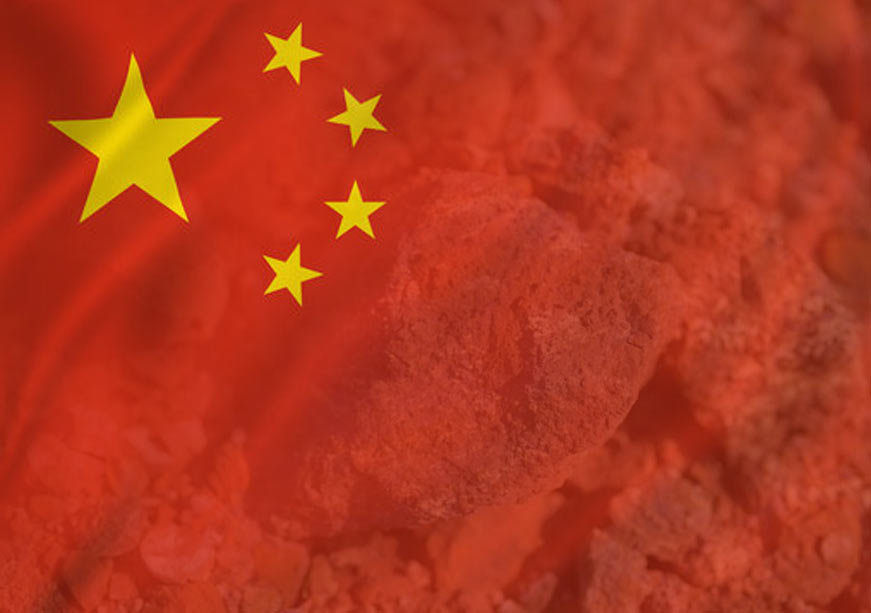
Expert Speak | 05 December, 2025
Challenges to Breaking China’s Critical Minerals Grip
The imposition of export controls that China aimed at Skydio in October 2024 may be considered the first most significant version of Beijing calibrating its export-control regime to impose a high cost on companies rather than reacting symbolically to perceived affronts from Washington. The curtailment was targeted and designed to inflict maximum disruption along crucial supply chains of US-manufactured drones, which incidentally were meant for replenishing Ukrainian war efforts. Despite China’s attempt to weaponise supply chains of critical minerals in 2010 vis-à-vis the Japanese, countries around the world appear to have grasped the seriousness of it only after Beijing reused this tactic in late 2024 with the Skydio episode. Beijing doubled down on this approach in April 2025 by imposing extremely effective bottlenecks in rare earth supply chains in response to Trump’s imposition of tariffs on China.
The discretionary use of export controls has become a point of strategic leverage in Beijing’s economic statecraft. The impact has been immediate, and it has been consequential. A slew of national critical minerals strategy upgrades and international agreements followed globally in response to China’s weaponisation of the critical minerals value chain. However, although the resultant initiatives by countries domestically and in concert with partners and allies marked a change in the status quo, they do not drastically alter the ground reality.
The International Energy Agency’s annual critical minerals outlook suggests that, despite global efforts seeking to de-risk supply chains through diversification, by 2035, China’s share of global processing capabilities, particularly of Rare Earth Elements(REEs), is likely to reduce only marginally to 82 percent from the current 90 percent it stands at. It is crucial to understand that China’s hold over critical mineral resources, particularly its sheer monopoly over processing and refining, is made comprehensive through compelling control across chokepoints along the entire value chain of critical minerals.
The first case in point is the consideration that the amount of Chinese investment across geographies in critical mineral projects globally continues to dwarf the substantive efforts at acquisition being made by other countries, whether individually or in partnership. In the first half of 2025 alone, for instance, the Chinese have committed nearly US$25 billion to copper and aluminium projects in Kazakhstan, country re-appearing in great power calculations based on its impressive resource endowment. Again, China’s access and control over Guinea’s Simadou, the world’s largest mining project, which expects to add nearly 1.2 million tonnes of alumina per year to the global market by the end of 2027, is an important lever in the global competition over critical minerals. Notably, this mine contains high–quality grade of iron ore. Such grades of ore are a necessary raw material for green steel, a product central to the energy transition and decarbonisation drives of heavy-duty and hard-to-abate sectors. By virtue of these two mammoth investments alone, the Chinese continue to single-handedly capture global market share in the domain for the foreseeable future.
Chinese majority ownership stake over the mines of the DRC, Indonesia, Chile, Argentina and Kazakhstan continues to shape the story of how Beijing has established its dominance in the supply chain of critical minerals well beyond its own borders. Importantly, this substantial market share also allows it to substantially undercut price points by flooding the markets with much cheaper and higher quality Chinese-produced alumina and, thereafter, green steel, which is being seen as an important input for effective energy transitions in industry.
Long permitting timelines and complex regulatory compliance requirements pose the next set of challenges for this hope of diversification. Mines, on average, take roughly 15.5 years from the point of discovery to viable production. Acquiring financing through this long gestation period can pose a problem given that the belated Return on Investments (RoIs) is further complicated by issues of domestic political turmoil and local conflicts. Additionally, regulatory and permitting challenges exist across countries that are seekingto expand their mining base. Human resources poses another challenge with skilling being a time-consuming process. When considering the investments and acquisitions that countries, whether through public or private ownership, have been making in mines globally, the real-time implications of each of these bottlenecks are substantial.
India’s recent efforts in this direction illustrates this clearly. The Vedanta group’s CopperTech Metals’ ownership of the high–ore grade Zambian Konkola Copper mines, which aims for an increase from the present 140,000 tonnes to 500,000 tonnes post 2031, is the kind of meaningful development that will eventually begin diversifying the critical minerals supply chain. However, while considering the Indian government’s acquisition of rights to explore copper and cobalt in Zambia in early 2025, one must also factor Zambia’s 34-year average of the time taken from project conception to production. The US itself needs a whopping 29 years for the development of mines, at the present rate of permitting timelines. With such timelines, ending Chinese monopoly is an impractical expectation in the short to medium term. Notably, however, there are concerted efforts underway in countries like Canada to directly address this timeline issue.
The resilience of finance and the risk appetite of countries pose a third set of challenges. Countries such as Australia, Canada, Japan, the US, South Korea and Saudi Arabia have begun investing in the midstream and downstream segments for critical minerals. However, refining and processing of critical minerals is not an industry trajectory that has a linear growth story. Non-market risks have substantial implications for these investments. Instability anywhere along the supply chain will lead to immediate and unavoidable price spikes, especially since a bulk of the investments in these countries presently will be in the form of sunk costs with modest returns. China’s pain threshold and its ability to both mobilise and underwrite its industries by fiat is unique to it. It is not something any other country has been able to actualise as a model of doing business at scale. The critical minerals industry in countries looking to diversify is unlikely to be an exception to this trend.
Finally, resource nationalism within resource-rich states, poses a considerable bottleneck for the newer actors in the domain. The growing local content demands within these countries, has further complicated the efforts at diversification of the critical minerals value-chain.
Improving Diversification Through Coordination
Coordinating sourcing strategies with trusted partners to ensure demand signalling and the long-term filling of order books could prove effective. For countries that are willing to invest in expanding their mining and processing prowess, such an assurance could prove to be a game-changer. Canada, for instance, with its central position across reserves to extraction to refining, could establish a robust supply chain diversification by coordinating and committing to work with the Quad countries which already have inroads in countries such as Malaysia and Indonesia.
Timely engagement with resource-rich countries such as the DRC by offering models of cooperation that are more mindful of local content interests and focused on downstream capacity building of these countries will set them apart from the Chinese model and will prove helpful .
Parallely, in the stockpiling of critical minerals, a more systematic approach to identifying and codifying the specific salience of each of these minerals to the particular national security needs of each partner must be prioritised.
By focusing systematically on recycling, countries like India, Japan, France and the UAE, all of which have already begun coordinating on this issue, could drive effective diversification by developing industrial-scale processes to recover REE traces from e-waste.
Development of alternative chemistries and the adoption of AI to fine-tune mining techniques could also directly challenge China’s human resource expertise in the domain in the medium to long-term.
In seeking to address China’s dominance in the sector, the foundations that underwrite its control must first be appreciated. Until the 1980s, the US was the global leader in REE production. The reasons the US ceded its position to China remain relevant to this day: this sector comes with heavy environmental costs; has a debilitating impact on local water safety; remains labour intensive; and is capital-heavy with longer duration RoIs. Regardless of the national and global conversations around the urgent need for diversification, these factors are based on the hard facts of current technologies and not the more transient determinant of political will. To believe that any meaningful diversification would come anytime soon is nothing but a mark of wishful thinking.
Cauvery Ganapathy is a Non-Resident Fellow at the Observer Research Foundation- Middle East.