 Global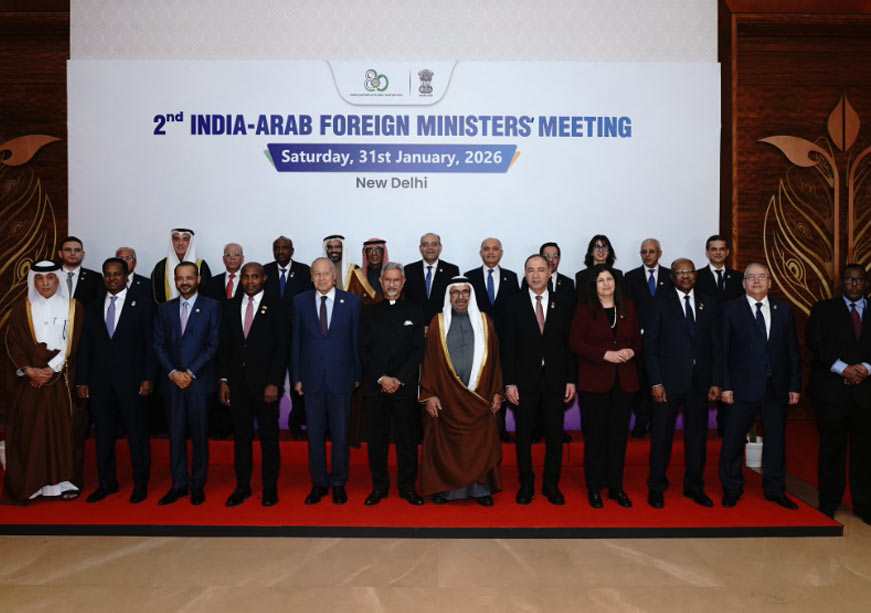
Expert Speak | 09 February, 2026
Navigating Strategic Autonomy: India and the Middle East in a Multipolar World
As the Western-led order frays, India and Middle Eastern powers pursue strategic autonomy—balancing, hedging, and mediating—while navigating constraints and coordination gaps to shape an emergent multipolar order
India recently hosted the second iteration of the India–Arab Foreign Ministers’ Meeting (IAFMM) in New Delhi after a 10-year gap. The first such meeting took place in Manama, Bahrain, in 2016, at a relatively more stable period in history when both regional conflagrations and global rivalries persisted within the confines of a larger global multilateral structure. While the issues under discussion have remained largely similar, the mechanisms addressing them—regardless of their successes or failures—were anchored in a Western-led commitment to a rules-based international system. By 2026, however, it is the West itself that appears to be deconstructing this order, creating space for others to emerge as contenders in shaping the next global system. Whether this moment marks an ‘end’ of the West or enables the ‘rise’ of the rest remains an open question.
Western Order in Flux: Implications for India and the Middle East
The deconstruction of the international order as we have known it for decades has come swiftly. Both the Indian subcontinent and the Middle East have found themselves in the wake of this new reality, with the former at an impasse with Washington over tariffs and trade agreements, while the latter grapples with erratic military and defence partnerships that have endured between Arab powers and the United States (US) since the 1940s. By 2026, the cracks in this Western multilateral order have widened considerably. For New Delhi, Abu Dhabi, and Riyadh, among others, this moment presents an opportunity to step up and shape the future of a renewed political order; questions remain over whether these powers are prepared to step in or whether this moment of change has arrived prematurely.
By 2026, however, it is the West itself that appears to be deconstructing this order, creating space for others to emerge as contenders in shaping the next global system.
India’s hosting of Arab leaders helped reinforce its position on Palestine, which India officially recognised in 1988. However, New Delhi has been engaged in a balancing act in the Middle East over the past few years, shaped by both the war in Gaza and renewed tensions involving Iran. As the Arab summit was underway, India’s Deputy National Security Adviser Pavan Kapoor arrived in Iran, amid heightened tensions with the United States as President Donald Trump deployed a large military armada around the country to pressure Tehran into negotiations. Simultaneously, reports indicated that Prime Minister Narendra Modi may visit Israel later this month.
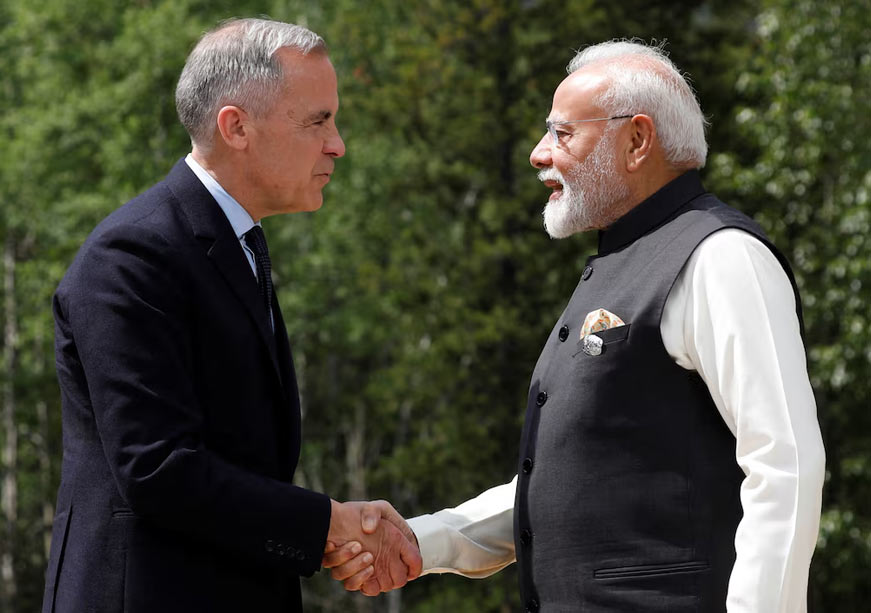
Recently, at the World Economic Forum in Davos, Switzerland, Canada’s Prime Minister Mark Carney, himself facing the ire of US President Donald Trump—disrupting North America’s otherwise stable neighbourhood relations—delivered a speech in which he admitted that the story of the international rules-based order was “partially false”. The Canadian leader also noted that countries involved in shaping the post–World War II architecture, including Canada, benefited from the system across domains ranging from trade to security, underwritten by US hegemony.
Divergent Paths to Strategic Autonomy: India and the Middle East
Over the past few years, the concept of ‘strategic autonomy’ has both challenged and revitalised debates on foreign policy in India and the Middle East. The initial shifts were first evident at the United Nations (UN) in 2022, when Arab powers did not explicitly side with the US and Europe against Russia, seeking to maintain a degree of neutrality as the war in Ukraine unfolded. While this was a familiar diplomatic approach for India, a long-standing advocate of non-alignment, the consequences of adopting a similar strategy in the Middle East were far more significant. Gulf powers sought strategic autonomy even as they remained tied to US security guarantees—a constraint largely absent for New Delhi.
Over the past few years, the concept of ‘strategic autonomy’ has both challenged and revitalised debates on foreign policy in India and the Middle East.
India’s foreign policy choices are rooted in its geographic realities and long-standing diplomatic ethos since its independence in 1947. It generally refrains from joining blocs, overtly taking sides, or becoming a subordinate in alliance systems. India is a member of the Quad with the US, Australia, and Japan, while also participating in the Shanghai Cooperation Organisation (SCO) and BRICS, where Russia and China play prominent roles. Illustrating this stance through its defence infrastructure, the Indian Air Force is integrating BrahMos missiles, jointly developed with Russia, on its fleet of French-made Mirage 2000 fighter jets, which also carry Israeli-made weapons such as SCALP-2000 bombs.
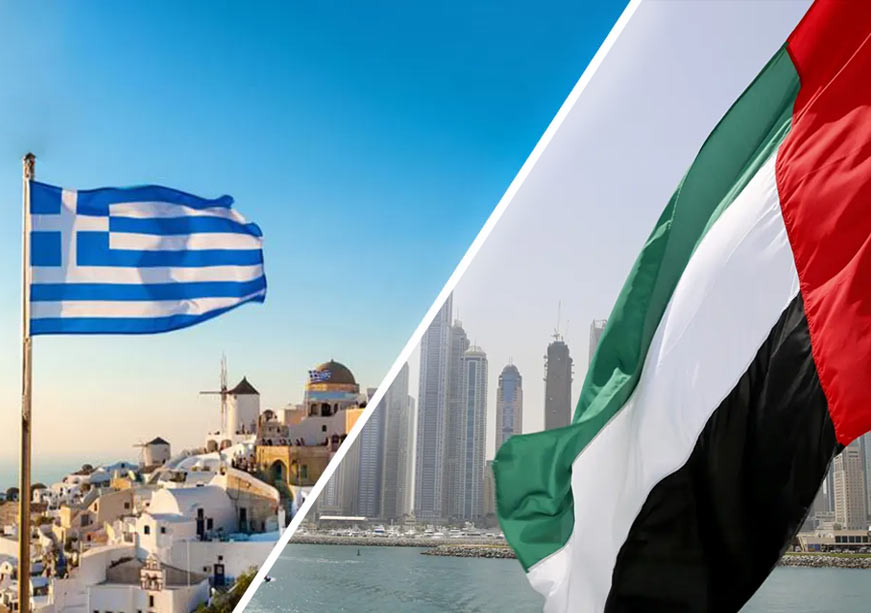
In the Middle East, the ideation of strategic autonomy has taken a different route. Countries like Qatar, the United Arab Emirates (UAE), and Saudi Arabia have increasingly positioned themselves as valuable middle powers, capable of mediating larger conflicts. To some extent, this explains why maintaining a relationship with Moscow following its conflict with Ukraine remains important. Even Türkiye, a member of NATO, has adopted a similar path, seeking to leverage its unique geographic advantage, particularly in the Black Sea region, as a hub for diplomacy. Others, including Doha, Riyadh, and Abu Dhabi, have already established themselves as new-era mediators on critical geopolitical issues, such as Russia, Ukraine, and Iran.
These political and diplomatic manoeuvres are occurring amid significant challenges, requiring states to remain nimble as they seek to consolidate their positions and interests. Arguably, India has a higher stake, being home to more than 1.4 billion people and a US$ 4.18 trillion economy. However, its appetite for risk and hedging, and its reluctance to appear overly cautious at a moment when the idea of ‘multipolarity’ demands action, shape its approach. India has long advocated multipolarity, meaning no single hegemonic control but multiple centres of power, and sees itself as one such centre in Asia. Across its shores from the Arabian Sea, the push and pull to become a pole of power is also well underway in the Gulf. An earlier design envisaged Arab powers, Israel, and Iran as the three poles of influence. However, shifts in power dynamics have created uncertainty and disagreement over leadership within the Arab world.
India has long advocated multipolarity, meaning no single hegemonic control but multiple centres of power, and sees itself as one such centre in Asia.
Coordinating a Multipolar Future: Challenges and Opportunities
Finally, the question arises whether emerging powers have been caught off guard in preparing to fill the vacuums left by the Western world. The answer is likely yes. Scholars such as Matias Spektor argue that, while Carney’s critique of Western hypocrisy may be valid, the world could come to miss the existing order, and transnationalism as a future organising principle could prove destabilising.
How middle or regional powers will coordinate to fill the emerging gaps remains unclear. This presents a potential opportunity to foster a new dialogue within existing forums such as the IAFMM. New Delhi, more than any other actor, is well placed to take up this proposition and revitalise these currently directionless diplomatic mechanisms. If India and the Middle East represent two poles of power in a multipolar construct, efforts to work together in shaping the next global order should begin without delay.
Kabir Taneja, Executive Director, ORF Middle East.