 Global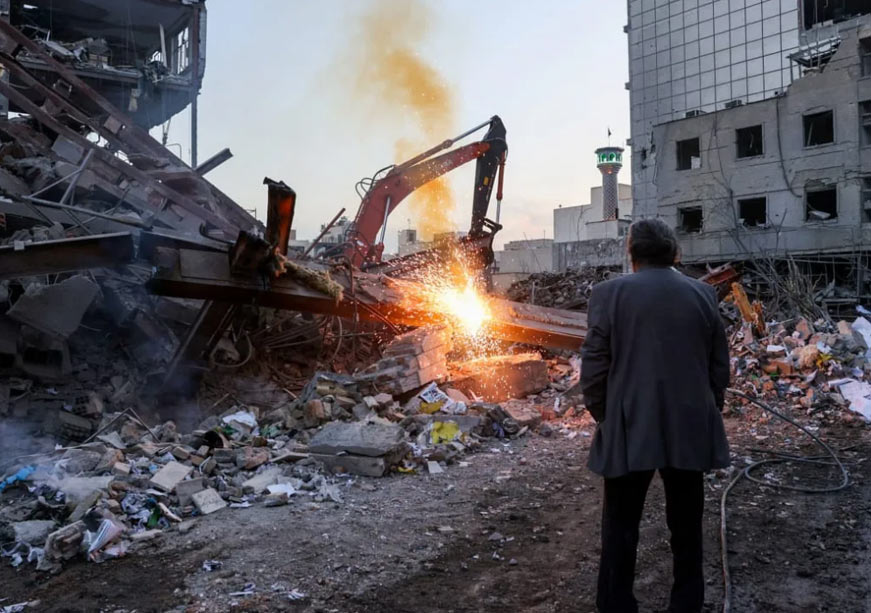
Expert Speak | 11 March, 2026
Collateral Reconfiguration: Will the US-Israel Conflict with Iran Reshape Gulf Strategic Calculus?
Spotlight
- Gulf states experienced repercussions from a conflict they actively sought to prevent. Iranian missiles struck cities, airports and energy infrastructure despite assurances their bases would not be used against Tehran.
- Competing narratives are obscuring underlying realities — President Trump has altered timelines, Iran has denied striking civilians, and Israel has called it a regional transformation. In the process, trust has eroded leaving Gulf states to bear the costs.
- The Abraham Accords and American reliability are both under strain. Gulf leaders are increasingly differentiating between personal diplomacy with President Trump and the question of genuine strategic dependability
In the early hours of February 28, the United States (US) and Israel launched what they described “pre-emptive” strikes on Iran. This marked the second major military confrontation in less than a year, following last June’s twelve-day Iran-Israel conflict in which Washington intervened, deploying B-2 Spirit bombers in deliberately “limited strikes” on Iranian nuclear facilities.
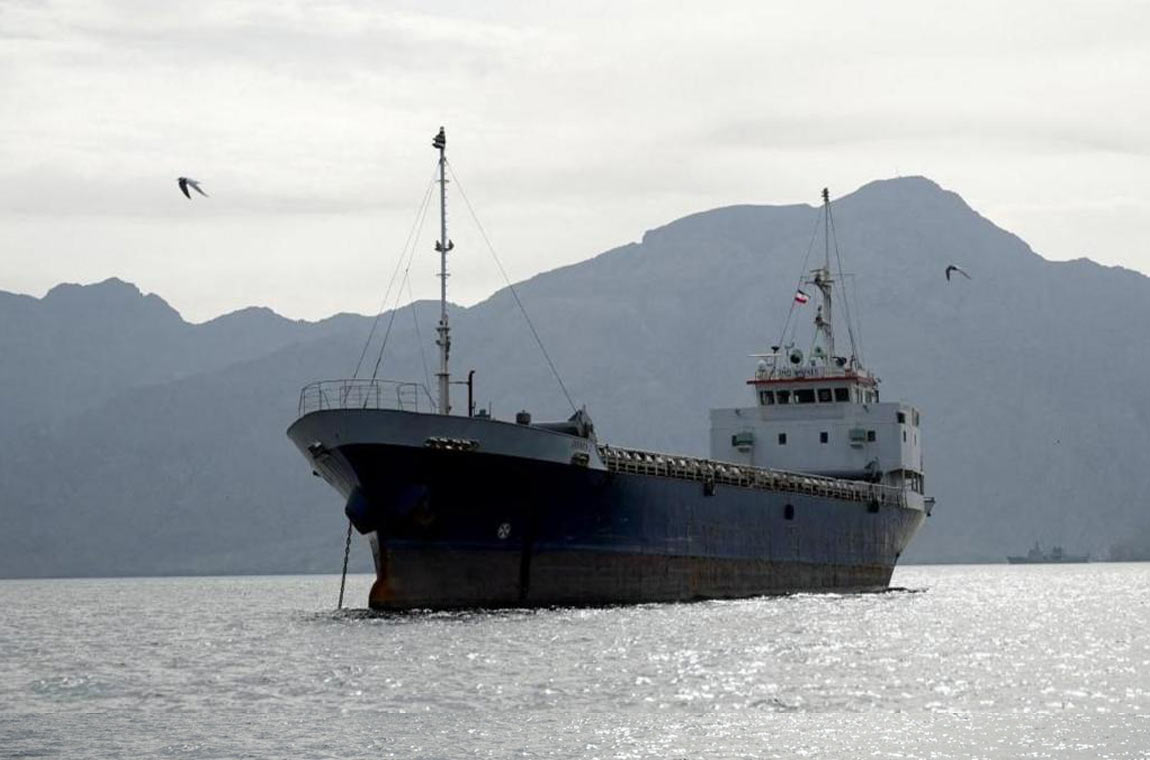
Unlike last June, the current conflict is broader in scope and existential in nature. In an eight-minute address, President Trump outlined objectives that Tehran interpreted as a death sentence: eliminating Iran’s missile capabilities, dismantling its nuclear program, and regime change. Facing annihilation, a cornered Tehran abandoned the calculated restraint it showed last June and struck back with disproportionate force — targeting not only US bases hosted by its neighbours, but civilian and energy infrastructure alike. Qatari Energy Minister Saad Al-Kaabi warned that a prolonged conflict could “bring down the economies of the world,” with Gulf energy exporters potentially suspending production within days and oil prices rising to US$150 a barrel.
Tehran’s strategy of attrition is visibly testing Gulf patience and defensive stockpiles — matched so far with a willingness to endure, albeit with limits.
For Gulf states long regarded as relatively stable actors in a region characterised by fragile and failed states, the current conflict has delivered a double shock: an immediate test of their resolve against a volatile neighbour, and a deeper reckoning with their strategic relationships with Washington. Twelve days in, with air and sea connectivity severely disrupted and President Trump showing no sign of moderating his rhetoric, Gulf leaderships find themselves navigating a precarious balance between containment and active self-defence.
Containment at the Brink?
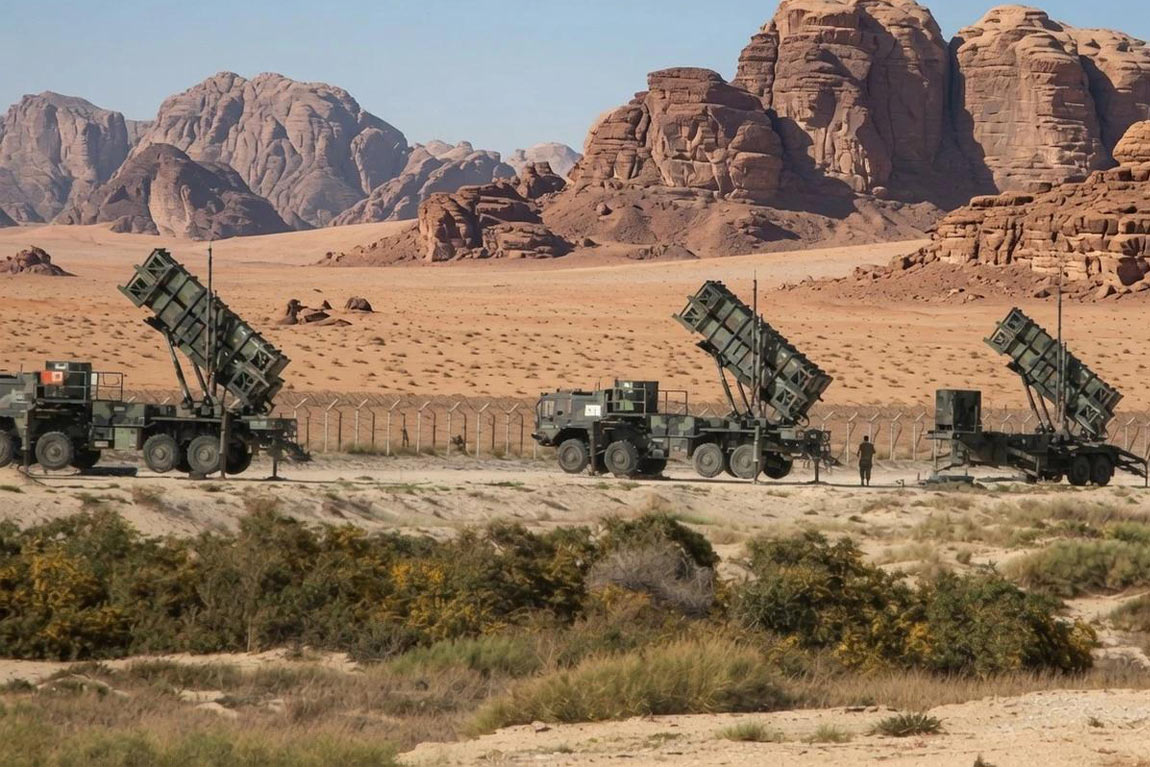
Tehran’s strategy of attrition is visibly testing Gulf patience and defensive stockpiles — matched so far with a willingness to endure, albeit with limits. By March 6, they had confirmed over 2,150 interceptions of Iranian drones, missiles, and even fighter aircraft.
Iranian President Masoud Pezeshkian’s March 7 apology for attacking neighbouring states was perceived as lacking credibility. Despite repeated official denials that Iranian strikes targeted US-affiliated infrastructure, Dubai’s airport was targeted shortly after the statement, as were Bahrain’s desalination plant and fuel tanks at Kuwait’s international airport. As reports emerged of Tehran’s largest oil depot set ablaze by Israeli strikes, Gulf neighbours anticipated that Iran would escalate further, rather than de-escalate.
Two developments are particularly noteworthy. First, Iran’s weakened command structure has produced visible fissures between its political and military establishments. Pezeshkian’s statement was almost immediately contradicted by the Islamic Revolutionary Guard Corps (IRGC) and the Parliament Speaker — a public unravelling that signals the absence of unified leadership. A regime in survival mode is a dangerous one precisely because it cannot be held to its own word. Deliberately targeting civilian utilities — desalination plants, fuel depots, airports — is not collateral damage. It constitutes a strategy of economic coercion.
Israel stands as the sole clear beneficiary of this episode, a point underscored by President Isaac Herzog, who stated that the objective is not regime change but the transformation of the Middle East.
Second, Gulf resolve is being pushed to its limits. The region’s response has so far been confined to defensive interceptions and sharp diplomatic language — but that posture is under growing strain. Saudi Arabia has warned of possible retaliation. The United Arab Emirates (UAE) President Mohammed bin Zayed, visiting citizens and residents wounded by Iranian strikes, delivered perhaps the most pointed statement by any Gulf leader since the conflict began — asserting that the UAE is “no easy prey” and that adversaries should not be “misled by the UAE’s appearance.” Abu Dhabi is also reportedly considering freezing Iranian assets held in the country. For a region that has carefully avoided belligerent rhetoric, these are significant signals.
A War of Narratives
Since the start of the US-Israel campaign, what has been most conspicuous is a contest of competing narratives — and the collapse of trust they reveal. President Trump has offered varying timelines for an outcome. Iranian officials maintain their strikes target only American infrastructure, even as evidence repeatedly contradicts them. Between Washington and Tehran, trust has deteriorated completely. Not once but twice now have attacks occurred in the middle of active negotiations — first last June and again in this episode.
For the Gulf states, years of painstaking investment in rapprochement with Tehran have been steadily eroding with each passing day of the conflict. Gulf capitals, particularly Muscat and Doha, had cultivated patient mediation channels that were quietly gaining ground when the hostilities began. Few captured this better than Qatar’s Prime Minister Mohammed bin Abdulrahman al Thani, who described Iran’s attacks on Gulf states as a profound betrayal that “destroyed everything.” This serves as a reminder that force chosen at a diplomatic inflection point does more than cause casualties. It kills mediation itself.
Equally telling is how Israel has drawn America deeper into its own strategic ambitions. While Israeli strikes on Iran continue unabated, Prime Minister Netanyahu has promised “new surprises.” Israel Defense Forces (IDF) Chief Eyal Zamir has declared no end date for the parallel theatre of operations in Lebanon against Hezbollah. President Trump, who could declare victory and halt the campaign, has instead boasted that Iran was being “beat to hell.” The result is a cascade of poor strategic decisions — with one conspicuous exception. Israel stands as the sole clear beneficiary of this episode, a point underscored by President Isaac Herzog, who stated that the objective is not regime change but the transformation of the Middle East.
Recalibration on the Horizon
Questions about Gulf complicity in the assassination of Supreme Leader Ali Khamenei have persisted — without evidence — although a reasonable assessment is that they were caught off-guard. The suspicion has nonetheless lingered, with Bahrain and the UAE bearing the brunt of it given their normalised relations with Israel. The assumption that the Abraham Accords translate into full strategic collaboration with Israel is a considerable leap — one that the Iranian regime itself may have internalised to justify the scale of its aggression. It is a damaging conflation, and one that Israel’s conduct has done little to dispel. An emboldened Israel in 2025 saw no problem in delivering strikes across the region: Gaza, Iran, Lebanon, Qatar, Syria, and Yemen all experienced the consequences. The current conflict represents a further downward spiral of events, one that carries a cost — and the Abraham Accords may be part of the bill.
Unlike October 7, 2023 — when Arab signatories held firm despite Israel’s strikes on Gaza, giving Washington confidence in the Accords’ durability — the current war presents a different test.
Recalibrations are in motion — or will be crystallised by the end of this episode. First, the UAE and Bahrain will prioritise intra-Gulf cohesion above all else. If deepening the Accords risks fracturing Gulf Cooperation Council (GCC) unity at a moment when collective defence has proven to be the region’s most consequential asset, it will be quietly shelved. The GCC’s coordinated response to Iranian strikes has demonstrated that solidarity, not bilateral arrangements with Israel, takes precedence.
Second, Washington’s role as the principal guarantor and facilitator of the Abraham Accords has been severely complicated. Unlike October 7, 2023 — when Arab signatories held firm despite Israel’s strikes on Gaza, giving Washington confidence in the Accords’ durability — the current war presents a different test. Iran is now a direct threat to those same states. With fingers pointed at Washington for aggression that Trump himself authorised, he will find little appetite for any new peace architecture.
Third, it is worth singling out Bahrain for its acute domestic pressures amid the conflict. Bahrain faces something more volatile than anti-Israel sentiment — growing sympathy for Iran among its Shia population, even as Iran has revealed itself as an open aggressor. If Bahrain concludes that distancing itself from Israel neutralises that threat, the decision will be straightforward. What was once a foreign policy disagreement risks hardening into something that cuts at national cohesion itself.
A Friend in Need is a Friend Indeed
The net result is a regional freeze on ambition in Gulf-Israel relations, particularly when conflict is ongoing — and even in the immediate aftermath. Political space for new agendas is put on hold. The priority now is managing Iran, limiting economic and social fallout, and recalibrating accordingly. Israel may have distanced the Gulf from Iran — but in doing so in a reckless manner, it may have also revealed the true scale of its regional ambitions.
Second, the perennial question of American reliability — Gulf leaders who invested heavily in personal relationships with Trump may now find that personality convergence and strategic dependability are not the same thing.
For the Gulf, the calculus is more conflicted than it appears. Closing ranks with Washington — their ultimate security guarantor — is the logical response as Iranian missiles remain bound for their cities. Yet what weighs heavily is that Gulf states did embark on a process that echoed President Obama’s 2016 call to “share the neighbourhood” — and still found themselves targeted.
A further burden is emerging: the cost asymmetry of this conflict. Defending against Iranian drones and missiles is significantly more expensive than producing them, and that gap compounds with every wave. Yet the calls for help have been answered — Italy, France, South Korea, and Ukraine have all stepped up, deploying or expediting air defence systems, fighter jets, missile batteries, and drone warfare expertise to the region. Who shows up when it matters will not be forgotten — and will quietly reshape post-conflict Gulf partnerships.
Ultimately, two convictions cut deeper. First, that Washington has once again been drawn into a conflict shaped by Israel’s strategic making, with Gulf states left to absorb the consequences. Second, the perennial question of American reliability — Gulf leaders who invested heavily in personal relationships with Trump may now find that personality convergence and strategic dependability are not the same thing. Should Washington persist with adventurism, Gulf states will not hesitate to quietly review their multi-billion dollar commitments — a sobering pressure point for a self-styled dealmaker who may yet discover that reliability, not personality, is the currency that counts in this region.
Clemens Chay is Senior Fellow for Geopolitics at ORF Middle East.
Mahdi Ghuloom is a Junior Fellow for Geopolitics at ORF Middle East.