 Global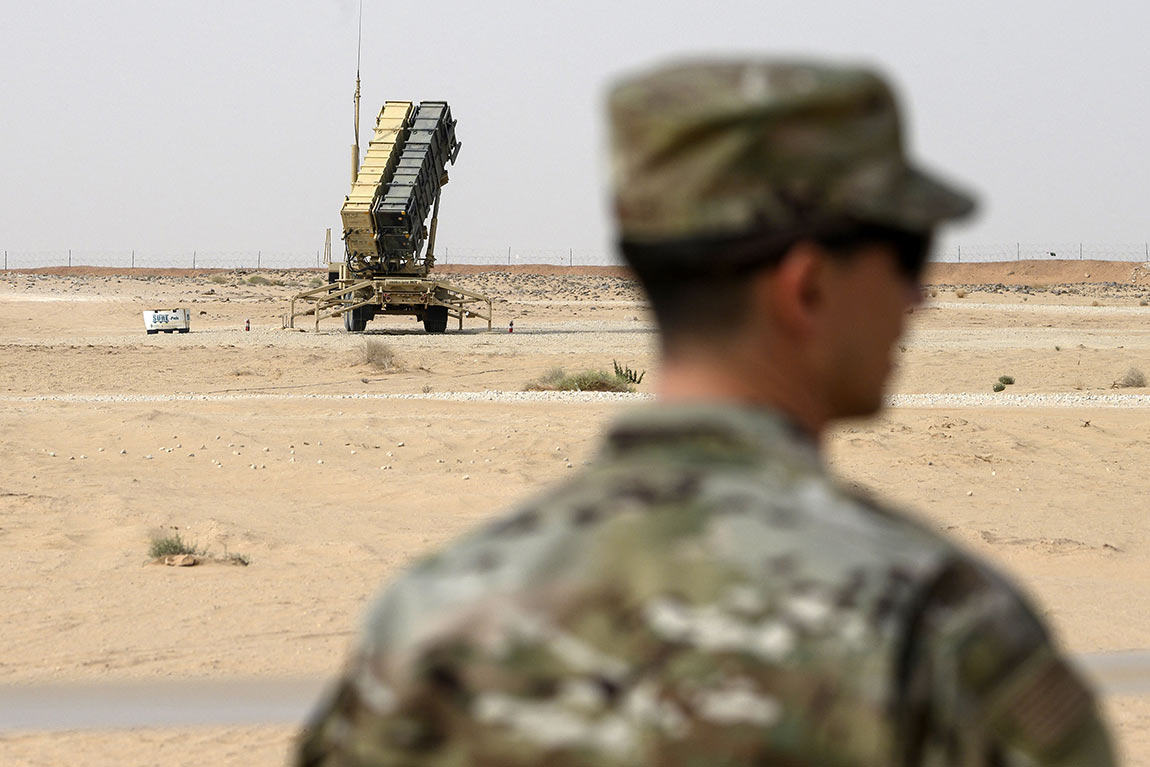
Expert Speak | 29 June, 2026
Reading the Future of Defence Strategies in the Middle East
Spotlight
- Complexities regarding regional defence in the Middle East are not so much about the future of American power in the region as they are about the challenges brought about by diversification.
- Opportunities that arise during a conflict, while providing short-term gains, can also offer long-term access based on strong bilateral ties.
- Indigenisation will be a core by-product of the defence diversification.
The recent Memorandum of Understanding (MoU) signed between the United States (US) and Iran has paused military hostilities in the Middle East for now. Not all wars fundamentally reshape the global order, and despite a gamut of analyses claiming the opposite, neither did this one. From oil shocks to critical trade waterways being choked, none of the predictions about the repercussions of this conflict are new. The only measurable shock, so to speak, was the direction and actions of American foreign policy.
In March 2026, President Donald Trump said in an interview that it was a big surprise to see Gulf states being targeted as a response to US and Israeli air strikes against Iran. The strategy employed by the Pentagon to strike Iran could contest this claim. Most of American fire and surveillance power was based in Israel, Saudi Arabia, or Jordan, or at sea on board its powerful aircraft carriers. The largest US military base in the region, Al Udeid Air Base in Qatar, a mere 190 kilometres from the Iranian coast, was evacuated in February this year. The clearing out of such a significant host of military equipment was one of the first strong signals that US-led attacks were imminent. The Gulf states ended up being mere buffer zones rather than either offensive or defensive partners.
The largest US military base in the region, Al Udeid Air Base in Qatar, a mere 190 kilometres from the Iranian coast, was evacuated in February this year.
The Iranian calculation to take advantage of the said buffer zones was based on its lack of technological edge. Politically, the strikes against Qatar, Bahrain, the United Arab Emirates (UAE), Kuwait, and Saudi Arabia were positioned as targeting American military and tactical infrastructure. The UAE, a member of the Abraham Accords that normalised relations with Israel in 2020, bore the brunt of Iran’s attacks, with over 2,200 projectiles fired at it. Iran knew that its missiles would not break Israeli or American air defences beyond a point. In the past three months, 42 to 46 US airframes were lost or damaged— mere dents infrastructurally, but deep gashes strategically.
The complexities regarding regional defence are not just about the future of American power in the region but primarily the challenges that diversification brings. The US-Israel conflict with Iran has shown that other major powers, including those in Europe, have next to no capacity or political intent to get embroiled in the Middle East’s intertwined regional dynamics. Evidence suggests that instead, countries like China are taking the current crisis as an opportunity to build parallel systems to those controlled by the West in spaces such as financial mobility, offering the yuan as an alternative to the dominance of the US dollar. Iran has long propagated bypassing the hold of the US dollar in forums such as BRICS and the Shanghai Cooperation Organisation (SCO).
Defining Defence Diversification
Defence is not just about the transfer of weapon systems; that is the end of a long chain of political and financial calculations. A long-term American commitment to Saudi Arabia, predominantly built around the idea of oil for security, was forged 81 years ago in February 1945 during a meeting between Saudi King Abdul Aziz Ibn Saud and US President Franklin D. Roosevelt on board the USS Quincy in the Suez Canal. Today, this agreement is unravelling, and the Gulf is looking to create its own clusters of security, with the US remaining critical to it, but not exclusive.
Defence diversification will be a relatively new challenge for the region. Until now, the US was the most viable defence option for the Middle East, thanks to its deep defence industrial complex and unilateral ownership of associated technologies. Qatar, Bahrain, Saudi Arabia, Egypt, Kuwait, and Israel all enjoyed America’s Major Non-NATO Ally (MNNA) tag. In 2024, the UAE was classified as a Major Defence Partner. These classifications now stand contested after the Gulf states were targeted by Iran; even the latest MoU does not prioritise their security.
The Gulf’s response to these ‘new’ realities has been visible on multiple fronts. This has ranged from deeper strategic cooperation between Saudi Arabia and Pakistan and rapid de-escalation of political postures between Saudi Arabia and Türkiye to military exercises between Türkiye and Egypt. Qatar, despite having been attacked by both Israel and Iran, is back in the mediation game, an eventuality it was perhaps forced to mobilise. Non-Western defence partnerships may now become the norm. The UAE successfully employed South Korean air defence systems to tackle Iranian drones and missiles. It has also opted for the French Dassault Rafale jets to form the backbone of its fighter fleet. Gulf states are also exploring how to integrate Ukraine’s notable experience with drone warfare in its ongoing conflict with Russia.
A long-term American commitment to Saudi Arabia, predominantly built around the idea of oil for security, was forged 81 years ago in February 1945 during a meeting between Saudi King Abdul Aziz Ibn Saud and US President Franklin D. Roosevelt on board the USS Quincy in the Suez Canal.
This diversification will provide opportunities to newer players as well. China already has a history of defence sales in the region. The advent of grey-zone and technology-led warfare, from cyber warfare to unmanned vehicles, will give Beijing a bigger opening. This will also allow countries like India the opportunity to enter a new, albeit hyper-competitive space. A recent report highlighted that New Delhi is looking at the UAE as a potential market for its BrahMos missile system, a joint venture between India and Russia,. India and the UAE also embarked on a renewed strategic partnership in January 2026, before the conflict started. Both the Indian prime minister and the external affairs minister have visited Abu Dhabi since, and defence cooperation, as a by-product of India’s increasing defence exports, has been a prominent offer.
A Complex Theatre
Opportunities that arise during a conflict are tempting, yet not easy. While often based on short-term gains, they can also offer long-term access through strong bilateral ties. However, they also present certain challenges. For instance, regarding the BrahMos missile, since it was created as a joint venture with Russia, despite it being predominantly an Indian system, Moscow would have a say in its sales prospects. New Delhi will have to skilfully navigate the UAE’s agreement with Ukraine and Iran’s proximity with Russia.
India is not alone in this boat. Even South Korea might face a similar conundrum, with its defence industry intricately feeding into and from its American counterpart. China, on the other hand, has strong indigenisation built out of necessity, a core by-product of the defence diversification the Gulf will seek. Given that this is an area where some countries have already made progress, opportunities of co-production, joint research and development, and co-funding related technologies will abound.
Finally, both the US and European defence industries are expected to remain competitive in the Middle East. But the Gulf’s desire for rapid diversification will concurrently take centre stage as well. This will allow defence industries in nascent stages an opportunity to scale up quickly and attract new capital. Who succeeds will ultimately depend on which states and their industries are nimble and work efficiently in tandem to take full advantage of this strategic opening.
Kabir Taneja is Executive Director, ORF Middle East.