 Global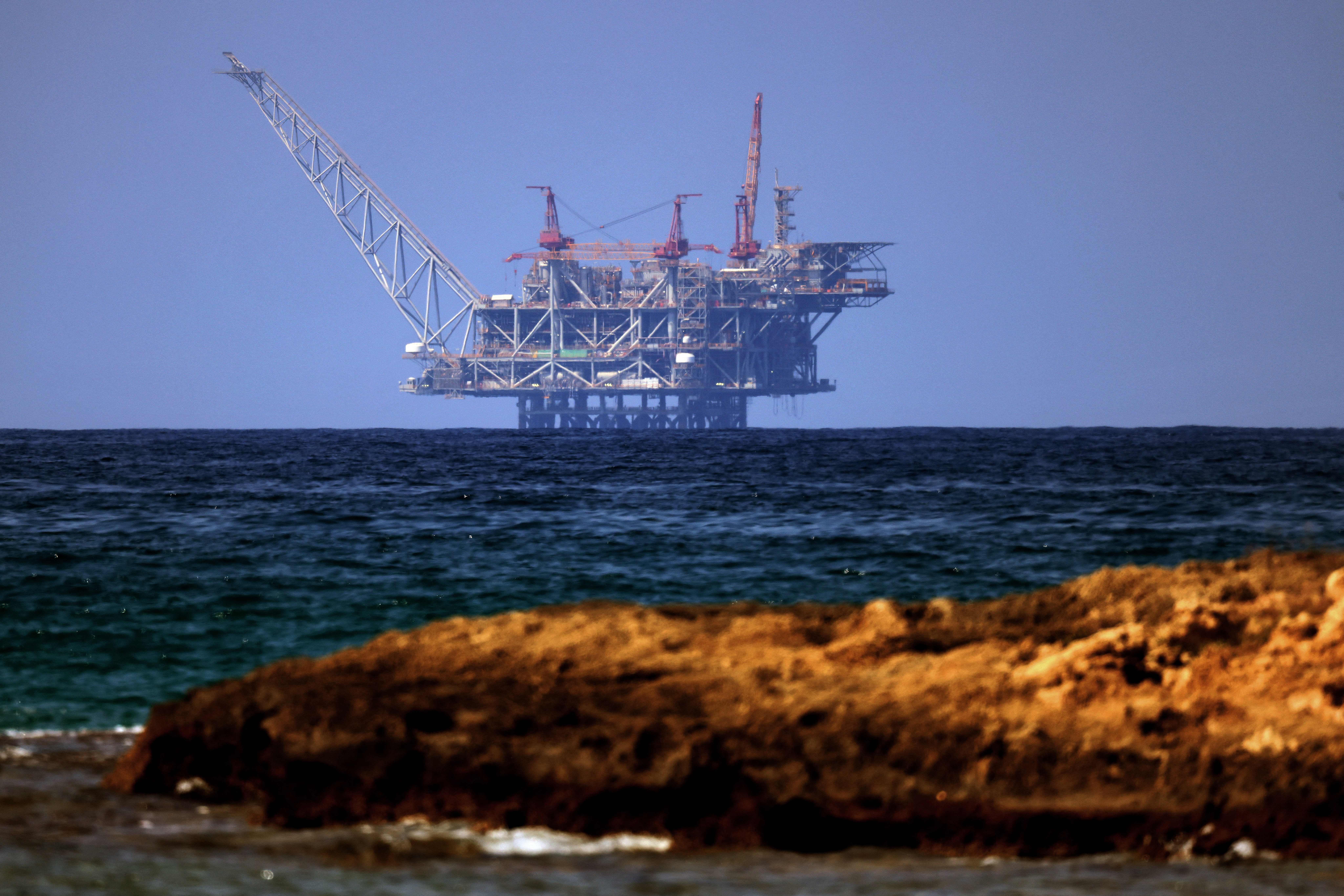
Expert Speak | 06 July, 2026
Can Geoeconomics and the Gulf Tame Eastern Mediterranean Tensions?
Spotlight
- Marked by painful collective memory, assertive subregional powers, and contested energy resources, the Eastern Mediterranean has endured relentless violence since 7 October 2023.
- While energy interdependence has occasionally helped dampen regional frictions, unresolved political disputes and the weaponisation of linkages can just as easily incite confrontation.
- A mix of national autonomy, strategic hedging, Arab coordination via jointly managed network infrastructure, and constructive engagement from Gulf states can offer a pathway to temper tensions.
In June 2024, former Hezbollah Secretary-General Hassan Nasrallah surprised many when he threatened to target Cyprus, accusing it of providing logistical support to Israel. While observers framed the wars in Gaza and Lebanon as a confrontation between United States (US)-backed Israel and the Iran-aligned ‘Axis of Resistance,’ Nasrallah’s threat underscored that the regional conflagration is also an Eastern Mediterranean affair.
Since 7 October 2023, the subregion, which stretches from Libya to Greece, has been the theatre of near-daily bombing, with none of the ceasefires resulting in an actual pause in either Gaza or Lebanon. In March 2026, beyond the Arab Levant, the targeting of the British Sovereign Base Areas of Akrotiri and Dhekelia in Cyprus by Iranian-made drones, as well as the interception of four ballistic missiles in Turkish airspace, illustrate how the Eastern Mediterranean is engulfed in Middle East tensions.
A High-Density Geography
Physically and symbolically, the Eastern Mediterranean is a saturated space. Thousands of Greek islands lie clustered off the Turkish coast, a geography that has fuelled tensions between the two nations over the delimitation of their maritime boundaries. Cyprus effectively functions as an unsinkable aircraft carrier only tens of kilometres from West Asia.
Riparian nation-states are shaped by traumatic collective memories, creating a fertile ground for adversarial geopolitics. In the bloodlands of the south (Anatolia, the Balkans, the Caucasus, and the Levant), national narratives carry the imprints of ethnic cleansing, genocides, and massacres that unfolded from the nineteenth century onwards and continue to inform contemporary tensions. In 1974, Turkish Cypriots’ fear of forced displacement shaped their support for Türkiye’s intervention in northern Cyprus. In recent years, conflict has wrought heavy socioeconomic destruction—in 2022, the Syrian gross domestic product (GDP) stood at roughly one-third of its 2011 level.
Meanwhile, economic growth and technological upgrades have boosted the assertiveness of the two main subregional powers, Israel and Türkiye, by expanding their material capacity to project power, and reshaped their political economies, unbalancing them in the process. In nominal terms (current US$), Israel’s GDP roughly doubled between 2012 and 2024. Türkiye’s manufacturing (value-added) more than quintupled between 2002 and 2024, driven in large part by the rise of small- and medium-sized enterprises in the conservative heartland—the “Anatolian Tigers.”
In nominal terms (current US$), Israel’s GDP roughly doubled between 2012 and 2024. Türkiye’s manufacturing (value-added) more than quintupled between 2002 and 2024, driven in large part by the rise of small- and medium-sized enterprises in the conservative heartland—the “Anatolian Tigers.”
Finally, the discovery of offshore gas fields, such as Tamar (2009) and Leviathan (2010) off Israel, Aphrodite (2011) off Cyprus, and Zohr (2015) and Nour (2019) off Egypt, has added a further layer of complexity. Gas politics now has the potential either to compound existing rivalries or provide incentive for cooperation and de-escalation.
A Dialectic of Containment and Integration
The geopolitics of the Eastern Mediterranean has balanced the containment of subregional powers with perceived hegemonic designs with geoeconomic integration efforts to tame tensions. In the process, new links have been forged between the subregion and the Arabian–Persian Gulf. Three phases stand out.
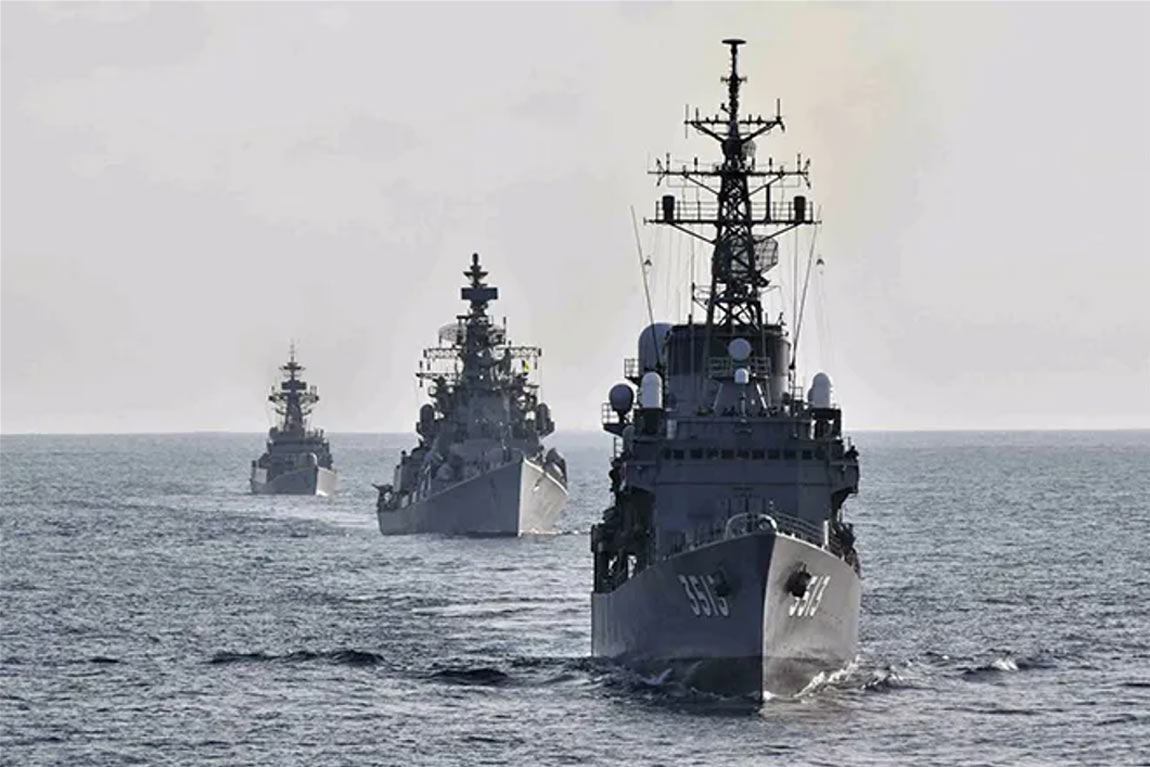
From 2015 to 2021, coalition-building appeared geared towards containing Türkiye. At the time, Ankara’s assertiveness and its support for the Muslim Brotherhood worried its neighbours. Riparian states institutionalised regional mechanisms across energy, political dialogue, and security, including the Medusa naval drill (2015), the annual Cyprus–Greece–Israel leaders’ summit (2016), and the East Mediterranean Gas Forum (2019). Cyprus, Greece, and Israel signed agreements to build an EastMed Gas Pipeline (2020) and a submarine power cable, the Great Sea Interconnector (2021). Months after the signing of the Abraham Accords, the Philia Forum convened in Athens seemed to outline an anti-Turkish bloc, bringing together Bahrain, Cyprus, Egypt, France, Greece, Saudi Arabia, and the United Arab Emirates (UAE).
From 2021 to 7 October 2023, with few subregional allies, Türkiye pursued a broader wave of regional reconciliation with geoeconomic undertones. Its relations normalised with Abu Dhabi, Riyadh, and later Tel Aviv and Cairo. Agreements signed included a UAE–Türkiye US$5 billion currency-swap deal (2022), a US$5 billion Saudi deposit in the Turkish Central Bank (2023), a US$3 billion Saudi order of Turkish weapons (2023), and billions in UAE commitments to the Turkish economy. In September 2023, Turkish President Recep Tayyip Erdoğan met with Israel Prime Minister Benjamin Netanyahu on the sidelines of the United Nations General Assembly. The same month, the India–Middle East–Europe Economic Corridor (IMEC) was announced.
Israel’s response to the 7 October attacks prompted a geopolitical reshuffle. In December 2025, the convening of the 10th trilateral summit between Cyprus, Greece and Israel in Jerusalem signalled the resilience of a format bound by cooperation across energy, security, technology, and continued commitment to the IMEC. Second, a regional quadrilateral of majority-Sunni states took shape: following an initial phase of rapprochement starting in late 2025, from March 2026 onwards, Egypt, Pakistan, Saudi Arabia, and Türkiye have coordinated their responses to regional developments, having met four times at the time of writing.
Such configuration explains why analysts and political leaders often perceive the subregion, as well as the wider Indo-Mediterranean, as ripe for confrontational bloc politics. A week before the 28 February 2026 offensive on Iran, Netanyahu called for the creation of a “hexagon of alliances” linking India as well as African, Arab, Asian, and Mediterranean partners to Israel.
Such configuration explains why analysts and political leaders often perceive the subregion, as well as the wider Indo-Mediterranean, as ripe for confrontational bloc politics. A week before the 28 February 2026 offensive on Iran, Netanyahu called for the creation of a “hexagon of alliances” linking India as well as African, Arab, Asian, and Mediterranean partners to Israel. A few weeks earlier, his rival Naftali Bennett described Türkiye as the “new Iran.” Israeli analysts and cabinet members have warned of a new “Sunni strategic threat”. Symmetrically, in April 2026, Turkish Foreign Minister Hakan Fidan accused Cyprus, Greece, and Israel of forming an anti-Islam alliance, and Türkiye vehemently reacted to the signing of a Cyprus–France defence agreement in June.
The Limits of Polarisation
The emergence of a subregional energy system underpinned by network infrastructure underscores the limits of reasoning in terms of rigid bloc politics. Commercial links have arguably contributed to tame subregional tensions.
For instance, in December 2025, Israel approved a US$35 billion gas export agreement with Egypt, the largest in its history, securing Egyptian access to Leviathan field supplies through 2040. Israel also provides more than half of Jordan’s natural gas, which generates over two thirds of the kingdom’s electricity. The gas supply exchange agreement announced by Jordan, Lebanon, and Syria in May 2026 is likely to rely on Israeli gas supplied through the Arab Gas Pipeline (AGP)—a 1,200-km infrastructure constructed in the 1990s and 2000s, connecting Egypt to the three Levantine signatories, and linked to Israel through the 90-km Arish–Ashkelon pipeline.
For instance, in December 2025, Israel approved a US$35 billion gas export agreement with Egypt, the largest in its history, securing Egyptian access to Leviathan field supplies through 2040. Israel also provides more than half of Jordan’s natural gas, which generates over two thirds of the kingdom’s electricity.
Similarly, provision of fossil fuels to Türkiye’s subregional rivals through pipelines crossing its territory has not ceased. Azerbaijan—Israel’s primary crude supplier—continues to route oil towards Israel through Türkiye’s Ceyhan port, with volumes spiking by over 30 percent in 2025. Türkiye continues to supply gas to Greece via a 300-km-long pipeline.
Gulf investments in Eastern Mediterranean energy also underscore the existence of potential communication channels between regional rivals. In a telling example, QatarEnergy, the state-owned enterprise of Türkiye’s closest partner in the Gulf, has secured exploration rights in Cyprus and is studying the development of a pipeline to Egypt.
An Arab Path to Eastern Mediterranean Stability
There are, however, limits to the positive implications of energy interdependence. Russia’s invasion of Ukraine highlights how energy supply control can be weaponised, while US attacks against Iran and Venezuela demonstrate how energy independence can fuel aggressiveness. Analysts have warned about the negative consequences of Israeli energy dominance on Palestinian, Arab, and broader regional security.
There are avenues to hedge against such supremacy. First, the diversification of gas supply sources feeding into the AGP, combined with stronger reliance on domestic renewables, can reduce Israeli control over Levantine energy chokepoints. Countries like Egypt and Jordan have announced plans for domestic exploration and production of gas. They have signalled openness to investment from the Gulf, notably the UAE. There is also potential in the planned interconnection of the AGP to Turkish pipelines, as well as in imports of liquefied natural gas (LNG) through floating storage and regasification units.
Arab Gulf countries have an important role to play in the Eastern Mediterranean. Growing economic, political, and security ties between the Gulf monarchies and Cyprus, Greece, and Türkiye would help avoid bloc politics from spiralling out of control. Gulf countries can help stabilise the subregion by supporting diplomatic and multilateral efforts to resolve the Cyprus problem and the conflicts in Lebanon and Gaza, and by taking a more active role in maritime security. After all, the violence which has engulfed Gulf monarchies had its roots in the Eastern Mediterranean.
Akram Zaoui is Associate Fellow, Geopolitics, ORF Middle East.
The author acknowledges the use of Microsoft Copilot for language refinement prior to submission.