 Global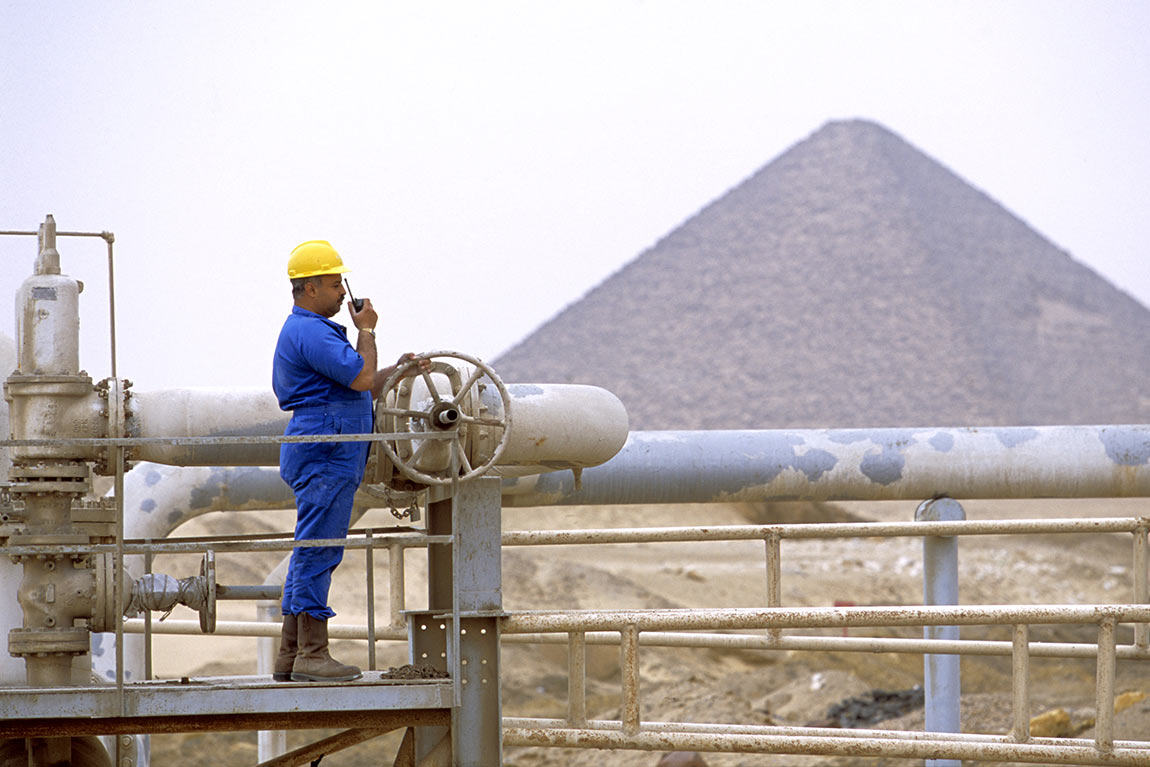
Expert Speak | 13 October, 2026
Egypt’s Gulf Anchor: From Financial Lifeline to Energy Buffer
Spotlight
- Gulf economic statecraft in Egypt has undergone a transformation from politically motivated aid in the post-Arab Spring era to strategic investment in real estate, ports, and energy assets.
- The US–Israel–Iran War has made Egypt’s geography more valuable for Gulf energy security, particularly through the SUMED pipeline and Mediterranean storage facilities.
- The relationship between Egypt and the Gulf is moving towards asymmetric interdependence where Gulf states bring capital while Egypt offers routes and infrastructure to combat energy and security risks.
The abundance of capital in the Gulf states and Egypt’s requirement for funds forms the basis of their relationship, according to common perception. What began in the immediate aftermath of the 2011 Arab Spring as a geoeconomic relationship based on unilateral financial support for Egypt has now evolved into targeted Gulf economic statecraft. Against the backdrop of the 2026 United States–Israel–Iran war, the relationship has further evolved into an avenue through which the Gulf manages regional vulnerabilities.
Egypt’s stability is connected to the prosperity of the broader Arab World. An economically and politically stable Egypt means less mass migration, which reduces population-driven pressures across the region; less unrest driven by domestic economic pressures; and less incentive to revive radical ideologies that threaten governments across the region. Since the Arab Spring, Gulf investment and capital flows have therefore aimed for stability in Egypt in various ways.
Bankrolling Stability
The Gulf strategy of providing financial aid to Egypt, following the events of 2011, was geared towards Cairo’s economic and political stability on terms aligned with the donor states’ preferences. Since then, Egypt has faced multiple disruptions, including the 2016 currency crisis and Houthi Red Sea attacks of 2023–24, prompting requests for foreign aid.
For instance, Qatar’s financial assistance of US$7.5 billion was part of its effort to support the administration of the newly elected Egyptian President Mohamed Morsi. Following his removal via the military coup led by current President Abdel Fattah el-Sisi, the United Arab Emirates (UAE), Saudi Arabia, and Kuwait immediately announced US$12 billion in financial aid to Egypt to curb the influence of the Muslim Brotherhood and ensure financial and political stability. In 2022, due to the economic hardship faced by Egypt as a result of the Russia–Ukraine war, Gulf states pledged US$22 billion in aid for the country.
Gulf states have stepped in to support Egyptian stability at various economically disruptive turns to prevent them from morphing into political downturns. Such unilateral transfers have been beneficial for Egypt not just fiscally but also to uphold foreign reserves as a condition to gain loans from the International Monetary Fund (IMF). In 2023, Gulf state deposits in the Egyptian Central Bank reached US$29.9 billion, split between long-term and short-term deposits, with the UAE and Saudi Arabia routinely alternating as the largest depositors.
From Aid to Assets
With the el-Sisi regime operating in relative political stability by 2016, Gulf states modified their strategy, shifting from unilateral financial aid to investments in sectors relevant to the region’s diversification and economic growth agenda, with stakes in luxury real estate and ports infrastructure.
One of the biggest ventures was the UAE-based ADQ’s US$35 billion investment in Ras al-Hekma in 2024. Alongside foreign direct investment (FDI) inflows of US$35 billion, this deal directly led to a domino effect, enhancing Egypt’s worthiness for foreign capital. The IMF and World Bank unlocked new loans for the country and the debt relief provided by the UAE’s cash injection allowed Egypt’s Central Bank to safely float the Egyptian Pound, a critical condition for an IMF loan. This investment in Ras al-Hekma has also allowed for the development of the Egyptian North Coast between Alexandria and Marsa Matrouh, where several luxury resorts are being built. It is expected to contribute US$25 billion to Egypt’s gross domestic product (GDP) and create 750,000 jobs directly and indirectly upon completion.
Qatar and Saudi Arabia have embarked upon similar projects. Qatari Diar, the real-estate arm of the sovereign wealth fund Qatar Investment Authority, has planned a US$30 billion investment on Egypt’s Mediterranean Coast, with the first phase launched in August 2026. Saudi Arabia’s Citystars Group is part of the US$18 billion deal signed by firms from Egypt, the UAE, and Saudi Arabia to develop the Marassi Red Sea project. Saudi Arabia’s sovereign wealth fund, the Public Investment Fund (PIF), has also established the Saudi Egyptian Investment Company (SEIC), an institute dedicated to investing in Egypt.
In 2024 FDI surged from under US$20 billion in 2023 to nearly US$50 billion in 2024, attributed largely to Gulf states. The impact of targeted investment and the resultant currency float and IMF reform package was clear through changes in GDP growth (which increased from 2.4 percent in 2024 to 4.5 percent in 2025) and a consistent drop in inflation from 38 percent in September 2023 to 13.9 percent in July 2025. While this may have supported Egypt’s aims of economic stability, the Gulf has increased its economic footprint in the region as well.
Egypt as an Energy Buffer
Since the Iran War, however, a new energy interdependency has come into play. With Saudi Arabia, the UAE, and Qatar facing unprecedented vulnerabilities in energy transportation through the Strait of Hormuz, the historical importance of Egypt’s dual-coast geography has given it a unique position in Gulf energy security through two primary shifts: a) sustained use of the Suez–Mediterranean (SUMED) Pipeline; and b) the Egyptian Mediterranean Coast serving as a critical energy storage and trading hub.
With Saudi Arabia, the UAE, and Qatar facing unprecedented vulnerabilities in energy transportation through the Strait of Hormuz, the historical importance of Egypt’s dual-coast geography has given it a unique position in Gulf energy security
The SUMED Pipeline (co-owned by Egypt, Saudi ARAMCO, Mubadala Energy, QatarEnergy, and a Kuwaiti consortium consisting of Kuwait Investment Authority, Kuwait Investment Co. (SAK), and Kuwait Metal Pipe Industries Co.) started operations in 1977. By April 2026, energy flows through the pipeline had increased by 150 percent since the onset of the US–Israel–Iran war. This is one of the clearest examples of how Egypt’s dual-coast geography and the Gulf complement each other during the region’s vulnerable moments. Since the Strait of Hormuz’s effective closure has blockaded energy exports from Saudi Arabia, the UAE, and Qatar, the SUMED pipeline has emerged as a saviour, particularly for Saudi oil, which is redirected from the Arabian Gulf route through the Red Sea, docking at the port in Ain Sokhna on the Egyptian Red Sea Coast. From Ain Sokhna, the oil is transported through SUMED to the Sidi Kerir terminal on the Egyptian Mediterranean Coast before being exported internationally. As the majority shareholder in the pipeline, Egypt benefits from the higher profits generated. Currently operating at its maximum capacity of 2.5 million barrels per day, the pipeline’s usage is transforming Egypt’s geography into a critical midstream security asset for Gulf energy exporters.
While Saudi Arabia benefits from sharing the Red Sea with Egypt, the UAE is exercising influence over Egypt’s logistics infrastructure through DP World’s investment in the Sokhna Port on the Red Sea and AD Port’s investment in the Safaga Terminal. In August 2026, the Emirate of Fujairah and Egyptian Authorities also established the Fujairah Alamein Oil and Gas Company, a joint venture for the trading and storage of Emirati crude oil and petroleum products through the Fujairah Oil Free Zone in New Alamein. This allows Egypt to localise manufacturing and increase foreign trade, while serving as a hedging strategy for UAE oil storage.
Qatar is not far behind in securing supply chains independent of Middle Eastern choke points. In May 2026, QatarEnergy signed an initial memorandum of understanding (MoU) with ExxonMobil and the Egyptian government to study the development and commercialisation of gas in Cyprus using Egypt’s infrastructure. The damage incurred by Qatar’s Ras Laffan liquefied natural gas (LNG) facility during the ongoing war highlighted the vulnerabilities of existing Gulf infrastructure. In this regard, additional cooperation with Egypt may complement Qatar’s broader efforts of diversification while domestic assets are disrupted.
Towards Asymmetric Interdependence
The evolution of Gulf economic statecraft from politically motivated financial assistance to targeted strategic investment has redrawn the geopolitical map of Gulf–Egypt relations. While earlier cash injections were largely intended to preserve Egypt’s political stability, current investments increasingly advance the economic and strategic interests of both sides. The UAE’s initial US$35 billion commitment towards developing Ras el-Hekma enhanced Egypt’s attractiveness to international capital, but the Iran war has brought its potential role as a geographic buffer for Gulf energy security into sharper focus. The resulting relationship, therefore, represents an evolution into one of asymmetric interdependence.
Gulf states retain considerable leverage through their abundance of capital, but Egypt possesses geographical advantages that can strengthen the Gulf’s energy resilience and support wider foreign policy objectives.
Gulf states retain considerable leverage through their abundance of capital, but Egypt possesses geographical advantages that can strengthen the Gulf’s energy resilience and support wider foreign policy objectives. This was further demonstrated by the recent meeting between Saudi Crown Prince Mohammed bin Salman and President el-Sisi on 15 September 2026. Their discussions included the expected investment of nearly US$10 billion, as well as talks on deeper cooperation on national security; regional security developments in Palestine, Lebanon, Sudan, and Yemen; and Red Sea navigation. This reflects a growing pattern of Gulf states looking beyond traditional defence partners like the United States (US) towards regional partnerships like the Mecca Joint Defence Agreement, signed by Saudi Arabia, Pakistan, and Türkiye. While Egypt is not part of this treaty, it remains a close defence associate for all the signatory states. By extension, Egypt’s role is evolving from an aid recipient into a more reciprocal and strategically integrated partner.
Amandeep Ahuja is a geopolitics and geoeconomics expert specialising in the Middle East and North Africa (MENA) region.
The author acknowledges the use of ChatGPT 5.6 for refining the language and sentence structure in some parts of this article. The core analysis was conducted solely by the author.