 Global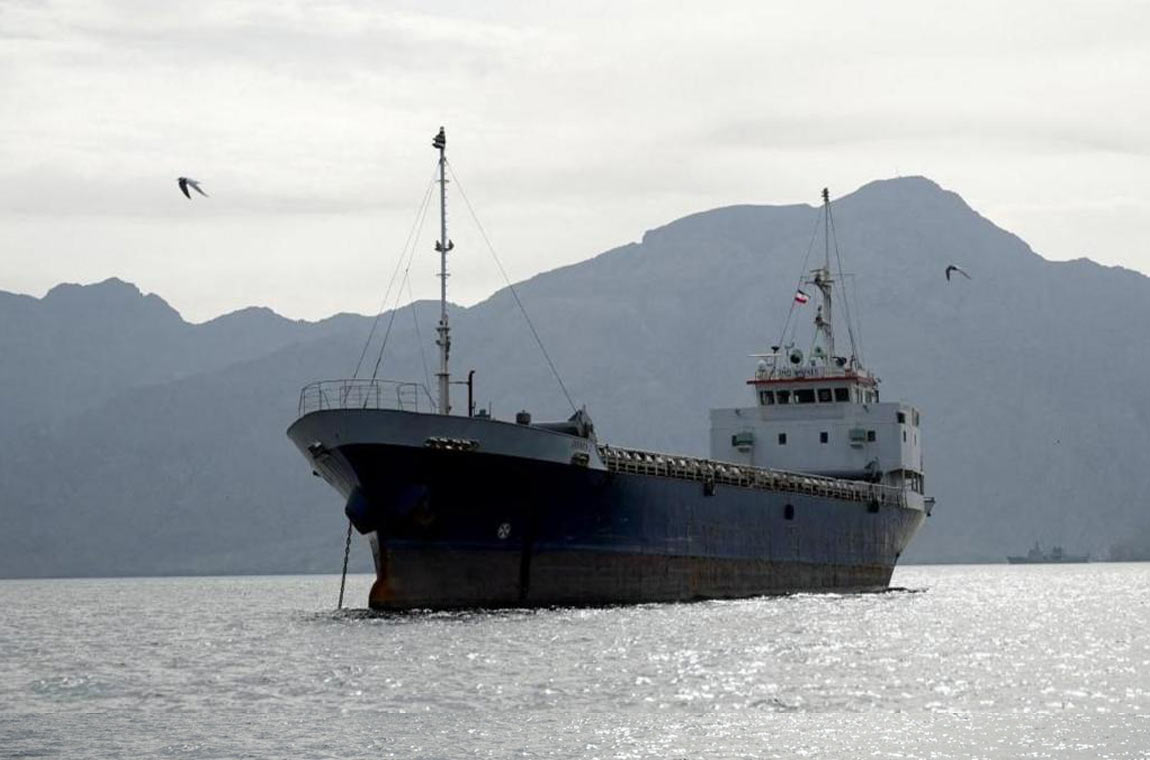
Expert Speak | 02 May, 2026
No Clear Victory: How Washington and Tehran Compete to Define Triumph
Spotlight
- The United States faces a narrowing set of strategic options: negotiation, escalation, or sustained coercion each carrying significant risks and no guarantee of decisive success.
- Structural mistrust and conflicting core interests make a comprehensive diplomatic resolution unlikely without a major shift in perceived pressure or vulnerability.
- Prolonged conflict risks accelerating broader geopolitical shifts, benefiting rival powers and deepening fractures among US allies, while increasing global economic instability.
The conflict has escalated significantly. By asserting control over the Strait of Hormuz, the Islamic Republic has restricted access to one of the world’s most vital energy transit routes, contributing to a pronounced global energy disruption. Crude oil prices have surged, supply chains are experiencing strain, and economic repercussions are extending well beyond the Middle East.
For the United States (US), the pressure is mounting on multiple fronts. Regional allies in the Gulf Cooperation Council (GCC) states, whose economies are heavily reliant on oil exports and maritime security, have urged Washington to reestablish access to the Strait of Hormuz. In response, the Islamic Republic has pursued a calibrated strategy of escalation, employing direct attacks and retaliatory measures against these states. This approach has increased the strategic and economic costs associated with sustaining a continued US presence in the region..
At the same time, Washington faces growing strain with its Western allies. European economies, already weakened by energy shortages, are increasingly reluctant to support further military escalation. In some cases, this has translated into restrictions on US use of regional bases, exposing fractures within the alliance.
Beyond the immediate battlefield, the geopolitical consequences are widening. Russia stands to benefit from shifting energy dynamics and weakened sanctions pressure, while China faces economic headwinds tied to instability in global energy markets. The longer the conflict continues, the greater the risk of sustained disruption to the global economy, including that of the US itself.
Against this backdrop, the US is left with a narrowing set of choices. Broadly, three strategic options remain, each carrying significant risks and uncertain outcomes.
Option One: Negotiation
Negotiation remains the most immediate theoretical pathway for the US to end the conflict, but in practice it is also the least likely. Washington’s credibility in diplomacy with the Islamic Republic has been significantly weakened by its withdrawal from the Joint Comprehensive Plan of Action and the collapse of subsequent talks, reinforcing Tehran’s belief that US commitments are reversible and politically contingent. This makes any renewed framework structurally fragile from the outset.
For the Islamic Republic, “defeat” is defined not by territorial or military losses, but by threats to its political and ideological continuity.
Recent reports of a comprehensive US demand package, which includes restrictions on missile capabilities, have further complicated the prospects for diplomatic engagement. For the Islamic Republic, such demands challenge the foundation of its deterrence doctrine. Given its limited conventional military capacity, the missile programme functions not merely as a bargaining chip but as a central pillar of regime survival. Any concession on this issue would likely be perceived domestically as capitulation rather than compromise.At the same time, Tehran is unlikely to enter negotiations unless it perceives existential pressure. For the Islamic Republic, “defeat” is defined not by territorial or military losses, but by threats to its political and ideological continuity. As long as the system remains intact, the leadership can frame prolonged conflict as resistance, preserving domestic legitimacy even under economic strain.
This creates a structural mismatch: the US seeks de-escalation on favourable terms, while the Islamic Republic is likely to demand sanctions relief and preservation of limited enrichment as preconditions for any deal. Domestic and international pressures constrain Washington’s ability to sustain escalation, which Tehran may interpret as time working in its favour. Internally, the growing influence of the Islamic Revolutionary Guard Corps (IRGC) has further hardened decision-making, reducing the space for pragmatic compromise. Taken together, these dynamics make a negotiated settlement unlikely without a significant shift in the balance of pressure or perception of vulnerability on either side.
Option Two: Escalation and Regime Change
A second option for the US is to continue the military campaign with the aim of degrading the Islamic Republic’s military capabilities to the point where it can no longer project meaningful force, potentially creating conditions for regime change.
However, this strategy faces significant challenges. The Islamic Republic appears to retain substantial striking capacity, with much of its missile arsenal likely stored in hardened underground facilities, limiting the effectiveness of airpower and suggesting a prolonged, resource-intensive campaign. Transitioning to a ground invasion would be even more difficult, requiring sustained political and financial backing in the US support that is far from guaranteed given domestic pressures.
Regional dynamics further complicate escalation. Increased conflict would heighten risks for US partners in the Gulf, whose willingness to host American forces under sustained attack may diminish.
While regime change represents the most decisive outcome, achieving it would require a long-term military commitment and acceptance of continued instability. The central issue is not its desirability, but whether the US and its partners are willing to bear the costs required to achieve it.
Option Three: Sustained Coercive Campaign and Strategic Isolation
A third option is to continue a campaign against the Islamic Republic to the point that it can no longer function effectively as a state. This would include strikes on military targets as well as critical infrastructure, such as electric power plants and bridges, as President Donald Trump has recently threatened in order to pressure Tehran to reopen the Strait of Hormuz. The goal would be to leave the Islamic Republic weakened enough that it poses little threat to the region, even if the country’s leadership remains in power.
Even if such attacks degrade the Islamic Republic’s ability to operate in the short term, Tehran could still rebuild in the future. The regime would likely frame surviving heavy bombardment and remaining standing as a victory, portraying itself as having resisted the world’s strongest military. This perception would make it difficult for the US to claim a decisive strategic success, even if Islamic Republic’s capabilities are significantly reduced.
This approach does not guarantee control of the Strait without a ground invasion or occupation. However, as Trump has suggested, the strait might reopen on its own because major stakeholders such as China and India, Iran’s primary economic partners, would pressure Tehran to restore access, and failure to do so might draw in a regional or EU coalition aligned with broader international interests.
From a US perspective, direct dependence on Gulf oil is not the main priority; over the long term, a strategy that pushes global consumers toward American supplies could have economic benefits. But this option would carry heavy costs, risk prolonged instability, and offer no guarantee that the Islamic Republic’s government or strategic culture would change as a result, as all the damage inflicted which could be rebuilt over time.
The Islamic Republic’s Strategic Mindset and Trajectory
To understand Islamic Republic’s strategic trajectory, it is useful to view power as operating through three main centres.
The first is the office of the Supreme Leader, under which sits the broader religious establishment. The second is the military-security power centre, primarily the IRGC and its expanding economic and political influence. The third is the administrative and bureaucratic state apparatus, which manages governance and day-to-day execution.
The central question is no longer decisive victory, but rather what constitutes a minimum acceptable outcome that allows each side to claim success
At the present stage, while these structures remain formally distinct, key strategic decision-making is increasingly concentrated within a narrow inner circle around the Supreme Leader. Importantly, the individuals who occupy this space are not only influential advisors but also function as the final decision-makers across major state domains.
This includes Hossein Taeb, former head of the IRGC Intelligence Organisation; Ahmad Vahidi, Commander-in-Chief of the IRGC. Together, this grouping forms an informal but decisive coordination core that links the religious authority, military-security establishment, and administrative system, effectively shaping final strategic outcomes across the state.
The confrontation between the Islamic Republic and the US reflects a strategic deadlock shaped by competing objectives, sustained economic pressure, and domestic constraints on both sides. As costs rise, the central question is no longer decisive victory, but rather what constitutes a minimum acceptable outcome that allows each side to claim success while preserving internal stability and credibility.
For the Islamic Republic, regime survival and strategic deterrence remain paramount. Despite mounting economic strain, Tehran continues to treat uranium enrichment, missile capabilities, and regional influence as non-negotiable core interests. However, internal pressures have created space for limited, tactical flexibility, provided that any concessions remain reversible and do not undermine core deterrence capacity.
A Partial and Transactional Compromise?
The trajectory of the conflict is shaped by a complex cost-benefit calculation across all actors, with the US playing a decisive role due to its military and economic capabilities. For Washington, while rhetoric often reflects maximalist demands, practical constraints economic, political, and strategic have narrowed policy options. The focus has increasingly shifted away from regime change toward a more limited objective: containing Iran’s nuclear program and preventing escalation into a broader military confrontation. The notion of regime change in the Islamic Republic initially advanced by the Trump administration and supported by Israel, remains more of a theoretical objective or a long-term aspiration rather than a feasible short-term strategy.
Any decision taken by Washington would likely entail one that best balances timing and risk to shorten the conflict, rather than one that achieves an ideal outcome.
In practical terms, any compromise would likely be partial and transactional. Islamic Republic may accept temporary limits on enrichment, enhanced monitoring, and increased transparency, while retaining its underlying nuclear infrastructure and strategic capabilities. In return, the US would offer partial and reversible sanctions relief and tolerate limited enrichment under strict verification mechanisms. Any decision taken by Washington would likely entail one that best balances timing and risk to shorten the conflict, rather than one that achieves an ideal outcome.
Such an arrangement would allow both sides to claim political success domestically, while settling for a limited form of threat reduction. In other words, underlying strategic mistrust will not be fully resolved, meaning the confrontation will likely persist, short of a direct military conflict.
Kamyar Kayvanfar is a native Persian and English-speaking communications and public affairs professional with experience at EY and Kreab.