 Global
Expert Speak | 11 June, 2026
Fibre‑Optic Integration: Shaping Gulf Digital Sovereignty
Spotlight
- The global cable industry is shifting from telecom-led consortiums towards hyperscaler-owned infrastructure, concentrating control of cables, data centres and cloud platforms that carry global data.
- While vertical integration can lower costs and accelerate efficiency and innovation, it can also reduce competition and create long-term dependence on a small number of foreign providers.
- Gulf states can strengthen digital sovereignty by growing domestic participation in less-consolidated parts of the subsea cable ecosystem, particularly landing- station infrastructure and maintenance and repair services.
Gulf states occupy a highly strategic position at the crossroads of Europe and Asia and have sought to leverage this geography to position themselves as global connectivity hubs. Today, that ambition is expanding beyond telecommunications, logistics and travel into cloud computing, data centres, and artificial intelligence (AI). With the ongoing push for digitalisation and incorporation of AI into public services and the wider economic models of the Gulf Cooperation Council (GCC) states, another critical technology has become indispensable: fibre-optic cables. While the subsea cable sector was experiencing significant growth before the US-Israel-Iran conflict of 2026, recent Iranian proposals to impose permit requirements and payments on cable systems crossing the Strait of Hormuz have highlighted the geopolitical sensitivities surrounding these networks. Yet, beyond immediate security concerns lies a longer-term structural question about who owns and controls the infrastructure underpinning the region’s digital future.
Gulf policymakers may need to consider not only the resilience of cable infrastructure during conflict, but also who ultimately controls the supply chain of this critical data artery.
Increasingly, the companies funding, owning and operating the infrastructure that carries global data are no longer traditional telecommunications operators, but technology giants such as Google, Amazon Web Services (AWS) and Microsoft—all of which own and operate data centres in the GCC. As these firms expand from cloud providers into cable owners, data centre operators, and AI infrastructure providers, Gulf policymakers may need to consider not only the resilience of cable infrastructure during conflict, but also who ultimately controls the supply chain of this critical data artery.
Towards Integrated Infrastructure Ecosystems
The global cable industry has undergone a profound shift over the past decades. The dot com bubble of the 1990s and 2000s was based on excitement around the potential of internet companies, leading to massive stock market investment in these firms and the digital infrastructure required to support them. The financial optimism and capital inflows of the era provided impetus for predominantly telecommunications carriers to manufacture and lay international cable infrastructure. This was, and largely still is, achieved predominantly through consortium models in which multiple independent organisations pool resources and expertise to finance, build, and operate a shared project—major participants being telecommunications operators, national carriers, and internet service providers. Though many such as the US’ SubCom and Japan’s Nippon Electric Company (NEC) are still active players in the market today, private hyperscalers have emerged as new and increasingly dominant financiers and owners of new projects, rather than simply customers. Today, Google, Meta, Microsoft, and Amazon account for approximately 71 percent of all used international subsea cable capacity, compared to less than 10 percent only a decade ago. This reflects a broader strategy of vertical integration, enabling these firms to operate not only data centres and cloud services, but also the physical infrastructure connecting their global networks.
Google, Meta, Microsoft, and Amazon account for approximately 71 percent of all used international subsea cable capacity, compared to less than 10 percent only a decade ago.
The trend is increasingly visible in projects affecting the Gulf. For example, Google’s Blue-Raman cable system is designed to connect Europe and India via Israel, Jordan, Saudi Arabia and Oman, bypassing traditional routes through Egypt. The system forms part of Google’s broader strategy of directly controlling the infrastructure underpinning its cloud services. Hyperscalers are also benefiting from adoption of an “open cable model” in which cable systems terminate directly into data centres rather than traditional carrier-neutral cable landing stations. In practical terms, this could mean that in future we may see the same company control the cable, the cloud platform, the data centre and the AI services operating across them.
A New Question of Digital Sovereignty
The benefits of an end-to-end ownership model such as the one described are substantial. Hyperscalers possess the financial resources and technical expertise required to rapidly expand digital infrastructure—capabilities that are essential for complex cable projects, particularly subsea systems. By contrast, only around half of projects reach completion when undertaken by traditional non-hyperscaler actors. From the perspective of the hyperscaler, consolidating the various technological elements of the path through which data travels allows them to reduce dependence on external infrastructure providers and exercise greater control over costs, capacity, and future expansion. From the perspective of GCC countries hosting cables and landing stations, greater connectivity provided by reliable market giants supports their ambitions to establish themselves as destinations for cloud services, AI development, and hyperscale computing. However, the same integration that creates efficiency can also create concentration and reduce healthy market competition between cloud providers, data centre operators, and network carriers because this vertical integration—when a supply chain is owned by a single company—creates higher barriers to entry for smaller suppliers.
For customers of hyperscaler services, including Gulf governments, there are both advantages and potential drawbacks. Vertical integration prevents double marginalisation—when two independent firms, for example a cable manufacturer and a data centre operator, both add their own profit margins—in theory making the final product cheaper. Furthermore, supply chain integration allows companies better oversight and faster communication between different company departments which can accelerate innovation and improve quality. At the same time, however, lower pricing which smaller suppliers cannot match prevents diversity in the market and can contribute to vendor lock-in, making it more difficult and costly for governments and businesses to switch providers in the future. The issue here is not the reliability of services provided by these giants, since hyperscaler-operated infrastructure is often among the most resilient in the world, but rather strategic dependence.
Vertical integration prevents double marginalisation—when two independent firms, for example a cable manufacturer and a data centre operator, both add their own profit margins—in theory making the final product cheaper.
As the European policy community has increasingly argued, concentration can limit fair competition and result in overreliance on foreign providers. This trade-off is particularly relevant in the Gulf, where governments across the region are also actively pursuing sovereign AI initiatives, national cloud strategies, and digital transformation programmes. From a national security perspective, governments must possess sufficient leverage and regulatory visibility to avoid becoming dependent upon a small number of infrastructure ecosystems over which they exercise limited control.
Potential Supply Chain Sub-Sectors for Gulf States
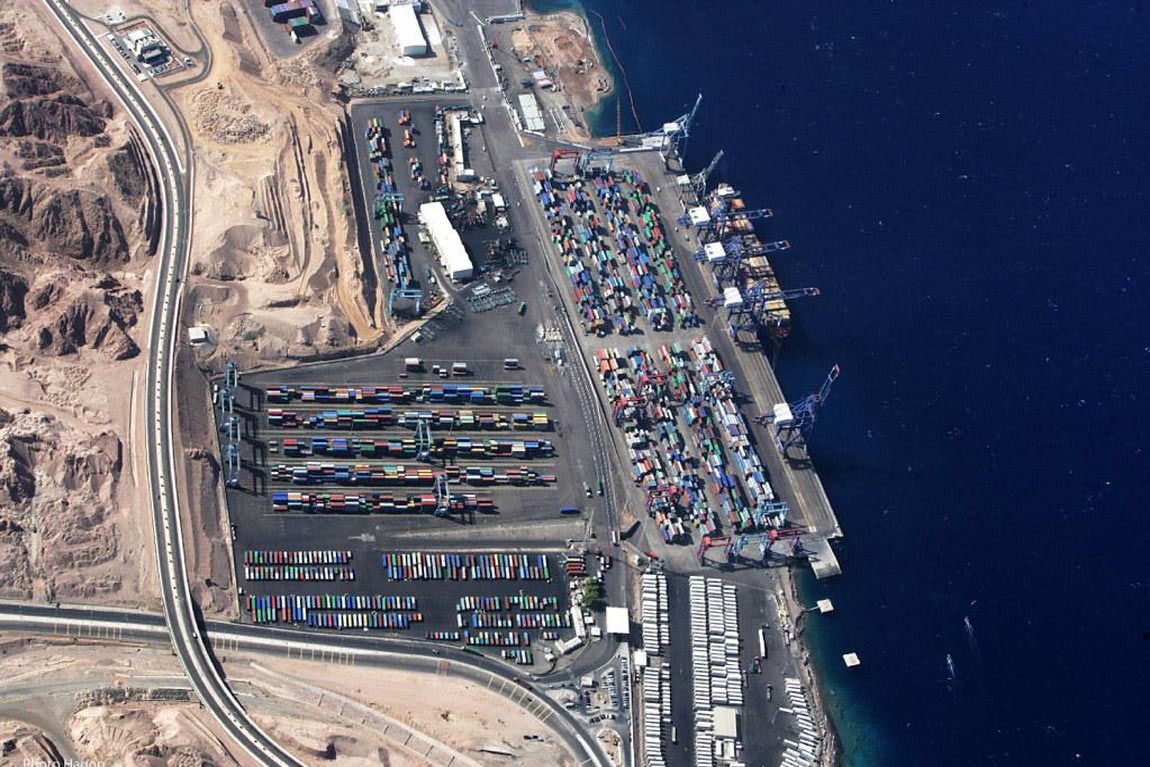
While ownership of global cable systems is becoming increasingly concentrated, not every segment of the supply chain has consolidated to the same degree. One such area is cable landing infrastructure, for which operators require local partners capable of securing permits, managing terrestrial connectivity and operating landing stations. GCC telecommunications companies have already established strong positions in this segment, Oman’s state-backed telecoms company Omantel, for example, operating over 20 landing stations globally, and is the only GCC carrier to land a European cable—the AAE-1 cable system’s landing in Marseille, France. Its private and similarly homegrown competitor Ooredoo operates in Oman and Qatar, with planned upcoming landing points in the UAE and Iraq. Oman’s leadership in this segment is unsurprising given its location outside the Strait of Hormuz, where cable landings are generally preferred due to lower exposure to regional geopolitical and maritime security risks.
The UAE-based company E-Marine remains the only notable Middle Eastern provider of cable installation and repair services, with most major operators headquartered in Europe.
Beyond landing stations, opportunities also exist for Gulf partners in specialised engineering and maritime services. Installation and repair capacity has struggled to keep pace with growing demand, while increasing geopolitical scrutiny has narrowed the pool of operators trusted to work on critical communications infrastructure. Gulf states that have historically maintained relatively cordial relations with Iran may be particularly well positioned to develop cable repair capabilities, as they could be better placed to secure freedom of movement and operational access through the Strait of Hormuz during periods of regional tension. The UAE-based company E-Marine remains the only notable Middle Eastern provider of cable installation and repair services, with most major operators headquartered in Europe. If Gulf-based firms can successfully navigate tensions with Iran and its regional partners during and after the current conflict, there may be scope to capture market share in the Gulf and Red Sea, particularly where Western operators could face heightened security risks or political sensitivities.
Conclusion
As digital infrastructure is increasingly being built as integrated ecosystems rather than discrete assets, questions of ownership and control are likely to become as important as questions of resilience and capacity. For Gulf states, the imperative is not necessarily to resist hyperscaler investment, which remains essential to ambitions around AI, cloud computing, and digital transformation, but to ensure that concentration does not gradually translate into strategic dependence. Capturing the benefits of vertical integration—lower costs, faster deployment and accelerated innovation—must be balanced with maintaining sufficient competition and increasing the market share of domestic companies in critical national infrastructure.
This is particularly important as governments pursue sovereign AI initiatives and seek greater control over the technologies underpinning public services and economic development. Identifying and supporting less-consolidated segments of the cable supply chain offers a practical pathway towards strengthening digital sovereignty in addition to supporting economic diversification.
Elizabeth Heyes is Junior Fellow, Emerging Technologies, at ORF Middle East.
The author acknowledges the use of ChatGPT 5.5 to generate a draft outline for this paper.