 Global
Expert Speak | 11 November, 2026
Hormuz as a Harbinger: Lessons in Risk and Resilience
The following excerpt is from Chapter 3 — Hormuz: Breaking the Insecurity Continuum
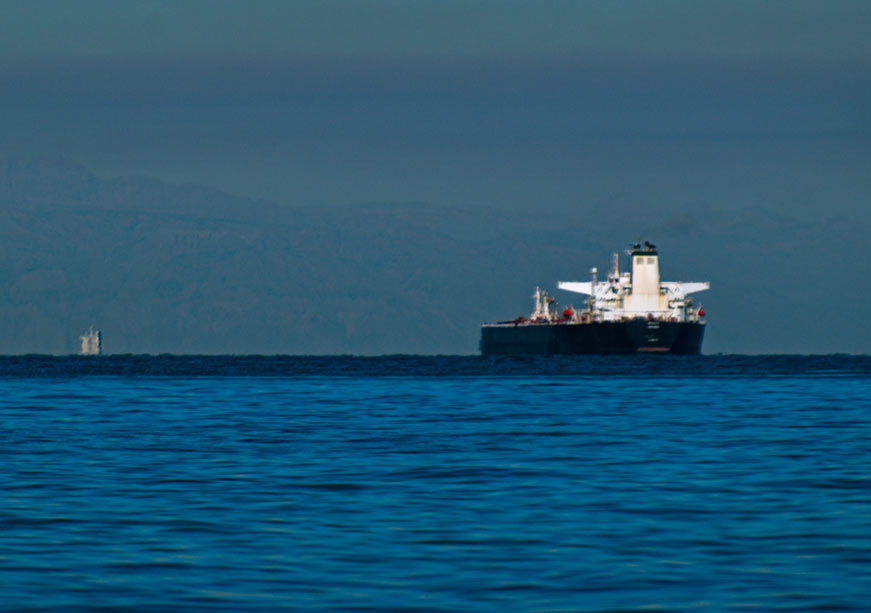
Iranian actions in the Strait of Hormuz represent a model of coercive economic statecraft where facts of geography and international interdependence are weaponised to influence the behaviour of states. The crisis has demonstrated that conventional military capitulation is no longer required to exert control over maritime chokepoints—instead, escalating costs enough to deter passage can deliver the strategic outcomes desired by both state and non-state actors. This article explores the precedents that weaponised interdependence[1] establishes in the domain of maritime commerce and security, and identifies potential recalibrations that could better integrate resilience to guard against such a template in the future.
The Hormuz Blockade: Stress-Testing Assumptions
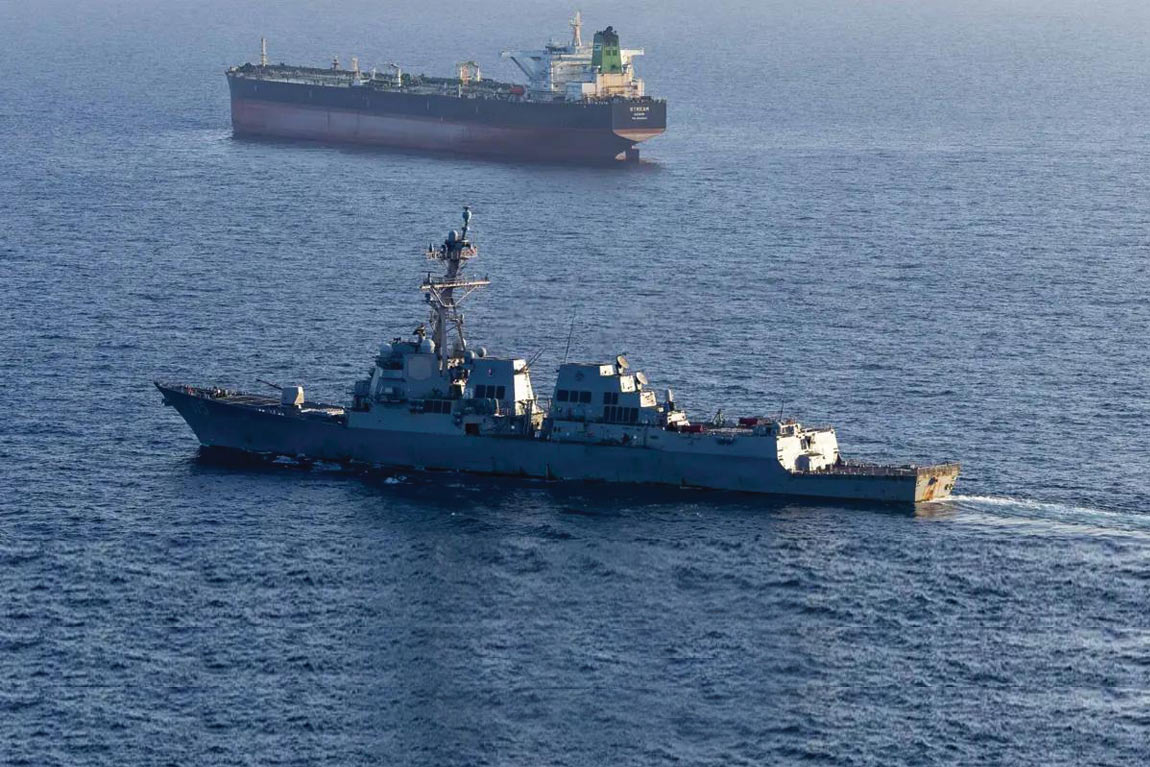
Two interconnected assumptions informed risk assessments regarding the Strait of Hormuz for over four decades. The first among these was the assumption[2] that the costs of blockading the Strait would be too high a price to pay for the Iranian economy, and the tactic too difficult to implement. This, it was believed, would discourage the Iranians from making good on their decades-long threat to disrupt transit through the Strait. A second common assumption[3] was that the unparalleled strength of the US Navy would both deter any intent on the part of Iran to exert control over the Strait as well as speedily restore freedom of navigation in the unlikely event of Iran acting on such an impulse.
The blockade[4] of the Strait of Hormuz in 2026 has stress-tested both these assumptions. Despite Iran suffering considerable losses, US intelligence reports indicate that it retains the ability to “shut down the Strait of Hormuz at will.”[5] Iranian missile arsenals, though sizeably depleted, remain.[6] So do their manufacturing capabilities to replenish those missiles. Their drone-production capabilities too, though now exposed and being factored into counteroffensive strategies, are unaffected. In addition to revealing the limits of the overwhelmingly superior conventional US military power in acting as a deterrent, this operational resilience on the part of Iran has also demonstrated that American tactical successes have not translated into long-term strategic outcomes—arguably setting a precedent regarding the changed nature of military conflict globally.
From Disproved Assumptions to Perceived Precedents
The sheer effectiveness and easy adaptability of Iran’s tactics could establish Hormuz as a harbinger of coercive economic statecraft, with several aspects of the 2026 crisis serving as precedents for modern warfare:
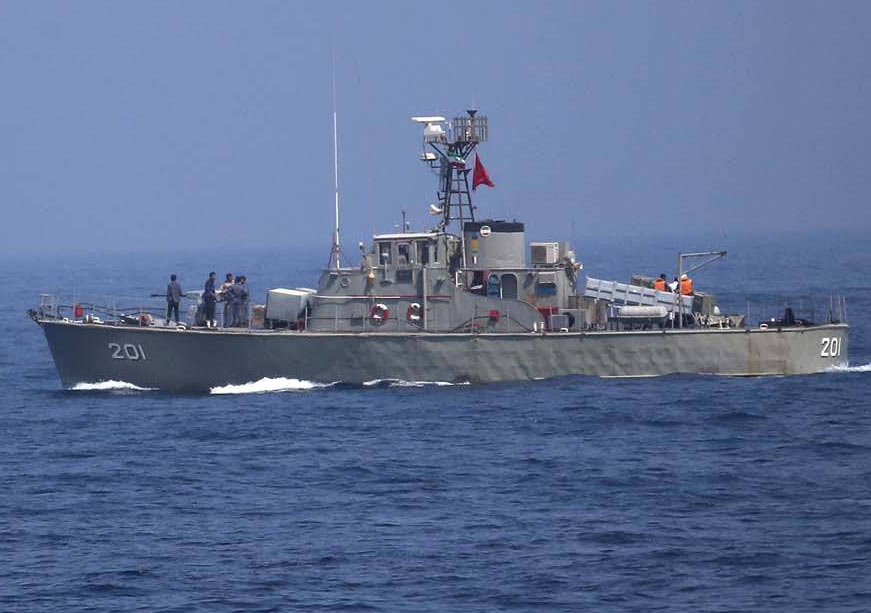
First, as seen in the 2026 Iran war, the changed nature of warfare has democratised the ability to inflict pain. Low-cost uncrewed systems of battle, such as drones, have changed the cost and deterrence calculus, which used to favour large and technologically superior militaries such as the US. The low costs of these battlefield innovations make them more easily replaceable and scalable as well as more readily expendable. The ability of a US$20,000-50,000 Shahed drone[7] to inflict damage on millions of dollars’ worth of commercial or naval assets, for instance, has entrenched a component of asymmetric warfare into maritime security considerations today. This cost asymmetry enables smaller states and non-state actors to impart disproportionately higher costs on traditionally stronger military adversaries.
Going forward, littoral actors, for one, will find it much easier to deploy low-cost systems against larger naval assets in maritime chokepoints that naturally restrict manoeuvrability of these vessels. Through grey-zone activities and hybrid warfare, including the use of shadow fleets, surreptitious digital targeting of maritime infrastructure, the turning off of transponders, or GPS jamming, the Hormuz crisis has created a maritime operations landscape that is going to be far more difficult to secure in the future. This changed environment has also increased the risks of miscalculations and accidents in contested waterways.
Second, and relatedly, the perception of and appetite for risk will be as significant a determinant of maritime commerce and transit post Hormuz, as actual physical interdiction by state or non-state actors. The issue will not remain restricted to whether vessels can physically transit a strait, but will also hinge on institutionalised risk appetites and a cost-benefit analysis of that risk being worth it. This is a more intangible— but equally significant—deterrent, and one that Hormuz has shown[8] can be activated at will with mere statements by littoral states.
Third, the mining of seabeds has moved beyond tactical defence and offence to become a coercive strategic tool. The Iranian declaration that they have mined the seabed effectively deterred the passage of ships through the Strait. This example could serve as a strategic instrument in future conflicts to shape the behaviour of states even without adequate proof.[9] It is a threat that is particularly potent, given the scarce expertise and assets available globally for de-mining.[10]
Fourth, Iran’s proposed passage fee represents efforts by the state to challenge the international dollar-based financial system that it has long been circumventing. The Iranian suggestion though eventually retracted, that the payment of transit fee in the Hormuz be through modes[11] other than the dollar is symptomatic of a larger trend. It is a method that Iran has used[12] in its trade with China over the years. While dedollarisation in the near to medium term is not likely to materialise, the maturation of alternative payment channels is a model that more states and non-state actors seeking to operate outside the dollar economy may repurpose.
Ring-Fencing Resilience
The possibility of adopting and acting on any of the precedents highlighted above offers crucial leverage, one that can be expected to be invoked by states and non-state actors in the future. The maritime risks thus created necessitate the following measures to integrate resilience:
First, multi-stakeholder efforts are required to secure maritime chokepoints, with littoral and regional states leading the initiative. The Gulf states will have to serve as the nucleus for any such initiative in the Strait. Coordination between this group of states would be key to avoiding duplication, overlaps, and seepages that could nullify meaningful efforts at patrolling the Strait.
Notwithstanding the economic arguments for Gulf cooperation in the Strait of Hormuz, there are political stumbling blocks to its realisation, including on the issue of extraregional participation. In this respect, the Malacca Straits Patrol (MSP), which offers a template on coordination to keep a strategic chokepoint open, could carry a lesson for the Gulf states. The Strait of Malacca was categorised as a high-risk waterway by Lloyd’s Market Association’s Joint War Committee in 2005, leading to an immediate and adverse impact on insurance premiums associated with ships and freight that transited the Malacca Strait. This had a direct bearing on the earning potential and profit margins of the countries of the region that depended on commerce through the chokepoint. Though MSP countries were initially wary about pooling resources, the economic pain point of this measure incentivised these countries into collective action to counter the threat of piracy and lawlessness along the Malacca Strait. It would be worthwhile to consider if the unprecedented disruptions seen during the Hormuz crisis can help generate a similar political will amongst the Gulf countries to guard against future weaponisation of the Strait.
Second, maritime domain awareness, through intelligence sharing and coordinated riskmapping, must be made a pillar of any naval coordination in the Strait. It is necessary for governments and organisations to share real-time data, including on ancillary or tertiary disruptions that may affect navigability, so that the governance and response architecture can factor it in good time and be agile. Such a framework must be built on surveillance that does not wait for a crisis to begin and legal clarity that is supplemented by the ability to be enforced. Multiple platforms that engage in some of these elements of coordination already exist in the Indian Ocean, such as Singapore’s Information Fusion Centre (IFC), the EU’s MASE (Program to Promote Regional Maritime Security), and India’s IFC-Indian Ocean Region, Coastal Surveillance Radar Network and NISHAR (Network for Information Sharing). It is necessary that Gulf countries work towards forging effective coordination between these formats to enable meaningful interoperability. It is also important that countries of the region and beyond begin investing in mine-sweeping capabilities, which remain woefully scarce globally. So far, Japan, the US, South Korea, the UK, France, the Netherlands, and Russia are among the small group of countries that have them.
This capacity building to develop blue water and green water naval capabilities will be costly,[13] as will be the technology needed for the surveillance of maritime zones. It is necessary, therefore, that the countries of the region coordinate to create a corpus for improving maritime security. Countries like Germany and Norway present an example, having coordinated on an investment fund[14] in the aftermath of the Nord Stream sabotage. The ability to build a multinational coalition to guard against the closure of the Strait in the future will help apportion the high costs associated with patrolling waterways and building resilient frameworks of maritime governance.
Third, existing maritime regimes and conventions must be revised to reflect changed realities. Neither Iran nor the US is party to the United Nations Convention on the Law of the Sea (UNCLOS),[15] of which Articles 38 and 44 are central to the free right of transit passage. Yet, both countries have largely adhered to its principles on the basis of customary international law. The Hormuz crisis has decimated this unsaid compliance system. In this context, it is necessary to examine if international legal regimes that govern the seas are still fit for purpose, given that they do not correspond to changed geopolitical equations or to the asymmetrical advantage that new forms of warfare may be granting state and non-state actors.
Finally, it is worthwhile to consider if perhaps the least expensive and more secure, albeit most counter-intuitive, way to keep the Strait open may depend on making it profitable enough for Iran to do so. Since the use of coercive military power has not delivered access, it may be time to consider if making peace profitable enough for the Iranian state—by integrating them into international markets and trade—can create such an impetus.
Conclusion
Paradoxically, a crisis that was perpetuated thoroughly due to high global interdependence also makes the most effective case for greater cooperation. The terms on which the Hormuz impasse ends will undoubtedly set a precedent for countries to turn facts of geography into strategic leverage
The example it sets, however, will be as much about the weaponisation of chokepoints as it is about the need for the littoral states to create a framework of cooperative governance. Hormuz’s most abiding lesson yet could be that it is only preemptive resilience created through cooperative security frameworks and systemic redundancies that could forge maritime deterrence such that no chokepoint is allowed to become singularly deterministic again.
Cauvery Ganapathy is Fellow, Climate and Energy, Observer Research Foundation, Middle East.
Endnotes
[1] Henry Farrell and Abraham L. Newman, “Weaponized Interdependence: How Global Economic Networks Shape State Coercion,” International Security 44, no. 1 (2019), https://direct.mit.edu/isec/article/44/1/42/12237/ Weaponized-Interdependence-How-Global-Economic.
[2] “War or Peace: Can Iran withstand the Economic Collapse?” Iran International, April 22 2026, https://www. iranintl.com/en/202604226411.
[3] “Analysis: US Navy well-positioned to prevent Iran blockade of Hormuz Strait,” Heartlander News, June 23, 2025, https://heartlandernews.com/analysis-us-navy-wellpositioned- to-prevent-iran-blockade-of-hormuz-strait/.
[4] Veer Puri, “Connectivity as Coercion: How Iran Turned the Strait of Hormuz into Leverage,” Observer Research Foundation, June 8, 2026, https://www.orfonline.org/ expert-speak/connectivity-as-coercion-how-iran-turnedthe- strait-of-hormuz-into-leverage.
[5] Zachary Cohen and Natasha Bertrand, “US Intel Assesses Iran Can Shut Down the Strait of Hormuz at Will from Now On,” CNN, June 16, 2026, https://edition.cnn. com/2026/06/16/politics/us-intel-assessment-iran-shutstrait- hormuz.
[6] Haley Britzky et al., “US Intelligence Assesses Iran Maintains Significant Missile Launching Capability,” CNN, April 3, 2026, https://edition.cnn.com/2026/04/02/ politics/iran-missiles-us-military-strikes-trump.
[7] Dylan Butts, “Iran’s Shahed drone: How ‘the Poor Man’s Cruise Missile’ is Shaping Tehran’s Retaliation,” CNBC International, March 5, 2026, https://www.cnbc. com/2026/03/05/iran-shahed-136-drone-cost-air-defensegulf- war-us-israel-gulf-scorpion-strike-centcom.html.
[8] Anna Mkrtchayan, “Impact of a Strait of Hormuz Closure on Shipping and Insurance,” Ficht & Co. Legal, March 4, 2026, https://fichtelegal.com/impact-of-a-strait-ofhormuz- closure-on-shipping-insurance/
[9] “Have sea mines been laid in the Strait of Hormuz?” Navy Lookout, May 11, 2026, https://www.navylookout.com/ have-sea-mines-been-laid-in-the-strait-of-hormuz/
[10] Nathalie Minard, “Sea Mines Clearance: A New Dimension of Difficulty,” UN News, March 30, 2026, https://news.un.org/en/story/2026/03/1167216.
[11] Rachel Frazzin, “Iran Demands $1 Per Barrel of Oil Passing Through Strait of Hormuz, Paid in crypto,” The Hill, April 4, 2026, https://thehill.com/policy/energyenvironment/ 5821752-iran-ship-toll-cryptocurrencystrait- hormuz/.
[12] John Power, “In Strait of Hormuz, Iran and China take aim at US dollar hegemony,” Al Jazeera, April 8, 2026, https://www.aljazeera.com/economy/2026/4/8/in-strait-ofhormuz- iran-and-china-take-aim-at-us-dollar-hegemony.
[13] “Green-Water Navy vs Blue-Water Navy: Understanding the US Navy’s Strategic Depth,” Defence Watch, September 3, 2025, https://thedefensewatch.com/head-to-head/ green-water-navy-vs-blue-water-navy/
[14] Christian Bueger and Tobias Liebetrau, “Critical Maritime Infrastructure Protection: What is the Trouble?,” Marine Policy, July 15, 2023, https://www.sciencedirect.com/ science/article/pii/S0308597X23003056#bib63.
[15] United Nations, “United Nations Convention on the Law of the Sea,” https://www.un.org/depts/los/convention_ agreements/texts/unclos/part3.htm