 Global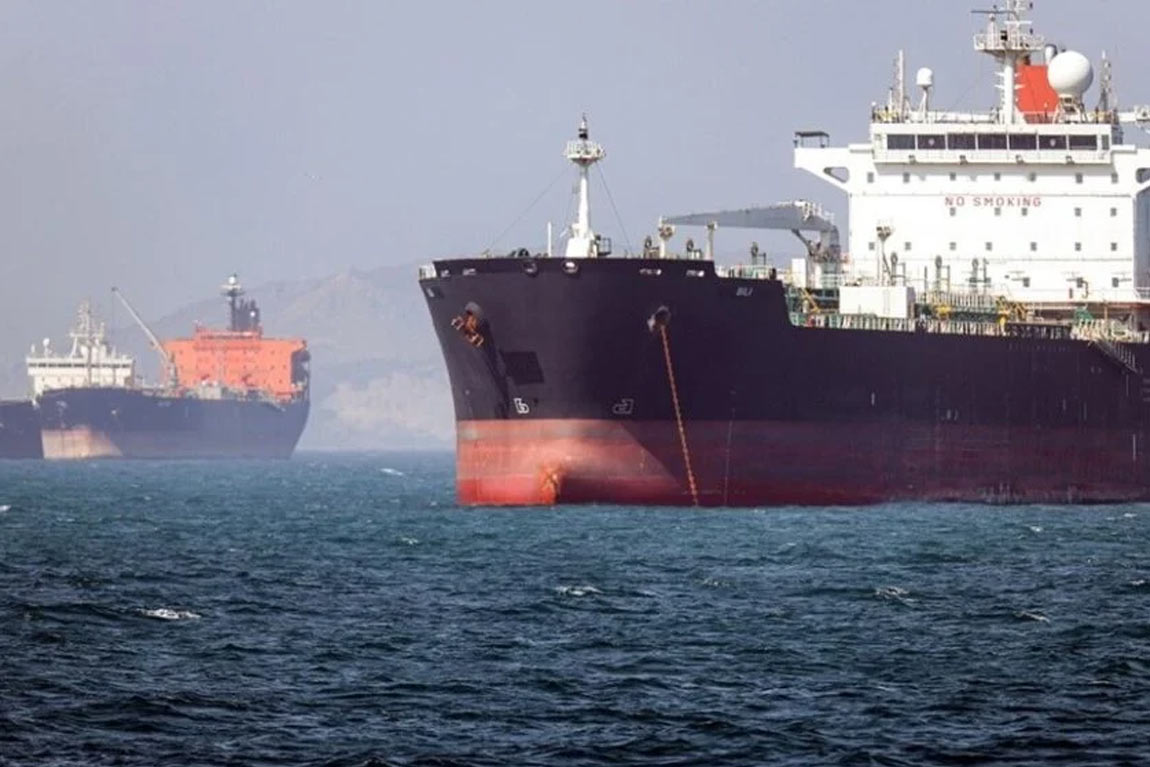
Expert Speak | 23 June, 2026
Hormuz Chokes the Iraqi Economy
Spotlight
- Iraq’s fiscal crisis, long rooted in rentier fragility, was merely exposed and not created by the 2026 war, as oil revenues collapsed from US$7 billion to US$1 billion in April.
- The crisis underscores a political economy built on distributing oil rents through jobs, welfare, and patronage, leaving Prime Minister Ali al‑Zaidi with little capacity for structural reform.
- The decisive factor is political, not economic: Iraq’s ability to enact reforms that are necessary for stability but painful to implement.
In an ordinary month, Iraq earns close to US$7 billion from crude exports, shipping roughly 95 percent of that oil through the Strait of Hormuz. In April 2026, after Iran had declared the Strait “closed” on 4 March 2026, that figure collapsed to barely US$1 billion dollars, a contraction of more than eighty percent in about a month. The number is arresting, but what it exposes matters more: the war between Israel, the United States (US) and Iran did not create Iraq’s fragility so much as detonate it. A single shock to one revenue stream has pushed Iraq toward a fiscal emergency.
This emergency has landed on a government only weeks old. On 14 May 2026, after months-of political deadlock, Prime Minister Ali al-Zaidi was sworn in, inheriting a treasury already running on borrowed money. Al-Zaidi, a multimillionaire businessman with no prior office, has been elected as a compromise candidate acceptable to both local fractions and foreign powers. With no political history, he was installed by the pro-Iran Coordination Framework (Iraq’s largest bloc) precisely because he commands no faction of his own. Yet his survival runs through Washington: a nuance often overlooked is the Development Fund for Iraq, created in 2003, which routes Iraq’s oil revenues into an account at the Federal Reserve Bank of New York. This arrangement places Iraqi oil dollars under US custody before Baghdad can access them, giving Washington a lever it has repeatedly threatened to pull. A new leader, the same rentier trap, and the same external pressure: this is the political setting in which the economics must be understood.
The Anatomy of Dependence
Iraq is a textbook rentier economy: a polity financed not by taxing its citizens but by capturing and redistributing the rents of a single exhaustible resource. Oil supplied roughly 84 percent of government revenue in the first quarter of 2026 and more than 90 percent of state income in 2025. All other forms of income are a rounding error. These contributed only around 16 percent in the first quarter of 2026, a period already marked by falling oil revenues due to conflict induced disruptions.
Why a country with this much to lose has never escaped dependence on a single commodity is the question this crisis forces and the answer is that the dependence has been engineered rather than inherited. Iraq’s muhasasa system , the sectarian quota arrangement through which political parties allocate state resources, public employment, and contracts to clients and financiers,buys elite cooperation and a measure of calm. As noted by Chatham House, “Instead of becoming ‘wealthy then political’, Iraq’s post-2003 leaders became political in order to become wealthy. With this wealth came patronage, endemic corruption and a bloated bureaucracy”. To move beyond oil would mean dismantling the very patronage engine that sustains the political settlement. This is why a payroll that has quadrupled since 2003 remains untouchable, and why a decade of International Monetary Fund’s (IMF) warnings about its unsustainability has had no effect. Iraq’s dependence is not a malfunction of the system, rather, it is the system working exactly as designed.
Revenue tracked volume downward almost in lockstep, with Iraqi oil revenue suffering the steepest decline among Gulf producers , plunging by 76 percent.
This dependence has two faces. The first is price risk: when crude prices fall, revenues collapse with them. In 2025, Iraq’s budget breakeven price (the level needed to fund spending) climbed to nearly US$86 per barrel, while market prices hovered around US$67— already leaving petroleum income insufficient to cover planned public expenditures. The second, more decisive in 2026, is transit risk: Iraq relies on the physical ability to move oil through a single contested chokepoint, and the closure of Hormuz struck directly at that vulnerability. As a result, Iraq’s oil production fell from 4.2 million bpd to just 1.4 million bpd, and oil exports of 3.4 million bpd were severely disrupted.
The mechanism by which a naval standoff becomes a budget crisis is direct. With sea lane disruptions, the oil minister reported monthly shipments falling from about 93 million barrels to just 10 million in April 2026. Vessel data confirmed the collapse: seaborne exports fell to 131,000 barrels per day, a 96 percent drop from a year earlier. Revenue tracked volume downward almost in lockstep, with Iraqi oil revenue suffering the steepest decline among Gulf producers , plunging by 76 percent. Even at wartime prices, the volume collapse left Iraq exporting barely one-seventh of its pre-war shipments.
Unlike the United Arab Emirates (UAE) and Saudi Arabia, Iraq has limited pipeline alternatives for exporting crude. A partial workaround exists through the 1973 Türkiye-Iraq Crude Oil Pipeline Agreement, which enabled flows to Ceyhan Port. After exports through Ceyhan Port ceased in 2023 due to political disputes between Erbil and Baghdad, a deal in 2026 reactivated the pipeline amid the Iran war. This allowed Iraq to pump between 200,000-250,000 bpd and supplemented by another 200,000 bpd from the Kurdistan region. Yet this remained only a fraction of the roughly four million barrels per day Iraq exported before the war. More pressing still, even these exports remain volatile as the Turkey-Iraq pipeline treaty is set to expire on 27 July 2026.
When the Rent Stops
A rentier state’s defining trait is that its obligations are recurrent and politically immovable, while its income is volatile and externally determined. When the rent stops, the bill does not. Iraq’s monthly spending exceeds US$ 7.77 billion against non-oil revenue at US$1.4 billion and oil revenue down to US$1.08 billion. Therefore, the income is hardly adequate to support the expenditure. The largest component of the expenditure is the public payroll, followed by social welfare programs. In Iraq’s political settlement, the public wage and welfare programs are the social contract, with patronage serving as the glue that holds national peace together.
Baghdad has resorted to internal and emergency borrowing simply to meet recurrent obligations, alongside printing currency to the tune of 25 trillion dinars.
This is the crux: the arithmetic signals emergency, not inconvenience. The revenue gap cannot be closed through efficiencies, and non-oil revenue remains too small to matter. Baghdad has resorted to internal and emergency borrowing simply to meet recurrent obligations, alongside printing currency to the tune of 25 trillion dinars. Both approaches are disastrous: borrowing to pay salaries rather than build assets earns no return but transfers today’s shortfall onto tomorrow and printing currency fuels inflation. Iraq might soon plummet into a dangerous cycle of financing consumption with debt and monetising its deficit.
The macroeconomic accounts already register the strain. The World Bank reported GDP contracting by 2.4 percent in the first nine months of 2025, led by a 5.7 percent fall in oil GDP even before the war. The World Bank estimates oil GDP will contract by 14.6 percent in 2026, conditional on exports through the Strait of Hormuz normalising by late-2026, a scenario that still remains uncertain.
The Reckoning
It would be a mistake to read 2026 as a freak accident. The war functioned as a stress test and Iraq failed it for reasons that long predate the first missile. The institutions had warned for years that Iraq must build buffers, restrain the wage bill, and grow a non-oil economy. Yet, reforms were repeatedly deferred because in good years high prices made deferral painless and reform itself was politically costly. The resource curse is not geology but incentives: easy money crowds out the harder work of building a tax base, a competitive private sector, and resilient institutions. Iraq in 2026 is what the resource curse looks like when the easy money stops. A final, cruel dimension is that recovery lies outside Iraq’s own hands, with the reopening of Hormuz decided between Washington and Tehran. The question is not whether the war hurt Iraq; the figures settle that, but whether a shock this severe is the impetus Iraq needed to break the rentier pattern.
The resource curse is not geology but incentives: easy money crowds out the harder work of building a tax base, a competitive private sector, and resilient institutions.
That choice falls to a leader installed for his very incapacity to make it: his room for maneuver is far narrower than his ambitions. Al-Zaidi’s immediate priorities are restoring oil exports by ordering Kurdistan’s fields back online, building a new pipeline to bypass the Strait of Hormuz and disarm the militias, less a security policy than the price of unlocking dollars and reassuring investors. His restructuring plan rests on five pillars: adjusting the exchange-rate, privatising distressed public enterprises, reclaiming looted public assets, disarmament to enable an open market economy, and banking reform. This is ambitious on paper but politically inert as the bloated public wage bill is politically untouchable and Al-Zaidi was chosen precisely because he commands no faction and cannot confront the interests of those that selected him. The crisis is both his liability and his only leverage, perhaps frightening even his political peers into reform because collapse is worse. Yet the likeliest path is incrementalism: gestures that buy time while real reform stalls. Whether that is enough to break the rentier trap before the next shock is doubtful.
Ultimately, Iraq’s crisis could be a catalyst: discrediting complacency and making impossible reforms briefly possible. Equally it could entrench dependence, as emergency borrowing leaves room for nothing but survival. That choice, not the oil price, will define Iraq’s trajectory in the years ahead.
Samriddhi Vij is an Associate Fellow, Geopolitics, at ORF Middle East.