 Global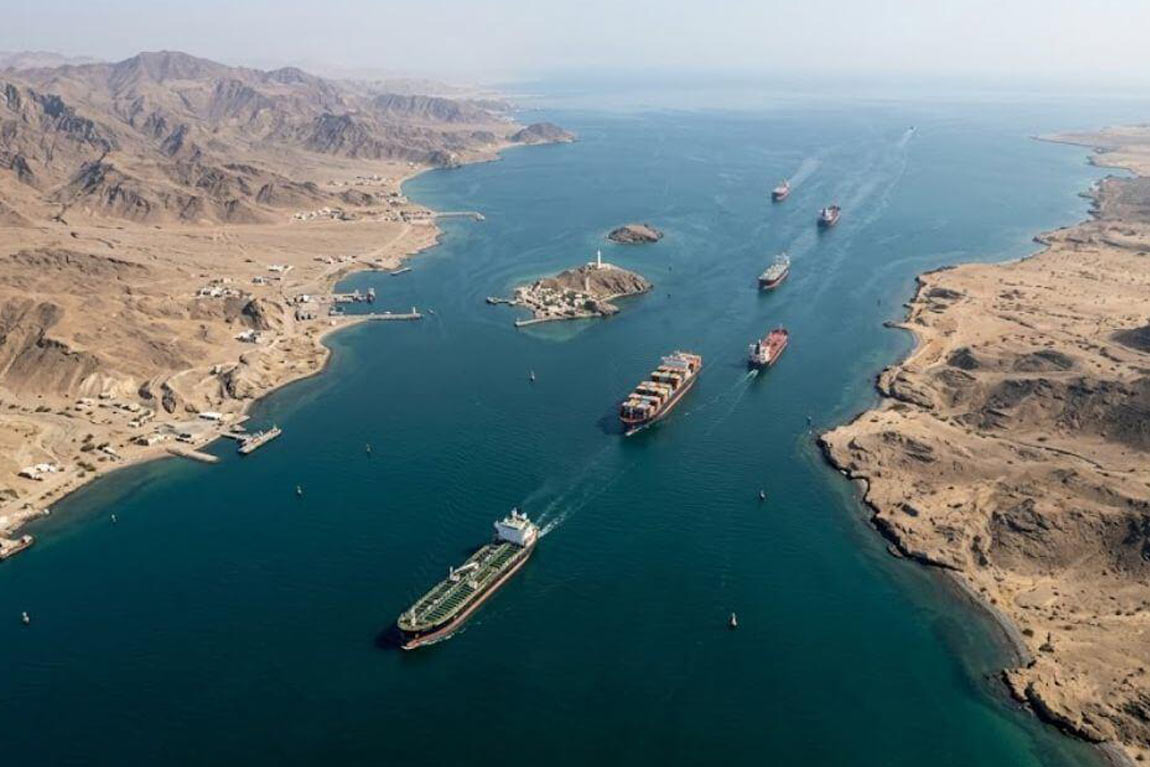
Expert Speak | 02 October, 2026
Schrödinger’s Conflicts: The Crisis of ‘Half Wars’
Spotlight
- Conflict management rather than resolution has become normalised, allowing wars to fester with no political clarity on how to end them.
- Swift military victories are increasingly a mirage. Unlike historical quick wins (such as the 1967 Six-Day War or the 1971 India–Pakistan war), today’s conflicts—like Israel’s ‘seven-front’ war or the Iran–Houthi standoff—feature automated, distanced warfare (missiles versus missiles, defence systems versus defence systems) that produce no decisive outcome, while the Islamic Revolutionary Guard Corps (IRGC) uses the chaos to expand its regional leverage.
- The real gap is political, not military. Resolving conflicts requires political compromise and diplomacy that no one is currently supplying, with the US checking out of its ‘global police’ role. The politics of conflict resolution today stand on a trial-and-error method.
As the United States (US) observed the 25th anniversary of the 9/11 terror attacks perpetrated by Al-Qaeda in 2001, the global security architecture—which was fundamentally and single-handedly remoulded by Washington, DC, in response to it—is going through a stormy unravelling.
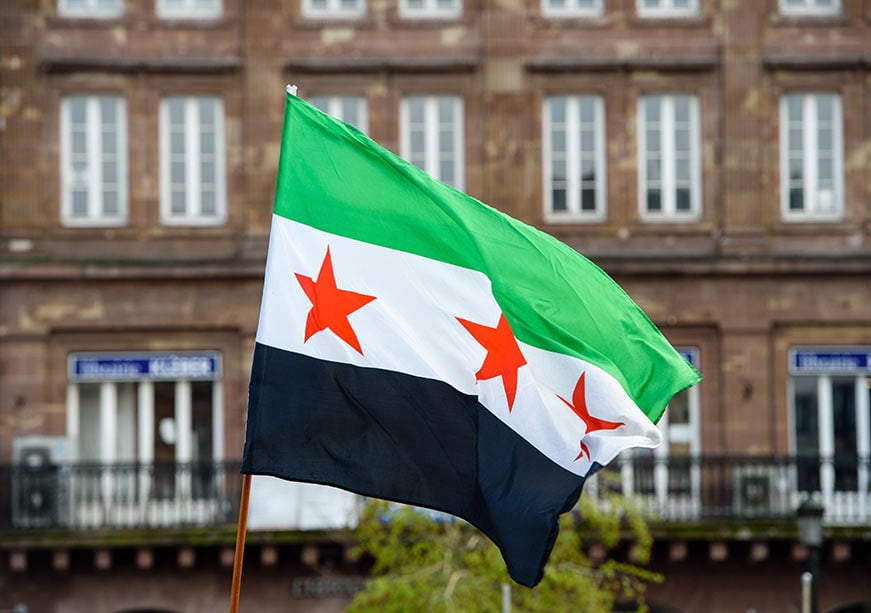
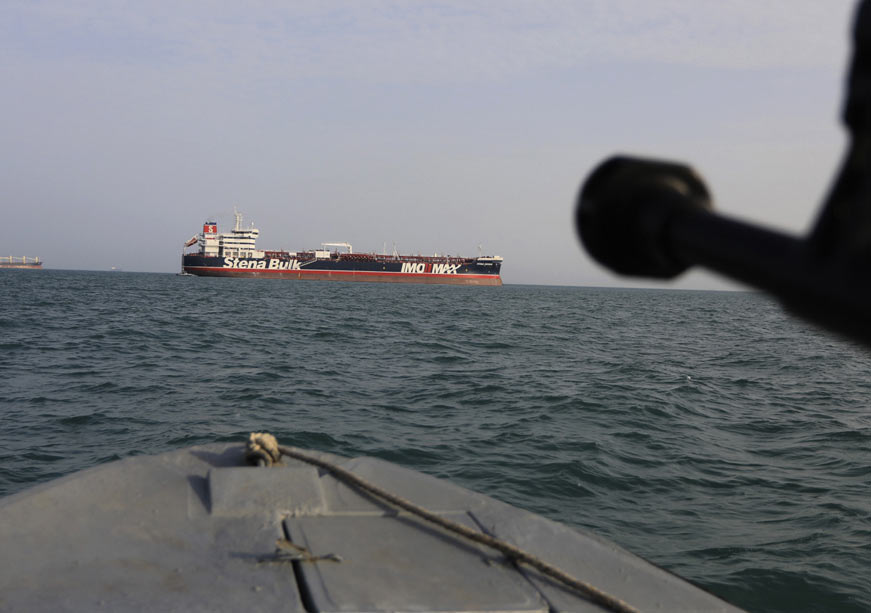
Six months into a directionless US and Israel military campaign against Iran and Tehran’s response of throttling all commercial trade in the Strait of Hormuz and targeting its neighbouring Gulf states under the pretext of their hosting American interests, the Red Sea is back in focus. The Yemeni Houthis (also known as Ansrallah) have made an attempt to control vast swathes of territory, including strategic islands, to create a more institutionalised presence across the Bab el-Mandab Strait, directly impacting both the Red Sea and the Suez Canal. Oil prices have again crossed the US$100 per barrel metric on the back of these developments. Incoming disruptions due to attacks being witnessed by Saudi Arabia may add a further blow to global energy security.
The spotlight on Yemen is not new; neither is the role of the Houthis nor their conflict with Saudi Arabia and Yemen’s own government. However, the importance of the Houthis in the pecking order of Iran’s “Axis of Resistance” construct has changed. For long, Hezbollah and Hamas had held these crowns, specifically the former, under the tutelage of the now-deceased chief of the Hezbollah, Hassan Nasrallah, killed in 2024 by Israel. Unlike Hezbollah, which is much more conjoined with Iran and the Islamic Revolutionary Guard Corps (IRGC), the Houthis have their own agenda and derive separate benefits from the alliance Iran has offered them over time.
The Half Wars
The broader question plaguing the Middle East conflicts is: how to resolve multiple adversarial relationships that include non-state actors? Israel, following the audacious attack by Hamas on 7 October 2023, mobilised its military into a ‘seven-front’ posture, largely led by an event to which not responding was not a political choice. However, much like the US post 9/11, Israel is facing its own versions of ‘forever wars’ underpinned by a fundamental question—how are terror and militant groups defeated? And can political compromise be the only way forward?
The US war in Afghanistan stands tall as an often-ignored example of half wars. The war, in its 20-year lifespan from 2001 to 2021, oscillated between a full-blown conflict and a ‘half war,’ where military aims were mixed with nation building, democratic agendas, and ideological reorientation of not necessarily a state, but a people that had successfully rejected forced external shifts for centuries. According to scholar Linda Bilmes, the cost of the two-decade-long conflict lies somewhere between US$4 trillion–US$6 trillion. After the US burned such a big hole in the exchequer, the Taliban retook the country in 2021, making the post-counter-terrorism designs of the years-long campaign an abject failure. Even today, reports suggest that Al-Qaeda continues to find safe haven under the Taliban’s tutelage in Afghanistan. It is difficult to see Afghanistan as anything but a defeat of American interests.
The other war, Iraq, often manages to escape scrutiny in today’s discourse. One of the main reasons why the Afghanistan war veered off its path was because military, financial, and political resources were diverted from Kabul to start the second front in Baghdad against Saddam Hussein in 2003. To this day, some argue that the Iraq war had worthy successes, in the sense that the country today has a democratic system that is flawed yet better than most in the region. Nonetheless, the Iraq war short-circuited the Afghan campaign, removing critical military capacity as the ‘war on terror’ expanded its mandate in a haphazard manner, eventually leaving both theatres as ‘half wars.’ The US military finally completed its withdrawal from Iraq on 30 September after 23 years of deployment, as militias once again gain strength in the country.
The legacy of these wars since 2001 has collided with the concept of forever wars in politics. US President Donald Trump ran his election campaigns on a more inward-looking America, one that does not need to police the world or spend trillions of dollars on foreign military campaigns. Yet, in 2026, Trump finds himself in a quicksand familiar to that of his predecessors. The Iran conflict has expanded instead of coming to any kind of swift conclusion as Yemen boils once again and the Houthis are well seated to block a second critical chokepoint for global trade—the Bab el-Mandeb Strait.
The Mirage of Military Victories
Swift military victories are not unheard of; Israel achieved it during the ‘Six-Day War’ in 1967 and India against Pakistan in 1971. Sometimes, contained wars do provide required strategic outcomes. In today’s Middle East, the Iranian tactical push is coming on the back of an existential crisis. The Islamic Revolutionary Guard Corps (IRGC) is now more in command than any other power centre within the country’s under-siege and complex polity. For the IRGC, the ongoing conflict is a rare opportunity to grab as much regional influence as possible and push the US into an uncomfortable position at home as the American midterm elections come closer. This has been substantiated by reports of IRGC commanders being deployed in Yemen to help upskill the Houthis. What kind of success this strategy will bring is open for debate. There is no doubt that Iran has a strong chokehold on the Strait of Hormuz and can piggyback on the Houthis to disrupt the Red Sea. The recently postponed meeting between the Gulf states and Iran in Oman is a trailer of Tehran getting what it demands by using its proxies to alter regional calculations and directly challenge the status quo of the American security umbrella.
The broader question is not about the complexities of conflict being witnessed in the region.
The broader question is not about the complexities of conflict being witnessed in the region. In fact, none of the players or theatres are new, but many of them have found a fresh lease of life. There is a rich history of conflicts petering out over time but not getting resolved, due to lack of political will. It is also not just about what kind of security and military architecture can and cannot work, or who will show up and who will not. The question is about what political tools are needed to run parallel to military conflicts.
For long, such as during the First and Second World Wars, body counts often dictated who ‘won’ and who ‘lost.’ Today, this is not the case. Wars tend to run in an open-ended manner for a long period of time with no outcome. Cheaper and more automated weapons mean that humans have added more distance between themselves and the battlefields, and often wars consist of defence systems taking on other defence systems and missiles taking on missiles, without any endgame in sight. Israel’s self-defined ‘seven-front war’ is a good example of this, considering that more complex tasks, such as the disarmament of Hezbollah in Lebanon after the country has been pounded by airstrikes for months, is turning out to be a hard ask. Similarly, despite the vast destruction witnessed in Gaza since October 2023, Hamas continues to persist in the region.
Breaking the political deadlocks will require compromise to be built into negotiations.
Breaking the political deadlocks will require compromise to be built into negotiations. Unfortunately, in the Middle East, this seems an unlikely outcome in the interim. A path to negotiations is further disrupted by ‘half wars,’ where military campaigns with ill-planned expectations and outcomes drag on purposelessly. The spotlight, hence, is on regional ability to form a political consensus, engage in deft diplomacy, and most importantly, to compromise. International institutions may end up playing a supportive role at best. The US has checked out of many of these processes and the Gulf, as a result, must now check in and fill in the vacuum—a transition that will be both chaotic and violent.
Kabir Taneja is Executive Director, ORF Middle East.