 Global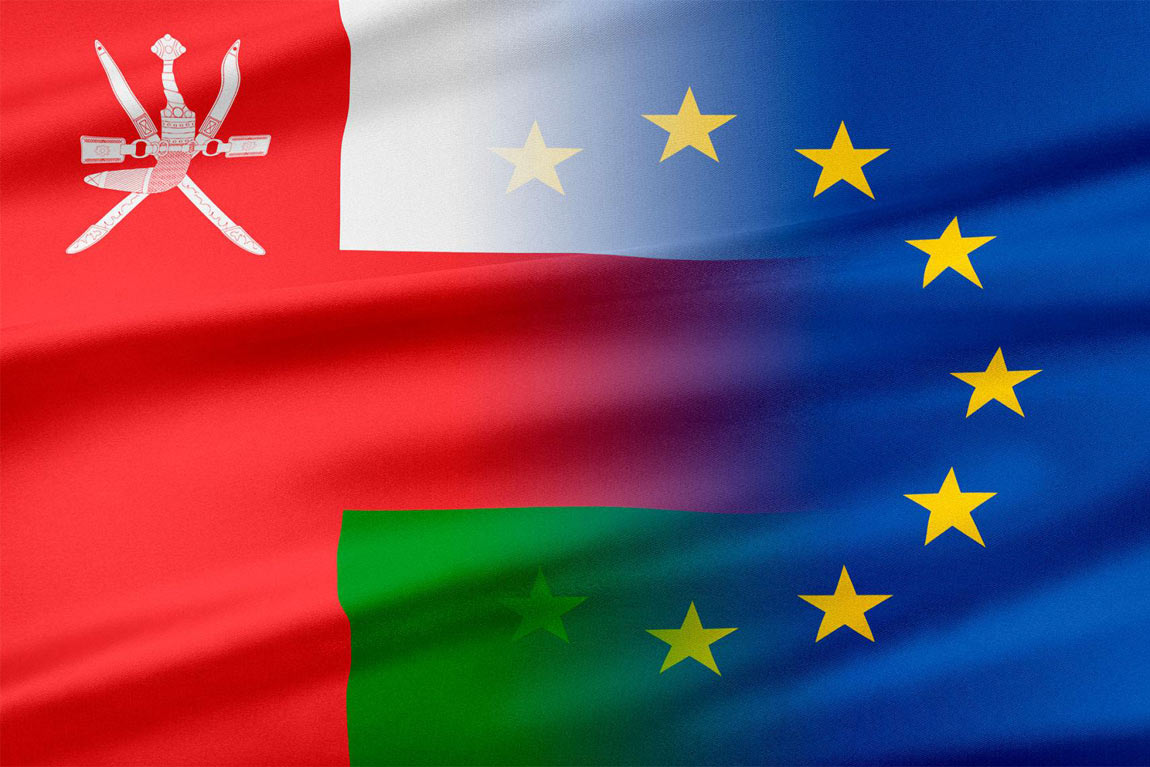
Expert Speak | 05 October, 2026
EU–Oman Relations: Brussels’ Quiet Strategic Move Amid a Roaring Conflict
Spotlight
- The European Union’s (EU) decision to open a Delegation in Oman should be assessed within the context of a wider geopolitical and geoeconomic transformation unfolding within the EU’s Eastern and broader Southern neighbourhoods. From Brussels’ perspective, one of the main challenges and priorities is to ensure the EU’s security of supply.
- Against this backdrop, Oman’s strategic importance to the EU appears to be increasing for several reasons. On the one hand, the EU already has an established basis for cooperation with the Sultanate in domains that are highly relevant to its security of supply and can be further built upon. On the other hand, the Gulf state’s geographical position and diplomatic role-assumption give it the potential to contribute to long-term regional stabilisation efforts.
- From the EU’s perspective, the strategic rationale to open a Delegation in Muscat appears to extend beyond a direct reaction to the Iran crisis and the disruptions it has engendered. The initiative can also be understood as a forward-looking step aimed at safeguarding the EU’s long-term prosperity and stability.
In July 2026, the European Union (EU) announced the opening of a Delegation to the Sultanate of Oman. Unlike in other Gulf countries such as Saudi Arabia, the United Arab Emirates (UAE), Kuwait, and Qatar, the EU had had no diplomatic representation directly established on the Sultanate’s territory. Matters relating to Oman were handled by the EU Delegation in Riyadh.
From a practical point of view, the opening of a new mission means that a country-specific mandate has been shifted from one geographical location to another within the same region. However, the strategic significance of such a diplomatic move extends beyond its immediate operational implications. A recent statement made by EU High Representative for Foreign Affairs and Security Policy, Kaja Kallas, on the announced opening, briefly captures this rationale: “Opening an EU Delegation in Muscat is a milestone in our relations. It is a clear signal of our commitment—to Oman, to the Gulf, and to stronger security partnerships with the region. Today, we are expanding our diplomatic footprint where it matters the most.”
The strategic significance of such a diplomatic move extends beyond its immediate operational implications.
Against this backdrop, this article seeks to examine the strategic reasons and underlying basis of this diplomatic initiative. To address these research objectives, it is essential to assess the mission opening in light of (a) the historical foundations and considerations underpinning the EU’s relations with the Sultanate and (b) Oman’s relevance and potential to facilitate the de-escalation of the Iran conflict and contribute to the Middle East’s lasting stabilisation.
An Existing Foundation and Interest to Build On
Cooperation between the EU and Oman predates the ongoing Iran war and is rooted in a multilayered relationship. The first layer is a region-to-region framework between the EU and the Gulf Cooperation Council (GCC), of which Oman is a member. It is anchored in the 1989 Cooperation Agreement and has been further strengthened since 2022 when the “EU’s first ever Strategy for the region” was presented. From the Union’s strategic perspective, one of the core elements of this strengthened cooperation is the enhancement of bi-regional economic relations. This development, to quite an extent, can be seen as due to the Russia–Ukraine war. The conflict in question at the EU’s doorstep fundamentally disrupted its established patterns of energy supply, brought an end to its long-standing security assumptions, and has become a defining factor in its external relations. Enhanced energy cooperation with the Gulf—both in the fields of hydrocarbons and clean energy—have, therefore, gained heightened strategic importance.
The second layer of the EU–Oman partnership consists of a bilateral framework. A key formal component of this is the cooperation agreement signed between the European External Action Service and the Ministry of Foreign Affairs of the Sultanate in 2018. The direct partnership between the actors aims at “strengthening political dialogue and cooperation in sectors of mutual interest.” The scope of cooperation encompasses a range of strategically significant domains for both parties such as (1) safeguarding maritime security and (2) enhancing clean energy trade and investment.
In a globalised economy with maritime transport as its “backbone,” commercial disruptions in Middle Eastern waterways can have both indirect and direct implications for the EU’s supply, despite the geographical distance.
In a globalised economy with maritime transport as its “backbone,” commercial disruptions in Middle Eastern waterways can have both indirect and direct implications for the EU’s supply , despite the geographical distance. They can strongly impact global energy prices or result in a shortage of commodities from the region, such as fertilisers, that the EU strongly relies on. Thus, the protection of freedom of navigation is in the EU’s essential economic interests and is consistent with its commitment to the principles of open and rules-based maritime commerce. In this domain, the Sultanate stands out as a particularly distinctive actor in the Middle East for three main reasons.
First, the Gulf state has territory both outside and within key regional chokepoints, at the crossroads of critical shipping routes. Oman, apart from Iran, is one of the two countries whose territorial waters extend into the Strait of Hormuz. Within this chokepoint, the Southern route passes through Omani waters and serves as a key artery of global trade. Second, the Sultanate has a “commitment to freedom of maritime navigation,” which it advocates for. Third, Oman has also proved to be a key counterpart for the EU in its defensive military efforts to prevent and counter disruptions to maritime security across the wider region. One concrete EU operation that conducted joint naval exercises with the Sultanate on multiple occasions (for example in 2021, 2022, or 2024) is EU NAVFOR Atalanta. As the latter’s website highlights: “Oman has been a major partner” of the operation; even at the time of the pandemic, it “continued to provide logistical support to the Operation and the Omani ports of Muscat, Duqm and Salalah remained the most frequently used by EU NAVFOR vessels.”
Looking beyond maritime security, the economic dimension of bilateral relations is equally important, with clean energy constituting one of its main angles. The Sultanate has strong potential as a green hydrogen supplier, which resonates with the EU’s own energy transition and diversification objectives. In accordance with Oman’s Vision 2040,[1] green hydrogen production and exports are key elements of the state’s economic diversification in the era of energy transition. As the International Energy Agency (IEA) highlighted, Oman is “well placed to produce large quantities of renewable hydrogen […] thanks to its high-quality renewable resources […] [and] vast amounts of land for large-scale project development.”
Looking beyond maritime security, the economic dimension of bilateral relations is equally important, with clean energy constituting one of its main angles.
These existing cooperation frameworks and domains demonstrate that the Brussels–Muscat relationship has a solid foundation to build upon, should there be mutual interest and newly emerging strategic motivation. In this regard, from the EU’s side, a clearly articulated interest in enhanced relations with Oman can be observed, especially since the outbreak of the Iran war.
Reacting to the Crisis and Looking Beyond It
According to the Oman Observer, a few weeks into the Iran war but prior to the announcement of the EU’s Delegation opening, EU Special Representative for the Gulf region Luigi Di Maio said that, the Sultanate is “increasingly viewed not as a traditional oil supplier, but as a strategic partner in diplomacy, energy transition and supply chain resilience;”[2] and, “[i]n a more complex world, partners like Oman are essential.”
As far as diplomacy goes, the Sultanate has been playing a unique—and tested—mediating role in the region for a few decades, essentially acting as a diplomatic broker. It navigates and seeks to reconcile competing interests and provides a conducive setting for backchannel diplomacy. It pursues an approach of “constructive neutrality”, in the words of its foreign minister, Badr Albusaidi. As the minister explained, “This means more than just being helpful or prepared to facilitate. It means simultaneously preserving and constructing public international law.” Additionally, Oman has “relatively stable relations” and interactions with both Washington and Tehran, and maintains direct ties and diplomatic channels with its fellow GCC states.
Against the backdrop of uncertainty and the widespread disruptions engendered by the Iran conflict, the EU’s diplomatic move can—to a large extent—be interpreted as a strategic reaction to the current crisis. However, from Brussels’ perspective, its rationale and objectives appear to extend beyond an immediate crisis-management effort, pointing to a long-term geostrategic investment.
Against the backdrop of uncertainty and the widespread disruptions engendered by the Iran conflict, the EU’s diplomatic move can—to a large extent—be interpreted as a strategic reaction to the current crisis. However, from Brussels’ perspective, its rationale and objectives appear to extend beyond an immediate crisis-management effort, pointing to a long-term geostrategic investment. Based on Di Maio’s remarks to the Oman Observer, “partnerships with countries able to combine stability, diplomacy and economic openness will become increasingly valuable”[3] amid mounting global uncertainty. Oman is one such partner.
A Strategic Step with Long-Term Potential
The EU’s decision to establish an institutional presence in Oman enables it to engage directly with Muscat every day and advance its interests on the ground at a geopolitically relevant location within a volatile region.
The opening of the Delegation constitutes a tangible step towards enhanced engagement with the Sultanate and has potential to pave the way for the partnership to further adapt to today’s geopolitical and geoeconomic realities. One instrument for structurally strengthening EU–Oman relations could be the negotiation of a Strategic Partnership Agreement (SPA) between the parties, an option that the EU has put forward and kept on the table for each individual GCC state since July 2025. As the European Commission’s website says: “The aim of the SPAs is to provide for an ambitious, modern, comprehensive and effective framework for bilateral cooperation tailored to the shared priorities and objectives of the EU and each respective GCC partner.” The opportunities and instruments thus appear to be in place for the EU–Oman relationship to evolve to a new level in the years ahead.
Eszter Karacsony is Non-Resident Fellow, ORF Middle East.
The author acknowledges the use of ChatGPT for language refinement.
[1] The country’s long-term national development and transformation plan.
[2] This is not a direct quote from Di Maio, but a quotation from the Omani news outlet reporting on what he said.
[3] This is not a direct quote from Di Maio, but a quotation from the Omani news outlet reporting on what he said.