 Global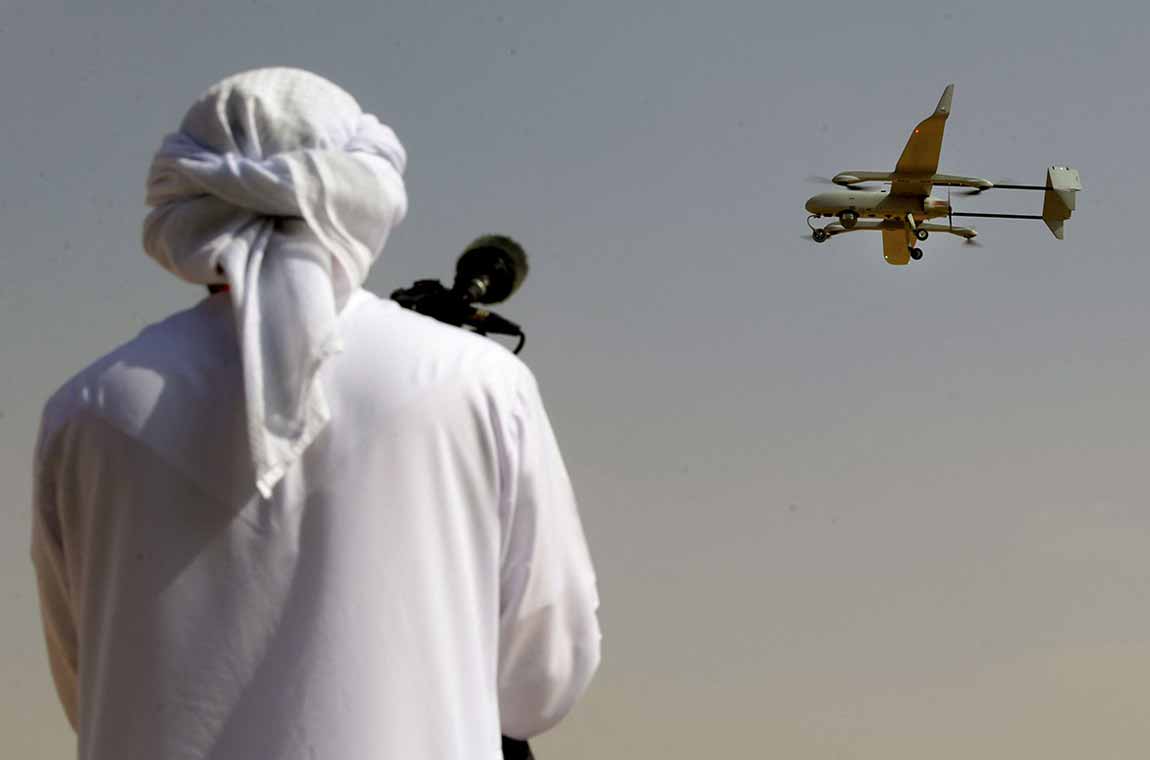
Expert Speak | 18 August, 2026
The UAE’s Defence Technology Priorities: Resilience, Dual-Use Capabilities, Sovereignty
Spotlight
- The UAE seeks to protect the civilian infrastructure and public confidence that supports its globally connected economic model.
- It aims to improve its defensive cost ratio through domestic production and diversified co-development partnerships for anti-drone systems.
- Space and cybersecurity, often treated as ‘evolving domains,’ are essential to its defence operations.
While the Middle East conflict that erupted in February 2026 may have shocked observers outside the region, Gulf defence strategies have accounted for long-term threats from a hostile neighbour since the 1979 Iranian Revolution, more so after the expansion of Iran’s missile and proxy capabilities over the past two decades. While existing United Arab Emirates (UAE) defence systems have proved resilient, the current conflict has revealed Iran’s increasingly sophisticated missile, drone, and cyber capabilities.
The UAE’s position as a globally connected commercial and investment hub is especially pronounced compared to its Gulf Cooperation Council (GCC) neighbours. Its travel and tourism contributed around 15 percent of annual gross domestic product (GDP) pre-conflict, around 90 percent of its population are expatriates, and it holds the highest concentration of data centre infrastructure in the region. Consequently, its priorities extend beyond defending territory to include preserving the secure and stable environment that supports its wider economic ambitions and protecting the civilians and infrastructure that underpin its economic model.
The highly aerial nature of the ongoing US, Israeli, and Iranian exchanges in the Strait of Hormuz has underscored the importance of acquiring technologies to intercept a new generation of weapons designed to evade and overwhelm established defence systems.
Aerial Systems: Domestic Drones with Diversified Partners
The highly aerial nature of the ongoing US, Israeli, and Iranian exchanges in the Strait of Hormuz has underscored the importance of acquiring technologies to intercept a new generation of weapons designed to evade and overwhelm established defence systems.
Table 1: Summary of Key Aerial Threats and Defensive Technologies
| Iranian Threat Type | Function | Defensive Systems |
| One-way Attack Drones/Unmanned Aerial Vehicles (UAVs)
Shahed family (Shahed-136, Shahed-107, Shahed-238) Unconfirmed use of Arash-2, Hadid-110, Geran-2 |
Slow, low-flying drones carry air-to-surface or integrated weapons and are fitted with electro-optical sensors for target location. These can be manufactured cheaply with mostly easily available commercial parts at between US$20,000 and US$80,000 per unit and carry no pilots. They have been used in large waves of one-way attacks probably intended to exhaust expensive interception systems and disrupt the day-to-day function of targeted infrastructure while attacks are underway. | Radars, infrared sensors and electro-optical cameras detect UAVs as they approach.
High-end surface-to-air interceptor missiles (as described below) are the established mode of countering UAVs but are expensive. The US’s Patriot missiles, in addition to Israeli Barak and SPYDER interceptors, are autonomous systems that use radar to identify targets, including UAVs, at low altitudes (as well as missiles). However, the most recent and advanced Patriot interceptor, the PAC-3 MSE, costs close to US$4 million per interception. In addition, while production of PAC-3 interceptors is set to ramp up, there is currently a finite amount to provide to the UAE. Other partners include Russia, which has supplied its Pantsir-S1 series. The UAE has also domestically developed inner-layer defences against drones including EDGE/Halcon’s SkyKnight missile system, which can track and neutralise up to 80 targets at a time. Their cost has not yet been released. Lighter-weight rockets, such as the US-made Hydra 70 and missiles like the UK-made Martlet or interceptor drones like the Ukrainian STING Interceptor that cost as low as US$2,100 per unit, are more economical alternatives. While the UAE’s purchase of these specific systems is not confirmed, its defence agreements with all three countries and the imperative for anti-drone technologies make future procurement likely. |
| Ballistic Missiles
Short-Range (300–700 km): Shahab-1, Shahab-2, Qiam-1, Fateh-110, Fateh-313, Raad-500, Zolfaghar, Dezful. Medium-Range (1,400 km – 2,000 km): Sejjil, Shahab-3, Ghadr, Emad, Khorramshahr family, Fattah family Kheibar Shekan, Haj Qasem |
Rocket engines launch missiles carrying conventional (or nuclear) warheads from the ground, shooting them into the upper atmosphere in a curved trajectory at high velocity. Their target is generally set from the ground and once airborne, the missile is guided by autonomous inertial navigation systems (INS) using self-contained sensors to perform manoeuvres. This makes it immune to external jamming, global positioning system (GPS) spoofing, or weather effects.
|
Infrared sensors on satellites or ground- and ship-based radars detect ballistic missile launches. Data is sent to command centres where interception points are calculated, followed by the launch of interceptor missiles. These are predominantly ‘hit-to-kill,’ destroying the ballistic missile through impact rather than explosives.
The US leads innovation in anti-ballistic missile (ABM) technologies with its Terminal High Altitude Area Defense (THAAD) system for use against short- and medium-range missiles just as they re-enter the atmosphere; the primarily ship-based Aegis system engages missiles at their mid-course in the upper atmosphere; and the ground-based Patriot system intercepts shorter-range missiles at lower altitudes. They are mostly used together in a ‘layered defence.’ The UAE has both THAAD and Patriot systems, as well as South Korean short-range Cheongung-II missiles and Israeli Barak and SPYDER systems. These systems are expensive at between US$500,000 and US$12.8 million per missile unit. Directed energy weapons systems based on satellites or aircraft are being explored as potential alternatives that could heat and damage missiles during flight or before launch. However, these are all at the development stage. |
| Cruise Missiles
Land Attack Cruise Missiles (LACMs): Soumar, Hoveizeh, Ya Ali, Paveh Anti-Ships Cruise Missiles (ASCMs): Noor, Ghader, Ghadir, Abu Mahdi, Nasr, Kowsar, Jask Supersonic: Khalij Fars, reported negotiation for China’s CM‑302 Hypersonic: Fattah-1, Fattah-2
|
A booster rocket propels the cruise missile to cruising speed, when a jet engine takes over. Satellite navigation and Inertial Navigation System (INS) combine to guide the missile on a pre-programmed path. The missile can drop to low altitudes to avoid detection.
Iran also possesses supersonic and hypersonic missiles, which fly at higher velocity than regular cruise missiles, using different propulsion techniques. |
The low-altitude flight paths of cruise missiles allow them to evade ground radar until they are about 40 km away, so radars attached to aircraft, aerostats, towers, UAVs, or satellites are used to detect beyond this ‘radar horizon.’ Infrared or satellite sensors are also used for detection.
Cruise missiles are then targeted with surface or ship-to-air interceptor missiles including the Patriot system, or a close-in weapon system (CIWS), which is a last-line defence for when a cruise missile reaches close to a target, consisting of automatic guns or short-range missile systems including the Phalanx CIWS and SeaRAM. Some of the systems the UAE possesses, including Patriot, Pantsir and SPYDER, are designed for dual use against both cruise and ballistic missiles, among other threats.
|
| Combat Aircraft
F-4, F-14, F-5, Su-24, MiG-29, J-7, F1, Saeqeh, Azarakhsh, Kowsar. Reported purchase of Yak-130, Su-35.
|
Ground radar or airborne sensors detect a possible enemy aircraft, and combat aircraft are sent to engage with air-to-air missiles. Aircraft with strike or ground attack capabilities carry bombs, rockets, or air-to-ground missiles and use onboard navigation systems to locate targets. | Ground, ship, and airborne radars detect incoming aircraft in addition to infrared sensors.
Ground-to-air engagement includes surface-to-air missiles, such as those of the Patriot system or CIWS to bring down the aircraft. Engagement can also take the form of electronic warfare, in which electromagnetic signals are used to disrupt or spoof the aircraft’s radars. |
Sources: Compiled by the author using sources as linked.
To defend against these weapons, the Gulf region has drawn primarily from US systems, with the most advanced systems described in Table 1 being manufactured by Raytheon and Lockheed Martin. However, since incoming attacks are overwhelmingly conducted using drones, using Patriot interceptors costing around US$4 million per engagement is increasingly becoming unsustainable against low-cost mass drone attacks. The UAE has, therefore, directed significant resources into developing its domestic UAV technologies, with UAE defence conglomerate EDGE Group producing the Shadow series and developing other autonomous airborne interceptors, such as the Vortex-E and Allag-E, to neutralise incoming drones. While the price of an individual UAV mentioned here is not publicly available, similar systems such as the Ukrainian P1-SUN and Sting Interceptor are US$1,000 and US$2,100 per unit respectively. This would drastically reduce the cost of drone defence.
EDGE is also diversifying its partnerships to develop these systems via European co-development agreements intended to widen access to specialist technologies while supporting localisation. The Eurosatory defence showcase in Paris in June 2026 saw France’s Safran pledge to partner with EDGE on developing weapons, including those designed to be carried by drones. Safran has valuable expertise in embedded Artificial Intelligence (AI) and optics that underpin UAVs’ autonomous sensing and guidance, and is expanding its UAV capabilities through a strategic partnership agreement with Turkish UAV developer-manufacturer Baykar. Italy’s Leonardo has also made a strategic agreement with EDGE, specifically targeting the development of counter-drone systems, plus a joint venture announced in June for developing capabilities critical for defence against UAVs, including radars and detection sensors.
From a procurement perspective, this diversification represents an expansion rather than a replacement of the UAE’s historically US-focused defence partnerships. American systems will remain central to their missile defence as the most advanced in the market. However, the rapid evolution of technology-enabled UAV weapons has clearly made co-development opportunities and a broad supplier base essential to the UAE’s defensive cost-exchange ratio and procurement speed.
Space represents an “evolving domain,” according to certain UAE strategic defence documents, yet it already functions as an enabling layer for more mature capabilities.
Space Systems: Sovereignty Beyond Earth Observation
Space represents an “evolving domain,” according to certain UAE strategic defence documents, yet it already functions as an enabling layer for more mature capabilities. AI-enabled warning, radar, navigation, and targeting systems often require data provided by satellites that can monitor territory through darkness, cloud, and dust. Beyond immediate defence against incoming threats, this information is also essential for public services such as emergency response, disaster mapping, and urban planning. The reason for this “evolving” label is likely institutional rather than operational: space capabilities are already important but less integrated into procurement and command structures than established land, air, or naval systems.
As such, the UAE’s National Space Strategy is more revealing than military strategies for understanding how the country is building defence-relevant space capacity. It prioritises competitive space services, and advanced local capacity in space science, research, and manufacturing. Although framed mainly in civilian terms, these priorities form dual-use foundations for secure communications, surveillance, and situational awareness.
An illustration of this is Space42 and ICEYE’s 2024 joint venture to manufacture synthetic aperture radar (SAR) satellites, which provide highly detailed imagery for mapping in the UAE. By localising manufacturing and technical expertise, the agreement gives the UAE more sovereign access to persistent all-weather imagery that is useful not just to disaster response and maritime surveillance, but also to national-security monitoring and situational awareness, which is of direct relevance to defence planning and operations. This localisation is a transition from purchasing imagery to controlling production and highlights that although direct defence use cases of space technology may still be considered “evolving,” many dual-use capabilities are already being actively pursued.
Cybersecurity: A Dual-Use Priority
Another “evolving domain” within the UAE defence industry is cyber capabilities, though they are just as deeply integrated into military operations and civilian infrastructure, both of which are targeted by state and non-state actors. Cybersecurity capabilities are inherently dual use, with solutions that improve network resilience, threat detection, and incident response. These are needed both for protecting military command systems, logistics networks, and operational technology as well as enhancing the overall security of banks, ports, airports, energy infrastructure, healthcare systems, and government services. This matters particularly in the UAE, since the data centre industry’ security as well as other digitally enabled sectors relies on the resilience of their digital infrastructure, apart from their physical sites.
The UAE is accustomed to the threat of cyberattacks, since the high levels of capital flowing through the country make it a lucrative target for financially motivated cybercriminals and was ranked as having the most cyberattacks globally per capita in 2024. Amid the US–Israel–Iran conflict, reported daily attacks have risen from roughly the pre-war level of 200,000 to 800,000. Reports that the Fujairah Port strike in May 2026 was the result of a combined cyber-kinetic attack suggests that future defensive planning may need to account more fully for the coordinated use of cyber operations alongside physical drone and missile assaults. Given also the ambitious national targets for representation of the digital economy in the UAE’s national GDP and adoption of AI in government services—systems that are at high risk of disruption or manipulation through cyberattacks—protecting the digital infrastructure is a critical national security priority.
The host of agreements signed at the ‘Make it in the Emirates’ event in May 2026 demonstrates how the UAE is using foreign partnerships to build cross-sector capability rather than acquire isolated products. At the event, Lockheed Martin, Siemens, and Dell Technologies (among others) agreed to create a Cybersecurity Centre of Excellence in the UAE, with each offering expertise in cybersecurity for aerospace and defence, critical infrastructure, and industrial sectors and storage solutions respectively, and knowledge transfer to local professionals as a core function.
The cybersecurity imperative will only grow as frontier AI models lower the level of technical expertise necessary to conduct sophisticated cyberattacks. Systems such as Claude Code are now able to facilitate offensive cyber capabilities for those without significant expertise in cyber operations. Beyond defence purposes, these investments will also underpin the UAE’s wider digital transition, making civilian systems more secure and resilient during peacetime as well.
Conclusion
The UAE’s defence priorities are driven by the need to respond to immediate threats from Iran as well as to protect its ambitious and highly digitised economic model in the long term. This helps explain their defence strategy of retaining proven US systems while diversifying partners and localising capability in faster-moving domains. As geopolitical competition and technologically enabled conflict continue to evolve, this integration of localisation and sovereignty initiatives within defence technology development and procurement will become an increasingly defining characteristic of the UAE’s security strategy. As such, companies that can provide advanced defence technologies alongside opportunities for co-development, local manufacturing, and knowledge transfer are expected to find a receptive market in the country, which prioritises long-term industrial partnerships over conventional buyer–supplier relationships.
Elizabeth Heyes is Junior Fellow in Emerging Technologies, ORF Middle East.
The author acknowledges the use of ChatGPT 5.5 to aid background research and for language refinements prior to submission.