 Global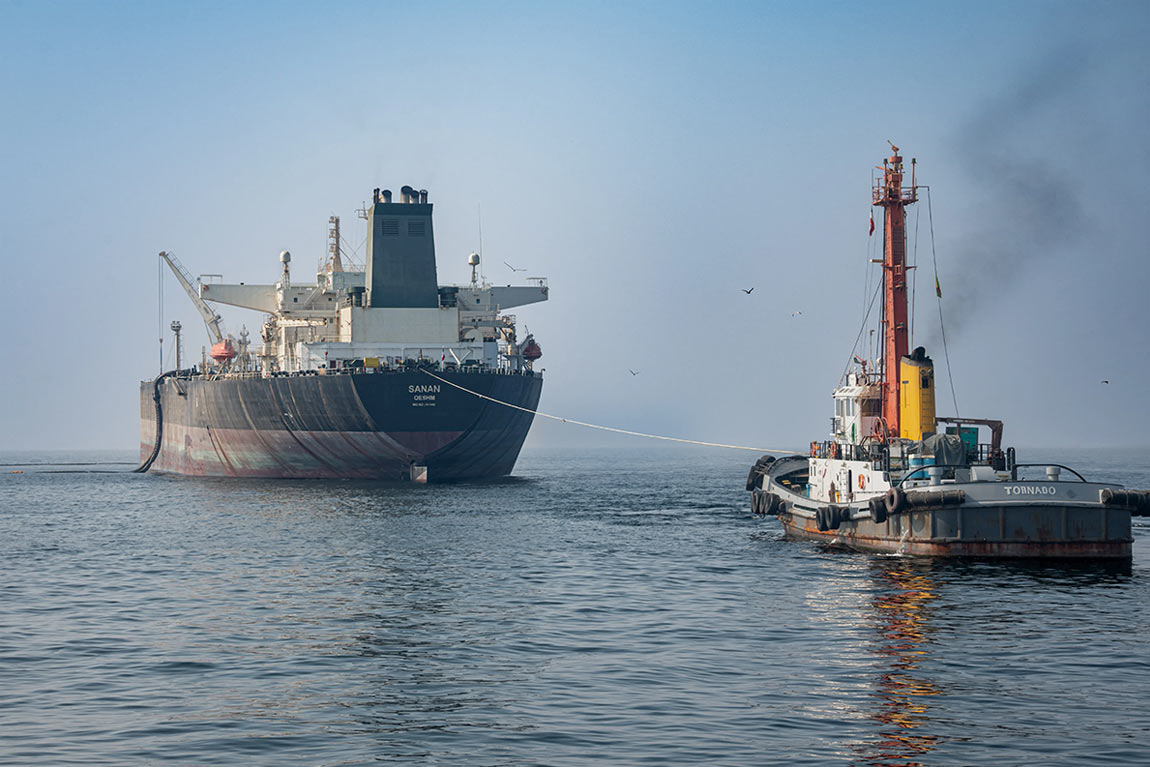
Expert Speak | 22 April, 2026
Why Asia Cannot Replace Gulf Crude Easily
Spotlight:
- The ongoing crisis highlights Asian refineries’ heavy reliance on Middle Eastern crude rooted in design and supply chains.
- Oil substitution is costly and inefficient due to decades of specialisation in Gulf processing.
- India and China show resilience; South Korea and Singapore face moderate risk; Japan, remains most vulnerable.
The energy crisis triggered by the 2026 Iran war was the culmination of a structural dependency built over half a century. In 2025, Asia imported 14.74 million barrels per day of Middle Eastern crude , nearly 60 percent of its total purchases. When the United States (US) and Israel struck Iran in February 2026, Iran closed the Strait of Hormuz, the dependency became a regional emergency. The International Energy Agency (IEA) described the disruption as the largest supply shock in the history of the global oil market. The question that followed —whether Asia could source oil elsewhere—proved far from straightforward.The reasons lie in chemistry and capital: refineries are specialised systems, built over decades to process Gulf crude, with billions invested in desulfursation and heavy‑crude capacity. While the current crisis may not be permanent, Asia’s dependency on Middle Eastern crude is, necessitating a deeper examination of the structure and extent of this vulnerability.
Types of Crude and Gulf Crude Variety
Not all oil is the same. Every barrel of crude is defined by two properties: density and sulfur content. Density differentiates the crude between light and heavy. Light crude flows easily and yields large volumes of high-value fuels like gasoline and diesel. Heavy crude is thick and viscous, requiring more processing. The second major characterisation is based on its Sulfur content and is either “sweet” or “sour”. Sweet crude has low sulfur content so it is simpler to refine but commands a premium. Sour crude requires specialist equipment, desulfurisation units, to strip out impurities. It sells at a discount, making it attractive to refineries that have already made the capital investment. Gulf crude is largely medium and sour, while US crude is light and sweet. Therefore, these are chemically distinct products, not interchangeable substitutes.
Density differentiates the crude between light and heavy. Light crude flows easily and yields large volumes of high-value fuels like gasoline and diesel.
Saudi Arabia, the United Arab Emirates (UAE) and Iraq are Asia’s three largest suppliers. Saudi Arabian Light is the benchmark medium-sour grade, anchoring refinery diets across China, India, Japan and South Korea. Arab Heavy and Medium are heavier and more sulfurous, the feedstock for Asia’s more complex refineries. Iraq’s Basra grades are broadly similar. The UAE’s crude is lighter but still sour. While this oil is produced in the Middle East, it is refined in Asia. Therefore, these medium-to-heavy sour grades define what Asian refineries were built to consume.
Why Asia Cannot Easily Replace Gulf Crude
Asian economies face several constraints. Refiners in China, Japan, South Korea, India and Southeast Asia have configured their plants to process medium and heavy sour crude grades produced by Gulf exporters. These are not general-purpose facilities but are precision systems, calibrated over decades for a specific feedstock.
Asian refineries have invested billions in desulfurisation systems, which are calibrated for high-sulfur Gulf crude that is typically cheaper than low-sulphur grades. Switching crude grades changes product yields at refineries, requiring operational adjustments across blending, cracking and output specifications. This erodes throughput in the short term, leading to yield trade-offs that can reduce profitability.
The alternatives available are fundamentally mismatched. US crude is light and sweet, the incorrect density and chemistry for refineries built around Gulf sour crude. Russian supply is largely committed to China and India. Refineries that cannot substitute lighter grades without configuration penalties are now competing for alternatives from the Americas and West Africa, adding freight cost, lead time and feedstock uncertainty. As a result, there are no viable near-term replacements for Gulf crude. Permanent reconfigurations can take years and cost billions. For example, ExxonMobil spent US$2 billion and four years adding a crude distillation unit at its Texas refinery to process a new crude type, light Permian shale oil.
Refineries that cannot substitute lighter grades without configuration penalties are now competing for alternatives from the Americas and West Africa, adding freight cost, lead time and feedstock uncertainty.
This dependency is not accidental. Most Asian refiners lock in more than 50 percent of their crude through long-term contracts, limiting their ability to rapidly pivot. Additionally, Middle East oil producers are investing in Asian refineries, that is deepening this dependency. Saudi Aramco acquired equity stakes in refineries across Asia, integrating supply chains and guaranteeing customers while making Asian refiners more dependent on Gulf feedstock. Hence, some Asian refineries have already cut throughput by 10 percent or more since the Hormuz closure. This is not because there is no oil in the world, but because there is a paucity of the right kind.
Variations amongst Key Asian Refineries
While the dependency on Middle Eastern crude remains, not all Asian nations and refineries face the same degree of exposure. A refinery’s ability to switch crude types is determined by several interlocking factors: processing equipment complexity, supply contracts’ structure, owners and Gulf producers’ equity ties, and the product slate economics it is optimised to deliver.
The Nelson Complexity Index (NCI) captures the first of these. It measures the sophistication of a refinery’s secondary conversion equipment like catalytic crackers, hydrocrackers, cokers and reformers that allow it to process heavier or more sulfurous crude and still yield high-value fuels. A higher NCI indicates greater feedstock flexibility, meaning the refinery can handle a wider range of crude grades.
Yet, flexibility is not the same as independence. A refinery may be technically capable of running multiple crude types but still be contractually locked into long-term Gulf supply agreements, ownership structures, or product-yield economics calibrated around specific grades. We assess five key Asian economies on these dimensions.
India is considered to have a relatively high degree of flexibility. Its Jamnagar complex, operated by Reliance Industries, carries an NCI of 21.1, the highest of any single-site refinery in the world and has processed over 216 different crude grades. India has also actively diversified its crude import base, around 65–70 percent of crude now comes from non-West Asian sources, and roughly 70 percent arrives via routes outside Hormuz, compared to 55 percent earlier. Russia accounts for roughly 35 percent of India’s crude imports and the US for 10–13 percent in peak months. The Indian government stated that Indian companies have “full flexibility to source oil from different sources and geographies based on commercial considerations.” India’s relative insulation is therefore both technical and strategic, high NCI refineries combined with a deliberate supply diversification policy.
China occupies a comparable position of relative resilience. Major refineries including Sinopec’s Zhenhai complex (NCI 11.13) and Zhejiang Petrochemical’s integrated Zhoushan facility (NCI 12.06) are built to process heavy and sour crudes, with fluid catalytic cracking (FCC) and hydrocracking units calibrated for medium-sour Gulf grades. China sources roughly half of its seaborne crude imports from the Middle East but does not rely on any single country for more than 20 percent of its supply. In 2025, five countries: Russia, Saudi Arabia, Malaysia, Iraq and Brazil together accounted for 62 percent of its crude imports. While China’s General Administration of Customs has not reported crude imports from Iran since 2022, analytics firm Kpler estimates Iran accounted for 12 percent of Chinese crude imports in 2025. China also produces over 4 million b/d domestically and its access to discounted Russian crude has provided insulation.
The Indian government stated that Indian companies have “full flexibility to source oil from different sources and geographies based on commercial considerations.”
South Korea presents a more divided picture. Its refineries are large and highly complex, Ulsan (NCI 7.3), Yeosu (NCI 6.8) and Onsan (NCI 9.8) all feature heavy oil upgrading, desulphurisation and residue conversion units. At the national level, the Middle East accounted for 69.6 percent of Korean crude imports in 2025, down from 86 percent in 2016, while the US share rose to 16.3 percent from 0.21percent over the same period. However, the distribution is highly uneven by company. Onsan, operated by S-Oil relies on Middle Eastern oil for over 90 percent of its inputs, a result of Saudi Aramco holding a majority stake and locking in Saudi feedstock. Contrastingly, Daesan I refinery (NCI 10.63), operated by HD Hyundai Oilbank, has 60 percent dependence on Middle Eastern oil, the lowest among its peers. Korean refiners remain structurally cautious about switching to US light sweet crude: retrofitting plants for lighter grades would prevent efficient heavy Gulf crude processing. The economic rationale for Gulf crude also persists as the pre-conflict lower prices, shorter transit and established supply chains generate margins that US crude cannot easily replicate.
Singapore, a trading and export refining hub rather than a domestic consumption economy, has a distinct profile. Over two-thirds of Singapore’s crude imports come from the UAE, Qatar, Saudi Arabia and Kuwait. Its dependence on Middle Eastern oil rose to over 70 percent in 2025 (from 50 percent in 2024), after ExxonMobil completed a refinery expansion requiring heavy oil supply from the region. Singapore’s refineries are export-oriented and process a variety of grades, but the recent expansion makes its crude intake more concentrated on Gulf heavy grades.
Japan seems to be the most structurally exposed of the five economies. Japanese refineries are smaller and less complex than the newer facilities in China, South Korea and India, with limited secondary conversion capacity to handle grades outside their configured range. Japan’s import mix is concentrated in light and medium Middle East grades accounting for roughly 70 percent of delivered import volumes since 2024. Japan has taken steps to diversify: it purchased a record 103,784 b/d of US crudes in 2025, nearly double the 2024 figure, and Taiyo Oil made Japan’s first import of Russian Sakhalin Blend, a light sweet crude since January 2023. However, analysts note that refinery configurations and logistical constraints are likely to cap how far Japanese refiners can shift toward US crude.
The five economies examined reveal a spectrum of vulnerability rather than a uniform crisis. Decades of competitively priced Gulf crude, stable long-term contracts and equity investments by the Gulf into Asian refinery infrastructure created a self-reinforcing system. India and China have demonstrated higher resilience through technical complexity and supply diversification, South Korea and Singapore face real but more manageable exposure, while Japan remains the most structurally vulnerable. The chemistry of Gulf crude and the capital architecture of Asian refining have evolved together. Replacing one requires rebuilding the other, and that is not a short-term proposition.
Parul Bakshi is Fellow, Energy and Climate, ORF Middle East.
Samriddhi Vij is Associate Fellow, Geopolitics, ORF Middle East.