 Global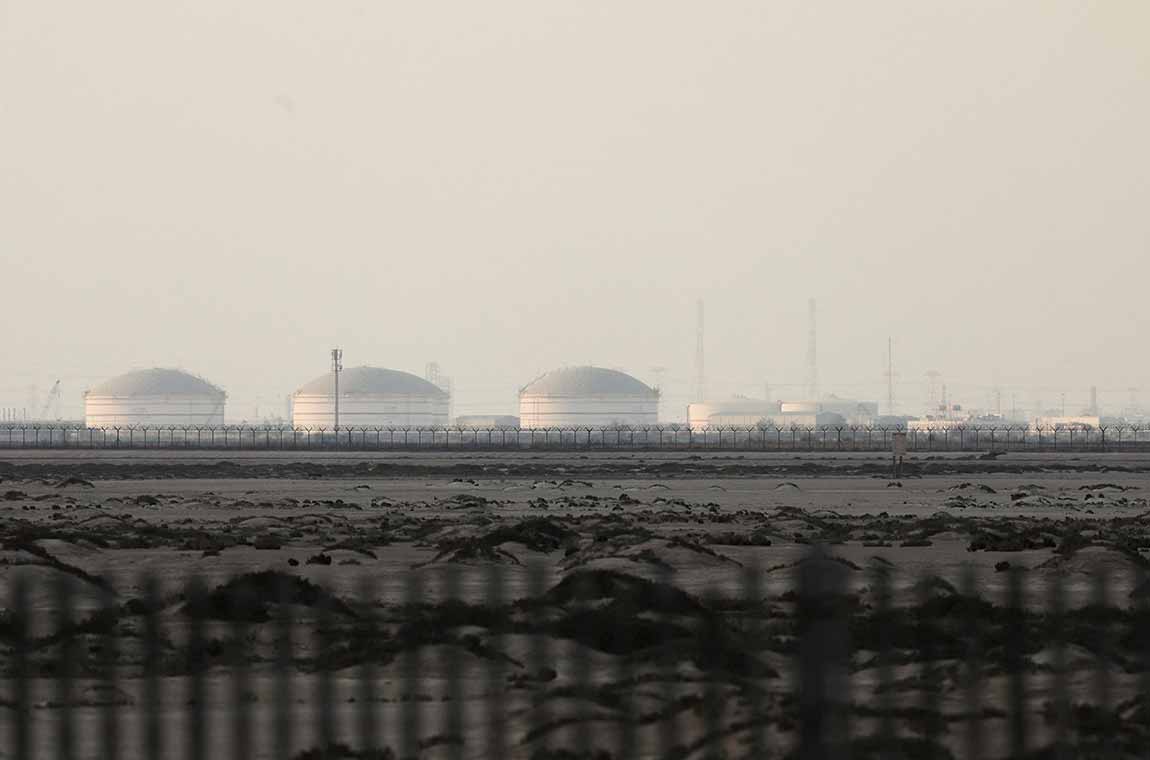
Commentaries | 11 August, 2026
The GCC Must Move from Crisis Response to Real Deterrence
Kuwait and Bahrain may lack the capacity to deter Iran alone, but the GCC has the military architecture to respond collectively. The question is whether its members have the political will to use it.
The war between the United States and Iran has drawn in Israel voluntarily and the Arab Gulf states involuntarily. While Israel has been able to step back from the conflict since its peak, the Gulf Cooperation Council (GCC) has struggled to shield itself from Iranian hostilities. After the initial 40-day period of war culminated in a ceasefire in April, people across the Gulf breathed a sigh of relief.
Despite material damage and casualties, social resilience has held, supported by air defence and public warning systems.
Since the ceasefire, however, Iran has doubled down on a divide-and-conquer strategy. It is betting on the absence of a credible and unified Gulf deterrent. In doing so, Tehran is creating political asymmetries within the GCC by demonstrating that it can selectively impose costs on individual member states without necessarily provoking a unified response.
The nature of the targets has also varied across Gulf countries, ranging from energy and civilian facilities to ports and military infrastructure. Iran intensified its attacks against Kuwait and Bahrain when tensions with the United States resurfaced in the Strait of Hormuz. This may be because threats against both countries carry domestic political appeal within Iran. Kuwait has previously detained IRGC operatives attempting to infiltrate its territory, while Bahrain remains subject to historical Iranian claims of sovereignty. For Tehran, targeting these two countries may therefore appear low-risk and high-reward.
The challenge for the Gulf states is to overturn the perception that individual countries can be attacked at little cost to Iran. This challenge does not arise, as some have asserted, from a lack of capability. Kuwait and Bahrain may not individually possess the capacity to take on Iran, but the GCC provides a mechanism through which its members can exercise collective deterrence, including the Unified Military Command and the Peninsula Shield Force. These structures remain largely untested in an active military theatre, but they exist.
The fact that many of the Gulf’s offensive and defensive systems come from similar suppliers and can operate together also strengthens the case for a collective mechanism. The capability, therefore, exists. The political will may not.
The most consequential question is whether those capabilities can be translated into a collective political response when only one or two member states are targeted.
The Limits of Collective Restraint
Iran and the Gulf states are fighting two different threat matrices. Were the Gulf to believe it was engaged in an existential struggle, as Iran appears to, the political will to take offensive action would be vastly different.
Iran has emerged from this war on the offensive because its leadership believes the country’s stability is under threat. Solidarity among the Gulf states has been exemplary, as demonstrated by official statements and mutual visits. Translating that solidarity into deterrent action, however, remains considerably more difficult.
The Gulf faces serious threats from Iranian ballistic missiles, drones and support for regional proxies, alongside the disruption of the Strait of Hormuz. Yet these threats have not generally been perceived as existential enough to create support for an overt, collective military response. Reports of covert retaliation, however, have become more frequent when Iran is believed to have crossed the red lines of individual states.
That asymmetry matters because deterrence is ultimately psychological. Iran’s leadership appears willing to tolerate significant costs because it believes the survival of the regime is at stake and preserving control is imperative, particularly when it faces threats from the US.
The Gulf states, by contrast, remain focused on protecting their most important assets while limiting the damage caused to economic development and investor confidence. Those are rational priorities, but they inevitably create a higher threshold before military escalation becomes politically acceptable across the GCC.
The impact on national priorities also varies across the Gulf. Saudi Arabia, for example, may be able to absorb more attacks than Bahrain, which has less capacity to withstand their economic and material consequences. Such differences make it harder to establish a unified Gulf threshold for retaliation.
The question, therefore, is whether this collective Gulf calculus will pay off. Because the conflict is not yet seen as existential in the Gulf, its governments have so far chosen to exercise joint restraint.
That restraint gives Iran time to recognise that it ultimately needs a shared negotiating table with its Gulf neighbours. It also allows the GCC to wait for Iranian capabilities to be weakened further or for Tehran to conclude that continued hostilities are producing diminishing returns. Some may also hope to change Iran’s strategic calculations by offering the prospect of future economic integration.
The risk is that Iran overplays its hand. Escalation could follow if Tehran misjudges the Gulf’s collective threshold.
If Iran begins to interpret Gulf restraint as strategic hesitation rather than deliberate prudence, it may continue steadily raising the costs imposed on individual states. In doing so, it could inadvertently cross a joint red line and compel a collective response.
Preventing such a miscalculation should be a central objective of Gulf policy. The threat of an offensive response must remain credible, even if military action remains an undesirable option that would carry a heavy human cost.
Making Gulf Unity Visible
The clearest indications of Iranian intent include attacks on Kuwait’s airport, damage to critical infrastructure such as Ras Laffan and attempts to exploit domestic instability, as seen in Bahrain. Should such attacks begin to undermine public confidence, Gulf restraint is likely to weaken.
The Gulf States would also be wise to start doubling down on reinforcing perceptions of greater unity. It can do so by renewing its commitment to shared military capabilities, conducting joint exercises, convening more frequent high-level political summits and coordinating diplomatic engagement with allies and multilateral institutions.
Such signalling would demonstrate that any Iranian miscalculation could place the two sides of the Gulf on a path towards an irreversible confrontation, stretching Iran across several fronts simultaneously. More importantly, it would begin to change Tehran’s assessment of the costs associated with targeting individual Gulf states.
Deterrence depends on convincing an adversary that selective coercion will no longer produce selective political responses. Until that perception changes, Iran is likely to continue testing the limits of Gulf restraint.
Those limits, however, are not infinite.
This commentary originally appeared in Arabian Business.