 Global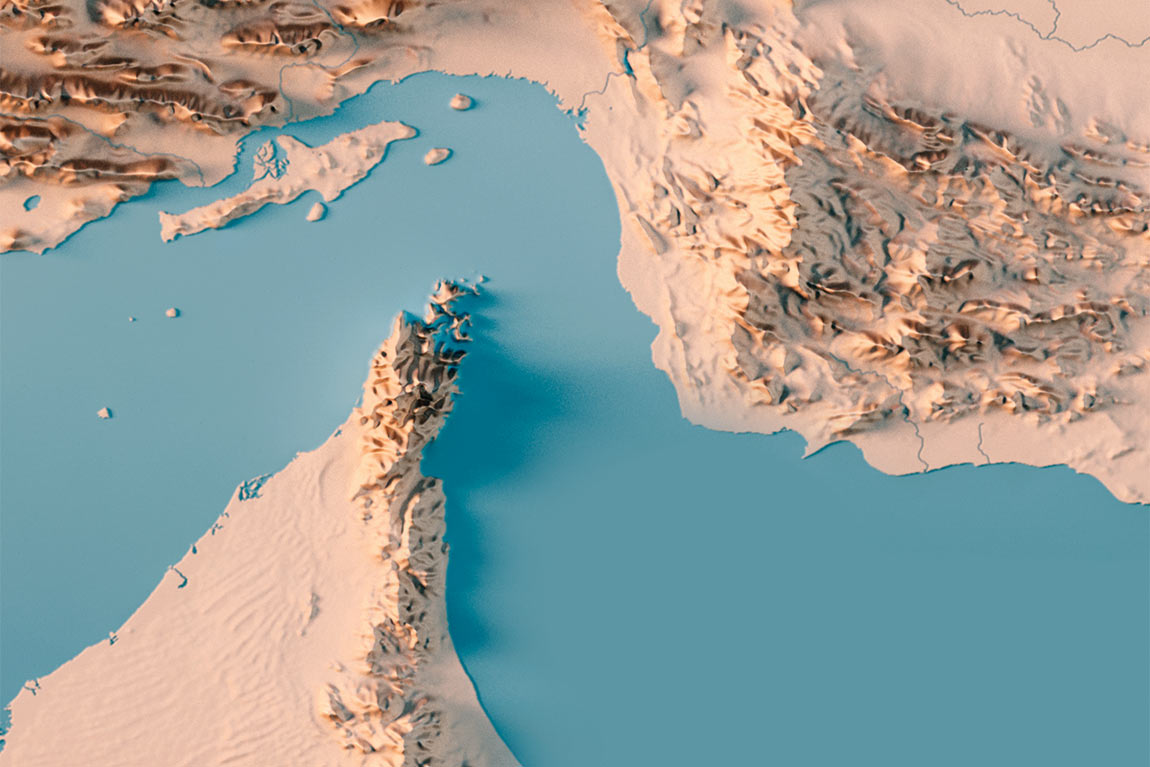
Special Reports | 15 October, 2026
The Hormuz Inflection: Energy Security and Connectivity Networks in the Middle East
Attribution: Mannat Jaspal, Leigh Mante, and Cauvery Ganapathy, The Hormuz Inflection: Energy Security and Connectivity Networks in the Middle East, ORF Middle East, October 2026.
Introduction
The Energy Security Imperative
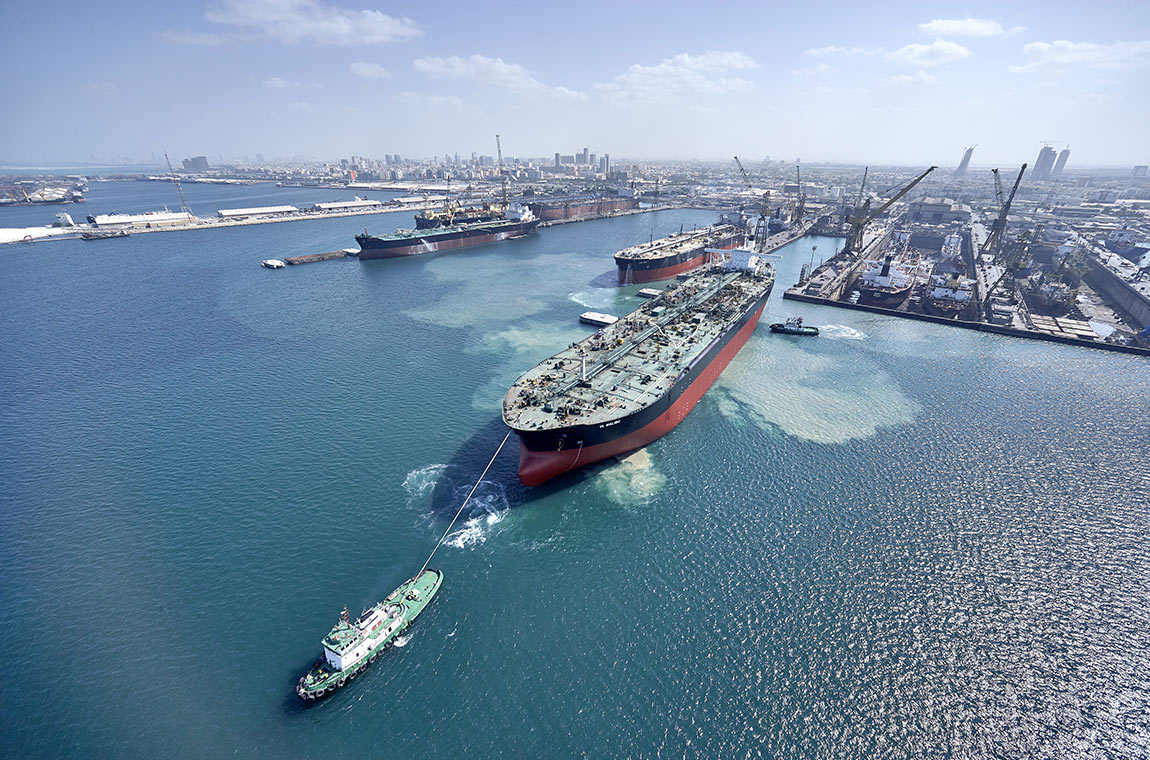
The United States-Israel war on Iran and the consequent disruptions at the Strait of Hormuz have exposed critical vulnerabilities in strategic maritime chokepoints, underscoring the risks associated with excessive dependence on single routes, suppliers, and energy sources.
Energy security has once again emerged as a vital pillar of national security. Since the war began on 28 February, the price of crude has increased by over 84 percent from US$68 to US$126 per barrel.[1] Almost 20 percent of the global oil and gas reserves pass through the Strait of Hormuz,[2] making it one of the world’s most important energy corridors. At the height of the crisis, the tanker traffic dropped by as much as 95 percent.[3] Shipping movement remains sporadic and ad-hoc despite the ceasefire announcements between Iran and the United States.
While it is the first time that the Hormuz Strait has been held hostage, the weaponisation of energy supply chains is not new. Multiple episodes from modern history have exposed the fragility of global energy supply chains, among them: the oil embargos of the 1970s; the Tanker wars of the 1980s; the COVID-19 pandemic beginning in 2020; the Russian Ukraine conflict in 2022; the Houthi attacks on the Red Sea in 2023; and the growing rivalry between the West and China. These events have underlined the vulnerability of traditional maritime routes and demonstrated the imperative for greater diversification and built-in redundancies in supply chains.
Countries that invested early in alternative export infrastructure are in a better position to cushion the blow from the effects of the current crisis—most notably, Saudi Arabia with its 1,200-km-long East-West Crude pipeline from Abqaiq to Yanbu in the Red Sea.[4] With an export capacity of around 5 mbpd, the country can reroute large parts of its 7 mbpd of exports that would otherwise pass via the Strait of Hormuz.[5] The Kingdom also operates a parallel Petroline for natural gas liquids (NGLs). Similarly, The United Arab Emirates (UAE) has benefitted from its 380-km Abu Dhabi Crude Oil Pipeline (ADCOP) running from Habshan to the Fujairah port. Able to move between 1.5–1.8 mbpd, roughly half of UAE’s total daily oil export capacity, the pipeline allows the UAE to bypass the Strait of Hormuz entirely.[6]
However, not all producers have such alternatives. Qatar, for instance, has no option for its LNG exports given it is effectively locked into the Strait of Hormuz.[7] Kuwait and Iraq are similarly heavily dependent on the Strait. Given limited diversion options, Iraq has recorded the steepest export supply declines by as much as 90 percent in April and May 2026 from pre-war levels.[8] Rising energy prices have escalated prices across other sectors and industries including fertiliser, food, transport, and manufactured products. Insurance costs have also risen, further raising the geopolitical cost of energy transit.
To be sure, the alternative capacities of certain countries have helped offset some of the market pressure,[9] as have the easing of Iranian and Russian sanctions, the release of strategic emergency reserves, and falling demand particularly from the region’s largest importer, China, by as much as 1 mbpd. However, the current uncertainty shrouding the future of such passageways have prompted the Middle Eastern producers and the global markets to reassess the resilience of energy supply chains.
Indeed, energy security is no longer about procuring additional supply but about creating a flexible and diversified energy supply chain that can withstand geopolitical shocks. The concentration of production, storage, export, or liquefaction capacity in one or few countries heightens the risk of disruptions. These geopolitically sensitive interdependencies can prove to be disastrous in periods of political tension or energy weaponisation, reinforcing the case for diversified infrastructure and resilient supply chains.
It is therefore unsurprising that the Gulf countries are already gearing up to build out that alternative capacity to reduce their dependence on the Strait of Hormuz. Existing pipelines alongside seven additional pipeline and export-infrastructure projects that are under construction, planned, or considered potentially feasible, can reportedly insulate more than 45 percent of the pre-war level of Persian Gulf producers’ exports from future disruptions in the Hormuz Strait.[10] By the end of 2028, the number could rise to more than 60 percent.[11] The West-East pipeline in the UAE and the Basra-Haditha (potentially further connecting Aqaba in Jordan) Pipeline in Iraq are already under construction.[12] In addition, a new port on the coast of the UAE is being considered to reduce the pressure on the port of Fujairah.[13] Despite the rerouting buildout, 7-9 million barrels of crude and refined products per day would continue to remain exposed.[14]
Besides the global implications, the disruptions in the Bab el Mandeb, the Strait of Hormuz, and along the Suez Canal have exacted high costs on the energy production and national security calculations of the Middle Eastern countries.[15] The costs of disruptions along this route are particularly severe for a region that acts as a bridge and anchor across India, the world’s third largest energy consumer,[16] the increasingly urbanising populations of the Middle East, and Europe that is concertedly seeking a diversification of its energy portfolio away from its previous Russian dependence.
From Single Corridors to a Web of Networks
Middle East occupies a unique geographic advantage between Asia and Europe, and is therefore well placed to emerge as a diversified, multimodal, and resilient connectivity hub for ensuring energy security. The region has the potential to integrate capital with markets and capacity gaps with skill sets to support energy trade and energy transition agendas. It may offer an opportunity for cross-sectoral and cross-continental diversification and development as well.
The India-Middle East-Europe Economic Corridor (IMEC), first proposed under India’s G20 Presidency in 2023, represents this important step to realise the vision of establishing a multimodal and multi-commodity route connecting the ports of India to those of Europe through the Arabian Gulf, Jordan, and Israel. The objective of the Corridor is to strengthen energy, digital, and infrastructure connectivity and cooperation among the partner countries—namely, India, the United Arab Emirates (UAE), Saudi Arabia, France, Germany, Italy, the European Union (EU), and the United States (US). Israel, Jordan, and Greece, although not permanent signatories of the IMEC, will serve as nodes to make the identified route and current arrangement work.
However, normalisation in Arab-Israeli relations is crucial to make the IMEC agenda a reality. Given the unresolved Israel-Gaza conflict since the October 2023 Hamas attack and the wider geopolitical disruptions in the region, the Arab (notably, Saudi Arabia) and Israeli relationship is likely to remain frozen in the near future. The primary obstacles to IMEC are therefore not physical, but political[17] and has less to do with infrastructure and more with security. In essence, the operationalisation of the Haifa port in Israel, which is a key node to enter Europe via the Mediterranean, remains a bottleneck. Other than the political stagnation, the economic bottlenecks associated with such multi-decadal and cross-continental infrastructure projects have also derailed progress.
The Iran war has only reinforced that a single route of connectivity is detrimental to the broader diversification agenda and any weaponisation in a single country, port, or transit corridor can disrupt the entire supply chain. Therefore, building diversification, redundancy, and optionality, is essential through a complementary infrastructure framework that maximises commercial returns while enhancing long-term regional energy security.
This report argues that IMEC should evolve into an interconnected web of corridors across the region, instead of a linear bi-directional route. Complemented by existing infrastructure, as well as regional and national connectivity strategies and plans, such an approach can reinforce long-term energy security, economic diversification, and supply-chain resilience.
This study aims to map the energy-based trade interlinkages along the region’s geographic scope that could effectively diffuse risks through a diversification of energy sources and forms that also help deliver on the decarbonisation agendas of the countries concerned. The objective is not to replace, but to supplement, the existing IMEC proposal and initiatives. The analysis identifies and evaluates existing transport and energy infrastructure that can be strategically leveraged to support alternative routing options across the IMEC region.
It should be noted that the envisioned network will not emerge all at once; rather, sub-sections of the corridors are expected to become operational progressively, reflecting differences in project readiness, financing, infrastructure development, and geopolitical conditions. The proposed networks should be considered a blueprint for a long-term vision on energy security and diversification planning for the Middle East region.
At the core of this analysis is diversification across two dimensions:
Diversification of Routes. This analysis considers other viable routes of possible energy trade and transit in the region to act as tributaries complementing the main IMEC route, as well as pathways of circumvention in the event of chokepoints and blockages. Other than the originally proposed IMEC route, the analysis considers two principal alternatives: the Iraq–Syria corridor to the east and the Egypt–Suez Canal corridor to the west. Together, these routes create a more resilient and flexible network capable of sustaining cross-regional energy flows under varying geopolitical and commercial conditions.
The analysis also covers certain countries in North Africa, primarily the Maghreb region, which are increasingly recognised for their capacity to supply low-cost, low-carbon energy to Europe and other energy-demanding IMEC nations. The inclusion of North African energy systems underscores their potential as key contributors to transcontinental energy trade and green energy corridors.
Diversification of Energy Forms and Clean-Energy Supply Chains. Building on IMEC’s original mandate, the report argues for diversification of both energy forms and energy sources to expand the scope of the proposed energy integration. It proposes a diversification of the markets accessible to energy importers and exporters through the expansion of energy infrastructure by way of multimodal transport networks, electricity grid interconnectors, LNG infrastructure and natural gas pipelines, hydrogen transport corridors, civil nuclear energy, and SMR co-development, as well as critical mineral partnerships.
A key objective is to ensure that the transition away from fossil fuels does not create new strategic dependencies in clean-energy technologies. The report therefore examines opportunities to diversify the sourcing of critical minerals and other raw materials essential for the energy transition, alongside the development of alternative clean-energy value chains. These energy assets and supply chains are assessed for their potential to enhance long-term energy security, support decarbonisation objectives, and foster a more resilient and diversified clean-energy ecosystem across the IMEC region.
Mapping the Regional Energy Network
This section outlines the strategic rationale for the participation of the principal regions and examines the networks and ecosystems underpinning each of the routes considered in this study: IMEC; Iraq-Syria; Egypt; and Maghreb.
These alternative routes are considered as viable paths to mitigating any disruptions to the original route and thereby contribute to forging a more resilient model of diversification that coincides with the IMEC’s larger vision of inter-regional integration while building a throughline of integrated energy cooperation stretching from the Indian Ocean to the Mediterranean Sea.
Map 1: The Proposed Web of Networks
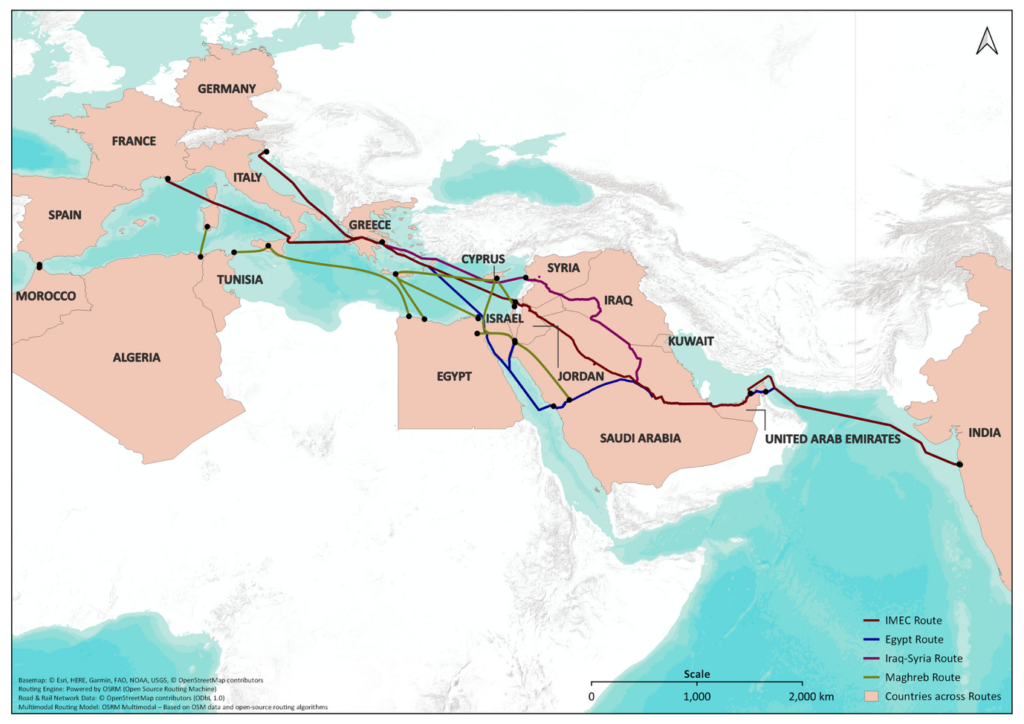
Source: Map created by cartographer, Nishalini Virumandi.
There is a strong rationale for each of the three regions—India, the Middle East, and Europe—to cooperate on energy. The diplomatic engagements over the years across India, the Gulf, and Europe signal that the governments are positioning connectivity not merely as an instrument to strengthen logistical capabilities across these regions but as a means to reinforce cross-regional security and minilateral allegiance.
India. It integrates the country into the rising demand centres and funding opportunities from the Middle East and Europe. Already, India is investing heavily in infrastructure projects and deep-sea ports including Vadhavan in Maharashtra and Vizhinjam in Kerala, and is expected to enhance its container handling capacity by more than 23 million Twenty-foot Equivalent Units (TEUs) by 2040.[18] The country has a US$ 1.2-trillion National Master Plan for Multi-Modal Connectivity which aims to integrate the manufacturing hubs to its western ports serving IMEC.[19] With a string of trade agreements such as the 2022 India-UAE CEPA, India-EU FTA, India-UK CETA, and the trilateral alliances such as the UFI (UAE, France and India) on infrastructure and port development, all these efforts signal greater willingness for trade integration.
The Middle East. IMEC is closely aligned with the long-term vision of both Saudi Arabia and the UAE to emerge as global logistics, trade, and industrial hubs besides diversifying their economies and decreasing dependence on hydrocarbons. It also allows Gulf capital to invest more in the demand-generating geographies of India and tie up with Europe’s investment agenda in the Global South at a time when the US appears to be retracting from the global decarbonisation and energy transition agendas. The Gulf Railway Project, relaunched in 2024, is momentous for building a 2,100-km rail network linking all six Gulf Cooperation Council (GCC) countries.[20] The project is expected to cost some US$250 billion in investments.[21]
The UAE, meanwhile, boasts of ports in Fujairah and Khor Fakkan, which have risen in prominence since the eruption of the Iran war due to its location outside the Strait of Hormuz. The country also has a strong Etihad Rail network. Saudi Arabia has ports and terminals across both sides of the Gulf, headlined by ports in Jeddah, Yanbu, and NEOM on the Red Sea and ports in Dammam and Jubail on the Arabian Gulf.
Europe. The move away from Russia and the trouble with the US forces a fresh look at the opportunities on the eastern flank for energy and economic diversification and security. It aligns well with the EU’s Global Gateway Initiative which is finding avenues to underwrite transition architecture and related finance globally, but particularly in the Global South. The initiative’s commitment to mobilise up to 300 billion euros in infrastructure financing by 2027 creates a potential funding mechanism for IMEC segments.[22]
The proposed Web of Networks across the Middle East traverses through four complementary corridors that collectively strengthen regional connectivity and resilience.
The IMEC Route
Map 2: The IMEC Corridor
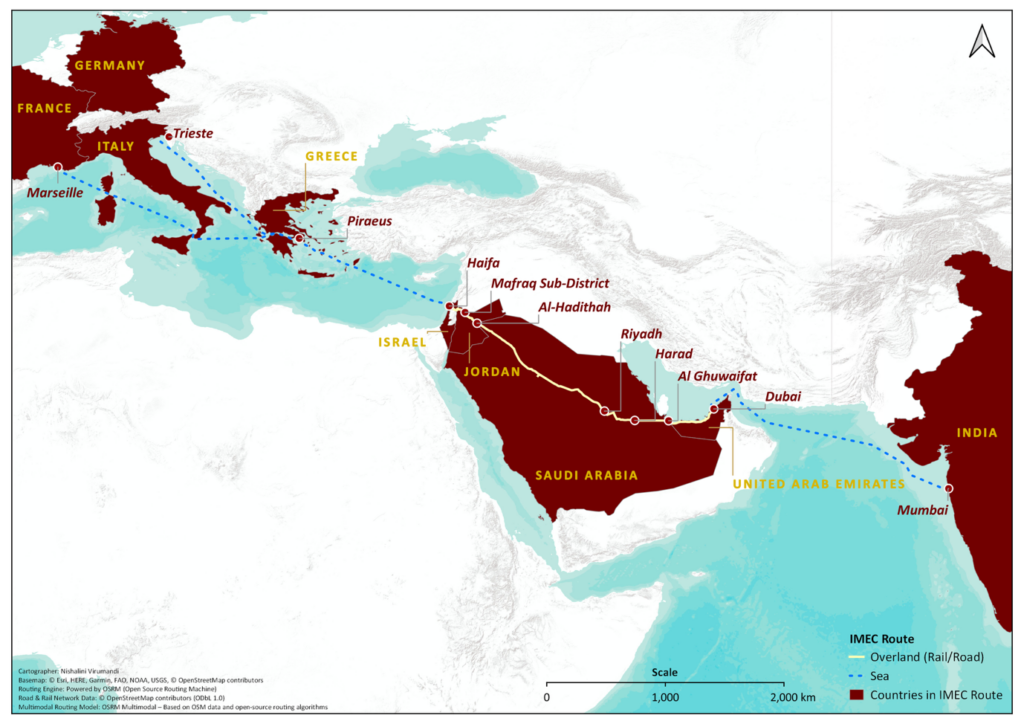
Source: Map by cartographer, Nishalini Virumandi.
The India-Middle East-Europe Economic Corridor (IMEC) was launched in September 2023 at the G20 Summit in New Delhi by India, the UAE, Saudi Arabia, France, Germany, Italy, the EU, and the US, through a Memorandum of Understanding (MoU).[23] It was proposed in the backdrop of the destabilising supply chain risks of the COVID-19 pandemic years, the commodity shortfalls from the fallout of the Ukraine War, and the emerging ambitions of countries to diversify their economic models, energy portfolios, and geopolitical alignments.
The objective was to establish a multilateral framework built around a multimodal connectivity corridor that proposes to link maritime routes with advanced railway infrastructures across India, the Middle East, and Europe. By reducing transport costs and transit times while strengthening regulatory coordination, IMEC aims to improve market access, deepen economic integration, and reinforce resilient supply chains. It rests on three mutually reinforcing pillars: energy, digital, and transport infrastructure.
Goods would travel by ship from the western coast of India (Mumbai Port, Jawaharlal Nehru, or Mundra) to the UAE (Jebel Ali Port, Fujairah, or Khalifa); continue by rail through Saudi Arabia and Jordan to Israel’s port of Haifa; for onward shipment to destinations across Europe, to ports such as Piraeus (Greece), Trieste (Italy), and Marseille (France).[24]
The UAE’s logistics advantage is underpinned by the Etihad Rail network, operational since 2023, which links the country’s major ports with the Saudi border. In addition, the strategic location of Fujairah on the Gulf of Oman enables maritime traffic to bypass the Strait of Hormuz, reducing exposure to geopolitical risks and enhancing the reliability of regional trade and energy flows.
Table 1: Status of Infrastructure Linkages through the IMEC Corridor
| Component | Status |
| India–Gulf ocean freight | Fully operational |
| UAE domestic rail (Etihad Rail) | Operational for freight within UAE |
| UAE-Saudi rail link | 269-km rail gap between al-Ghuwaifat in the UAE and Haradh in Saudi Arabia |
| Saudi–Jordan–Israel rail link | Saudi-Jordan rail link exists, but the Jordan-Israel rail link is missing and there is no confirmed construction start date |
| Haifa, Israel –Europe ocean leg | Route exists, but hinges on rail leg above |
Sources: MEI[25] and Shipmnts[26]
The India to Gulf flank via the UAE is well established and operational. However, there is still a 269-km rail gap between al-Ghuwaifat in the UAE and Haradh in Saudi Arabia which is expected to cost around US$2 billion.[27] Furthermore, the Saudi-Jordan and Israel (Haifa) connection, which is expected to link the Gulf to Europe, is yet to be completed. The tip of Saudi Arabia’s North-South Railway (al-Hadithah) is to be linked with the Jezreel Valley railway in Beit She’an, Israel (which connects to the Port of Haifa) via some uneven terrain in northern Jordan.[28] The freight rail line connecting Saudi Arabia to the Jordan border is now complete, but there has been little progress on the construction of a rail line connecting Jordan to Israel.[29]
Given the geopolitical tensions in the region, it is unlikely that the Haifa port will be utilised under the IMEC framework. In such a scenario, countries such as Iraq and Syria could serve as alternative nodes for transit until the geopolitical climate becomes stable enough to attract the required investments to complete the northern leg of the IMEC route via Israel.
Map 3: The Iraq-Syria Route
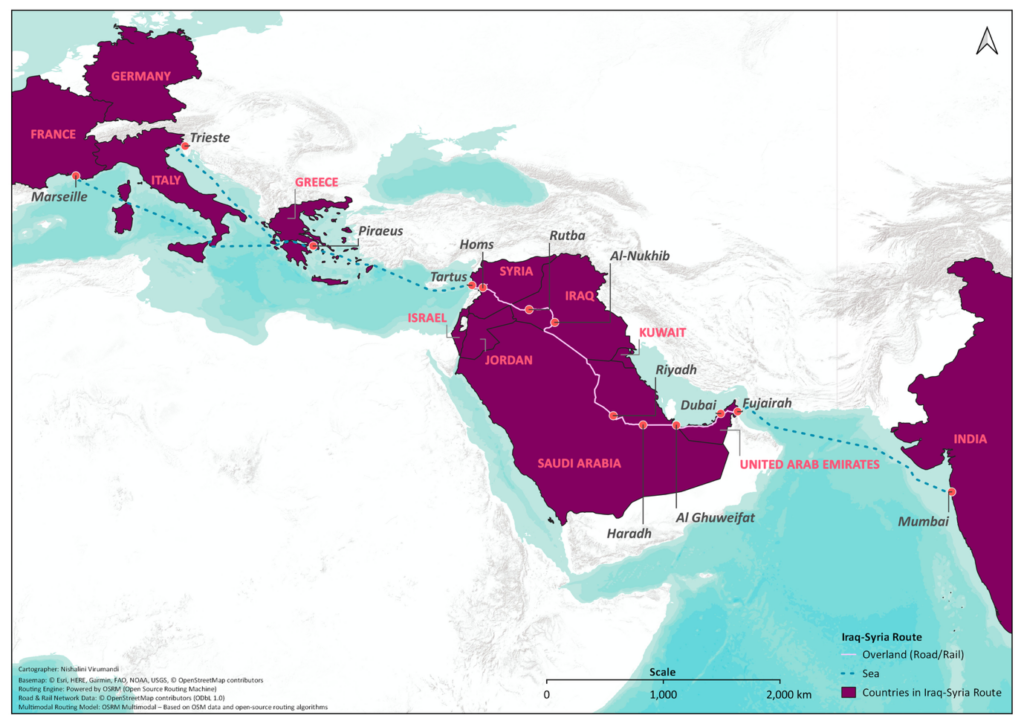
Source: Map by cartographer, Nishalini Virumandi.
The Iraq–Syria corridor represents one of the most strategically significant alternatives to the traditional IMEC route, offering a complementary westward land bridge from the Gulf to the Mediterranean. Saudi Arabia’s contiguous borders with Iraq, and Iraq’s onward connectivity through Syria to Mediterranean ports, provide a natural extension of the Gulf segment of IMEC. Rather than competing with the original corridor, this route has the potential to strengthen its resilience by providing an additional pathway for energy trade, logistics, and transport during periods of disruption affecting the region or key maritime chokepoints.
Launched in 2023, Iraq’s Development Road Project—a 1,200-km multimodal corridor—is a national infrastructure project to reposition Iraq as a regional connectivity hub linking the Grand Faw Port in Iraq to Turkey (Ceylan), Syria (Baniyas), and Jordan (Aqaba). The Rabi’a Crossing, which reopened in 2026 after more than 12 years,[30] is an important land corridor between Iraq and Syria for trade and passenger transport. The reopening of border crossings such as Rabi’a and al-Tanf, together with the establishment of truck-based shipments from Iraq to Syria and onwards to the Mediterranean,[31] demonstrate Baghdad’s and Damascus’ willingness to cooperate and the potential to strengthen regional trade and energy security in the region. Iraq has allocated nearly US$5 billion towards the rehabilitation of the Basra–Haditha pipeline, connecting Iraq’s southern oil fields with export routes towards Ceyhan (Turkey), Aqaba (Jordan), and Baniyas (Syria).[32]
At the same time, the easing of sanctions on Syria has created new opportunities to restore the country’s historical role as a regional transit state linking the Gulf with Europe. The country’s ambitious Four Seas Initiative and its Nine Corridors Initiative is aimed at positioning the country as a link between the Arabian Gulf, the Caspian, the Mediterranean, and the Black Sea.[33] Trade through the ports of Lattakia and Tartous in Syria has also increased, rising from 5.3 million tonnes in 2023 to 9.7 million tonnes in 2025.[34] Saudi Arabia is also investing in Syria, committing US$16 billion across the areas of energy, real estate, infrastructure, and telecommunications.[35] The UAE and Qatar have also extended both solidarity and financial commitments in an effort to strengthen ties with the country.[36]
Map 4: The Egypt Route
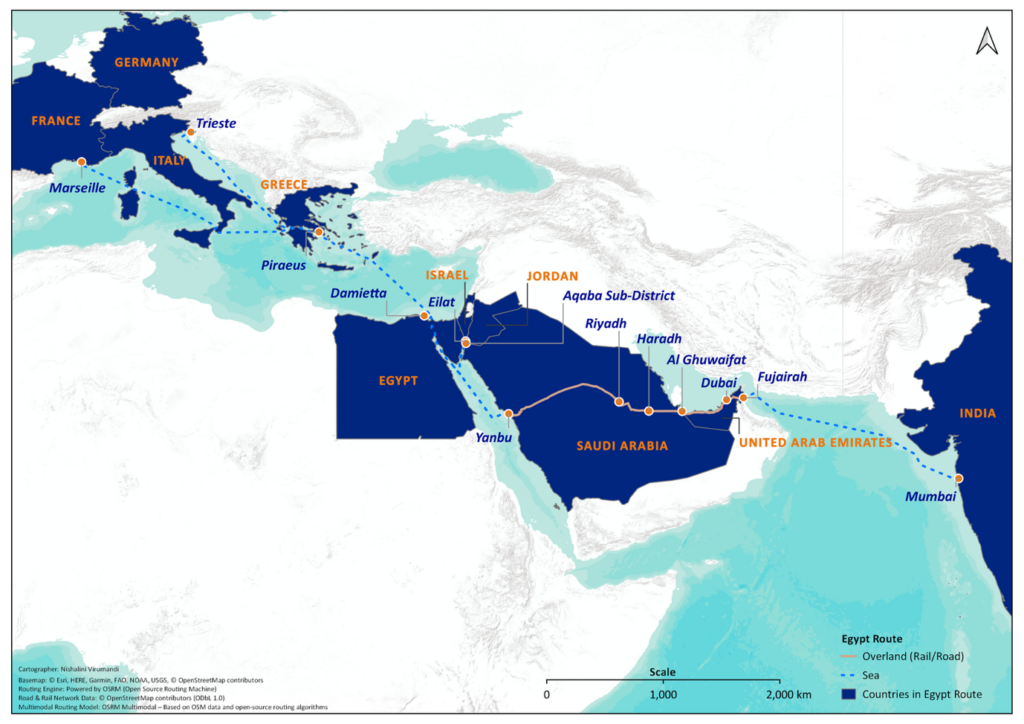
Source: Map by cartographer, Nishalini Virumandi.
Egypt is viewing IMEC with caution, concerned that it could divert trade from the Suez Canal, one of the world’s most important maritime chokepoints and a major source of national revenue. Rather than competing with the Suez Canal, however, the proposed Egypt corridor can complement IMEC by providing greater redundancy and resilience in regional connectivity.
Egypt’s ongoing investments in Alexandria, Damietta, and East Port Said, together with upgrades to its rail network, position it as a valuable partner within a broader connectivity framework.[37] The proposed Moses Bridge linking Saudi Arabia to Egypt’s Sinai Peninsula could further strengthen Gulf–Africa connectivity.[38]
Map 5: The Maghreb Route
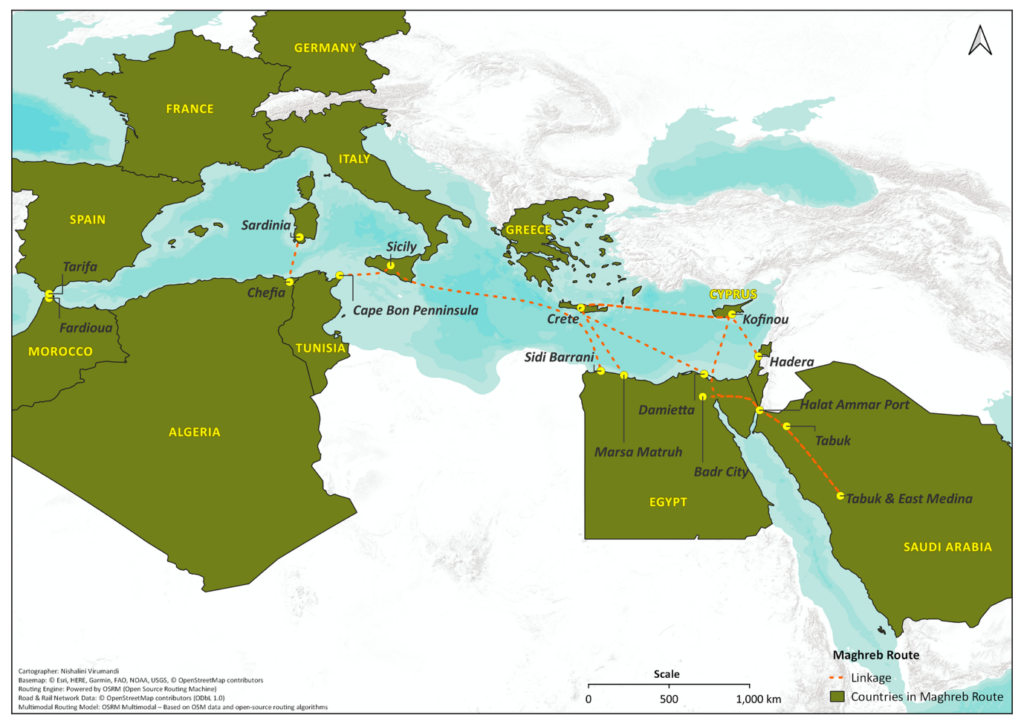
Source: Map by cartographer, Nishalini Virumandi.
The Maghreb corridor, comprising Algeria, Morocco and Tunisia, represents the western pillar of a diversified IMEC network, combining established natural gas infrastructure with world-class renewable energy resources. As Europe seeks to diversify both its energy sources and import routes, the region is well positioned to emerge as a major supplier of natural gas, electricity, green hydrogen, and hydrogen-derived fuels.
Oman and Turkey
Given its geographic position outside the Strait of Hormuz, Oman occupies a strategically important place within the Gulf’s broader transport and logistics architecture. The country has been expanding at its Duqm and Salalah ports, and strengthening the Hafeet Rail connection between Sohar Port and Al Ain in the UAE.[39] These initiatives signal increased cooperation among the GCC countries to strengthen multimodal connectivity in the region.
However, this report does not include Oman as a core component of the proposed connectivity framework for two reasons. First, the UAE has played a more central role within IMEC and has a much stronger strategic and economic partnership with India, rather than any limitation in Oman’s potential contribution. The bilateral trade between India and the UAE reached US$101.25 billion in fiscal year 2025–26, since the Comprehensive Economic Partnership Agreement took effect in 2022.[40] Both governments have revised their target upward to US$200 billion by 2032.[41] Second, Chinese investments in Oman are considered among the most ambitious and significant BRI investments in the region, and routing a Western-aligned corridor though the Chinese-invested ports raise serious concerns.[42]
However, as the trade volumes from India and the wider Indo-Pacific continue to grow, Oman could play a valuable complementary role by providing additional port capacity and logistics infrastructure, thereby reducing pressure on the UAE ports and further enhancing the resilience and flexibility of the broader IMEC network.
Given Turkey’s opposition to IMEC’s current configuration and the geopolitical complexities surrounding its regional relationships, this report excludes Turkey from its analytical scope.
Trade-offs and Constraints
A resilient network capable of adapting to changing geopolitical and commercial realities is favourable. It does carry, however, the risk of fragmentation and competition. Political tensions, economic challenges, infrastructure gaps, poor interoperability between financial customs, and other national security concerns can stall progress.
While the chokepoint disruptions have strengthened the case for alternative hubs and corridors, it does not insulate them from future supply disruptions and volatility. If diversification reduces systemic risks, it also could, at the same time, multiply the points of failure. The trade-offs exist and the stakeholders will have to develop an empirical framework to identify the most appropriate approach—one that delivers on both the diversification and decarbonisation objectives.
A more concerted and willing effort is required of the countries in the region if they aim to stake their claim on an energy-secure future. The authors acknowledge that any such coordination will have to overcome deep-rooted rivalries in the region, and sovereign states may prioritise absolute gains and national energy independence, especially when transit routes traverse hostile and unstable territories. However, a multi-route, multi-commodity and multimodal option can help address some of the challenges discussed above, undergirded by strong political will and sound economic synergies.
At the same time, the energy corridors proposed in this report may compete for the same capital and demand pool, thereby stripping down the others’ bankability. The authors, however, do not propose that all four corridors across all five commodity types be built out simultaneously. What could be more feasible is a progression based on prioritisation, political feasibility, and availability of financial resources.
The other elephant in the room is China’s flagship Belt and Road Initiative (BRI), which has undertaken massive investments in the region and which could undercut IMEC and the entire commercial logic of the proposed Regional Web. However, reducing dependence on any single actor, including China, in itself provides a strong rationale to pursue independent and diversified infrastructure projects.
Read the report here.
All views expressed in this publication are solely those of the authors, and do not represent the Observer Research Foundation, either in its entirety or its officials and personnel.
Endnotes
[1] Statista, “Weekly Crude Oil Prices,” https://www.statista.com/statistics/326017/weekly-crude-oil-prices/
[2] Mannat Jaspal and Reem Sagahyroon, “The U.S.-Iran Ceasefire Illusion: Energy Shortages Far from Over,” ORF Middle East, May 26, 2026, https://orfme.org/expert-speak/the-us-iran-ceasefire-illusion-energy-shortages-far-from-over/
[3] Hanna Duggal, Marium Ali and Mohamed Hussein, “How a 95 Percent Drop in Hormuz Traffic Changed Global Shipping”, Al Jazeera, August 27, 2026, https://www.aljazeera.com/news/2026/8/27/how-a-95-percent-drop-in-hormuz-traffic-changed-global-shipping
[4] Jaspal and Sagahyroon, “The U.S.-Iran Ceasefire Illusion”
[5] Emma Ross-Thomas and Bloomberg, “Saudi Pipeline to Bypass Hormuz Hits 7 Million Barrel Goal,” Fortune, March 28, 2026, https://fortune.com/2026/03/28/saudi-arabia-east-west-oil-pipeline-strait-hormuz-bypass-7-million-barrels-yanbu-red-sea/
[6] Jaspal and Sagahyroon, “The U.S.-Iran Ceasefire Illusion”
[7] Jaspal and Sagahyroon, “The U.S.-Iran Ceasefire Illusion”
[8] Leonardo Del Piccolo, “From Corridor to Crossroads: Iraq’s Infrastructure Push Amid Gulf Trade Disruptions,” Italian Institute for International Political Studies, July 17, 2026, https://www.ispionline.it/en/publication/from-corridor-to-crossroads-iraqs-infrastructure-push-amid-gulf-trade-disruptions-241462
[9] Jaspal and Sagahyroon, “The U.S.-Iran Ceasefire Illusion.”
[10] Emily Peck, “The Push to Bypass Hormuz,” Axios, July 14, 2026, https://www.axios.com/2026/07/14/oil-hormuz-pipelines-trump
[11] Peck, “The Push to Bypass Hormuz”
[12] Peck, “The Push to Bypass Hormuz”
[13] Peck, “The Push to Bypass Hormuz”
[14] Peck, “The Push to Bypass Hormuz”
[15] U.S. Energy Information Administration, “The Strait of Hormuz is the world’s most important oil transit chokepoint,” https://www.eia.gov/todayinenergy/detail.php?id=65504
[16] Energy Transitions Commission, “India,” https://www.energy-transitions.org/region/india/
[17] Harsh V. Pant and Dharminder Singh Kaleka, “Can IMEC Survive the Iran War?,” The National Interest, July 21, 2026, https://nationalinterest.org/blog/silk-road-rivalries/can-imec-survive-the-iran-war
[18] Filippo Fasulo, Nicola Missaglia and Valeria Talbot, IMEC: The Backbone of an Indo-Mediterranean Region. Italy and the Future of Transcontinental Connectivity, Milan, ISPI, 2026, https://www.ispionline.it/en/publication/imec-the-backbone-of-an-indo-mediterranean-region-italy-and-the-future-of-transcontinental-connectivity-232214
[19] “$1.2 Trillion PM Gati Shakti Plan to Compete with China,” EquityPandit, October 3, 2022, https://www.equitypandit.com/1-2-trillion-pm-gati-shakti-plan-to-compete-with-china/
[20] Sofía Capriles, Cesar Valero and Omar Fares, “Connecting the Gulf: The GCC Railway and the Future of Regional Integration,” ALG, July 7, 2025, https://www.alg-global.com/blog/land/connecting-gulf-gcc-railway-and-future-regional-integration
[21] “IMEC: The Backbone of an Indo-Mediterranean Region. Italy and the Future of Transcontinental Connectivity”
[22] “IMEC: The Backbone of an Indo-Mediterranean Region. Italy and the Future of Transcontinental Connectivity”
[23] India-Middle East-Europe Economic Corridor (IMEC), https://www.imec.international/
[24] “IMEC: The Backbone of an Indo-Mediterranean Region. Italy and the Future of Transcontinental Connectivity”
[25] Walter Murdoch, The India-Middle East-Europe Economic Corridor, Middle East Institute, 2026, https://mei.edu/wp-content/uploads/2026/06/IMEC_Backgrounder_2026_final.pdf
[26] “IMEC Corridor: Is It a Real Route for Indian Exporters Yet?,” Shipmnts, July 16, 2026, https://shipmnts.com/blog/imec-corridor-indian-exporters-real-route
[27] “The India-Middle East-Europe Economic Corridor”
[28] “The India-Middle East-Europe Economic Corridor”
[29] Allison Minor and Afaq Hussein, “Saudi Arabia: Connectivity and the Search for Regional Alignment,” ISPI, July 17, 2026, https://www.ispionline.it/en/publication/saudi-arabia-connectivity-and-the-search-for-regional-alignment-241555
[30] “Iraq reopens Rabia border crossing to ease fuel shipments through Syria,” The National, April 21, 2026, https://www.thenationalnews.com/news/mena/2026/04/21/iraq-reopens-rabia-border-crossing-to-ease-fuel-shipments-through-syria/
[31] Joseph Daher, “Unlocking Syria’s Potential as a Regional Hub,” ISPI, July 17, 2026, https://www.ispionline.it/en/publication/unlocking-syrias-potential-as-a-regional-hub-239688
[32] Daher, “Unlocking Syria’s Potential as a Regional Hub”
[33] “President Al-Sharaa: Syria can Serve as Corridor Linking Gulf, Central Asia with Europe,” Syrian Arab News Agency (SANA), April 24, 2026, https://sana.sy/en/presidency/2312533/
[34] Daher, “Unlocking Syria’s Potential as a Regional Hub”
[35] Al Jazeera Staff, “Syria and Saudi Arabia sign multibillion-dollar investment deals,” Al Jazeera, February 7, 2026, https://www.aljazeera.com/news/2026/2/7/syria-and-saudi-arabia-ink-multi-billion-dollar-investment-deals
[36] Alexander Cornwell and Suleiman Al-Khalidi, “UAE Sees Rapidly Growing Trade with Syria, as Ties Warm,” Reuters, May 12, 2026, https://www.reuters.com/world/middle-east/uae-sees-rapidly-growing-trade-with-syria-ties-warm-2026-05-12/
[37] “IMEC: The Backbone of an Indo-Mediterranean Region. Italy and the Future of Transcontinental Connectivity”
[38] “IMEC: The Backbone of an Indo-Mediterranean Region. Italy and the Future of Transcontinental Connectivity”
[39] “IMEC: The Backbone of an Indo-Mediterranean Region. Italy and the Future of Transcontinental Connectivity”
[40] ANI, “UAE-India CEPA at Four: Bilateral Trade Crosses $100 Billion for Second Year, Partners Target $200 Billion by 2032,” Times of Oman, May 21, 2026, https://timesofoman.com/article/172089-uae-india-cepa-at-four-bilateral-trade-crosses-100bn-for-second-year-partners-target-200bn-by-2032
[41] ANI, “UAE-India CEPA at Four”
[42] “The India-Middle East-Europe Economic Corridor”