
 Global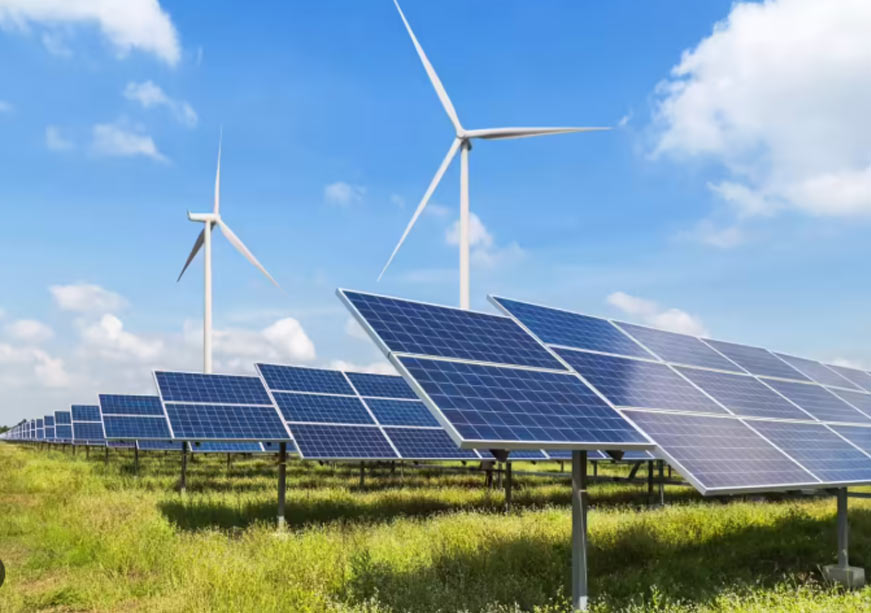
Commentaries | 10 February, 2026
Why India’s Round-The-Clock Renewable Energy Story Must Be Written in Coal-Rich States
Clean energy is no longer just an environmental necessity; it is a driver of competitiveness, investment and long-term growth.
As India steps into 2026, it enters a decisive phase of its development journey. Goldman Sachs Research forecasts demand for power- driven by the rapid expansion of data centres & AI-led digital infrastructure alone will increase 50 per cent by 2027 and 165 per cent by the end of the decade, alongside urbanisation and industrial growth. How states meet this surge in demand will shape not only their energy and emissions systems, but their ability to participate in India’s next growth cycle. A Viksit Bharat by 2047 will be built not only on national ambition, but on how decisively states align growth, energy security and resilience today.
There is little doubt that India’s renewable energy transition is central to this ambition. Clean energy is no longer just an environmental necessity; it is a driver of competitiveness, investment and long-term growth. Yet the geography of this transition remains uneven. Capacity additions, manufacturing clusters and capital flows have concentrated in a small group of renewable-rich states.
India’s coal-dependent states have powered national growth for decades, yet today rank among the lowest on key socio-economic indicators. Deep dependence on coal for employment, revenues and electricity, coupled with limited renewable potential and weaker industrial diversification, has left them exposed to fiscal stress, climate shocks and declining competitiveness. For these states, the risk is no longer just falling behind on climate goals, but missing the next phase of development altogether.
This raises a critical question: can the energy transition be shaped not as a constraint for coal-dependent states, but as a catalyst for their growth and convergence?
Renewable energy round-the-clock (RE-RTC), or reliable clean power delivered through a combination of solar, wind and storage, allows coal-dependent states RE-RTC) to overcome the barriers that have long kept them outside India’s renewable growth story, and offers three critical development dividends that can enable this shift.
The first dividend of adoption of RE-RTC is a new phase of state-level economic growth. The biggest constraint holding back renewable-led development has been reliability. Despite India’s impressive gains in renewable capacity, economic activity and industrial productivity remain closely tied to coal because standalone solar and wind cannot guarantee uninterrupted supply. RE-RTC changes this equation by delivering assured power across the day, including during peak demand periods.
Crucially, RE-plus-storage projects can typically be implemented within two to three years, compared to six to seven years for new coal-fired capacity, allowing states to respond far more quickly to rising electricity demand. Storage-backed renewables can also provide peak power, grid balancing and ancillary services- capabilities that are becoming increasingly valuable as demand becomes more complex and climate variability intensifies.
For states, this reliability turns renewable energy from a supplementary resource into a dependable input for growth-critical sectors such as manufacturing, data centres, logistics, urban infrastructure and MSMEs. It lowers operational risk, reduces exposure to fuel price volatility and improves competitiveness in global markets where carbon intensity increasingly shapes investment decisions.
Early evidence of this dynamic is already visible. India’s Production-Linked Incentive (PLI) scheme for high-efficiency solar PV manufacturing has generated around 43,000 jobs nationwide, including over 11,000 direct jobs, as of October 2025, according to Lok Sabha data. Gujarat alone accounts for more than half of this employment, underscoring how states that align industrial policy with renewabledeployment are beginning to capture tangible gains.
The second dividend is fiscal and financial resilience. Many state governments and distribution companies (DISCOMs) are already under strain from rising power procurement costs, legacy coal-based power purchase agreements and weak balance sheets. Yet several DISCOMs continue to contract new coal-based capacity through long-term PPAs, often locking in supply for decades.
As renewable tariffs continue to fall and system flexibility improves, long-term coal contracts expose DISCOMs to higher fixed costs, stranded asset risk and reduced operational flexibility. Coal-based power is increasingly vulnerable to fuel availability risks, logistics bottlenecks and water scarcity. RTC renewable contracts, by contrast, offer long-term price certainty and lower operating costs, insulating states from external shocks.
The economics of storage, a critical enabler of RTC supply, have improved sharply, with battery energy storage system (BESS) costs declining by more than 80 per cent over the past decade. Recent competitive bids have yielded effective tariffs as low as ₹2.1–₹2.8 per unit, highlighting the growing cost competitiveness of storage-backed renewables. By shifting a portion of baseload procurement toward RTC renewables, states can stabilise DISCOM finances, improve creditworthiness and reduce long-term fiscal liabilities.
Most importantly, RTC also opens a pathway to unlock international climate and development finance. States scaling renewable infrastructure are already attracting significant capital. In 2025, Rajasthan led India in fresh investment commitments, with a dominant share directed towards solar energy, followed by Maharashtra, Gujarat and Odisha. At the national level, the renewables sector attracted a record USD 3.4 billion in foreign direct investment in FY 2024–25, reflecting strong global investor confidence in India’s clean energy pipeline.
Global investors, development banks and climate funds are actively seeking large-scale, bankable clean-energy projects with predictable cash flows—precisely the profile that RTC projects offer. For coal-dependent states, this ability to crowd in international finance is particularly significant, as it can support grid modernisation, economic diversification and just transition pathways.
The third, often underappreciated, dividend of RE-RTC lies in public health and development outcomes, where poor air quality imposes heavy economic costs through lost productivity, higher healthcare expenditure and reduced quality of life. RTC renewables can displace coal generation across the entire day, delivering sustained air-quality gains. Cleaner air is not a peripheral benefit; it is a development multiplier.
In 2026, the energy choices made by states will shape their development trajectories for decades. States that delay adaptation risk being caught in a transition they did not plan for, facing financial stress, environmental liabilities and declining investment appeal. RE-RTC is not an ideological pivot; it is a pragmatic development strategy.
This commentary originally appeared in Energy World.