 Global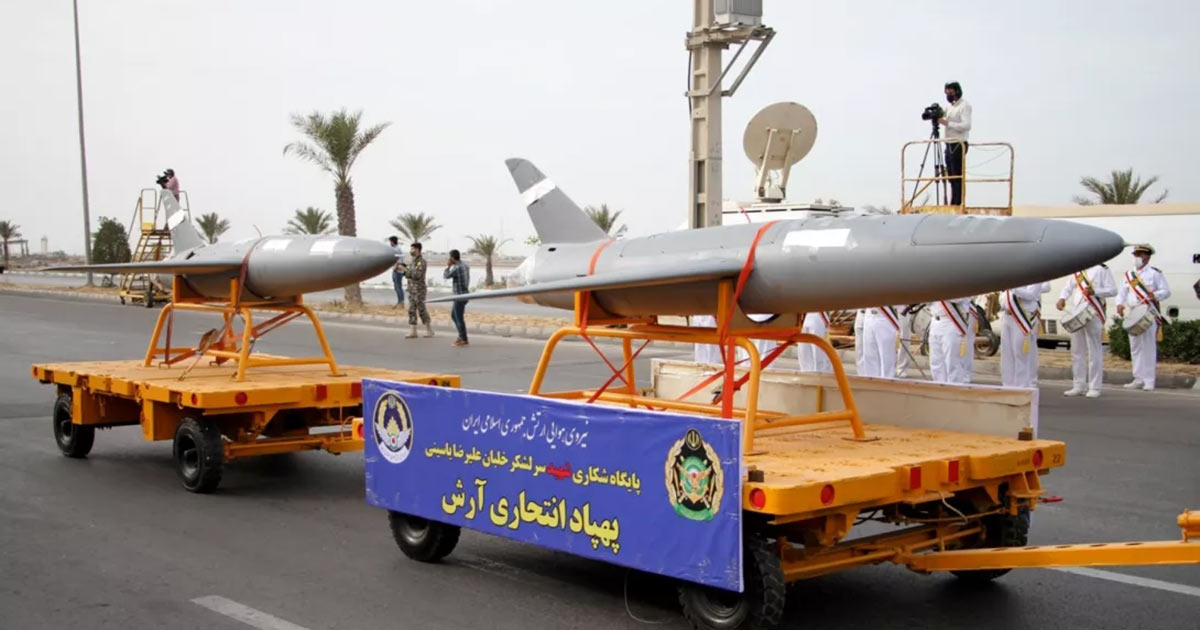
Commentaries | 06 April, 2026
Iran’s Geoeconomic Strategy
Cornered, the Iranian regime is waging a geo-economic battle against better-endowed adversaries, following a logic of "maximum yield." This consists of inflicting the maximum amount of economic damage with restricted resources. For Tehran, the aim of this approach is nothing less than its survival as a sovereign state.
Trapped since its founding on the margins of the international political economy, the Islamic Republic is nonetheless carrying its current struggle against Israel and the United States onto the terrain of geo-economics — that is, at the intersection of the spheres of geopolitics and economics.
This option is all the more surprising when one considers two factors. The first is that since 28 February 2026, it is two countries that collectively concentrate first-rate and deeply interconnected geo-economic nodes that have been mounting a coordinated assault against it. The second is that Iran’s marginal position within globalisation is itself explained by the deployment against it of a quintessentially geo-economic instrument: sanctions.
Yet, by weaponising the economic geography of its immediate environment, Iran has carried out a reversal: redirecting the pressure exerted on its own territory — the stakes of which are its survival as a sovereign state — to the heart of the international economy, and into the political system and socioeconomic fabric of the United States.
Making a Virtue of Necessity
The economic and technological balance of power — which determines the capacity to finance and sustain military operations — is, to put it mildly, unfavourable to Iran. Faced with the scale and interconnectedness of the military-industrial complexes, innovation ecosystems, and capital markets of the United States and Israel, Iran is relegated to the periphery.
Even setting aside the United States, Israel would constitute, in economic and technological terms, a superior adversary to the Islamic Republic. In 2024, Israeli GDP was nearly 14% higher than Iran’s, even though Iran’s population is more than nine times larger.
This situation is partly the result of Israel’s successful integration into three major pillars of US political economy — political, financial, and technological — namely Washington, New York, and Silicon Valley. It is in Washington that military and financial support for Israel is decided; Israel is the leading recipient of US aid — $300 billion (€260 billion) in real terms since its founding in 1948, and $21.7 billion (€19 billion) between October 2023 and October 2025. In New York, Israel is the third most represented foreign country on the Nasdaq stock index, which is technology-heavy. As for Silicon Valley, it is home to technology companies that have made substantial investments in Israel. In 2025 alone, Israeli cybersecurity companies Wiz and CyberArk were acquired for a combined total of $57 billion (€50 billion).
Conversely, through an ideology glorifying self-sufficiency and because of the sanctions imposed on it, Iran finds itself largely isolated from international trade, financial, and technological flows. This situation has degraded Iran’s potential for growth, innovation, and therefore defence. It has pushed the country to develop armament programmes relying on domestic R&D capabilities and convoluted supply chains of reduced efficiency. These programmes have themselves suffered from an economic environment depressed by poor economic management, the damaging effects of which have been amplified by the macroeconomic shock of sanctions. As a result, Iran’s GDP contracted by more than a third between 2012 and 2024.
Making a virtue of necessity, Iran has chosen to employ a “poor man’s strategy.” A flagship example of this strategy is the Shahed 136 drone, produced by its defence industry, with a unit cost estimated at between $20,000 and $50,000 (€17,000–€43,000). Intercepting it can cost several million dollars. The use of naval drones, or the possible use of floating mines to blockade the Strait of Hormuz — through which nearly 20% of global oil consumption and 19% of liquefied natural gas trade passes — would follow the same logic of maximum yield.
The Centrality of the Strait of Hormuz
Making sense of Iranian retaliation against neighbouring Gulf monarchies, whose combined GDP is nearly five times that of Iran, pushes this same logic to new levels.
Extending the conflict to their territory implies, for the Gulf states, three levels of damage: the direct material damage sustained, the loss of export revenues from goods and services, and future costs — for example, in terms of unrealised foreign direct investment or increased insurance premiums — linked to the degradation of these countries’ reputations as safe and business-friendly environments.
While the damage and losses to date already amount to several tens of billions of dollars, Goldman Sachs has estimated that a two-month prolongation of the conflict could lead to GDP contractions of up to 14% for Kuwait and Qatar, which are more dependent on the Strait of Hormuz for their exports. Beyond this, the diversification efforts of sub-regional economies could be threatened, jeopardising the prosperity of the six monarchies in the post-oil era.
However, the assets of the Gulf states’ sovereign wealth funds and public pension funds — exceeding $6 trillion (€5.2 trillion) — should allow them to weather the coming crisis and uncertainty. It is the deep integration of the Gulf monarchies into globalisation, and the centrality of the Strait of Hormuz to their exports and to the global energy market, that lie at the heart of Iran’s geo-economic calculus.
Beyond sectors such as logistics, tourism, and air and maritime transport, it is the disruptions introduced into the international energy market — which the International Energy Agency has described as the greatest shock the sector has ever experienced — that have lodged this crisis at the very heart of globalisation. Several consequences are possible. The first concerns a deterioration in consumers’ purchasing power, particularly in the United States, due to inflationary pressure driven by rising fuel prices and other hydrocarbon-derived products (fertilisers, plastics, other chemicals). The second would see the crisis spread to production, notably by disrupting industrial supply chains, including in cutting-edge sectors and for high-technology-intensive products such as semiconductors. The third would see the contagion extend to the financial sector, as the prospect of central banks raising benchmark interest rates to combat inflation depresses credit, raises the cost of public borrowing, and weighs on stock market prices.
A Costly and Risky Gamble
Through its geo-economic pressure campaign, Iran hopes to activate a series of corrective forces to restrain US President Donald Trump. A broad coalition of discontented actors would together exert mounting pressure on Washington: consumers-as-voters ahead of US midterm elections, financial markets, major industrial players (particularly in the energy-hungry artificial intelligence sector), European and, to a lesser extent, Asian allies. Beyond this, Iran hopes to permanently deter the United States from the temptation of regime change, to provoke a rift between Washington and Tel Aviv, and to force negotiations leading to respect for its sovereignty, recognition of its place in the region, and a lifting of economic sanctions.
But this strategy is not without costs. It durably harms relations between Iran and its Gulf neighbours. It could also galvanise other countries into forming a coalition against the Islamic Republic, on the grounds that it is holding the international economy to ransom. It is also likely to place additional pressure on developing countries barely recovering from the economic shocks induced by the pandemic and the war in Ukraine — isolating Iran even within the Global South. Yet, with its very existence under siege, Tehran has judged these costs to be relative — and, ultimately, unavoidable.
This commentary originally appeared Orient XXI.