 Global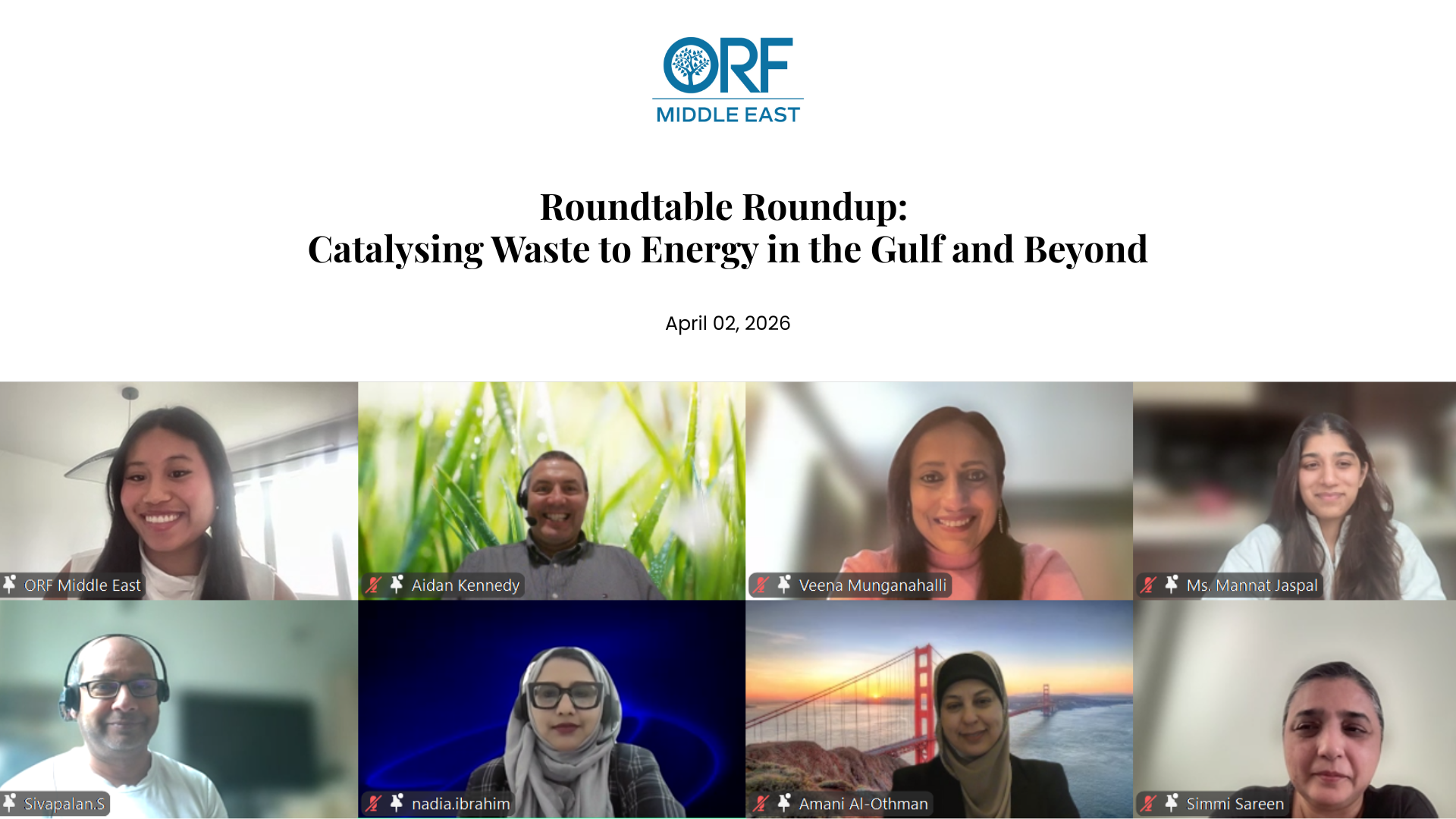
Event Reports | 15 April, 2026
Roundtable Roundup: Catalysing Waste to Energy in the Gulf and Beyond
KEY DISCUSSION POINTS
The State of Waste-to-Energy in the Gulf
The Gulf Cooperation Council (GCC) countries are estimated to experience rapid population growth, increasing energy consumption and waste generation. To illustrate, the total waste collected in the GCC increased by 153.7 percent to 262.7 million tonnes between 2019 and 2023. High waste production can largely be attributed to socio-cultural factors such as higher disposable income, preferences for convenience, and a general lack of public awareness of waste management options.
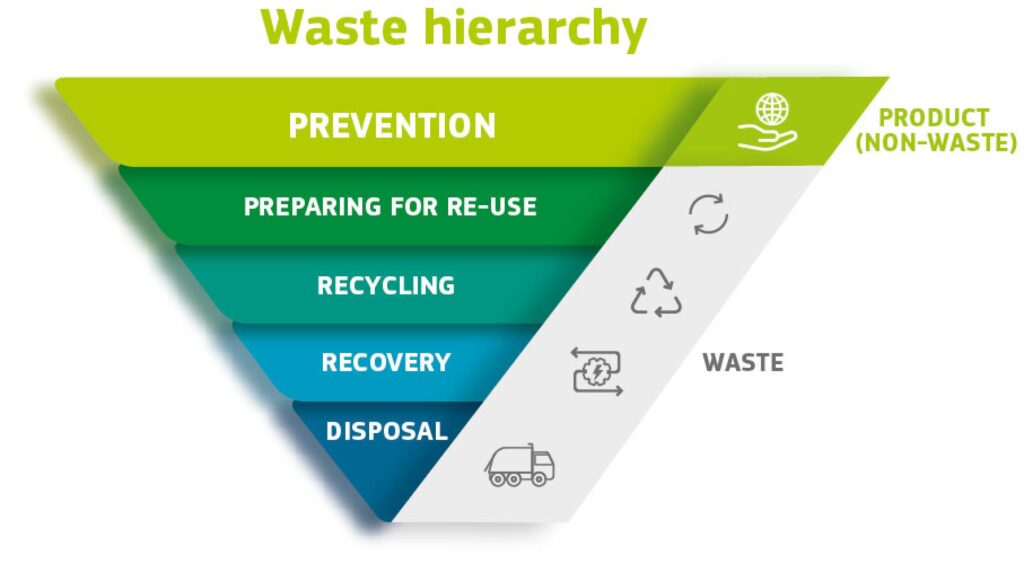
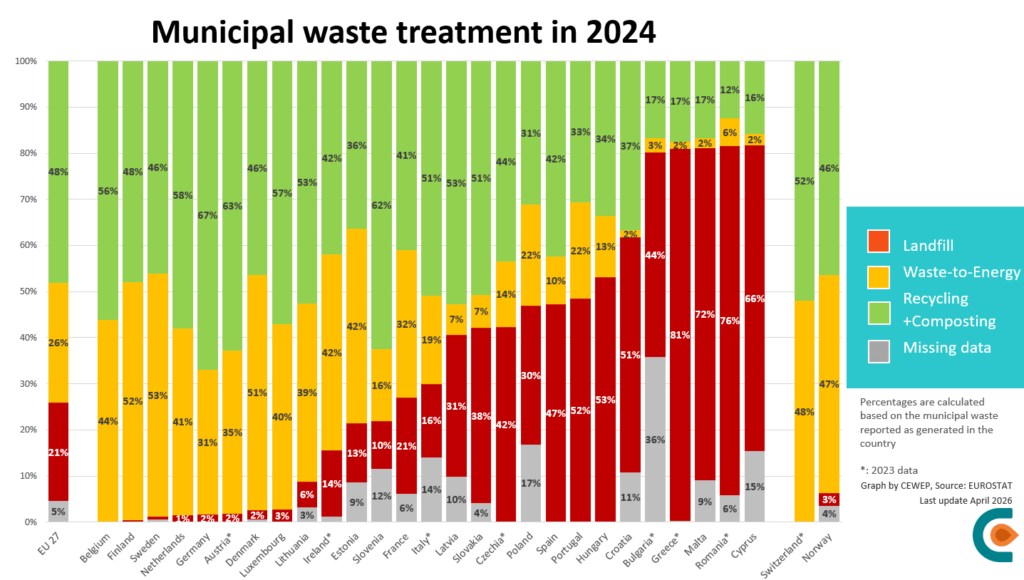
Despite waste management progress, recycling composes less than 5 percent, while more than 85 percent of the region’s waste is processed through landfills, releasing harmful toxins and carbon emissions. Waste-to-Energy (WtE) refers to the generation of electricity or heat from waste treatment. It is becoming an increasingly feasible and economically viable process to generate value from waste, with large municipal-scale proof-of-concepts emerging across the region with highly efficient energy outputs. Within the waste hierarchy, WtE intersects waste management, circular economy, and energy transition goals, but it must be positioned carefully so that it complements rather than undermines recycling. Rather, WtE should serve as a downstream solution for irrecoverable residual waste, offering a pathway to shift from incineration-based disposal towards integrated systems that treat waste as a feedstock for energy, industrial fuels, and low-carbon products. (See Figures 1 and 2).
Figure 1: Waste Hierarchy
Source: European Commission
Figure 2: Municipal Waste Treatment in 2024
Source: CEWEP
Common processes to transform waste to energy include incineration, gasification, anaerobic digestion, and pyrolysis. Incineration directly combusts waste into steam for electricity or heat through boilers or steam turbines, while gasification partially oxidises waste to produce synthetic gas that can be converted into a chemical feedstock. Pyrolysis converts organic and inorganic waste into liquid fuel through thermal degradation. Anaerobic digestion transforms organic waste into biogas and digestate through anaerobic microorganisms.
In the Gulf Cooperation Council (GCC) context, municipal-scale thermal WtE via incineration dominates for mixed residual waste. However, there remains unharnessed opportunities to diversify towards gasification, pyrolysis, and anaerobic digestion. Aviation, cement, and industrial fuels and heavy industries have the largest decarbonisation potential, while organic pathways through AD and composting can support agriculture. Reaping the maximum economic and environmental benefits of these processes requires stronger waste segregation policies, synergised social and economic policy incentives, and improving the bankability of decentralised projects.
Challenges and Bottlenecks
1. Inadequate upstream waste segregation processes may lead to losses in energy output and economic value.
Despite progress, the GCC countries’ waste segregation policies remain largely inadequate, inhibiting waste recovery potential. In most cases, proper waste segregation is crucial to obtain high quality feedstock for Waste-to-Energy facilities. Large municipal-level facilities require segregated waste to maximise combustion efficiency. Likewise, smaller and decentralised facilities require single source feedstock at a scale that is consistently available in order to generate sufficient output and reach bankability. Because unsegregated waste is not mandated at the source, it requires facilities to bear the burden of extensive preparation, drying, and transport processes, with each additional step raising costs, reducing product efficiency and recoverable energy. One way to overcome this challenge is by anticipating this uncertainty when developing WtE facilities and tailoring facility designs to the expected calorific value gathered from waste in order to minimise energy loss later on.
2. Waste-to-Energy is inherently capital-intensive, and its outputs are costly in comparison to subsidised fossil fuels and inexpensive landfill waste disposal strategies.
Existing economic incentives are largely misaligned to environmental policies. Many GCC countries have highly subsidised fuels and inexpensive landfill taxes, reducing the economic competitiveness of WtE outputs. Moreover, WtE is energy-intensive, requiring high temperatures to combust waste into heat, steam. The cost-intensity of WtE is exacerbated by waste procurement models that reward the amount of waste tonnage collected for landfills, contradicting environmental policies that aim to divert waste away from landfills for recycling and recovery. One way to overcome the cost dilemma is through the development of auxiliary waste-to-energy plants that are coupled with industries like aluminum which can directly leverage WtE outputs like heat. However, incentivising industries to co-locate with WtE plants must be initiated by the government in order to be economically attractive.
3. The GCC faces a strategic trade-off between logistical efficiency offered by decentralised plants and the industrial scale offered by centralised facilities.
While decentralised WtE plants minimise transport costs and energy loss incurred from moving high-moisture waste over long distances, centralised facilities are beneficial for generating high value electricity with very little transmission losses. Industrial plants co-located with decentralised facilities require access to consistently available heat which may be challenging to obtain from small plants. Without synergetic coordination between decentralised and large municipal facilities, private actors may also absorb high value waste streams, leaving municipal authorities responsible for managing costly and non-recyclable waste fractions.
4. Entrenched social behaviors contribute to high waste production, hindering the scalability of waste reuse, recycling, and recovery processes.
In the Gulf region, social behaviors contribute to waste generation and aversion towards waste infrastructure construction in residential areas. Waste disposal is highly driven by socioeconomic status, with the high-income Gulf countries generating high amounts of daily organic and inorganic waste due to higher disposable income and preferences for takeaway food consumption. High waste-generating behaviors combined with a shortfall in proper government waste segregation mandates and limited behavioural change campaigns has resulted in poor manual waste sorting at the household level compared to other countries. This leads to4. waste management challenges and reduced combustion efficiency.
Policy Recommendations
1. Improve source waste segregation and pre-treatment through government mandates and data-driven monitoring.
The GCC should combine its strengths in infrastructure construction with additional municipality, industry and household-level mandates for proper on-site waste segregation systems. Municipalities need mandatory source segregation and enforceable pre-treatment waste requirements. Combining industry quotas with standardised integration standards for cement, steel, and aviation industries that clarify specifications such as calorific value, contaminants, and traceability would ensure consistent high quality and consistent waste inputs for energy recovery and help bridge supply-demand gaps. WtE facilities can also leverage AI and machine learning to optimise energy integration processes and waste sorting and help reduce costs.
2. Build a cohesive ecosystem of decentralised and centralised waste-to-energy solutions to derive maximum value out of all waste streams.
GCC countries can leverage in-country assessments of waste output distributions to help bridge gaps between smaller WtE private sector players and municipal facilities, essentially building a portfolio of cohesive technologies that ensure WtE supply meets industry-specific or grid demand. Building an understanding of waste production streams will help inform the most strategic pathways to co-locate waste-to-energy plants with industries. Co-location would leverage waste heat for industrial processes and district cooling, helping to reduce energy loss and transport costs while driving efficiency. Clustering smaller facilities will further help guarantee consistent feedstock availability. While incineration dominates municipal WtE facility models, anaerobic digestion and pyrolysis are often overlooked and underfunded options to capitalise on organic waste streams which constitute a large portion of the Gulf’s waste mix.
3. Improve bankability by moving beyond reliance on tipping fees towards innovative financing structures that capitalise on system efficiencies.
A government-fostered ecosystem can help address project bankability challenges. Governments can contribute to blended financing structures through minimum revenue guarantees, first loss blended finance structures, green sukuk structures, and stronger offtake agreements with better public-private partnership (PPP) risk allocation for feedstock and pricing to help bridge the “missing middle.” Supporting interconnected waste-to-value ecosystems can enable smaller WtE players to generate multiple revenue streams from selling industrial steam, specialised fuels such as bio-fuels or methanol, or carbon capture and storage (CCS) credits which can add value but should be applied selectively.
4. Institute economic and social policy incentives that incentivise positive environmental outcomes and disincentivise poor environmental outcomes.
Policies should anchor WtE firmly within the waste hierarchy, by prioritising reducing, reusing and recycling waste first prior to energy recovery. Shifting away from rewarding “inputs” towards “outputs” in the form of the value recovered from waste will enhance the attractiveness of WtE. For example, evolving contracts away from rigid minimum tonnage guarantees towards flexible residual-waste supply and performance or recycling-aligned targets will ensure cities are not penalised for waste reduction. This can also be achieved by instituting higher landfill taxes, enforcing mandates for WtE products in key industries, or through offtake agreements. Addressing social aversion to waste facilities can be achieved through awareness campaigns or community benefit funds that redistribute funds to public community infrastructure for those living in close proximity to waste facilities.
Conclusion
Given rapid advancements in waste-to-energy technology and infrastructure, the GCC countries can further catalyse the sector by enhancing and enforcing mandates for waste source segregation and industry adoption for WtE outputs, and supporting campaigns to improve social behavior and awareness of positive waste management behaviors. Additionally, GCC countries can help coordinate between decentralised and centralised WtE facilities, ultimately developing a strong ecosystem of value-generating infrastructure. The long-term strategic value lies in converting waste into low-carbon molecules, not just power. Through gasification-to-syngas, WtE can produce SAF and green methanol which aligns with the GCC’s broader investments in low-carbon fuels for aviation and shipping. To strengthen their socioeconomic incentive policies, the GCC countries can glean key takeaways from other regions such as Europe and South Asia which have succeeded in spearheading zero-waste policies.
SPEAKERS
- Aidan Kennedy, General Manager at Sharjah Waste to Energy
- Veena Munganahalli, Founder – Managing Director, Sencirc Holding Ltd
- Sivapalan Kathiravale, Head of Research and Development, Tadweer Group
- Nadia Ibrahim, Regional Lead-Regenerative Climate & Circularity – SJ Group
- Simmi Sareen, Managing Director, Climake
- Amani Al-Othman, Professor and Petrofac Endowed Chair in Renewable Energy, American University of Sharjah
- Mannat Jaspal, Director, Climate and Energy at ORF Middle East
The session was moderated by Ms. Leigh Mante, Junior Fellow, Climate and Energy at ORF Middle East.