 Global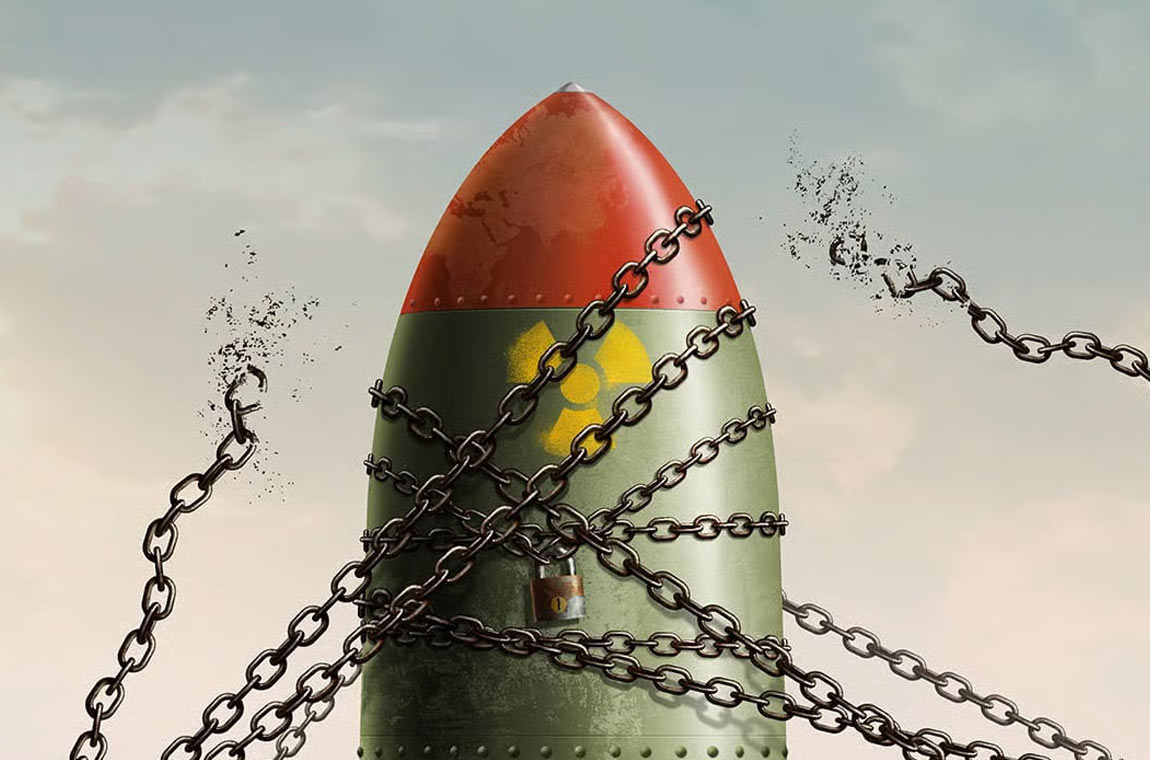
Expert Speak | 28 April, 2026
The End of Nuclear Arms Control: What Comes Next?
Spotlight
- With the expiry of the New START, and ambitious nuclear modernisation among the United States, Russia, and China, vertical nuclear proliferation will increase.
- The breakdown of the arms control framework has direct implications for the broader nuclear non-proliferation regime.
- The nuclear states must take steps to reaffirm their obligations to Article VI of the NPT. Failure to do so risks undermining the credibility of the treaty and jeopardising the future of the global non‑proliferation regime.
For the first time in five decades, there is no nuclear arms control treaty between the United States and Russia. The New Strategic Arms Reduction Treaty (New START) expired on February 5, 2026. This development raises significant questions for global security, arms control, and the future of the non-proliferation regime. In the absence of treaty-based guardrails, vertical nuclear proliferation is likely to intensify. Russia, China, and the US have all embarked on ambitious nuclear modernisation programs, a trend that will increase insecurity and reinforce perceptions of vulnerability among these states vis-à-vis each other. Recently, France has announced a forward deterrence posture, which is expected to result in an expansion of its nuclear forces. This will further compound the proliferation problem being caused by nuclear-armed states. The cumulative effect of these developments places additional stress on the broader non‑proliferation regime and risks undermining the credibility of the Nuclear Non‑Proliferation Treaty (NPT).
The cumulative effect of these developments places additional stress on the broader non‑proliferation regime and risks undermining the credibility of the Nuclear Non‑Proliferation Treaty (NPT).
The ambitious nuclear modernisation programs of both the US and Russia suggest that an increase in nuclear arsenals might be imminent. The New START Treaty, signed in 2010 and entering into force in 2011, restricted both countries to 1550 deployed strategic nuclear warheads. It also stipulated that each side could deploy no more than 700 intercontinental ballistic missiles (ICBMs), submarine-launched ballistic missiles (SLBMs), and heavy bombers. With these restrictions now expired, the US and Russia are free to expand both the number of deployed strategic warheads and the delivery systems available to them.
Russia, China, and the US are actively developing new nuclear systems. In October 2025, Moscow announced that it had tested the Burevestnik nuclear-powered cruise missile, which reportedly travelled 14,000 kilometers in 15 hours. In the same month, Russia also tested the Poseidon system, an intercontinental nuclear-powered underwater autonomous torpedo designed to be equipped with a nuclear warhead.
The US, meanwhile, has a nuclear modernisation program projected to cost nearly two trillion dollars over the next three decades. Within this modernisation, a new generation of land-based intercontinental ballistic missiles (ICBMs) named Sentinel, will replace the Cold War-era Minuteman III ICBMs. Similarly, the B-2 bombers will be phased out in favour of the new B-21 nuclear-capable stealth bombers. In the naval domain, the aging Ohio-class ballisic missile submarines (SSBNs) will be replaced by the Columbia-class SSBNs.
The ambitious nuclear modernisation programs of both the US and Russia suggest that an increase in nuclear arsenals might be imminent.
China’s nuclear modernisation is advancing in response to developments in US-nuclear modernisation. China maintains a nuclear triad, with the capability to launch nuclear weapons from land-based, sea-based, and air-based platforms. In 2021, reports indicated that China had constructed three new silo fields for nuclear weapons. Its arsenal has grown to approximately 600 nuclear warheads, and a bipartisan Congressional Commission on the Strategic Posture of the US has projected that this number could rise to around 1500 warheads by the mid-2030s.
The impetus for expanding nuclear arsenals among the United States, Russia, and China is driven by mutual uncertainty and strategic competition. The absence of arms control measures to verify warhead numbers contributes to a lack of transparency, which in turn fuels greater nuclear weapons system deployment.
The breakdown of the arms control framework has direct implications for the broader nuclear non-proliferation regime. To secure the participation of non-nuclear states in the NPT, the nuclear-armed states committed under Article VI to pursue negotiations on disarmament and to reduce their arsenals. With nuclear powers now expanding their stockpiles, this commitment appears to have been sidelined. As a result, non-nuclear states at the April 2026 NPT Review Conference are likely to question whether the nuclear-armed states have abandoned their pledge to move toward a nuclear-weapons-free world – or at least toward a world with fewer nuclear weapons.
The breakdown of the arms control framework has direct implications for the broader nuclear non-proliferation regime.
The US’ recent efforts to prevent the spread nuclear weapons, including actions taken during the war in Iran, risk being perceived as hypocritical in light of its own nuclear arsenal expansion. For states that have considered nuclear acquisition; most notably South Korea, Japan, and Saudi Arabia, this perceived inconsistency could create openings to justify renewed interest in nuclear capabilities. If nuclear-armed states fail to uphold their disarmament commitments under the NPT, non-nuclear states may begin to question whether they too must continue to abide by their obligations to the non‑proliferation regime.
With the expiration of the New START treaty in February 2026, the Russian government pledged to unilaterally adhere to its stipulations for one additional year. This commitment entails maintaining 1550 strategic nuclear warheads on no more than 700 nuclear launchers until February 5, 2027. To date, the US has not reciprocated this offer or announced any unilateral arms control measures.
Before non-nuclear states that are party to the NPT begin to question the necessity of abiding by their own legal commitments to the non-proliferation regime, the US, Russia, and China must take steps to reaffirm their obligations. This could involve unilateral, bilateral, or multilateral commitments to arms control. Failure to do so risks undermining the credibility of the NPT and jeopardizing the future of the global non‑proliferation regime.
Debak Das is an Assistant Professor at the Josef Korbel School of Global and Public Affairs at the University of Denver.