 Global

Special Reports | 19 October, 2026
Hormuz: Breaking the Insecurity Continuum
Attribution: Virginie Collombier, Luigi Narbone, and Akram Zaoui, Eds., “Hormuz: Breaking the Insecurity Continuum,” ORF Special Report No. 326, ORF Middle East, October 2026.
Introduction
The conflict that has engulfed the Middle East since Israel and the United States (US) attacked Iran on 28 February 2026 highlights the accelerating erosion of the international rules-based order. What makes this latest escalation in the three-year-long Middle Eastern war particularly significant is the contestation surrounding the Strait of Hormuz, a critical maritime chokepoint whose disruption carries consequences far beyond the region given its central role in the international energy system and, consequently, the global economy. The weaponisation of the Strait illustrates the challenges facing international law and multilateral governance, and underscores the need for collective efforts to uphold freedom of navigation and ensure the safe passage of civilian and commercial vessels.
The Brutalisation of International Law
Since the end of the Second World War, international legal norms have ensured a degree of predictability and peaceful coexistence in the international arena. In recent years, however, violations of these norms have been increasingly normalised. These include aggression; resource grabbing; threats of territorial annexation; the unrestrained use of force and disrespect of international humanitarian law; atrocities committed against civilian populations; contempt for the obligations of occupying powers; pressure on multilateral organisations tasked with relief and peace-making; campaigns against international justice, including sanctions targeting the International Criminal Court (ICC); and growing breaches of trade norms.
The actions of permanent members of the UN Security Council (UNSC)—most notably, China, Russia, and the US—are shaping this worrying trend, as exemplified by the Russian invasion of Ukraine and the US military operation in Venezuela. Great powers’ disregard for international law has helped create an international environment in which serious violations are openly perpetrated, including in the context of ongoing wars in the Democratic Republic of Congo, Palestine, and Sudan.
The law of the sea—in its customary form and as codified in the United Nations Convention on the Law of the Sea (UNCLOS), or as it concerns naval warfare—is no exception. In recent years, UNCLOS has faced repeated infringements, and great powers have been among the principal actors challenging its application. China has sought to assert control over maritime territories in the South China Sea, going against the ruling of an arbitral tribunal at The Hague that ruled in favour of the Philippines. Russia has reportedly used civilian vessels for military purposes, including in the transport of arms, while restricting or targeting civilian shipping in the Black Sea. The US too, has employed lethal force in international waters, including against boats allegedly linked to drug trafficking in the Caribbean.
The intensifying competition between major powers is fundamentally reshaping the global order. Their tendency to disregard international rules is one dimension of this. However, increasingly, these rules and multilateral settings are also being actively weaponised. This attitude of great powers reverberates across the geopolitical landscape—eroding longstanding principles, blurring red-lines, and incentivising middle powers to pursue their interests outside the bounds of international law. Ultimately, this breakdown feeds the tendency to frame international issues primarily through the narrow lens of national security.
Traditionally, states have used abstention from signing or ratifying international instruments, or withdrawal from international organisations, to register their disagreement, which constitutes a sovereign right. Iran and the US, for example, signed UNCLOS but never ratified it, while Israel and Türkiye are not parties to the Convention.
However, states, and particularly great powers, now increasingly use other mechanisms to pursue foreign policy objectives or counter the constraints of international rules. These include grounding decisions with international implications in domestic legislation, often invoking national security; expanding extraterritoriality through measures such as secondary sanctions; and bending international rules by either imposing specific interpretations or contesting the empirical evidence that would trigger their enforcement. Such approaches have often been combined with the imposition of facts on the ground through military means.
The cumulative effect of these mechanisms has been the undermining of the legitimacy of international law, multilateralism, and the rules-based international system. The result is not simply a weakening of rules, but an increasingly contested space in which states routinely seek to shape, circumvent, or selectively apply these laws in pursuit of strategic objectives.
Economic Warfare and the Weaponisation of Chokepoints
Economy too, has come to be perceived through the lens of power and security. In a globalised world economy underpinned by international flows, network infrastructure, and global value chains, interdependence itself is being weaponised.[1] The US intervention in Venezuela and its agenda of “energy dominance”, for instance, should be understood within this framework.
It is also in this wider context that so-called “chokepoints” have gained prominence.[2] The term originates in the naval domain, referring to key geographic bottlenecks, navigation through which becomes essential to the geopolitics and wealth of nations, introducing economic and strategic risks. The control of chokepoints and the arrangements governing passage through them become matters of global consequence and of direct interest to major powers. In recent years, the notion of chokepoints has broadened to encompass new domains beyond the seas. China’s dominance in the refining of rare-earth elements, for example, and Beijing’s readiness to wield that control in disputes with the US have increasingly been interpreted through this analytical lens.
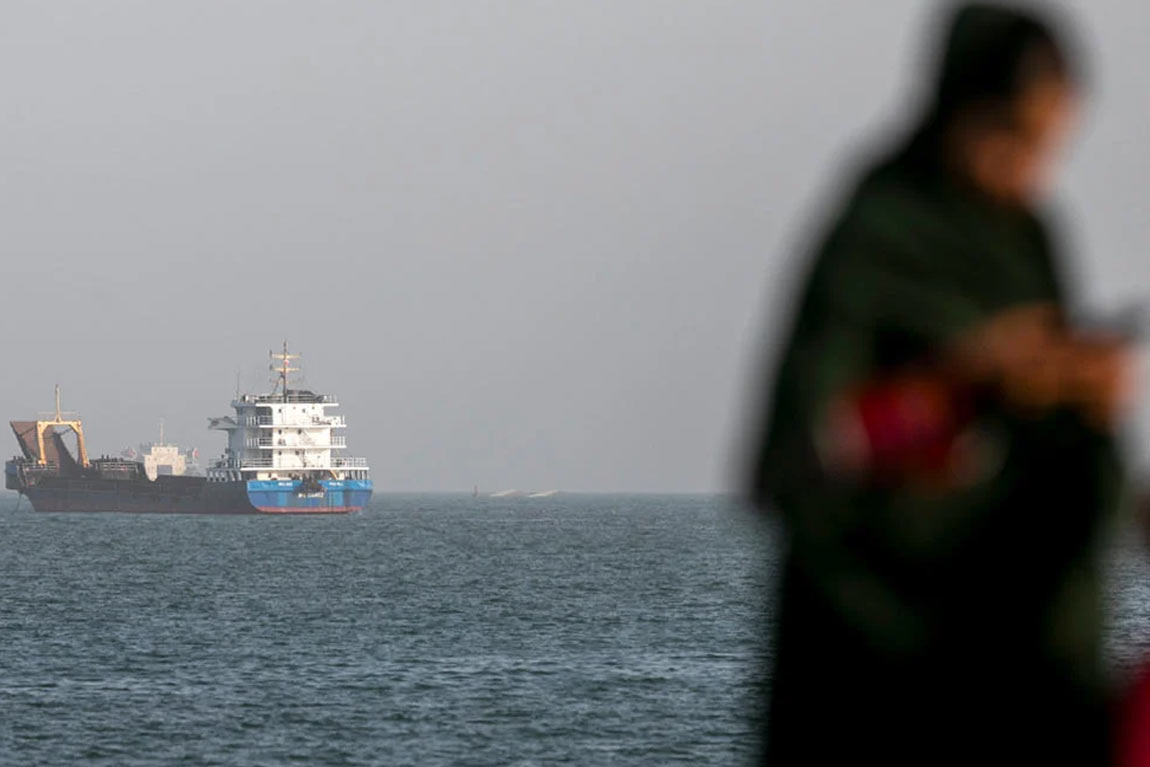
The Strait of Hormuz represents one of the clearest manifestations of this broader dynamic. One of the most globally consequential chokepoints, it serves as a critical node in global energy flows, and its disruption can turn economic interdependence into a source of strategic leverage, with consequences extending far beyond the immediate region.
Iranian actions around the Strait should be understood against this backdrop. By blocking civilian vessels, laying mines, targeting tankers attempting to transit the Strait, and attacking offshore and onshore energy infrastructure, Iran has militarised bodies of water, securitised civilian flows, and weaponised chokepoints to pursue strategic objectives.
In the Memorandum of Understanding signed between the US and Iran in June 2026, the fifth point offers an illustration of how international law can become subject to competing interpretations. It leaves it to Iran to “conduct dialog with the Sultanate of Oman to define the future administration and maritime services in the Strait of Hormuz in discussion with other Persian Gulf littoral states in line with the applicable international law and the sovereign rights of coastal states.”[3] The provision leaves questions unaddressed concerning the future governance of the Strait, including the roles of Iran, Oman, and the other Arabian–Persian Gulf littoral states.
The broader challenge that remains is that the Strait cannot be considered in isolation from the wider maritime system. Its security cannot be separated from the question of how its governance and the rules governing passage through it is upheld in practice. Given its connection to the Gulf of Oman and the North-western Indian Ocean, and further westward to the Bab el-Mandeb, Red Sea and Suez, disruptions in one maritime space have consequences for others.
Various countries have attempted to address these challenges through regional cooperation, multinational naval deployments, and broader coalitions. Yet, maritime insecurity persists, raising questions about the adequacy of existing arrangements and about what a more sustainable multilateral approach might look like. Who should provide leadership? How should regional and extra-regional actors share responsibility? Can approaches developed in one maritime theatre be adapted to another? And how can the perspectives of states directly affected by maritime insecurity be incorporated into arrangements that have often been shaped by external powers?
From Instability to Multilateral Response
While the weaponisation of Hormuz reflects the broader dynamics of international affairs outlined earlier, it must also be situated within the specific geopolitical, historical, and geographical context of the Middle East.
The 2026 Middle East crisis is the latest episode of a longstanding divide between the northern and southern shores of the Arabian–Persian Gulf—a rift that originated during the 1979 Iranian revolution and has since deepened. The 1984–1988 Iran–Iraq Tanker War offered an early illustration of the weaponisation of the waterway.
A second way to frame the crisis is through the series of kinetic confrontations that followed the attacks carried out on 7 October 2023. The conflict’s regionalisation quickly extended to the maritime domain, as the Houthis began targeting vessels of the countries they deemed hostile or complicit in the destruction in Gaza. The resulting disruption to shipping around the Bab el‑Mandeb and Red Sea, and its consequences for the Suez Canal, highlighted the interconnectedness of the region’s maritime chokepoints.
While the recent attacks across the Arabian–Persian Gulf and the naval embargo the Houthis declared on Saudi Arabia in July 2026 echo earlier episodes of maritime weaponisation, they also underscore how distinct conflicts overlap, as evident in the case of the Iranian-Israeli rivalry and Saudi Arabia’s confrontation with the Houthis.
This interconnectedness—and the transmission channels that carry conflict from one flashpoint, and from one chokepoint, to the next—should be seen as a defining feature of the 2026 Middle East crisis and of the system within which it is unfolding. That system is one of structural instability extending well beyond the Gulf, one in which Africa and the Middle East; civilian and military; economics and security; land and sea; and local, regional, and global dynamics form a continuum.
Policymakers must bear this in mind when approaching the complex expanse of Afro‑Eurasia stretching from the Mediterranean to the wider North-western Indian Ocean, and from the Caucasus to the Horn of Africa. It is within this wider geographical and strategic context that the question of how to secure Hormuz—and how to develop a sustainable multilateral response—must be considered.
Despite intensifying conflicts and heightened tensions, space for multilateralism still exists. Broad coalitions, inclusive frameworks, purposeful engagement and, where appropriate, minilateral formats may offer avenues for addressing the intractable problems resulting from the ongoing conflict. The contributions that follow explore the possibilities and limitations of different approaches in the context of Hormuz and the wider maritime system.
This compendium brings together eight contributions approaching the question from complementary perspectives. The first chapter asks whether multilateral approaches can do more to guarantee free passage in Hormuz, while the seventh examines the leadership format required to secure the Strait. The second and third essays broaden the geographical and analytical lens, exploring the relationship between Hormuz and the Bab el-Mandeb, drawing lessons from this crisis for other theatres. The fourth, fifth, and eighth bring Gulf, Indian, and African perspectives into the discussion, while the sixth considers what can be learned from European naval missions and built upon after the Hormuz crisis. Taken together, the chapters in this special report explore not only how Hormuz might be secured, but also who should shape the response, how different maritime theatres are connected, and what a genuinely multilateral maritime-security architecture might look like.
Read the report here.
Virginie Collombier is Co-founder and President of the Mediterranean Platform.
Luigi Narbone is Co-founder and Vice-President of the Mediterranean Platform and former EU Ambassador to Saudi Arabia and other GCC countries.
Akram Zaoui is Associate Fellow, Geopolitics, ORF Middle East.
All views expressed in this publication are solely those of the authors, and do not represent the Observer Research Foundation, either in its entirety or its officials and personnel.
The authors acknowledge the use of Microsoft Copilot for language refinement prior to submission.
Endnotes
[1] Henry Farrell and Abraham L. Newman, “Weaponized Interdependence: How Global Economic Networks Shape State Coercion,” International Security 44, no. 1 (2019): 42–79, https://doi.org/10.1162/isec_a_00351
[2] Edward Fishman, Chokepoints: The Geopolitics of Critical Supply Chains (New York: Oxford University Press, 2025).
[3] Memorandum of Understanding between the United States of America and the Islamic Republic of Iran, Washington, DC: The White House, June 2026, https://www.whitehouse.gov/.