 Global
Commentaries | 19 October, 2026
Why Gulf Money Is Moving to India Despite the Regional Crisis
Spotlight
- Gulf sovereign wealth funds (SWFs) invested US$1.7 billion into India in the first half of 2026, their best half-year since 2024, even with the Strait of Hormuz effectively shut.
- However, India’s share has shrunk. Of the record US$53.9 billion the Gulf committed globally in the same period, almost half went to the US and 17 percent to China, while India took only about 3 percent, below the 5–6 percent it held in 2022–24.
- Attracting sovereign capital is the easier half. Deploying it needs investment-ready pipelines, predictable regulation, and fast dispute resolution. That is the binding constraint.
A Supposed Paradox
The Strait of Hormuz, which once carried about a fifth of the world’s seaborne oil and liquefied natural gas (LNG), has been contested since 28 February 2026, with Iranian forces declaring it closed and mining parts of it. Transits have not recovered: a June 2026 memorandum briefly reopened the waterway, but the restart was limited and uneven. The arrangement broke down in July and traffic is still running at a fraction of the roughly 3,000 vessels a month the Strait handled earlier. Indian refiners spent the spring sourcing alternative crude from the United States (US), Russia, and West Africa.
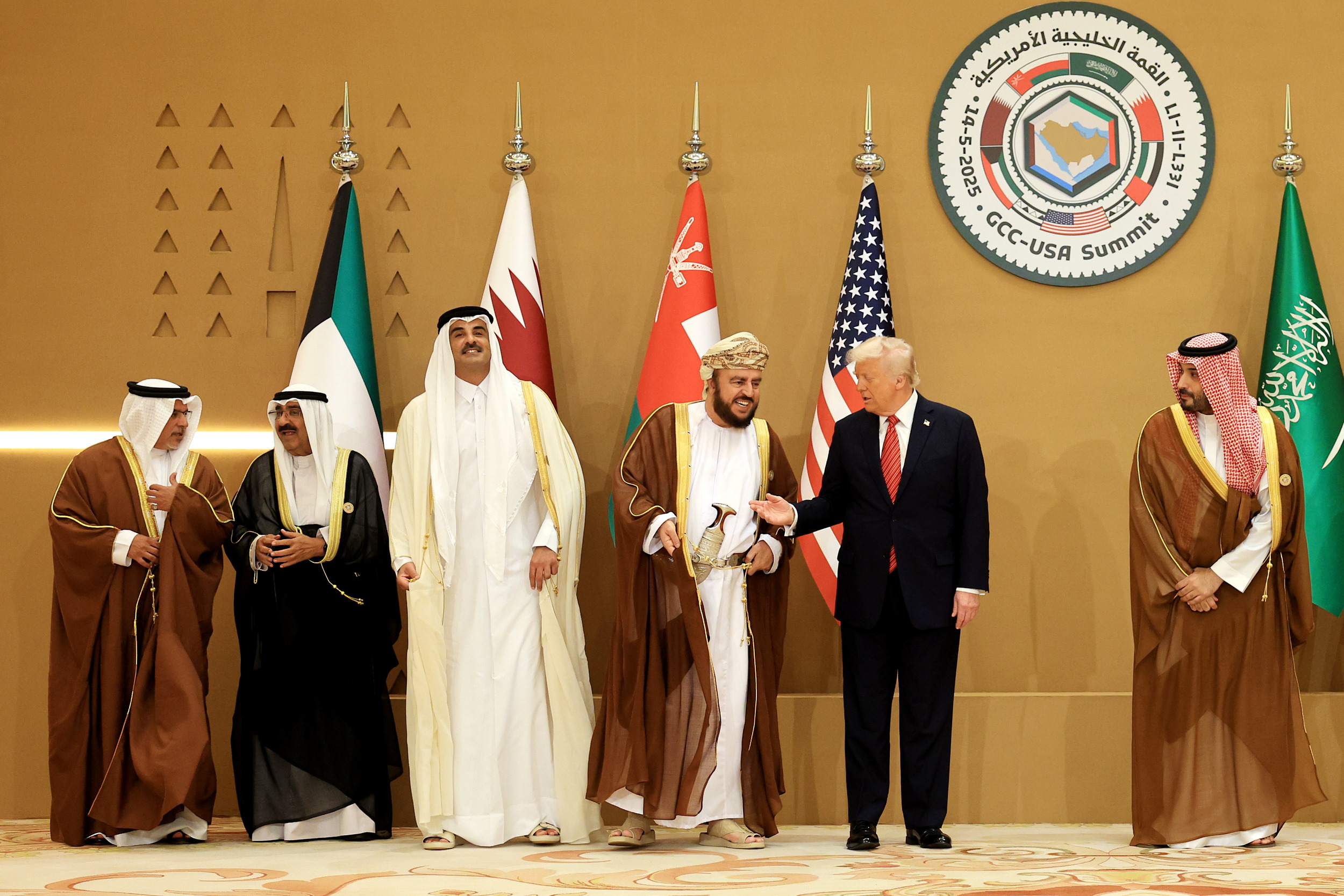
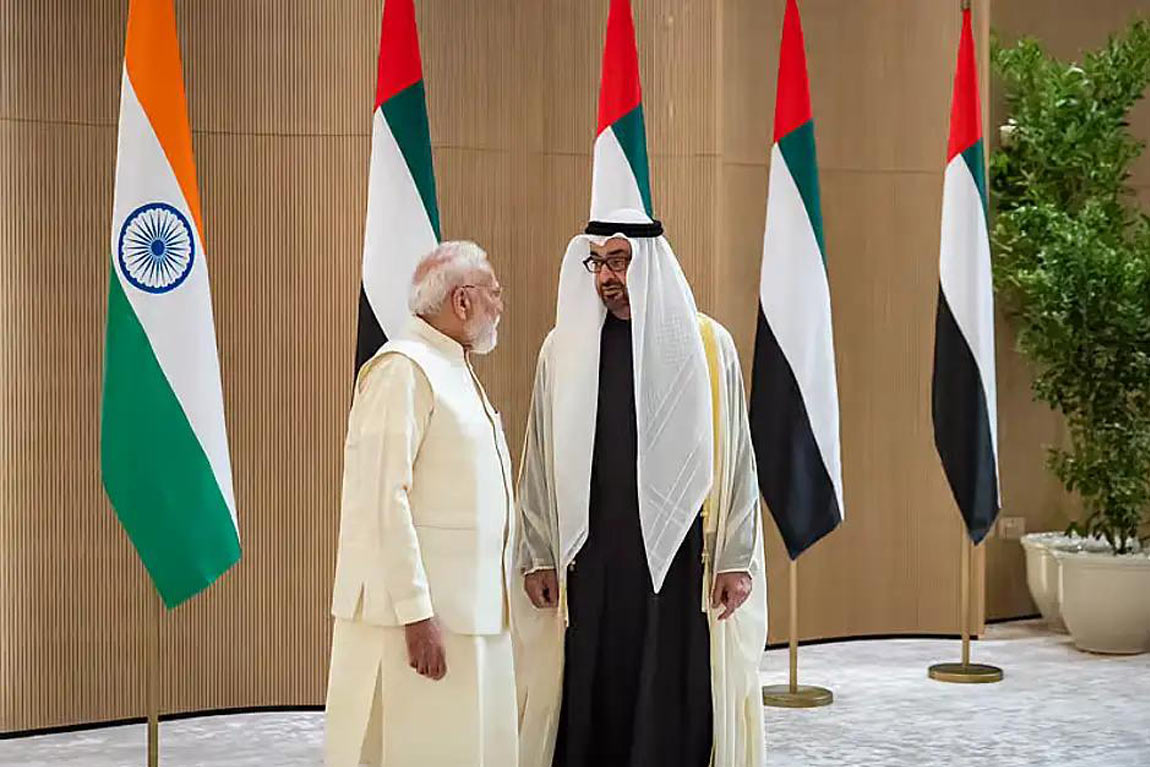
Gulf sovereign capital, however, was not pulled back from India during these months. It went the other way. Gulf sovereign wealth funds (SWFs) invested roughly US$1.7 billion into India in the first half of 2026, the strongest half-year since 2024, and more than double the US$700 million in all of 2025.. Global SWF data shows that the bulk of the US$1.7 billion is concentrated in a single investor, the Abu Dhabi Investment Authority (ADIA), with its largest entry an agreement with India’s National Investment and Infrastructure Fund (NIIF), announced in May 2026 after a summit between Indian Prime Minister Narendra Modi and United Arab Emirates (UAE) President Sheikh Mohamed bin Zayed Al Nahyan, to explore infrastructure investments of up to US$1 billion. That is a statement of intent rather than a completed transaction. No other Gulf fund appears in the half-year figures and India’s 3.1 percent share of Gulf deployment remains below the 5.2–6.3 percent it held between 2022 and 2024.
There is less of a contradiction here than at first glance. SWFs invest on a 10- to 15-year view and respond to growth rates, currency stability, and policy predictability rather than geopolitical ups and downs. Instability in their own region also led Gulf funds to invest more abroad, since keeping capital concentrated at home would only deepen their exposure to the same regional risks. When the Gulf neighbourhood turned volatile and oil revenues began to look like a liability, spreading exposure into large, comparatively stable markets was the sensible response.
SWFs invest on a 10- to 15-year view and respond to growth rates, currency stability, and policy predictability rather than geopolitical ups and downs.
India is an obvious investment destination. Its economy recorded robust growth in the first quarter of financial year 2026–27 (FY27), and full-year forecasts have since been revised to 6.7–6.8 percent even after the war-related oil price shock. The rupee has weakened, but the project pipeline is deep and India’s ability to work across blocs means that Gulf investors are not seen as taking sides in the rivalry between the US and China. The Gulf turbulence has, if anything, strengthened India’s case, since India offers some cover against the high risks the Gulf is exposed to from Iranian missile and drone strikes on energy facilities and the disruption of its oil and gas exports through Hormuz.
Why Patient Capital Matters
Gulf SWFs’ appetite for overseas investment is not new. They deployed about US$119 billion globally in 2025, which, by Global SWF’s count, was around 43 percent of all sovereign spending worldwide. In the first half of 2026, they committed US$53.9 billion across 108 transactions, an all-time high, with the Abu Dhabi-based Mubadala Investment Company as the world’s most active sovereign investor at US$15.2 billion. Almost half of that capital went to the US and 17 percent to China, which is the context in which India’s 3 percent share should be read.
How these investors choose where to invest has changed. They now apply a national strategy filter alongside the financial one, securing food and energy supply chains, buying into artificial intelligence (AI) ahead of a post-oil economy, and building longer partnerships with fast-growing markets. Between 2020 and 2025, Gulf sovereign investors accounted for roughly 63 percent of global sovereign spending on AI. That is closer to industrial policy than to portfolio management, and explains much of the Gulf’s turn towards Asia. India fits this criterion because it has a large consumer market, a growing manufacturing base, and a digital economy, none of which the Gulf can quickly build at home.
India’s development finance story has always been short of patient capital and SWFs are among the few reliable sources of it. The National Infrastructure Pipeline (NIP), the government’s consolidated list of planned public and private infrastructure projects unveiled in 2019, was conceived as a roughly US$1.4 trillion undertaking for FY 2020–25. The scale of need has outpaced available finance: the World Bank puts India’s infrastructure financing gap at more than 5 percent of gross domestic product (GDP).
Ports, power grids, logistics networks, and clean energy need money that can sit for a decade before it earns anything, which is what SWFs hold. Long-duration equity also lets India finance these assets without incurring short-term external debt, which matters when the current account deficit is set to increase to about 1.5 percent of GDP in FY 27, from 0.6 percent in FY 26.
Decades after the 1970s Gulf oil boom, the India–Gulf relationship rested on hydrocarbons going east and remittances from a diaspora of close to ten million, but it is more multifaceted now. India and the Gulf Cooperation Council (GCC) began talks for a Free Trade Agreement (FTA) in February 2026, with bilateral trade being worth US$178.56 billion in FY 2024–25. Alongside the talks, cooperation has widened to include food security corridors, green hydrogen cooperation with Saudi Arabia, payments links, a new India–UAE defence framework, and shipbuilding tie-ups.
However, the FTA itself is far from finalised. The first formal round of India–GCC talks slipped past its original timetable because of the Hormuz crisis and was expected in September 2026. No date for it was announced at the GCC–India ministerial meeting held in New York in late September, where the two sides only welcomed the start of negotiations. Meanwhile, Gulf deployment into India contracted sharply in 2025 as SWFs channelled capital into large Western technology and AI deals, before recovering only partly this year. India’s share of Gulf sovereign deployment fell from 5.2–6.3 percent in 2022–24 to about 1.2 percent (roughly US$700 million) in 2025, and has climbed back to only 3.1 percent in the first half of 2026.
Capital Follows Returns, but Trust Decides Where It Goes
Returns still decide how much money moves, but trust in a partner’s political reliability and strategic alignment increasingly decides where. The India–Middle East–Europe Economic Corridor (IMEC) is the clearest example of this. Announced at the 2023 Group of Twenty (G20) summit in Delhi, progress on the corridor stalled during the Israel–Hamas war that began in October 2023 and has since been kept alive mainly through feasibility studies and diplomatic meetings rather than construction. The Middle East Institute’s assessment in May 2026 was blunt: implementation remains doubtful, with no firm funding commitments or construction timelines, even though the Hormuz closure has reminded Europe of the advantages of an overland route. Engineering is not the obstacle; it is aligning its eight signatories[1] and the transit states along the route, with normalisation of Israel–Saudi relations being the binding constraint.
India and the Gulf are exposed to the same risks: energy price shocks, maritime chokepoints, dependence on imported food, and disrupted supply chains.
India and the Gulf are exposed to the same risks: energy price shocks, maritime chokepoints, dependence on imported food, and disrupted supply chains. When Iran’s foreign minister, Abbas Araghchi, said in March 2026 that India, China, and Russia would retain access to the Strait of Hormuz, it reminded everyone how much of the India–GCC relationship is about managing risk together.
Absorbing Capital Is the Harder Half
India appeals to Gulf capital for three reasons that evolved over the past decade: macro-financial credibility, including inflation targeting and a cleaned-up banking system; public infrastructure, both digital and physical; and investment diplomacy, from trade agreements to co-investment vehicles such as NIIF.
While attracting capital has been relatively easy for India, deploying it requires structured project pipelines, transparent regulation, quick dispute resolution, and institutions able to co-invest at scale. The National Bank for Financing Infrastructure and Development (NaBFID) nearly doubled its lending portfolio, including bonds, to about INR1.15 trillion in FY 26. Where such institutional machinery is missing, incoming money either sits idle or piles into a handful of safe assets, and the real constraint becomes India’s ability to put capital to productive use, not its ability to attract it. NIIF and the Export-Import Bank of India (EXIM Bank) could be given more scale and a clearer outward mandate to help in capital deployment.
Infrastructure remains central, since ports, power and renewable energy projects, and logistics are slow and expensive to build. Experts at PricewaterhouseCoopers (PwC), which advises Gulf investors, expect Gulf sovereign investment in India over the next 12 to 24 months to focus on logistics, ports, airports, digital infrastructure, renewables, and data centres rather than the real estate that used to dominate, although ADIA’s commitments in the first half of 2026 still ran about 40 percent into a real estate fund. That is the more telling change—the money is beginning to back the sectors that will shape India’s future growth, rather than only the current assets.
Soumya Bhowmick is Deputy Director and Fellow at the Centre for New Economic Diplomacy, Observer Research Foundation.
The author acknowledges the use of Claude Opus 4.8 for language editing and background research assistance. All factual content, analysis, and final text remain the responsibility of the author.
[1] The IMEC Memorandum of Understanding, signed in September 2023 on the sidelines of the G20 summit in New Delhi, has eight signatories: India, the United States, Saudi Arabia, the UAE, the European Union, France, Germany, and Italy.