 Global
Occasional Paper | 10 November, 2026 Download Report (PDF)
From Congestion to Access: Sustainable Urban Mobility and the India–Africa–UAE Trilateral
In cities across India, Africa, and the United Arab Emirates (UAE), growing traffic congestion and fragmented public transport systems limit access to economic opportunities. Streets designed for vehicle speed rather than multimodal use restrict mobility for children, older adults, and people with disabilities. Traditional measures, such as wider roads and flyovers, fail to offer a long-term solution, as induced traffic quickly fills the added capacity. Reversing course requires reform on several fronts: formalisation of bus operations through gross-cost contracting, expanded bus fleets, cost-effective rapid transit investments, inclusive street design, transit-oriented land-use policy, and robust parking management. The India–Africa–UAE (IAU) trilateral can accelerate this transition by widening access to finance, mobilising and de-risking private capital, building regional clean bus supply chains, strengthening transport institutions, and facilitating the diffusion of best practices.
Attribution: Christopher Kost, “From Congestion to Access: Sustainable Urban Mobility and the India–Africa–UAE trilateral,” ORF Occasional Paper No. 583, Observer Research Foundation, November 2026.
Introduction
As cities around the world confront the rise of artificial intelligence (AI), changing dynamics in job markets, shifting geopolitics, and an intensifying climate crisis, the need for efficient urban mobility systems has become more urgent than ever. Across India, Africa, and the United Arab Emirates (UAE), cities face growing traffic congestion that hinders economic performance and erodes the quality of life. The construction of wider roads only brings temporary relief. Cities with some of the worst traffic jams—from Lagos to Dubai to Bengaluru—contend with the reality that the solutions lie beyond wider roads, flyovers, and tunnels. The 2026 US-Israel–Iran war and its regional theatres have disrupted shipping channels through the Strait of Hormuz and the Red Sea, triggering a global energy crisis and highlighting the fragility of transport systems that depend on imported fuel. Meanwhile, decades of prioritising fast car movement have limited freedoms and access for children, those with disabilities, and the elderly, producing transport systems that fail to serve all members of society. Governments are beginning to realise that cities with congested streets and a public realm teeming with cars cannot support a dignified quality of life and attract an increasingly mobile workforce.
How can cities move away from this trajectory and provide their citizens with equal access to opportunities, enable safe and independent movement, and reduce reliance on personal vehicles? A potential instrument to support this transition is the India–Africa–UAE (IAU) trilateral, an initiative proposed by the Observer Research Foundation Middle East to strengthen economic competitiveness through dialogue, partnership, and investment.[1] With multilateralism under strain, alignments like the trilateral offer an alternative channel for strategic and economic cooperation. Building on successful collaboration on trade, logistics, and clean energy, the trilateral has the opportunity to support the scaling of best practices in sustainable mobility and urban development. By expanding access to finance, unlocking commercial opportunities, and facilitating knowledge sharing, stronger cross-regional partnerships can encourage greater investments in high-quality public transport and walking and cycling infrastructure. This paper explores how urban mobility planning can change course and how the trilateral can help drive the transformation.
Understanding the Causes of Today’s Mobility Challenges
One More Lane Won’t Fix It
Traditionally, transport planning has followed a predict-and-provide approach to road expansion: estimate the future increase in car traffic and expand roadways accordingly. However, a growing body of evidence illustrates the futility of this approach: rising traffic volumes quickly fill the added road space.[2] In the long run, there is a one-to-one relationship between road space and vehicle volume, even after accounting for population and economic growth.
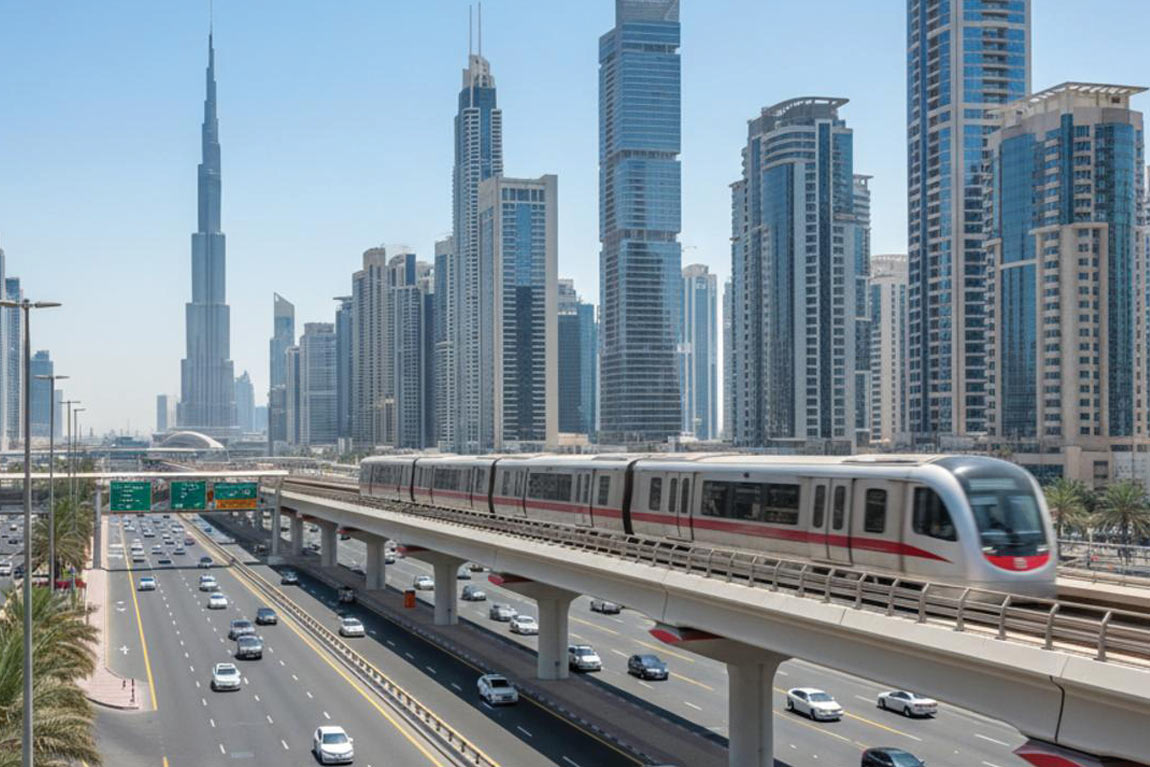
Commuters see induced demand play out through daily traffic jams that waste time and trigger frustration. In greater Dubai, with its extensive highway network, traffic snarls on the E11 and E311 highways connecting residential areas in Sharjah to job centres in Dubai start as early as 5.00 a.m. In the absence of dedicated lanes for public transport on these critical corridors, commuters lack an alternative to being stuck in traffic. Besides exacerbating congestion, burgeoning car and motorcycle use is contributing to an air quality crisis in Indian cities like Delhi, where vehicles produce 40 percent of particulate pollution and 81 percent of nitrogen oxide emissions.[3] In many African cities, poor road density concentrates traffic in a limited number of major roads, adding to congestion that stifles access to jobs and economic development.[4]
Fragmented Public Transport and Weak Institutions
Public transport systems have not kept pace with the demand for efficient mobility. Across the Africa region, informal operations comprise most of the public transport services.[5] While informal public transport fills a critical service gap in many cities, its prevalence reflects the failure of institutions to manage and invest in the sector. Loosely regulated by governments, the services typically rely on dilapidated and polluting buses and minibuses. The vehicles are usually inaccessible to people with disabilities and can be difficult to board for passengers with young children or riders with luggage. Operators cover their costs solely through passenger revenue, resulting in poor vehicle maintenance and deferred vehicle replacement. Vehicle owners often employ drivers without formal contracts or drive the vehicle themselves, and in either case the job means long work hours and a lack of workplace benefits. Competition among operators contributes to unsafe driving.[6]
Public transport route patterns have evolved to mediate conflicts among operators, so cities typically have radial route networks converging on downtown areas. Passengers headed to destinations outside the city centre need to catch more than one vehicle to complete their trips.[7] In the absence of formal scheduling, a fill-and-go system predominates, with irregular departures and limited off-peak service.[8] Passengers endure overcrowding in peak services and long waits while travelling at other times of the day. Services often fail to meet the needs of caregivers and other users whose travel patterns and timings do not match the peak-hour commute. Across many countries in Africa, the shortcomings in public transport services have spurred a surge in motorcycle taxi use,[9] along with an ensuing rise in road-traffic injuries and fatalities.[10]
Despite the presence of large state-owned bus fleets in major Indian cities, the private sector runs 93 percent of the country’s buses,[11] often under weak regulatory oversight. In Indian cities with a population below 10 million, the share of trips carried by informal modes is comparable to or exceeds the share of formal bus services.[12] An informal ‘car lift’ service is also common in Dubai, where fleets of commuter vans and Coaster buses provide connectivity from residential areas to shopping malls and other job centres. The Roads and Transport Authority (RTA), which operates a formal system of 1,518 buses and a 90-km metro network, [13],[14] has launched a licensing programme to bring some flexible services under the ambit of regulation.[15]
India has invested extensively in metro rail, with systems totalling 1,090 kilometres in 26 cities as of the end of 2025.[16] While the Delhi Metro—the country’s most extensive—attracts some 6.5 million daily boardings,[a],[17] many metro systems have struggled to attract ridership, resulting in large operating deficits.[18] Mumbai’s 33.5 km Metro Line 3, built at a cost of INR 373 billion (US$4.1 billion),[19] carries only around 150,000 passengers per day, a tenth of the line’s projected ridership.[20] Meanwhile, bus service remains inadequate. While national guidelines call on cities to provide 40–60 buses per 100,000 population, most cities fall far short of this benchmark.[21],[22] Several cities with operational metro systems have fewer than 20 buses per 100,000 population.[23] In many cases, shared autorickshaws and minibuses have taken up the slack, while other passengers have shifted to motorcycles.[24]
High-quality bus rapid transit (BRT) systems have taken root in Ahmedabad, Hubballi-Dharwad, Pimpri-Chinchwad, Rajkot, and Surat, most of them launched with central government funding support through the Jawaharlal Nehru National Urban Renewal Mission. BRT is a bus-based rapid transit mode that provides metro-quality service through the use of median bus lanes, level boarding, off-board fare collection, and intersection improvements.[25] It is a growing mode in Africa, with systems operating in cities such as Agadir, Cairo, Cape Town, Casablanca, Dakar, Dar es Salaam, and Johannesburg.
Unfortunately, many Indian BRT systems have suffered from deferred maintenance, overstretched bus fleets, and incomplete information technology (IT) system implementation. Some Indian cities, such as Delhi, Indore, and Bhopal, have removed their BRT corridors, and others have begun the demolition process, bowing to demands from the car lobby for more road space.[26] In recent years, Indian media outlets have tended to amplify the voices of private vehicle users, downplaying the benefits of bus service and attributing congestion to the dedicated BRT lanes rather than growing car use.[27] As one would expect, jams have persisted following the removal of the bus lanes. At Moolchand junction along Delhi’s erstwhile BRT corridor, traffic grinds to a halt during peak periods.
Streets Made for Cars and Not People
In seeking to cater to ever-growing car volumes and higher speeds, cities are making their streets increasingly hostile to pedestrians and cyclists—especially children and older people. High vehicle speeds make streets difficult to cross and contribute to rising rates of fatalities. The World Health Organization (WHO) estimates that its African region has an average of 19 fatalities per 100,000 residents and that India has 15.4 fatalities per 100,000, [28],[29] compared to 5.9 fatalities per 100,000 in the UAE.[30]
Cities across India, the Africa region, and the UAE are currently converting arterial streets to signal-free corridors, forcing pedestrians to use footbridges or pedestrian subways. Grade-separated crossings make walking journeys more arduous, especially for people with disabilities and caregivers with children.[31] Even with elevators, footbridges and subways increase the time needed to cross the street and diminish the potential catchment area of public transport services. Grade-separated crossings also introduce barriers for cyclists unless they are aligned with the direction of cyclist movement. Finally, they are expensive to build. In Nairobi, a pedestrian underpass at a single intersection cost KES 2 billion (US$15 million).[32]
Despite the role of walking as a critical mode of transport for urban residents,[33] narrow, intermittent, and poorly built footpaths make it difficult, pushing pedestrians into the carriageway where they face conflicts with motor vehicles. Universal access standards have been slow to take hold across the IAU, with road authorities often building footpaths that are narrow or have level changes without smooth ramps. Poor construction quality leads to the quick degradation of pedestrian facilities. Streets also lack safe space for cycling, forcing cyclists to share space with fast-moving vehicles. Where cities have implemented high-quality infrastructure for active modes, unauthorised car and two-wheeler parking often encroaches on spaces meant for pedestrians and cyclists.
Shade is critical for making walking and cycling more pleasant in cities with hot and humid climates, yet road-widening projects often result in tree-cutting and fail to incorporate space for new trees. Inadequate drainage also makes walking treacherous—a problem that is likely to grow more serious in an era of climate change. Altogether, the unpleasant conditions make public transport difficult to access and contribute to increased private vehicle use for short trips that people could otherwise accomplish on foot.
Land-Use Regulations that Undermine Public Transport
Neighbourhood design impacts the ability of residents and workers to walk, cycle, and use public transport. Compound-style developments with large blocks and poor connectivity are difficult to navigate on foot. In Dubai, many precincts have well-planned walking routes for internal circulation; however, movement by active modes between districts remains a challenge, and many suburban city zones are too dispersed for efficient public transport operations. Building design also affects walkability; in cities across the IAU geographies, compound walls and blank facades create dreary and isolated spaces along public streets, aggravating security challenges that particularly affect women and girls.[34]
Historically, planning regulations have focused on limiting or restricting development through caps on the floor-area ratio (FAR), also known as the floor-space index (FSI) in India. Lower-density areas with car-oriented layouts are difficult to serve with frequent public transport. In the Africa region, low-density sprawl is exacerbated by a lack of street and utility networks that could facilitate more compact development. The resulting urban form is “crowded rather than economically dense.”[35]
Density restrictions in urban-planning regulations limit the number of people who can live close to job centres, thereby hindering the functioning of job markets.[36] They also trigger sprawl,[37] pushing development to far-flung areas that lack effective public transport service. In India’s National Capital Region, height restrictions limit development in the prime areas of South Delhi to ground plus four floors,[38] while development is mushrooming in the exurban reaches of Gurgaon, which has a fleet of only 150 buses and limited metro connectivity. [39],[40]
Mumbai, which has had notoriously restrictive zoning policies,[41] adopted a master plan update with some increases in allowed densities; however, the changes are modest when compared to the original draft of the plan.[42] In the UAE, decades of car-centric urban planning have influenced the high share of private vehicle trips, with public transport accounting for only 14 percent of daily trips in Dubai.[43] As cities work to expand multimodal transport options, improving pedestrian permeability and reorienting future development around public transport corridors will be essential.
From Car-Centric Growth to Sustainable Access
Investments in public transport service, safe walking and cycling environments, and compact neighbourhoods have the potential to bring about better access to economic opportunities, reduced emissions of greenhouse gases and local pollutants, and lower costs of urban infrastructure. In the Africa region, adopting a sustainable mobility trajectory for the region’s cities could help governments save US$2.1 trillion in urban infrastructure expenditures through 2050,[44] and a similar shift in India would yield savings of US$1.8 trillion over the same time horizon.[45] How can governments across the IAU geographies facilitate the move from car-centric development to a sustainable mobility paradigm? Changing the trajectory of urban mobility systems will require a multifaceted effort to reform public transport business models, pursue efficient investments in sustainable modes, update urban planning policies, and improve the management of urban space.
Reforming Bus Operations to Deliver Reliable Service
Rapid and dependable bus service is crucial for efficient urban mobility. Where public transport systems consist of large numbers of individually owned minibuses or small bus operators, reform efforts should translate into tangible improvements for passengers, including reliable service, safer vehicles, and integrated fares. Long-lasting changes in bus system performance will require the formalisation of the industry with professionalised staff, enhanced institutional capacity to manage the public transport sector, and improved contracting arrangements between the government and the private sector.
Creating an incentive for operators to consolidate and form modern bus operating companies is an important first step. Efforts to bring public transport operators together in groupings such as the Economic Interest Groups in Senegal or the Savings and Credit Cooperative Organisations in Kenya represent good initial efforts towards consolidation.[46] However, further work is needed to form companies that own modern equipment, hire staff through formal employment contracts, and meet corporate governance standards, such as ISO 9001.[b] Larger operating companies can achieve economies of scale in bus maintenance and the deployment of automated systems for operational control.[47]
To transform the quality of bus service, cities need to address the core incentives for public transport operators. Shifting from net-cost contracts (NCCs)—where operators retain passenger revenue—to gross-cost contracts (GCCs)—where the authority pays a per-km rate for the provision of bus service—is a key step.[48] Under a gross-cost arrangement, an independent fare collection operator deposits fare revenue in a trust fund, and the government issues payments based on the distance operated after deducting any service quality penalties. While the primary incentive under an NCC is to carry a larger number of passengers to maximise revenue, the gross-cost model can motivate operators to run safe and reliable service. IT-based fare collection is critical to safeguard system revenue, and Global Positioning System (GPS)-based tracking enables the government to monitor the kilometres operated. The government may also provide the core depot infrastructure under a GCC, making it easier to handle a change of operator.[49]
GCCs require greater fiscal capacity and commitment from the government, as public authorities assume responsibility to meet operator payments regardless of fare income. Where farebox revenue is insufficient to cover per-km payments, governments need reliable funding sources to bridge the gap—particularly during the transition from informal or net-cost operations to a formalised GCC model. One of the most practical short-term options is the introduction of demand-based parking fees, which can generate recurring revenue while reinforcing travel demand management objectives. Over the medium to long term, land value-capture mechanisms can provide an additional source of funding by allowing cities to share in the increase in property values generated from improved public transport infrastructure.
Beyond financing, the GCC approach requires governments to play a more active role in planning, monitoring, and managing public transport services, underscoring the need for stronger institutions and enhanced technical capacity. Advances in data analytics and AI-enabled monitoring can strengthen institutional capabilities by automating service verification, flagging anomalies in vehicle operations, and supporting real-time performance management.
Since Ahmedabad launched the Janmarg BRT system with a GCC in 2009, the contracting model has become standard in India, with central government capital support for e-bus procurement conditioned on GCC adoption. India’s FAME-II (Faster Adoption and Manufacturing of Hybrid & Electric Vehicles phase 2) programme, which sanctioned 5,595 e-buses for Indian cities,[50] mandated the use of GCCs.[51] Under this model, the central government provided a capital subsidy of up to 40 percent to help offset the cost differential between e-buses and conventional vehicles, while local authorities covered the per-km payments over the duration of the operating contract.[52] The ongoing PM-eBus Sewa scheme, which seeks to deploy 10,000 buses across the country, continues to rely on the GCC model.[53] Similarly, the PM E-DRIVE initiative aims to support the introduction of 14,028 e-buses, again conditioned on GCC adoption.[54]
In the UAE, Abu Dhabi operates its bus service under a gross-cost model, with three companies currently contracted to provide service.[55] Dubai, where the government body RTA currently handles bus operations, is exploring the possibility of tendering service to private operators. In the Africa region, the gross-cost model is gaining traction. After a lengthy review process, the Tanzania Public-Private Partnership (PPP) Steering Committee authorised the Dar Rapid Transit Agency to issue a payment guarantee, enabling the agency to enter a km-based contract for BRT operations with the UAE-based Emirates National Group (ENG).[56] Kigali recently shifted to GCCs under a model where the city-owned venture Ecofleet oversees bus operations, compensating operators through per-km contracts.[57] Under the new model, the government deploys a combination of government-owned buses and buses provided by asset companies. Bus leasing agreements also cover maintenance, aiming to address earlier gaps in vehicle upkeep.[58]
Scaling Bus Fleets to Meet Demand
As governments onboard operators under enhanced business models, cities will require larger numbers of high-quality buses to maintain and expand public transport ridership. For example, India needs at least 145,000 additional urban buses to achieve a reasonable level of service.[59] African cities will require a dramatic ramp-up in bus fleets, with 1.2 million new buses and 9.4 million minibuses required through 2050.[60] To provide inclusive service, these buses and minibuses should offer at least two wide doors and universal access features to facilitate use by people with disabilities. In India, a Ministry of Road Transport and Highways draft notification proposes that all city buses manufactured from October 2026 onwards have low-floor designs.[61] Buses should also offer IT-based customer information displays, automated fare collection, and air conditioning in cities with hot climates. Adoption of clean technologies for the new fleets will help cities improve air quality and reduce reliance on imported fuel, a rationale that has gained particular urgency in the aftermath of the US-Israel–Iran war. Bus service expansion requires more than new vehicles: cities also need supporting infrastructure such as depots, charging facilities, terminals, and bus shelters.
National initiatives can help aggregate demand, lower purchase costs, facilitate the introduction of e-bus technology, and de-risk private investment. Under India’s PM-eBus Sewa initiative, Convergence Energy Services Limited—a government-owned entity—pools requirements from cities and issues a consolidated bus supply tender to original equipment manufacturers (OEMs).[62] Public transport authorities then reimburse the OEMs through standardised GCCs. Recognising concerns about payment defaults from public transport authorities, the government developed the PM-eBus Sewa-Payment Security Mechanism.[63] Under this scheme, the Ministry of Heavy Industries administers an INR 34 billion (US$357 million) fund to guarantee payments to operators for up to 38,000 buses contracted under central government schemes.[64]
In Morocco, the national urban bus transport programme aims to introduce 3,746 buses by 2029.[65] In Senegal, the government has supported operators to renew vehicles through a revolving fund.[66] Ethiopia has introduced 396 e-buses in cities across the country against a goal of deploying 4,850 e-buses by 2030. [67],[68] Local assembler Belayneh Kindie Group has set up a production facility capable of producing 1,000 buses, minibuses, and trucks annually.[69] The adoption of financing mechanisms and modern bus standards in more African countries could help accelerate the expansion of bus fleets.
Getting Rapid Transit Investments Right
For higher-demand corridors that require more than simple bus service, cities need to identify the most cost-effective investments to expand high-capacity public transport quickly and efficiently. While metro systems can bring extensive improvements in the quality of public transport service, they come with a hefty price tag. In the Africa region, the typical cost of a metro system is over US$100 million per km, while recent BRT projects have cost a tenth as much—around US$10 million per km.[70] Yet, the passenger-carrying capacity of BRT systems is often on par with that of metro systems, especially the lower-capacity metro systems operating with three-car trains in several Indian cities.[71]
In cities with nascent bus systems, the construction of metro or commuter rail represents a costly leap when bus fleet expansion or BRT service could provide an important incremental improvement in public transport service. After building a 29-km light rail transit (LRT) corridor, the Government of Mauritius is grappling with the system’s operational deficit, maintenance costs, and loan repayment obligations[72] as the country faces a potential credit rating downgrade.[73] To make the most of finite transport budgets, governments need to get the proportions right: implement a few metro lines on very high-demand corridors where the expenditure is justified, while building much more BRT on the remaining corridors with moderate demand. In many cities, BRT will be able to handle demand across all corridors.
Over time, BRT design has evolved from the erstwhile trunk-and-feeder configuration to the ‘direct service’ model, where buses travel in dedicated corridors and then proceed into mixed traffic to serve neighbourhoods beyond the main corridors. Cities such as Ahmedabad and Surat have moved towards equipping most city buses with doors on both sides. Buses can access BRT corridors wherever available, speeding up service, while mixed-traffic operations provide widespread coverage. This integrated approach improves connectivity and minimises passenger transfers. Flexible service design enables bus and BRT networks to respond to the needs of diverse trip types, including daily commutes, journeys to school, care activities, and leisure trips.
The Africa region has seen some promising developments in rapid transit, with the launch of the Dar es Salaam BRT in 2016 and fully electric BRTs in Dakar in 2024 and Cairo in 2025. Dar es Salaam’s second-phase BRT corridor opened in 2025, the third phase is nearing completion, the fourth phase is under construction, and financing for the fifth phase is confirmed. Abidjan, Addis Ababa, and Maputo have launched construction of their respective first-phase BRT corridors.
Experience with BRT systems in the Africa region has shown that the planning process requires robust engagement and trust-building with public transport operators to enable the existing industry to participate in BRT operations, avoid parallel competing services once a BRT line opens, and facilitate retraining of the existing workforce. Some cities, particularly in South Africa, have pursued negotiated agreements, involving deliberation between government and affected operators on company formation and shareholding, corporate governance, decommissioning of old vehicles, payment terms, and employment retention.[74] Alternatively, the government can issue a competitive tender incorporating incentives for the inclusion of existing operators.[75] In either case, a transparent process for identifying affected operators is key to building trust between government and the industry.[76]
Designing Streets for Access and Safety
Moving forward, cities need to ensure that urban streets have well-designed footpaths, signalised or traffic-calmed crossings, and safe cycling facilities. Streets that are safe for children, secure at night, and accessible for people with disabilities will ensure that all residents—especially low-income ones—have dignified access to opportunities. Street designs should incorporate continuous tree lines to provide shade, organised spaces for vending, and natural stormwater management to enhance climate resilience. Cities need to emphasise quality construction, with adequate oversight guided by design standards tailored to urban streets.
Abu Dhabi launched a progressive Urban Street Design Manual in 2010, catalysing the implementation of accessible footpaths, wide cycle tracks, safer intersection designs, and traffic-calmed pedestrian crossings across the Emirate.[77] The city now has over 500 km of streets with high-quality cycle tracks.[78] Dubai’s RTA has announced plans to enhance last-mile connectivity to 63 public transport stations by 2030, with measures including improved footpaths and cycle tracks, safer pedestrian crossings, shade elements, and expanded access to bikeshare.[79]
In Africa, Ethiopia has taken a leadership role in developing complete streets. Addis Ababa has constructed 125 km of quality footpaths and cycle tracks, and additional corridors are under construction in secondary cities, supported by a localised manual for urban street design.[80] Indian cities have started scaling up active mobility infrastructure: Pimpri-Chinchwad launched pedestrian improvements under the INR 1.3 billion (US$16.0 million) first phase of the Harit Setu initiative,[81] and the Greater Chennai Corporation allocated INR 2 billion (US$23.4 million) for walking and cycling improvements in the 2025 annual budget.[82]
Aligning Land Use Policies with Sustainable Mobility
Achieving more sustainable city design will require deliberate reform in urban planning policies. To enhance access to economic opportunities, city master plans should liberalise FAR standards to enable densification along major public transport corridors. For example, in Kigali, the Master Plan 2050 allows the highest densities along the city’s planned BRT network, and developments within 75 metres (m) of the BRT corridors can achieve a 30 percent higher FAR if they incorporate affordable units.[83] Dubai’s 2040 Urban Master Plan has a goal of bringing 55 percent of residents within 800 m of a prominent public transport stop.[84] By pairing new BRT and metro corridors with land-use reforms through a transit-oriented development (TOD) framework, cities can establish a virtuous cycle of growing public transport ridership, higher fare revenue, and more frequent service.
Cities need to support densification through locally tailored investments in essential infrastructure, including improvements in water supply, sewerage, public open space, and other public facilities. Land value capture (LVC) mechanisms can help raise revenue to support infrastructure upgrades in TOD zones. To generate meaningful revenue through LVC, local governments need effective property tax regimes with updated valuation rolls. Freetown’s property tax reform demonstrates the potential to expand the local revenue base. The reform process, which began in 2019, involved extensive community participation and a pledge to reinvest 20 percent of ward-level revenue in local projects.[85] The digitised collection system prioritised the 50 percent of properties with the highest value and led to a tripling in collections from 2017 to 2021.[86]
For greenfield areas, urban plans need to consider public transport access from the start, setting the stage for compact neighbourhood development within walking distance of frequent bus service. The ongoing preparation of urban expansion plans for African cities is a welcome step towards facilitating orderly growth.[87] However, these plans should envisage how new street networks can facilitate efficient public transport operations and improve walkability. In built-up and peripheral areas alike, development control regulations should encourage pedestrian-oriented building design elements, including active ground-level uses and arcades to provide shade and rain protection. Zoning regulations should incorporate incentives for developments to include publicly accessible pedestrian routes through large blocks to reduce walking times to public transport. Standards such as Dubai’s Transit-Oriented Development (TOD) Manual, launched in 2025, can ensure that the design of buildings and neighbourhoods supports the use of sustainable modes.[88]
Managing Car Use in Space-Constrained Cities
Parking reform is a contentious but critical measure in improving urban mobility systems. Demand-based pricing of parking facilities can lead to a more efficient use of the existing supply, and the enforcement of parking rules is critical to preventing cars and two-wheelers from blocking footpaths and cycle tracks. Where on-street parking is underpriced, cities should adopt market-based fees to ensure that areas with higher demand have higher prices.[89] For example, parking fees in Dubai vary by zone and time of day.[90] Many African cities have shifted to digital payments using mobile money, but on-street enforcement remains manual. To ensure compliance and minimise revenue leakage, modern parking systems should incorporate IT-based enforcement with the automatic scanning of parked vehicles. Parking fees can serve as a source of revenue to enhance the financial strength of local governments and generate much-needed funds for sustainable transport infrastructure and operations.
Leveraging the IAU Trilateral to Accelerate Reform
Cities across India, Africa, and the UAE are recognising the imperative of overcoming a shared legacy of car-oriented urban planning and the urgent need to develop more efficient, equitable, and sustainable mobility systems. In this context, there is ample opportunity to scale up experience sharing, technical cooperation, and financing partnerships through the IAU trilateral. Collaboration across IAU geographies can leverage the UAE’s ability to provide capital and instruments to manage risk, India’s vibrant bus manufacturing industry and experience with bus contracting, and the fast-growing demand for improved transport systems in the Africa region. The trilateral can also showcase successful initiatives, helping to reward political risk-taking.
Unlocking Faster and More Flexible Urban Mobility Finance
Existing financing for urban infrastructure is woefully inadequate, particularly in the Africa region.[91] To bridge the gap, cities are looking for new sources beyond traditional multilateral lenders and Chinese bilateral financing. UAE-based financing partners are uniquely positioned to deploy investments with rapid preparation cycles, a willingness to take risks, and the patience to support critical but difficult public transport sector reform efforts. Financing from India could support the faster deployment of clean bus fleets while building on existing experience in the country’s bus industry. Bilateral financing is particularly well suited for medium-sized incremental projects that capitalise on political will and reform momentum, setting the stage for larger investments by traditional development banks.
The Abu Dhabi Fund for Development (ADFD), established by the government of the Emirate of Abu Dhabi, has provided concessional finance for a wide range of infrastructure projects in the Africa region and beyond. One of ADFD’s biggest past initiatives was the development of Sheikh Zayed City, a greenfield suburb in Greater Cairo, where the Fund supported the construction of public buildings and facilities.[92] More recently, ADFD has financed intercity road projects in Kenya, Tanzania, and Seychelles, [93],[94],[95] as well as several clean-energy projects, including a hydroelectric initiative on the Senegal River and solar power plants in Togo and Sierra Leone.[96] ADFD investment in the urban transport sector could accelerate public transport reform, BRT, and complete street initiatives in the region.
India has provided bilateral financing for several urban transport projects in the Africa region, often through lines of credit (LOCs) from the Export-Import Bank of India (India Exim Bank). The Bank has provided concessional LOCs for multiple bus purchases, including the purchase of 475 buses by Dakar Dem Dikk[97] and the supply of 500 buses to public bus operator Société des Transports Abidjanais in Côte d’Ivoire.[98] Additional initiatives include the 29-km Mauritius LRT, for which the Government of India provided US$277 million in grants and US$340 million in loans for phases 1–3,[99] and the Lusaka Decongestion Project. Despite initial plans for a BRT corridor, the final infrastructure in Lusaka consisted of road widenings and flyovers.[100] The financial strains experienced by the Mauritius LRT and the change in project direction in Lusaka illustrate the need for sound planning decisions and careful financial analysis to guide urban transport interventions. Bilateral financing agreements in support of BRT corridors and complete streets, as suggested by a 2018 India Exim Bank working paper,[101] could help cities establish more financially sustainable mobility systems.
Mobilising Private Investment
Rapidly growing cities in India and the Africa region present opportunities for direct commercial partnerships and investment, building on experience across multiple sectors. By some metrics, the UAE is the largest source of foreign direct investment (FDI) in the Africa region,[102] covering domains such as logistics, energy, agriculture, mining, telecommunications, and carbon offsets. The UAE’s DP World and Abu Dhabi Ports Group operate a large network of ports and container terminals across the Africa region and India. UAE firms are increasingly involved in urban development and mobility projects. In Dar es Salaam, UAE-based ENG won the tender to become the second operator for phase 1 of the city’s BRT network.[103] Under the contract, ENG will supply and operate 177 buses through a GCC. A potential role for experienced Indian and UAE operators is to partner with the incumbent industry in the Africa region to build capacity for modern fleet management and operations. Alternatively, a UAE-capitalised leasing company could finance bus fleet acquisition, helping to reduce foreign currency obligations on the balance sheet of local bus operators.
In 2024, the UAE entered an agreement with the Government of Egypt to invest US$35 billion in a greenfield development project known as Ras El-Hekma.[104] Abu Dhabi sovereign wealth fund ADQ and Modon Holding will develop the new coastal city, located west of Alexandria and envisioned as a hub for tourism and light industries. In Ethiopia, Abu Dhabi-based Eagle Hills Properties launched the 36-hectare La Gare redevelopment project in central Addis Ababa in 2018.[105] The project includes 4,000 residential units, hotels, offices, and a shopping mall.[106] Although the project includes some best-practice elements, such as internal walking and cycling paths, the design visualises the entire development as a gated complex, with limited connectivity to the surrounding city. Future initiatives should incorporate emphasis on compact and walkable urban design with connections to public transport, leveraging the UAE’s considerable financing capabilities to demonstrate TOD best practices at scale.
Reducing Risk to Crowd in Private Capital
To mobilise greater private capital investment in urban mobility, especially bus service, governments will need to strengthen frameworks for private investment in public transport operations. While governments and financing partners have extensive experience with PPP structuring for toll roads, there is less experience with public transport projects—especially bus-based public transport. As part of the IAU trilateral, the UAE’s experience with de-risking instruments could prove valuable if applied to the public transport sector, helping to mitigate uncertainty around the public transport industry transition, political changes, currency fluctuations, and the performance of e-vehicles.
The 15-year concession agreement for Dakar’s first-phase BRT corridor illustrates how risk management measures can help make private investment in public transport viable. Dakar Mobilité, the operator, obtained a political risk insurance package with a total exposure of 20.8 million euros from the World Bank Group’s Multilateral Investment Guarantee Agency,[107] helping secure the consortium’s equity investment. The Private Infrastructure Development Group supplied 9 million euros in viability gap funding, and the European Union provided a grant of 7 million euros.[108] Based on these contributions, Proparco and the Emerging Africa Infrastructure Fund offered a loan of 85.4 million euros, with a tenure of 15 years, and a battery replacement loan of 6.4 million euros. In total, the operator will invest 135 million euros in rolling stock, control systems, and fare collection equipment.[109]
Since projections showed the Dakar BRT operations to be financially viable, Dakar Mobilité will collect fare revenue and take on the revenue risk, subject to a minimum ridership guarantee of 100,000 passengers per day.[110] In most bus systems and BRT projects, governments will need to provide subsidy support to maintain affordable fare levels. However, the private sector can still handle a substantial portion of the investment in system rolling stock. As discussed earlier, a typical arrangement is for the government to finance the corridor infrastructure, bus depots, and other core facilities, while private operators invest in the rolling stock under a GCC. Sound project preparation with the support of partners such as ADFD could help define viable business models that respond to local financial realities. Over time, improved service reliability and network planning through GCCs can increase ridership and farebox recovery, partially offsetting the higher upfront fiscal commitment.
The UAE’s Africa Green Investment Initiative (AGII) is another example of how donor support can leverage private sector investment in green infrastructure, serving as a potential model for a parallel initiative in urban transport. Launched in 2023, the AGII seeks to mobilise 15 gigawatts (GW) of solar, wind, energy storage, and green hydrogen projects by 2030.[111] The total UAE commitment of US$4.5 billion includes US$2 billion in equity from Masdar, US$1 billion in equity from AMEA Power, US$1 billion of financial assistance from ADFD, and US$500 million of insurance from Etihad Credit Insurance to mitigate risks for private investors.[112] The Global Climate Finance Centre serves as the secretariat, supporting countries with project preparation, and Africa50, an infrastructure investment bank affiliated with the African Development Bank, is participating as a strategic partner.
Building Regional Clean Bus Supply Chains
India’s bus manufacturers are actively pursuing electric bus sales in African markets and in the UAE. While Indian producers have historically focused on the market for inexpensive staff and school transport buses in the UAE, both Ashok Leyland and JBM are now entering the e-bus space. Ashok Leyland’s subsidiary Switch Mobility has announced plans to shift e-bus manufacturing operations from the United Kingdom (UK) to an existing facility in Ras Al Khaimah in the UAE, improving cost structures and better positioning the manufacturer for markets in the Middle East and Europe.[113]
Switch Mobility has supplied 100 buses to the National Transport Corporation in Mauritius, fully covered by grant funding from India.[114] Meanwhile, Indian vehicle manufacturer EKA Mobility has delivered 15 e-buses to Zanzibar out of a planned fleet of 35 buses in a project partly financed by the Zanzibar Social Security Fund.[115] EKA Mobility and Ethiopian conglomerate Kerchanshe Group announced a partnership to set up an assembly facility for e-buses and trucks in Ethiopia.[116] EKA subsequently announced a separate partnership with Mitsui & Co. and Rana Motors to set up another assembly plant in Ghana.[117] Moving forward, bus supply partnerships can extend beyond the provision of vehicles to address industry reform, contracting, and IT systems, benefiting from India’s bus operations ecosystem.
Strengthening Transport Institutions
Across the diverse institutional landscape in the IAU geographies, stronger government capacity will be crucial to enhancing public transport service, developing streets that serve all users, and managing public space. In addition, better institutional collaboration is needed to ensure that all agencies in a given urban area work towards the common objective of developing integrated and efficient mobility systems. Cities need empowered transport agencies with a clear mandate to plan for the future of the mobility system across the metropolitan area, oversee public transport operating contracts, facilitate interagency cooperation, and communicate with the public. Such an agency may need to bridge multiple jurisdictions if a metropolitan area has more than one local government, but the scope should not extend to the national level, which risks diluting the agency’s focus.
Through the IAU partnership, transport authority officials would have the opportunity for exchange with peer cities facing similar governance constraints and mobility challenges. Emerging agencies could learn from more mature transport authorities, such as the Conseil Exécutif des Transports Urbains Durables (CETUD) in Dakar, Casa Transports in Casablanca, and RTA in Dubai. Meanwhile, the upgrading of individual skills through place-based learning across the IAU geographies could help practitioners share lessons learned on best practices in mobility planning, public transport reform, bus operations, and complete streets. The partnership could also transfer knowledge on maintenance and enforcement, helping emerging transport authorities keep buses running, enforce dedicated BRT corridors, and ensure that footpaths and cycle tracks remain free of parking encroachments.
Conclusion
A transformation is unfolding as cities across India, the Africa region, and the UAE work to overcome a legacy of car-oriented transport planning by investing in active mobility networks and public transport systems. These mobility solutions hold the potential for more efficient access to economic opportunities, improved public health, and cleaner air. Interregional exchange through the IAU trilateral has the potential to accelerate sustainable mobility initiatives by expanding access to finance, catalysing private investment, and facilitating the exchange of critical know-how.
The next steps for the trilateral can include setting up a joint task force for IAU collaboration on urban mobility. The joint task force could bring together transport authorities, financing partners, and bus manufacturers, matching cities ready for reform with finance and technical support. The task force could collaborate with the newly formed BRICS Urban Mobility Hub on knowledge sharing and capacity building.[118] A dedicated financing window, anchored by partners such as ADFD and India Exim Bank, could support bus fleet renewal, BRT corridors, and complete streets, backed by project preparation assistance. Demonstration projects in interested cities would show how gross-cost contracts, clean buses, and safe streets together give residents faster, more reliable, and more affordable access to jobs and services.
Christopher Kost is a transport planner, working as an independent consultant. He serves as Director of the Advanced Urban Mobility Initiative.
The author wishes to thank the reviewers of the paper for generously offering their time and expertise.
The author acknowledges the use of AI ChatGPT 5 and Claude Opus 5 to support web searches, for citation management, and proofreading.
All views expressed in this publication are solely those of the author, and do not represent the Observer Research Foundation, either in its entirety or its officials and personnel.
Endnotes
[a] The Delhi Metro Rail Corporation counts trips involving interchanges between lines more than once, so the ridership figure is not directly comparable to daily ridership figures reported by other public transport authorities globally.
[b] ISO 9001 is an international standard and certification framework for quality management systems for organisations, covering seven areas: organisational context, leadership, planning, support, operations, performance evaluation, and continuous improvement.
[1] Mannat Jaspal, “Countdown to BRICS 2026: The India-Africa-UAE Trilateral,” ORF Middle East, 14 August 2025, https://orfme.org/expert-speak/countdown-to-brics-2026-the-india-africa-uae-trilateral/.
[2] Susan Handy and Marlon Boarnet, “Impact of Highway Capacity and Induced Travel on Passenger Vehicle Use and Greenhouse Gas Emissions,” Policy Brief (California Air Resources Board, 2014), https://ww2.arb.ca.gov/sites/default/files/2020-06/Impact_of_Highway_Capacity_and_Induced_Travel_on_Passenger_Vehicle_Use_and_Greenhouse_Gas_Emissions_Policy_Brief.pdf.
[3] Sunita Narain et al., ‘How India Moves: Our Analysis of 40 Cities Reveals a Brutally Simple Answer — It Does Not’, Down to Earth, July 9, 2025, https://www.downtoearth.org.in/air/how-india-moves-our-analysis-of-40-cities-reveals-a-brutally-simple-answer-it-does-not.
[4] Somik Vinay Lall et al., Africa’s Cities: Opening Doors to the World (World Bank, 2017).
[5] GIZ and Agora Verkehrswende, Leapfrogging to Sustainable Transport in Africa: Twelve Insights into the Continent’s Sector Transformation (GIZ & Agora Verkehrswende, 2023), https://changing-transport.org/wp-content/uploads/2023_Leapfrogging-to-Sustainable-Transport-in-Africa_EN.pdf.
[6] Nicolas J. Raynor and Tolib Mirzoev, “Understanding Road Safety in Kenya: Views of Matatu Drivers,” International Health 6, no. 3 (2014): 242–48, https://doi.org/10.1093/inthealth/ihu034.
[7] ‘Better than a Ban: Prioritising Efficient Public Transport in the Nairobi CBD’, ITDP Africa, November 20, 2020, https://africa.itdp.org/better-than-a-ban-prioritising-efficient-public-transport-in-the-nairobi-cbd/.
[8] SSATP, Studies of Informal Passenger Transport Reforms in Sub-Saharan Africa: Kigali, Rwanda (SSATP, 2023), https://www.ssatp.org/sites/default/files/publication/Kigali_vf.pdf.
[9] Simon Saddier, “Are Motorcycle Taxis Competing with Collective Public Transport? Analyzing the Role of Boda-Bodas in Kampala’s Urban Mobility System,” Research in Transportation Economics 111 (June 2025): 101562, https://doi.org/10.1016/j.retrec.2025.101562.
[10] SSATP, “Guidelines for a Policy Framework to Enhance the Safety of Commercial Motorcyclists in African Countries,” 2025, https://www.ssatp.org/sites/default/files/publication/Commercial_Motorcycle_Safety_Guidelines_FINAL_0.pdf.
[11] Institute for Transportation and Development Policy, Accelerating Clean Mobility through India’s ZEV Opportunity (ITDP India, 2025), https://itdp.in/wp-content/uploads/2025/10/For-website_ITDP_ZEV-AS.pdf.
[12] Ravi Gadepalli, “Role of Intermediate Public Transport in Indian Cities,” Economic & Political Weekly 51, no. 9 (2016), https://shaktifoundation.in/wp-content/uploads/2016/03/Ravi_article-1.pdf.
[13] Roads & Transport Authority, “About Dubai Bus,” Roads & Transport Authority, https://www.rta.ae/wps/portal/rta/ae/public-transport/dubaibus?lang=en.
[14] “Mohammed Bin Rashid Lays Foundation Stone for Dubai Metro Blue Line,” Government of Dubai Media Office, June 9, 2025, https://www.mediaoffice.ae/en/news/2025/june/09-06/mohammed-bin-rashid-lays-foundation-stone-for-dubai-metro-blue-line.
[15] Government of Dubai Media Office, “RTA Rolls Out App-Based Bus Pooling Initiative,” Government of Dubai, December 18, 2024, https://mediaoffice.ae/en/news/2024/december/18-12/rta-rolls-out-app-based-bus-pooling-initiative.
[16] Ministry of Housing and Urban Affairs, Government of India, https://www.pib.gov.in/Pressreleaseshare.aspx?PRID=2209583®=48&lang=2.
[17] Pioneer News Service, “Delhi Metro Records 235.8 Crore Passenger Journeys in 2025, Average Daily Ridership 64.6 Lakh,” The Pioneer, March16, 2026, https://dailypioneer.com/news/delhi-metro-handles-235-8-crore-passenger-journeys-in-2025.
[18] Nandan Dawda, “A Matter of Choice: Determining Public Transport Systems for Urban India,” Observer Research Foundation, February 12, 2024, https://www.orfonline.org/expert-speak/a-matter-of-choice-determining-public-transport-systems-for-urban-india.
[19] Ministry of Finance, Government of India, https://www.pib.gov.in/Pressreleaseshare.aspx?PRID=2223801.
[20] Nikhil Inamdar, “India Has Splurged Billions on Metro Trains. But Where Are the Commuters?” BBC, April 19, 2026, https://www.bbc.com/news/articles/c4g833128vlo.
[21] Ministry of Urban Development, Service Level Benchmarks for Urban Transport at a Glance (Ministry of Urban Development, Government of India, 2017), https://web.archive.org/web/20200206004256/http://mohua.gov.in/upload/uploadfiles/files/Service_level.pdf.
[22] Institute for Transportation and Development Policy, Guidance for Electric Bus Rollout in Indian Cities (ITDP India, 2022), https://www.itdp.in/wp-content/uploads/2022/10/Guidance-for-e-Bus-Rollout-in-Indian-Cities.pdf.
[23] Rutul Joshi and Arundhathi, “The Aspirational Shift of Urban Transport Infrastructure: The Emerging Mobility Transition in India,” Journal of Environmental Policy & Planning, June 2, 2025, 1–15, https://doi.org/10.1080/1523908X.2025.2514581.
[24] Narain et al., “How India Moves: Our Analysis of 40 Cities Reveals a Brutally Simple Answer — It Does Not.”
[25] Institute for Transportation and Development Policy, The BRT Standard (ITDP, 2024), https://itdp.org/publication/the-brt-standard/.
[26] Yudhvir Rana, “From Ambitious Project to Dismantling: Amritsar’s Controversial BRTS Journey,” The Times of India, September 9, 2026, https://timesofindia.indiatimes.com/city/amritsar/from-ambitious-project-to-dismantling-amritsars-controversial-brts-journey/articleshow/133972526.cms; “Pune: PMC To Remove BRT Corridors On Alandi Road, Nagar Road and Swargate-Katraj Stretch To Ease Traffic Congestion,” Pune Pulse, June 23, 2026, https://www.mypunepulse.com/pune-pmc-to-remove-brt-corridors-on-alandi-road-nagar-road-and-swargate-katraj-stretch-to-ease-traffic-congestion/.
[27] Shubhangi Misra, “Rise and Fall of India’s BRTS. ‘World-Class’ Solution That Made Problems Worse,” The Print, July 28, 2025, https://theprint.in/ground-reports/rise-and-fall-of-indias-brts-world-class-solution-that-made-problems-worse/2703724/.
[28] WHO, Global Status Report on Road Safety 2023 (World Health Organization, 2023), https://iris.who.int/server/api/core/bitstreams/46275f9f-ef66-4892-8ddd-a496ef8c1b74/content.
[29] WHO, Global Status Report on Road Safety 2023: India (World Health Organization, 2023), https://cdn.who.int/media/docs/default-source/country-profiles/road-safety/road-safety-2023-ind.pdf?sfvrsn=b4fb5a5c_3&download=true.
[30] WHO, Global Status Report on Road Safety 2023: United Arab Emirates (World Health Organization, 2023), https://cdn.who.int/media/docs/default-source/country-profiles/road-safety/road-safety-2023-are.pdf.
[31] “Pedestrian Bridges Make Cities Less Walkable. Why Do Cities Keep Building Them?” Institute for Transportation and Development Policy, February 29, 2024, https://itdp.org/2024/02/29/pedestrian-bridges-make-cities-less-walkable-why-do-cities-keep-building-them/.
[32] Citizen Digital, “Nairobi’s Ksh.2B Greenpark Pedestrian Underpass 97% Complete, Set to Open Soon,” Citizen Digital, October 3, 2025, https://citizen.digital/article/nairobis-ksh2-billion-greenpark-terminus-pedestrian-underpass-97-complete-set-to-open-soon-n370793.
[33] UN-Habitat et al., Walking and Cycling in Africa: Evidence and Good Practice to Inspire Action (UNEP, 2022), https://www.unep.org/resources/report/walking-and-cycling-africa-evidence-and-good-practice-inspire-action.
[34] Kangana Sachdeva, “Survey Reveals 1,200 Spots in Gurgaon Unsafe for Women,” Millennium Post, January 27, 2016, https://www.millenniumpost.in/survey-reveals-1200-spots-in-gurgaon-unsafe-for-women-121852.
[35] Lall et al., Africa’s Cities: Opening Doors to the World.
[36] Alain Bertaud, Order without Design: How Markets Shape Cities (The MIT Press, 2018), https://doi.org/10.7551/mitpress/10671.001.0001.
[37] Jan K. Brueckner and Kala Seetharam Sridhar, “Measuring Welfare Gains from Relaxation of Land-Use Restrictions: The Case of India’s Building-Height Limits,” Regional Science and Urban Economics, special issue ‘In Honor of Jacques Thisse’, vol. 42, no. 6 (2012): 1061–67, https://doi.org/10.1016/j.regsciurbeco.2012.08.003.
[38] ANI, “Redevelopment Drives up Price of Luxury Floors in South Delhi,” Tribune India, 1 July 2025, https://www.tribuneindia.com/news/business/redevelopment-drives-up-price-of-luxury-floors-in-south-delhi/.
[39] Akanksha Gupta, “7-Acre Land Allocated for New Bus Depot off Dwarka Expressway,” The Times of India, 22 May 2025, https://timesofindia.indiatimes.com/city/gurgaon/7-acre-land-allocated-for-new-bus-depot-off-dwarka-expressway/articleshow/121324300.cms.
[40] Akanksha Gupta, “Mobility Plan Deadline Just 2 Years Away, Gurgaon yet to Meet 90% of Bus Fleet Target,” The Times of India, 21 September 2024, https://timesofindia.indiatimes.com/city/gurgaon/mobility-plan-deadline-just-2-years-away-gurgaon-yet-to-meet-90-of-bus-fleet-target/articleshow/113534740.cms.
[41] Alain Bertaud, “Mumbai FAR/FSI Conundrum,” 20 July 2011, https://alainbertaud.com/wp-content/uploads/2013/06/AB-Mumbai-FSI-Conundrun-Revised_June-2013_kk-ab1.pdf.
[42] Bidya Sapam and Madhurima Nandy, “Mumbai Development Plan Expands Scope for Housing,” Mint, 27 April 2018, https://www.livemint.com/Politics/siX1OxIKiLwGLxAaR3VYiO/Mumbai-development-plan-expands-scope-for-housing.html.
[43] Nida Sohail, “Dubai’s Public Transport Surge: 395 Million Riders in First Half of 2025,” Gulf Business, 28 July 2025, https://gulfbusiness.com/en/2025/transport/dubais-public-transport-surge-395-million-riders-in-first-half-of-2025/.
[44] Institute for Transportation and Development Policy, Sustainable Cities through Transport: Optimising Urban Investments in Africa (ITDP Africa, 2024), https://africa.itdp.org/publication/sustainable-cities-through-transport-optimising-urban-investments-in-africa/.
[45] Institute for Transportation and Development Policy, Compact Cities Electrified: India (ITDP India, 2023), https://itdp.in/wp-content/uploads/2023/11/CCities_India_PRINT.pdf.
[46] Fatima Arroyo-Arroyo et al., Embracing Informal Transport: A New Paradigm for Urban Mobility (SSATP, 2025), https://www.ssatp.org/sites/default/files/publication/Embracing-IPT.pdf.
[47] Institute for Transportation and Development Policy, Quick Guide to Bus Sector Modernisation (ITDP, 2016), https://africa.itdp.org/publication/quick-guide-to-bus-sector-modernisation/.
[48] Institute for Transportation and Development Policy, Quick Guide to Bus Sector Modernisation.
[49] Institute for Transportation and Development Policy, Quick Guide to Bus Sector Modernisation.
[50] Ministry of Heavy Industries, Government of India, https://www.pib.gov.in/Pressreleaseshare.aspx?PRID=1581525®=3&lang=2.
[51] GIZ, Status Quo Analysis of Various Segments of Electric Mobility and Low Carbon Passenger Road Transport in India (GIZ, 2021), https://changing-transport.org/wp-content/uploads/1612416043_Status_quo_analysis_of_various_segments_of_electric_mobility.pdf.
[52] Nandan Dawda and Firsat Fasih Mulla, “Private Bus Operators: Drivers of India’s E-Bus Adoption,” Observer Research Foundation, 18 June 2024, https://www.orfonline.org/expert-speak/private-bus-operators-drivers-of-india-s-e-bus-adoption.
[53] Press Information Bureau, Urban Transport (Press Information Bureau, Government of India, 2024), https://static.pib.gov.in/WriteReadData/specificdocs/documents/2024/dec/doc20241210468401.pdf.
[54] Ministry of Heavy Industries, Government of India, https://www.pib.gov.in/Pressreleaseshare.aspx?PRID=2081560.
[55] Ahmed Abbood Al Yafei, “Interview on Public Transport Operations in UAE and the Africa Region,” interview by Chris Kost, July 3, 2025, https://www.initse.com/ende/abu-dhabi-en/.
[56] Daily News, “ENG Signs 12-Year Contract to Operate BRT,” Daily News, June 2, 2025, https://dailynews.co.tz/eng-signs-12-year-contract-to-operate-brt/.
[57] Michel Nkurunziza, “What Does the New Bus Contracting Model Entail?” The New Times, December 3, 2025, https://www.newtimes.co.rw/article/31684/news/infrastructure/what-does-the-new-bus-contracting-model-entail.
[58] Michel Nkurunziza, “More Electric Buses to Be Deployed on Kigali Roads under New Govt Tender,” The New Times, January 8, 2026, https://www.newtimes.co.rw/article/32492/news/environment/more-electric-buses-to-be-deployed-on-kigali-roads-under-new-govt-tender.
[59] Aishwarya Soni, “Where Does India Stand in Its Public E-Bus Transition?” ITDP India, August 5, 2022, https://itdp.in/where-does-india-stand-in-its-public-e-bus-transition/.
[60] Institute for Transportation and Development Policy, Sustainable Cities through Transport: Optimising Urban Investments in Africa.
[61] Dipak Dash, “All City Buses across the Country Manufactured from Oct 2026 Onwards Will Be Low-Floor,” The Times of India, January 17, 2026, https://timesofindia.indiatimes.com/india/all-city-buses-across-the-country-manufactured-from-oct-2026-onwards-will-be-low-floor/articleshow/126585937.cms.
[62] Ministry of Housing and Urban Affairs, Guidelines for PM-eBus Sewa: Part 1 (Ministry of Housing and Urban Affairs, Government of India, 2023), https://mohua.gov.in/static/uploads/2025/10/ae37ffe6b25a2268ee348e06f5db0688.pdf.
[63] Prime Minister’s Office, “Cabinet Approves PM-eBus Sewa-Payment Security Mechanism (PSM) Scheme for Procurement and Operation of e-Buses by Public Transport Authorities,” PMINDIA, September 11, 2024, https://www.pmindia.gov.in/en/news_updates/cabinet-approves-pm-ebus-sewa-payment-security-mechanism-psm-scheme-for-procurement-and-operation-of-e-buses-by-public-transport-authorities/.
[64] Ministry of Heavy Industries, “PM E-Bus Sewa-Payment Security Mechanism (PSM) Scheme,” July 31, 2026, https://heavyindustries.gov.in/en/pm-e-bus-sewa-payment-security-mechanism-psm-scheme.
[65] Yabiladi, “Morocco’s New Urban Bus Program to Transform 84 Cities with 11 Billion Dirham Investment,” Yabiladi, June 3, 2025, https://en.yabiladi.com/articles/details/168073/morocco-s-urban-program-transform-cities.html.
[66] Fatima Arroyo-Arroyo and Ajay Kumar, The Senegal Bus Renewal Program: From 2005 until 2023 (SSATP, 2024), https://www.ssatp.org/publication/senegal-bus-renewal-program-2005-until-2023.
[67] “Why Ethiopia Leads Africa in Electric Buses,” Mobility Rising, July 16, 2026, https://www.mobility-rising.com/p/why-ethiopia-leads-africa-in-electric-buses.
[68] Ministry of Transport, “F.D.R.E. Transport Sector Ten Years Perspective Plan,” November 2020, https://www.motl.gov.et/sites/default/files/resource/MoTL%2010%20years%20Plan%20-%20English.pdf.
[69] “BKG Launches Ethiopia’s First Large-Scale Electric Vehicle (EV) Manufacturing Facility in Debre Birhan,” Belayneh Kindie Group, December 29, 2024, https://www.belayneh.et/bkg-launches-ethiopias-first-large-scale-electric-vehicle-ev-manufacturing-facility-in-debre-birhan/.
[70] Institute for Transportation and Development Policy, Sustainable Cities through Transport: Optimising Urban Investments in Africa.
[71] David Briginshaw, “Hyundai Rotem Delivers First Ahmedabad Metro Train,” International Railway Journal, January 3, 2019, https://www.railjournal.com/fleet/first-ahmedabad-metro-train/.
[72] Patrick Hilbert, “Situation Financière Du Metro Express : Plusieurs Options Étudiées Par Le Gouvernement,” Defi Media, July 6, 2026, https://defimedia.info/situation-financiere-du-metro-express-plusieurs-options-etudiees-par-le-gouvernement.
[73] Sushil Khushiram, “Fiscal and Debt Situation : Moody’s Downgrade Risk Rises,” lexpress.mu, April 19, 2026, https://lexpress.mu/node/557285.
[74] Colleen McCaul and Simphiwe Ntuli, “Negotiating the Deal to Enable the First Rea Vaya Bus Operating Company: Agreements, Experiences and Lessons,” GIZ, December 2011, https://transformative-mobility.org/wp-content/uploads/2024/01/GIZ_SUTP_CS_Negotiating-the-Deal-Rea-Vaya_EN-1.pdf.
[75] Institute for Transportation and Development Policy, “Developing an Industry Transition Strategy,” BRT Planning Guide, https://brtguide.itdp.org/branch/master/guide/informal-transit-transition-to-brt/developing-an-industry-transition-strategy.
[76] Institute for Transportation and Development Policy, Quick Guide to Bus Sector Modernisation.
[77] Abu Dhabi Urban Planning Council, “Abu Dhabi Urban Street Design Manual,” February 20, 2010, https://www.dmt.gov.ae/-/media/Project/DMT/DMT/E-Library/0001-Manuals/Abu-Dhabi-Urban-Street-Design-Manual.pdf.
[78] CyclingTracksAE, “Bike Routes,” MapHub, https://maphub.net/CyclingTracksAE/bike-routes. The author measured each corridor once along its centreline and added corridors that the dataset omits, identified through site analysis. Official statistics report a larger total, counting the length of a track on each side of a street separately.
[79] “RTA Approves Five-Year Soft Mobility Plan Covering 25 Residential Areas and 63 Public Transport Stations by 2030,” Government of Dubai Media Office, July 19, 2026, https://www.mediaoffice.ae/en/news/2026/july/19-07/rta.
[80] Institute for Transportation and Development Policy, “Ethiopia Urban Street Design Manual,” 250306, https://africa.itdp.org/wp-content/uploads/2023/10/Ethiopia-Urban-Street-Design-Manual-250306.pdf.
[81] Pune Mirror Bureau, “Pimpri Chinchwad: Rs 133.47 Crore Harit Setu Project to Elevate Living Standards,” Pune Times Mirror, September 22, 2024, https://punemirror.com/city/pcmc/pimpri-chinchwad-rs-133-47-crore-harit-setu-project-to-elevate-living-standards/.
[82] Varsha Vasuhe, “How Chennai and Coimbatore City Budgets Are Championing Walkable Streets,” ITDP India, May 20, 2025, https://itdp.in/how-chennai-and-coimbatore-city-budgets-are-championing-walkable-streets/.
[83] City of Kigali, “Master Plan 2050,” City of Kigali, 2020, https://masterplan.kigalicity.gov.rw/portal/apps/webappviewer/index.html?id=fdd2e30cbc15401d9daee5f68982d755.
[84] Government of Dubai, “Urban Master Plan & Sustainable Development,” Dubai 2040, 2025, http://dubai2040.ae/en/.
[85] Astrid R. N. Haas, “Freetown’s Property Tax Is Designed to Plug Funding Gap: How Sierra Leone’s Capital Went about It,” The Conversation, February 1, 2026, https://doi.org/10.64628/AAJ.cqcda9cfs.
[86] Hakimu Sseviiri and Astrid R. N. Haas, “Transforming Freetown: Rebuilding the Fiscal Contract,” Africa Urban Lab, March 2026, https://www.datocms-assets.com/143269/1789647251-aul-case-study-002.pdf.
[87] Patrick Lamson-Hall, “Why Urban Expansion Planning Is Critical for Africa’s Future,” Africa Urban Lab, May 8, 2025, https://www.aul.city/blog/why-urban-expansion-planning-is-critical-for-africas-future.
[88] Dubai Municipality, Dubai Transit Oriented Development (TOD) Manual (Dubai Municipality, 2025), https://www.dm.gov.ae/documents/dubai-transit-oriented-development-manual/.
[89] Institute for Transportation and Development Policy, Taming Traffic: Strategies to Reduce Driving and Prioritize Sustainable Transportation in Cities (ITDP, 2021), https://itdp.org/wp-content/uploads/2021/03/ITDP_TamingTraffic_2021.pdf.
[90] Parkin, “Pay for Parking,” Parkin, 2025, https://parkin.ae/pay-for-parking.
[91] AfDB, From Millions to Billions: Financing the Development of African Cities (African Development Bank, 2023), https://www.afdb.org/en/documents/millions-billions-financing-development-african-cities.
[92] WAM, “Abu Dhabi Fund for Development Finances Projects Worth AED102 Bn in 97 Countries in 50 Years,” Emirates News Agency, August 10, 2021, https://www.wam.ae/en/article/hszrctox-abu-dhabi-fund-for-development-finances-projects.
[93] WAM, “ADFD Finances Projects in 42 African Countries Worth AED35.3 Billion,” Emirates News Agency, May 29, 2024, https://www.wam.ae/en/article/b3earpg-adfd-finances-projects-african-countries-worth.
[94] ADFD, “Kidahwe-Uvinza Road,” Abu Dhabi Fund for Development, 2024, https://www.adfd.ae/en/what-we-do/projects/kidahwe-uvinza-road.
[95] ADFD, “Abu Dhabi Fund for Development Inaugurates the “West Coast Road” Project in Seychelles,” Abu Dhabi Fund for Development, November 17, 2025, https://www.adfd.ae/en/media-center/news/abu-dhabi-fund-for-development-inaugurates-the-west-coast-road-project-in-seychelles-3cd67a7d.
[96] WAM, “ADFD Finances Projects in 42 African Countries Worth AED35.3 Billion.”
[97] PTI, “Ashok Leyland Wins $82 Mn Bus Contract from Senegal,” ET Auto, June 23, 2015, https://auto.economictimes.indiatimes.com/news/commercial-vehicle/lcv/ashok-leyland-wins-82-mn-bus-contract-from-senegal/47785070.
[98] “Tata Motors Bags Order for 500 Low-Floor Buses from Ivory Coast,” Autocar Professional, April 6, 2017, https://www.autocarpro.in/news-national/tata-motors-bags-500-low-floor-buses-ivory-coast-24253.
[99] Republic of Mauritius, “Seventh National Assembly: Parliamentary Debates: First Session,” October 31, 2023, https://www.maurice-info.mu/wp-content/uploads/2023/11/Debate-No-27-of-2023-UNREVISED-Tuesday-31-October-2023.pdf.
[100] “Arcades Roundabout in Lusaka to Be Closed for 9 Months,” Lusaka Times, April 6, 2019, https://www.lusakatimes.com/2019/04/06/arcades-roundabout-in-lusaka-to-be-closed-for-9-months/.
[101] Export-Import Bank of India, Connecting Africa: Role of Transport Infrastructure (Export-Import Bank of India, 2018), https://www.eximbankindia.in/sites/default/files/2025-07/91file.pdf.
[102] Harry Clynch, “UAE and Saudi Arabia Vie for African Influence,” African Business, March 30, 2026, https://african.business/2026/03/trade-investment/uae-and-saudi-arabia-vie-for-african-influence.
[103] The Citizen, “Optimism as BRT Buses Now Expected by March 2025,” The Citizen, January 4, 2025, https://www.thecitizen.co.tz/tanzania/news/national/optimism-as-brt-buses-now-expected-by-march-2025-4877522.
[104] Yasir Iqbal, “ADQ and Modon Sign Ras El-Hekma Development Deals,” MEED, October 7, 2024, https://www.meed.com/adq-and-modon-sign-ras-el-hekma-development-deals.
[105] GCR, “Eagle Hills Unveils First Tower at Ethiopia”s $1.5bn La Gare Scheme,” Global Construction Review, January 20, 2024, https://www.globalconstructionreview.com/eagle-hills-unveils-first-tower-ethiopias-15bn-la/.
[106] Anteneh Aklilu, “Eagle Hills Announces Completion and Handover of La Gare Project in Addis Ababa by 2026,” Capital, January 15, 2024, https://capitalethiopia.com/2024/01/15/eagle-hills-announces-completion-and-handover-of-la-gare-project-in-addis-ababa-by-2026/.
[107] MIGA, “BRT Dakar,” World Bank Group Guarantees, 2023, https://www.miga.org/project/brt-dakar-0.
[108] Proparco, “Dakar Mobilité Secures Financing for the First-Ever 100% Electric BRT Bus System in Sub-Saharan Africa,” Proparco, November 30, 2023, https://www.proparco.fr/en/actualites/dakar-mobilite-secures-financing-first-ever-100-electric-brt-bus-system-sub-saharan.
[109] Proparco, “Dakar Mobilité Secures Financing for the First-Ever 100% Electric BRT Bus System in Sub-Saharan Africa.”
[110] ITDP Africa, “The Dakar BRT System’s Pioneering Journey Towards Inclusive Electrification in Africa,” ITDP Africa, March 11, 2024, https://africa.itdp.org/the-dakar-brt-systems-pioneering-journey-towards-inclusive-electrification-in-africa/.
[111] GCFC, “Two Years On, Africa Green Investment Initiative Delivers on $4.5B COP28 Clean Energy Commitment,” GCFC, September 9, 2025, https://gcfc.com/news/africa-green-investment-initiative-agii-press-release/.
[112] COP28, “COP28 Presidency Announces US$4.5 Billion UAE Finance Initiative to Unlock Africa”s Clean Energy Potential,” PR Newswire, September 5, 2023, https://www.prnewswire.com/in/news-releases/cop28-presidency-announces-us4-5-billion-uae-finance-initiative-to-unlock-africas-clean-energy-potential-301917499.html.
[113] Kriti Saraiya, “Ashok Leyland Rides EV Momentum as Switch Mobility Turns Profitable,” ET Auto, November 13, 2025, https://auto.economictimes.indiatimes.com/news/commercial-vehicle/ashok-leylands-switch-mobility-achieves-profitability-amid-ev-manufacturing-shift-to-uae/125288422.
[114] SMEStreet Edit Desk, “Switch Mobility Supplies Electric Buses For Public Transport to Mauritius,” SME Street, April 14, 2026, https://smestreet.in/sectors/switch-mobility-supplies-electric-buses-for-public-transport-to-mauritius-11724446.
[115] Sagar Parikh, “EKA Mobility to Supply 35 Electric Buses to Zanzibar,” Commercial Vehicles, Electrive, July 28, 2026, https://www.electrive.com/2026/07/28/eka-mobility-to-supply-35-electric-buses-to-zanzibar/.
[116] PTI, “EKA Mobility Partners with Kerchanshe for Distribution Assembly of E-Buses Trucks in Ethiopia,” The Week, October 13, 2025, https://www.theweek.in/wire-updates/business/2025/10/13/dcm18-biz-eka-mobility.html.
[117] News Ghana, “Indian Firm Plans Electric Vehicle Plant in Ghana,” News Ghana, November 5, 2025, https://www.newsghana.com.gh/indian-firm-plans-electric-vehicle-plant-in-ghana/.
[118] Prime Minister’s Office, “BRICS New Delhi Declaration: Building for Resilience, Innovation, Cooperation and Sustainability (September 12, 2026),” PMINDIA, 12 September 2026, https://www.pmindia.gov.in/en/news_updates/brics-new-delhi-declaration-building-for-resilience-innovation-cooperation-and-sustainability-september-12-2026/.