 Global
Expert Speak | 18 November, 2026
Beyond the Entente Cordiale: A European Big Four for Governing the Strait of Hormuz
The following excerpt is from Chapter 7 — Hormuz: Breaking the Insecurity Continuum
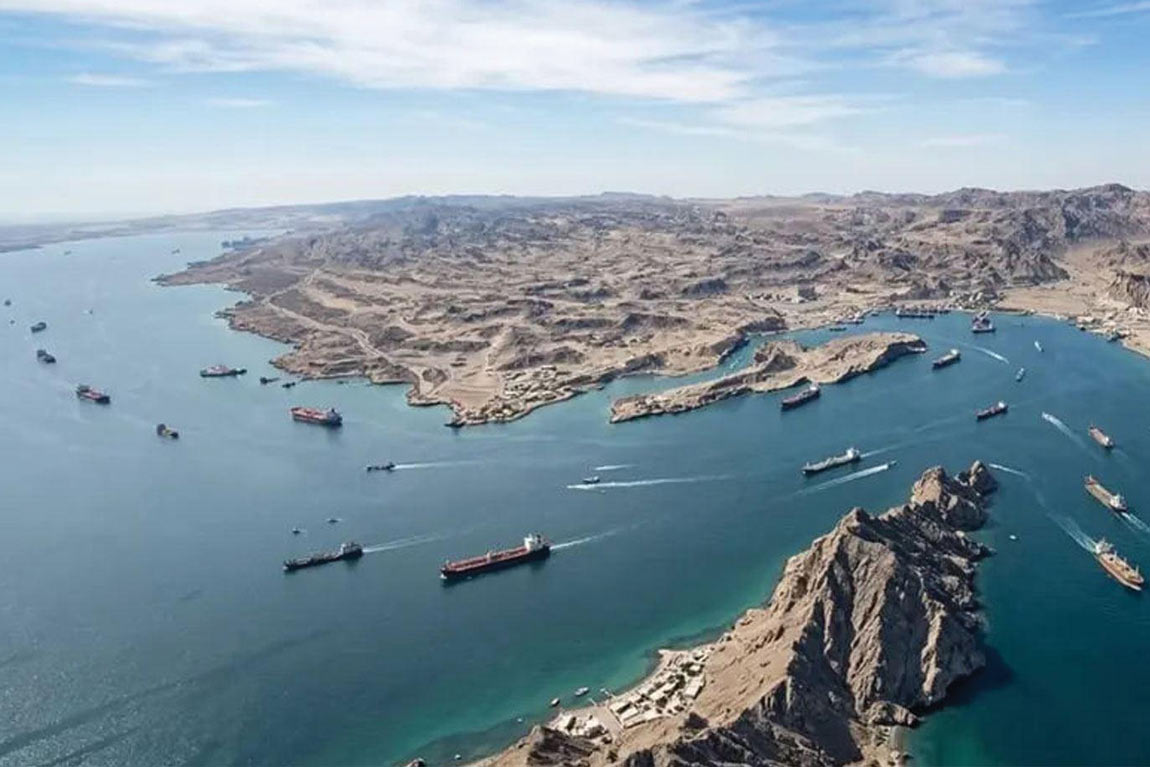
The Strait of Hormuz has become one of the defining tests of contemporary maritime governance. Recent crises— including the COVID-19 pandemic, the 2021 Ever Given blockage of the Suez Canal, the ongoing Red Sea crisis, and the recurring tensions in the Gulf—have shown how disruptions at a single maritime chokepoint can affect global energy markets and supply chains, as well as international stability.[1] Since strategic chokepoints serve as critical nodes of the global economy and security, naval operations can only reduce immediate risks but cannot restore traffic, mitigate wider economic consequences, or resolve the political drivers of insecurity, as evidenced by the Red Sea crisis.
Ensuring the resilience of Hormuz therefore requires more than naval deterrence: it demands political coordination across security, diplomacy, crisis management, and economic resilience. As the United States (US) encourages greater burden-sharing and multilateral institutions struggle to respond rapidly to geopolitical crises, strategic minilateralism offers a pragmatic alternative combining flexibility with political coherence.[2] In Hormuz, where regional rivalries intersect with global energy security and Europe- Indo-Pacific trade, effective governance requires complementary contributions from regional actors, external powers, and existing multilateral frameworks.[3] This reflects a broader shift from maritime security to maritime governance.
This article proposes a ‘European Big Four’— comprising France, Germany, Italy, and the United Kingdom—to serve not as a new organisation or military coalition, but as a strategic coordination platform. Building on recent European initiatives, such as the renewed Franco-British dialogue on Hormuz and the European Maritime Awareness in the Strait of Hormuz (EMASoH) mission,[4] the European Big Four would align European positions, strengthen dialogue with Gulf and Asian partners, and improve coordination across the European Union (EU), the North Atlantic Treaty Organization (NATO), and EMASoH/ AGENOR.[5]
Lessons from European and Indo-Pacific Minilateralism
A new governance framework for the Strait of Hormuz should build on existing experience. However, no single leadership model currently reconciles operational effectiveness, political legitimacy, flexibility, and coalition-building. While a US-led framework remains unmatched in operational capability and Gulf partnerships, Washington’s growing focus on the Indo-Pacific and preference for greater burden-sharing rules out exclusive American leadership. Similarly, institutional multilateralism offers legitimacy but often lacks the political cohesion and agility required for rapid crisis response, as illustrated by the European-led EMASoH/Operation AGENOR, whose multilateral and de-escalatory approach enhanced its political acceptability but did not translate into broad participation or the operational weight of a US-led coalition.[6]
Existing minilateral initiatives too, suffer from gaps, but offer important lessons. The E3 (France, Germany, and the United Kingdom) demonstrated that a small group of European powers could sustain diplomatic coordination during the negotiations for the Joint Comprehensive Plan of Action (JCPOA), but lacked operational instruments.[7] The Franco-British partnership combines military capabilities with diplomatic activism, but its limited political inclusiveness limits its potential as a broader governance framework.[8] This is demonstrated by EMASoH and its operational component AGENOR, which combined naval presence with political de-escalation but never evolved into a broader governance mechanism. The subsequent overlap with Operation Aspides highlights the need for political rather than operational coordination.[9] The Quad Security Dialogue (or Quad, bringing together Australia, India, Japan, and the US) offers a broader perspective, illustrating how maritime cooperation can progressively expand into wider strategic domains through regular political dialogue and issue-specific cooperation, without relying on highly institutionalised structures.[10]
Taken together, these experiences demonstrate the value of flexibility, political dialogue, and coalition-building, while also highlighting the persistent absence of a model that combines diplomatic coordination, operational connectivity, and broader political outreach. Hormuz requires a framework capable of integrating these functions.[11] Accordingly, a European Big Four represents the next step in Europe’s evolving approach to strategic minilateralism: a flexible governance mechanism capable of connecting existing initiatives, engaging regional partners, and strengthening coherence across an increasingly fragmented governance landscape.[12]
Why a European Big Four?
The principal governance gap in the Strait of Hormuz is not the absence of institutions, but the lack of a flexible political mechanism capable of connecting existing military, diplomatic, and economic instruments within a common strategic framework. A European Big Four addresses this gap. Its legitimacy derives not from a claim to authority over the Gulf, but from Europe’s direct strategic interests in Hormuz, sustained regional engagement, and diplomatic and operational experience through the E3, EMASoH/AGENOR, and EU maritime initiatives. By organising these assets more coherently, the Big Four can provide Gulf partners with a predictable European interlocutor while supporting regional ownership and facilitating dialogue among regional actors, international organisations, and Asian stakeholders.[13]
The composition of the Big Four is significant. Building on the renewed Entente Cordiale, the inclusion of Germany and Italy transforms a Franco-British security partnership into a broader European political framework capable of mobilising diplomatic, economic, and operational resources while preserving the flexibility of strategic minilateralism. The European Big Four therefore represents more than a numerical enlargement: it builds upon the renewed Entente Cordiale, extending its strategic logic to the wider Europe.[14]
Furthermore, the Big Four offers added value by combining complementary national capabilities. France and the UK contribute military and operational experience in the Gulf; Germany adds economic leverage and the capacity to mobilise EU trade, regulatory, and sanctions instruments; and Italy provides regional connectivity between Europe, the Mediterranean, and the Gulf. Together, these capabilities provide strategic direction without creating another permanent organisation.[15]
The initiative will primarily perform four functions:
- aligning European positions before engagement with regional and international partners;
- maintaining structured dialogue with Gulf Cooperation Council (GCC) members, Iraq, Iran, and major Asian stakeholders;[16]
- coordinating initiatives on maritime resilience, critical infrastructure, and supply-chain security; and
- linking existing institutions, including the EU, NATO, and European maritime missions, within a coherent political framework.[17]
The structure should remain deliberately light. A rotating political chairmanship, regular consultations among senior officials, and issuespecific working groups will provide continuity while preserving flexibility. Under this framework, existing institutions such as EMASoH, NATO, the EU, and relevant GCC mechanisms will retain operational responsibilities, while the Big Four provides political guidance and cross-institutional coordination. Thus, the model will effectively strengthen rather than replace multilateralism.[18]
Building a Wider Coalition
The European Big Four should be conceived as the political nucleus of a broader governance architecture for the Strait of Hormuz. Its effectiveness will depend on successfully connecting regional and extra regional stakeholders while preserving regional ownership. European actors alone cannot guarantee the security of Hormuz: Gulf states remain indispensable because of their geographic proximity, political legitimacy, and responsibility for regional security, while major Asian economies have a direct stake in uninterrupted energy flows and maritime commerce.[19]
The Big Four must therefore operate as a flexible political hub. The first circle should comprise the GCC states, which retain primary responsibility for regional security and agendasetting. Their role should extend to crisis communication and the co-definition of regional security priorities, reflecting a preference for arrangements that reinforce regional agency while remaining open to external partnerships. European engagement should reinforce this Gulf leadership.[20]
Oman’s recognised role as a trusted intermediary between Gulf Arab states and Iran makes it a valuable facilitator for confidence-building and crisis communication. Complementing Muscat’s mediation, engagement with Iran should focus on maritime safety, incident prevention, and freedom of navigation. Asian stakeholders—notably India, Japan, South Korea, and, to some extent, China—should contribute to maritime resilience and supplychain security, building on their growing role in preserving regional stability.[21]
The resulting hub-and-spokes architecture must connect these actors and existing initiatives without creating additional institutional layers. The success of the model should therefore be measured not by the degree of European leadership it achieves, but by its ability to combine regional ownership with broader international participation. Unlike highly institutionalised organisations or ad-hoc military coalitions, the Big Four should work to preserve flexibility while integrating diplomacy, economic cooperation, crisis management, and strategic dialogue within a common governance framework.[22]
Policy Recommendations
The effectiveness of a European Big Four depends on four policy priorities:
- strengthening European strategic coordination before launching new initiatives;
- ensuring GCC ownership of regional priorities and work programmes;
- maintaining functional dialogue with Iran on maritime safety and incident prevention; and
- coordinating existing European and regional initiatives rather than creating new institutions.
Implementation is likely to face three political obstacles. First, France, Germany, Italy, and the UK differ in their strategic cultures, threat perceptions, and approaches to deterrence and diplomacy—the situation thereby requires sustained political commitment and credible burden-sharing. Second, external acceptance will be crucial: Gulf partners must see the framework as reinforcing regional ownership, while Tehran should not perceive it as another Western containment mechanism. Cooperation should therefore be built on shared interests, such as freedom of navigation, incident prevention, and critical infrastructure protection. Third, institutional coherence will require connecting the EU, NATO, EMASoH, GCC mechanisms, and other international stakeholders, instead of duplicating their functions or replacing them. Addressing these constraints incrementally would enhance political feasibility and strengthen maritime governance in the Strait of Hormuz.[23]
Conclusion
The situation in the Strait of Hormuz illustrates a broader shift in international security dynamics: safeguarding strategic maritime commons increasingly depends on political governance alongside military deterrence, as naval missions alone cannot address the interdependence of maritime security, energy resilience, trade, and regional diplomacy. The E3, EMASoH/AGENOR, and the Quad demonstrate the strengths of strategic minilateralism; however, none combines political coordination, operational connectivity, and coalition-building within a framework adapted to the Gulf.[24] The proposed European Big Four is a pragmatic political instrument to address this strategic coordination gap in the Strait of Hormuz. By strengthening European coherence, supporting Gulf ownership, and connecting regional and extra-regional stakeholders through existing frameworks, it can organise existing capabilities more effectively instead of creating new ones.[25]
Its success, however, will depend on remaining inclusive, flexible, and function-driven. Rather than leading regional security, the Big Four should facilitate cooperation among actors with shared interests in the stability of one of the world’s most strategic maritime corridors. It should be seen not as an alternative to multilateralism, but as a flexible means of making existing frameworks more responsive to contemporary strategic challenges. If successful, this approach could also offer lessons for governance across other contested maritime commons.[26]
Giuseppe Dentice, PhD, is an analyst and researcher with expertise in Middle Eastern affairs and international security at the Mediterranean Observatory (OSMED) of the Institute of Political Studies “San Pio V” in Rome.
The author acknowledges the use of ChatGPT (OpenAI GPT-5.5) for brainstorming, outline development, and language refinement. All arguments, analysis, interpretations, factual verification, and conclusions are the sole responsibility of the author
[1] Nitya Labh, “The Maritime Chokepoints That Could Be Worse Than Hormuz,” Chatham House, June 15, 2026, https://www.chathamhouse.org/publications/the-worldtoday/ 2026-06/maritime-chokepoints-could-be-worsehormuz
[2] Camille Lons and Cinzia Bianco, “Anatomy of a Chokepoint: Mapping Power and Conflict in the Red Sea,” European Council on Foreign Relations, May 9, 2025, https://ecfr.eu/special/anatomy-of-a-chokepointmapping- power-and-conflict-in-the-red-sea/
[3] International Monetary Fund, Regional Economic Outlook: Middle East and Central Asia (Washington, DC: International Monetary Fund, 2025); Federico Donelli, “Maritime Disruption in Yemen: The Making of a Hybrid Red Sea Order,” Middle East Policy 32, no. 4 (2025), https://doi.org/10.1111/mepo.70018; International Maritime Organization, “IMO Condemns Attacks on Shipping, Calls for Safe-Passage Framework in Strait of Hormuz,” March 19, 2026, https://www.imo.org/en/ mediacentre/pressbriefings/pages/imo-calls-for-safepassage- framework-in-strait-of-hormuz.aspx
[4] France in the United Kingdom, “France-UK Joint Statement on the Strait of Hormuz,” April 17, 2026, https://uk.diplomatie.gouv.fr/en/france-uk-jointstatement- strait-hormuz; Tania Lațici, Branislav Stanicek and Eric Pichon, Charting a Course through Stormy Waters: The EU as a Maritime Security Actor, Brussels, European Parliamentary Research Service, 2021, PE 689.342, https://www.europarl.europa.eu/RegData/etudes/ BRIE/2021/689342/EPRS_BRI(2021)689342_EN.pdf.
[5] Nicolai von Ondarza, “After Brexit: E3. New Treaty Puts UK, Germany and France Back at the Heart of European Security,” Chatham House, July 18, 2025, https://www. chathamhouse.org/2025/07/after-brexit-e3-new-treatyputs- uk-germany-and-france-back-heart-europeansecurity; Nick Childs, “UK-France defence: a statement of entente for wider European security?,” International Institute for Strategic Studies, July 25, 2025, https:// www.iiss.org/online-analysis/military-balance/2025/07/ ukfrance-defence-a-statement-of-entente-for-widereuropean- security/; Göran von Sydow and Valentin Kreilinger, “Who Calls the Shots? Institutional and Political Dynamics in European Defence,” Swedish Institute for European Policy Studies, April 2026, https://sieps.se/en/ publications/2026/who-calls-the-shots-institutional-andpolitical- dynamics-in-european-defence/
[6] Lațici, Stanicek and Pichon, Charting a Course through Stormy Waters.
[7] von Ondarza, “After Brexit.”
[8] Daniel Byman et al., “Improving U.S. Cooperation with Allies and Partners,” Center for Strategic and International Studies, October 14, 2025, https://www.csis.org/analysis/ improving-us-cooperation-allies-and-partners; Abdulla Al Janahi, “Europe’s Role in Ensuring Maritime Security in the Strait of Hormuz,” Bahrain Center for Strategic, International and Energy Studies (Derasat), April 27, 2026, https://www.derasat.org.bh/en/europes-role-in-ensuringmaritime- security-in-the-strait-of-hormuz/; Jagannath Panda and Daewon Ohn, “Minilateralism and the New Indo-Pacific Order: Theoretical Ambitions and Empirical Realities,” Australian Journal of International Affairs 78, no. 6 (2024): 767-781, https://doi.org/10.1007/s10308-025- 00756-x; von Ondarza, “After Brexit.”
[9] European Parliament, “Answer Given by High Representative/Vice-President Kallas on Behalf of the European Commission,” Parliamentary Question E-002695/2025, November 6, 2025, https://www. europarl.europa.eu/doceo/document/E-10-2025-002695- ASW_EN.pdf
[10] World Economic Forum, “What Is Minilateralism and Why Does It Matter in 2026?,” January 14, 2026, https://www.weforum.org/stories/global-cooperation/ minilateralism-and-will-2026-be-the-year-size-doesntmatter/; Jagannath Panda, “NATO and Quad: A China Threat vs. a Cross-Functional Euro-Atlantic and Indo- Pacific Cooperation,” Asia Europe Journal 24, no. 1 (2026), https://doi.org/10.1007/s10308-025-00756-x
[11] Erica Moret, “Effective Minilateralism for the EU: What, When and How,” European Union Institute for Security Studies, June 3, 2016, https://www.iss. europa.eu/publications/briefs/effective-minilateralismeu- what-when-and-how; Felix Heiduk and Thomas S. Wilkins, “Minilateralism and Pathways to Institutional Progression: Alliance Formation or Cooperative Security Governance?” Australian Journal of International Affairs 79, no. 6 (2024): 808–827, https://doi.org/10.1080/10357718. 2024.2416566.
[12] Moret, “Effective Minilateralism for the EU”; Heiduk and Wilkins, “Minilateralism and Pathways to Institutional Progression”; Childs, “UK-France Defence.”
[13] Dana Stroul, “The Middle East Power Paradox: How the Iran War Will Transform America’s Military Role,” Foreign Affairs, June 16, 2026, https://www.foreignaffairs. com/iran/middle-east-power-paradox-dana-stroul
[14] Childs, “UK-France Defence”; von Ondarza, “After Brexit.”
[15] von Sydow and Kreilinger, “Who Calls the Shots?”
[16] Leonardo J.M. Mazzucco, “India’s Quiet Maritime Turn in Middle Eastern Waters,” ORF Middle East, April 7, 2026, https://orfme.org/expert-speak/indias-quietmaritime- turn-in-middle-eastern-waters/.
[17] Gabriele Abbondanza, “The Case for an EU-Indo-Pacific Critical Maritime Infrastructure Partnership,” Istituto Affari Internazionali, February 26, 2026, https://www. iai.it/en/publications/c41/case-eu-indo-pacific-criticalmaritime- infrastructure-partnership.
[18] European External Action Service (EEAS), “Working Together to Protect Critical Maritime Infrastructure in the Indo-Pacific,” November 20, 2025, https://www. eeas.europa.eu/eeas/working-together-protect-criticalmaritime- infrastructure-indo-pacific_en
[19] Mohammed Alotaibi, The GCC as a Regional Operating System: Differentiated Sovereignty and the Future of Gulf Regionalism to 2030, UNU-CRIS Working Paper, United Nations University, 2026, https://unu.edu/sites/default/ files/2026-06/Working-Paper_26.08_Alotaibi.pdf; European External Action Service (EEAS), “Co-chairs Statement by the High Representative and the Kingdom of Bahrain as Presidency of the Gulf Cooperation Council on the Strait of Hormuz and Freedom of Navigation,” July 13, 2026, https://www.eeas.europa.eu/eeas/co-chairsstatement- high-representative-and-kingdom-bahrainpresidency- gulf-cooperation-council_en.
[20] Rory Miller, “Navigating Rocky Waters: GCC Strategies for Maritime Security,” Middle East Council on Global Affairs, November 2025, https://mecouncil.org/ publication/navigating-rocky-waters-gcc-strategies-formaritime- security/.
[21] Alex Vatanka, “With the US and Iran on a Knife-Edge, Can Oman Once Again Step in to Mediate?” Middle East Institute, February 5, 2026, https://mei.edu/publication/ with_us_iran_on_knife-edge_can_oman_mediate/; Sultanate of Oman, Ministry of Foreign Affairs, “Oman and the Islamic Republic of Iran Issue a Joint Statement,” June 23, 2026, https://www.fm.gov.om/en/48943/
[22] Mazzucco, “India’s Quiet Maritime Turn in Middle Eastern Waters”; Abbondanza, “The Case for an EU-Indo- Pacific Critical Maritime Infrastructure Partnership”; EEAS, “Co-chairs Statement by the High Representative and the Kingdom of Bahrain.”
[23] Giovanni Parente, “Not Europe’s War? The Gulf Crisis and the EU’s Maritime Dilemma,” Istituto Affari Internazionali, June 10, 2026, https://www.iai.it/en/ publications/c05/not-europes-war-gulf-crisis-and-eusmaritime- dilemma.
[24] Moret, “Effective Minilateralism for the EU”; Heiduk and Wilkins, “Minilateralism and Pathways to Institutional Progression.”
[25] Thomas S. Wilkins, Strategic Minilateralism and the Regional Security Architecture of the Indo-Pacific: The Quad, AUKUS, and the Trilateral Strategic Dialogue (Singapore: Palgrave Macmillan, 2025); EEAS, “Co-chairs Statement by the High Representative and the Kingdom of Bahrain.”
[26] Moret, “Effective Minilateralism for the EU”; Heiduk and Wilkins, “Minilateralism and Pathways to Institutional Progression”; Wilkins, Strategic Minilateralism and the Regional Security Architecture of the Indo-Pacific.