 Global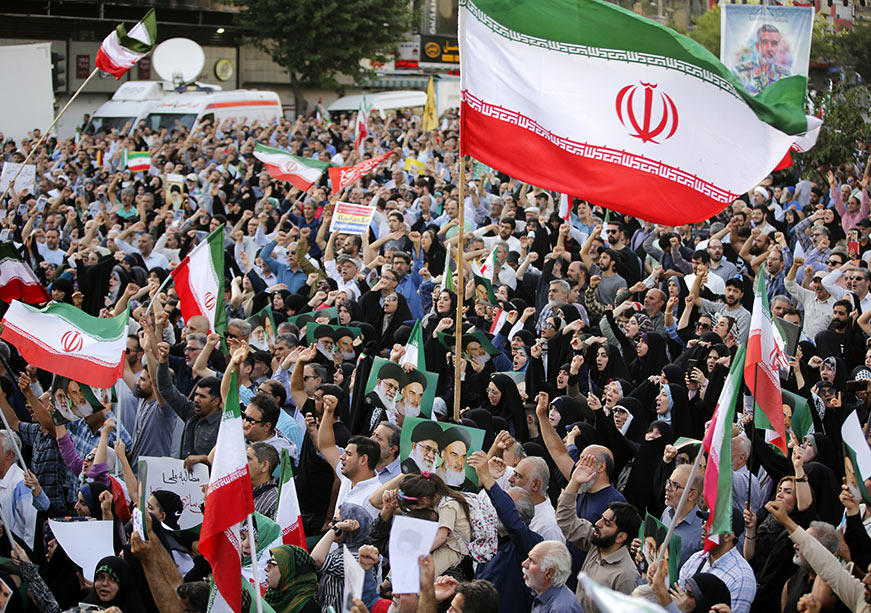
Expert Speak | 19 January, 2026
Iran’s Search for a Future
With no credible Opposition leader in sight, Iranians face a choice between imperfect alternatives: a hardline theocracy, monarchical nostalgia, peaceful reform, or prolonged deadlock.
Iran is a complex society where collective behaviour can appear contradictory, yet these outcomes often follow an internal logic. A notable example is the widespread display of unity in the aftermath of the 12-Day War with Israel in June 2025. Even amidst deep domestic discontent, this act signalled Iranians’ rejection of any foreign intervention. Since 1979, large segments of Iranian society have sought to coexist with the Islamic Republic whilst expressing dissatisfaction with both its domestic and foreign policies. Initially muted by fear of repression, over the years, these grievances have become increasingly visible. State policies have affected different segments of the society differently. The lower-income groups faced severe economic hardship, while women couldn’t enjoy everyday freedoms such as riding motorcycles or freely choosing their clothing. The extent of pent-up discontent was evident during the “Women, Life, Freedom” movement in 2022 which brought together merchants, teachers, retirees, students, workers, artists, religious minorities, women, entrepreneurs, and younger generations.
Workers and students have now joined the demonstrations as Iran faces multiple, overlapping crises with no solutions in sight.
Similarly, the consequences of prolonged economic, social, and political hardships are visible in the current wave of protests, which have spread across most cities and are being violently suppressed. Although the protests initially started with shopkeepers in central Tehran responding to the sudden currency devaluation, these gradually spread to other cities nationwide. Workers and students have now joined the demonstrations as Iran faces multiple, overlapping crises with no solutions in sight. It has already been grappling with energy and water shortages, severe poverty, pollution, a lifestyle crisis, alongside a growing and increasingly disgruntled youth population. s. As these pressures mount, the Iranian society is increasingly being gripped by pessimism.
The central concern is not just the potential toppling of the current establishment, but what kind of alternative governance would be acceptable to Iran’s nearly 90 million citizens, given their diverse backgrounds, social classes, political and social demands, and ethnic identities.
This article presents a broad overview of Iranians’ preferences regarding systems of governance. These include current supporters of the Islamic Republic; groups who view Reza Pahlavi as an opposition leader; those who reject both monarchy and clerical rule (“no king, no cleric”) and favour a republican system; and politically undecided “free riders” who could become decisive actors in the near future.
Who Supports the Islamic Republic?
It would be a mistake to assume that the Islamic Republic of Iran lacks any social and political support base. Despite the economic hardship, shortages and declining living standards, supporters of the current establishment have consistently been estimated around 15 percent of the population.
This constituency is predominantly religious and conservative, and is often characterised by strong anti-US and anti-Israel positions. Some within this group are also explicitly anti-reformist. Their political presence was evident in the 2024 presidential elections, in which Saeed Jalili, a hardline candidate closely aligned with this segment, received over 13 million votes, ultimately losing to reformist Masoud Pezeshkian. These voters constitute a politically significant bloc who have continued to support the Islamic Republic of Iran during periods of severe economic strain and amid sustained political unrest.
Simultaneously, their demands represent a major obstacle to reforming Iran, since their support depends on their expectations being met. During the most recent wave of protests, amid internet shutdowns that left many citizens reliant on state television for information, Saeed Jalili made public appearances that directly addressed and mobilised this constituency, reinforcing its political alignment with the existing system.
As a result, many within these groups remain uncertain about their status, rights, and treatment in a post–Islamic Republic order, contributing to scepticism and hesitation around regime change.
In addition, members of this group recently held pro-government rallies, signalling that while they may suffer economically, they reject violent protest tactics and remain unwilling to tolerate actions that are perceived as a threat to the political system.
For those who practise Islam regardless of their support for the Islamic Republic, the burning ofmosques and copies of the Qur’an during the ongoing unrest is deemed politically significant. Furthermore, so far, the Opposition has failed to articulate a clear alternative political or social vision. As a result, many within these groups remain uncertain about their status, rights, and treatment in a post–Islamic Republic order, contributing to scepticism and hesitation around regime change.
The Pahlavi Option: Restoration or Transition?
Reza Pahlavi, the son of the former Shah, has emerged as a leading figure of authority for a segment of the Opposition and is gradually attracting a broader base of supporters, either because of genuine confidence in his leadership or due to the absence of viable alternative opposition figures.
This is largely due to two factors.. First, among Iran’s fragmented opposition groups, this is currently the only opposition with a clearly identifiable figure who actively and consistently positions himself against the Islamic Republic. Secondly, supporters of this group are divided between those who advocate a return to a monarchical system that was overthrown less than five decades ago, and those who view Reza Pahlavi primarily as a temporary substitute to facilitate the ousting of the Islamic Republic rather than as a permanent leader. They largely envisage a transitional period of around one to five years, followed by a referendum to determine the future system of governance.
However, critics argue that Pahlavi lacks the leadership qualities required in times of crisis, citing his limited executive and managerial experience, poor judgment in evaluating people, and a lack of clear vision and strategic direction. They contend that his appeal is driven primarily by nostalgia for pre-revolutionary Iran. Moreover, they warn that the existence of two distinct constituencies among his supporters raises the risk of him pursuing a less democratic path and placing greater emphasis on monarchical restoration. Under such circumstances, his return to power could risk reinstating an authoritarian regime.
Opponents of both monarchical and clerical rule
Another segment of the Iranian society supports the removal of the Islamic Republic, but rejects a return to monarchy, and instead favours a republican system based on popular sovereignty and competitive elections. They argue that legitimate leadership must emerge from within Iran through democratic means, often pointing to figures such as Mostafa Tajzadeh, Narges Mohammadi, and Mir Hossein Mousavi as potential alternatives.
Among these figures, Mostafa Tajzadeh is frequently viewed as a credible Opposition leader. His political vision can be summarised around several core principles: a peaceful democratic transition; the establishment of a freely elected constituent assembly tasked with rewriting Iran’s Constitution; the removal of velayat-e faqih (the office of the Supreme Leader); opposition to repressive policies; and support for diplomatic rapprochement with the United States.
Supporters point to recent developments, including challenges to compulsory hijab enforcement and internet restrictions, as evidence that nonviolent pressure can constrain the regime’s hardline policies.
Unlike Reza Pahlavi, whom critics accuse of framing the political struggle as a form of war and risking large-scale civilian casualties, Tajzadeh consistently emphasises peaceful strategies. He maintains that constitutional reforms and the dismantling of clerical rule can be achieved through sustained civil disobedience. Supporters point to recent developments, including challenges to compulsory hijab enforcement and internet restrictions, as evidence that nonviolent pressure can constrain the regime’s hardline policies.
Critics argue that peaceful civil disobedience is no longer effective, pointing to the Islamic Republic’s repeated failure to implement meaningful reforms,even after intense pressure and 2025’s 12-Day W. Despite warnings from within the system that this was a final opportunity for change, no substantive reforms followed.
The uncommitted could be decisive
Among other sections in Iranian society are the indecisive and free-riding, a group that currently lacks a clear alternative leadership figure to the Islamic Republic. Its members view neither Reza Pahlavi as a credible alternative nor consider Mostafa Tajzadeh’s peaceful approach as effective, assuming the current establishment is unwilling to relinquish power. As a result, this segment finds itself in a political deadlock. Yet the choice it ultimately makes at a critical moment could prove decisive in reshaping the broader political trajectory.
Public chants in support of Reza Pahlavi should not be interpreted as a call for monarchical restoration, but as a broader search for symbols that signal the end of the Islamic Republic.
At present, this group remains largely observant, closely watching which actors are moving closer to power. Should the Islamic Republic signal a willingness to implement substantial reforms, it may even temporarily align with the existing system to assess the depth and credibility of such changes. This cautious stance is driven by a desire to avoid another revolutionary rupture and its potentially severe consequences.
A credible Opposition leader capable of broad mobilisation remains absent, which allows the regime to hold on to power. To be clear, Reza Pahlavi’s growing prominence is because he is the only visible option in a barren opposition landscape, leaving many Iranians trapped in a prolonged political dilemma. Consequently, public chants in support of Reza Pahlavi should not be interpreted as a call for monarchical restoration, but as a broader search for symbols that signal the end of the Islamic Republic.
*Zeynab Malakouti is a Research Affiliate at the Middle East Institute, National University of Singapore, and Senior Fellow at the Global Peace Institute, UK.