 Global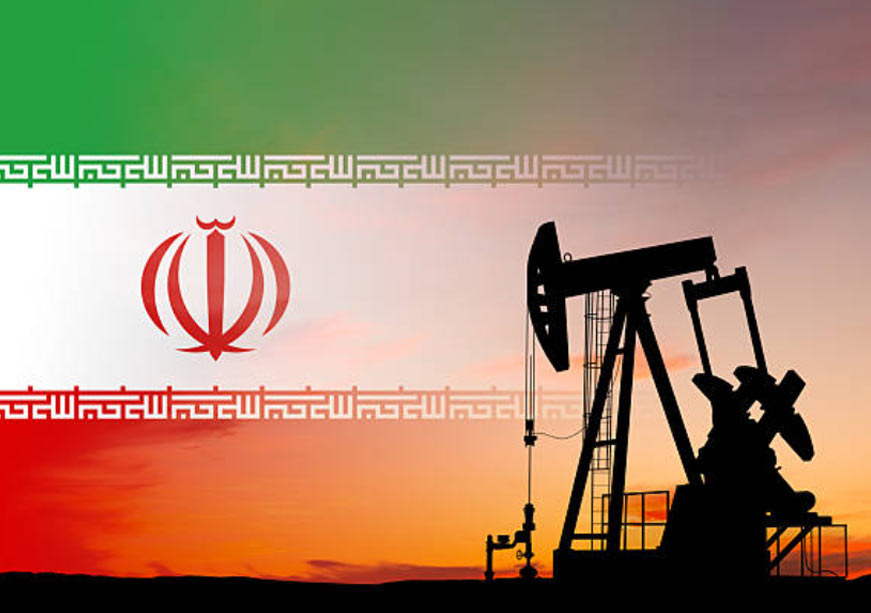
Expert Speak | 11 January, 2026
Iran’s Shadow Fleet Fuels Maritime Environmental Risks
Why sanctions are raising marine pollution risks
Sanctions, Shadow Trade, and Environmental Risk
The Islamic Republic of Iran (IRI)’s oil and gas sector has been subject to progressively stringent international sanctions over the past decade, particularly from the United States (US) and European states. These restrictions intensified following the reactivation of the UN “snapback” mechanism under Resolution 2231, reinstating limits on energy exports, shipping, finance, insurance, and port access.
Iranian oil exports have not stopped despite these limitations, which are meant to curb destabilising regional operations and restrict revenue. Rather, they have moved a sizable portion into murky marine routes. To sustain exports, the Islamic Republic increasingly relies on a clandestine “shadow-fleet” composed of ageing tankers operating under dubious flags, routinely disabling Automatic Identification System (AIS) transponders, and conducting unregulated ship-to-ship (STS) transfers beyond port oversight.
Iranian oil exports have not stopped despite these limitations, which are meant to curb destabilising regional operations and restrict revenue.
These techniques exclude shipments from established safety and responsibility frameworks, dramatically increasing the chance of collisions, spills, and unreported mishaps in environmentally sensitive seas. Despite sanctions, Iranian crude exports reached approximately 2.0 million barrels per day in September 2025 the highest level since mid‑2018 demonstrating how sanctions have altered how oil moves, rather than whether it moves.
Sanctions Evasion and Environmental Exposure
One of the principal sanction evasion techniques is the disabling or spoofing of AIS transponders. AIS is a cornerstone of maritime safety; vessels operating “dark” become invisible to regulators and nearby traffic, increasing collision risk and delaying spill detection.
Many shadow‑fleet tankers are decades old and poorly maintained. Fraudulent or frequently changing flag registrations obscure ownership and allow operators to bypass inspections. Operating without valid insurance further erodes incentives for maintenance and leaves no assured mechanism for environmental remediation following an accident.
Ship‑to‑ship transfers, often conducted at night in international waters, compound these risks. Hose failures, misalignment, and uncontrolled discharges are plausible even under regulated conditions; within the shadow-fleet they represent a major environmental vulnerability.
Finally, older tankers are increasingly used as floating storage units. With up to 63 million barrels reportedly held at sea, prolonged storage accelerates corrosion and mechanical degradation, turning these vessels into latent pollution hazards. Additionally, slow-moving or stationary tankers are more likely to be involved in collisions, especially in crowded sea lanes, which increases the likelihood of spills, leaks, and maritime mishaps.
Environmental and Sustainability Implications
The environmental consequences of Iran’s shadow-fleet are severe and cumulative. Ageing vessels, disabled tracking, uninsured operations, and unregulated transfers collectively elevate the probability of a major spill.
In particular, the Persian Gulf is at risk. Because of its high salinity, shallow waters, and restricted circulation, oil pollution would last longer than in open oceans. Fisheries, mangroves, and desalination plants that provide drinkable water throughout the Persian Gulf might all be severely damaged by spills. There would be transboundary impact to adjacent governments because to the ecological and economic consequences that will go well beyond Iran.
Global climate mitigation efforts are undermined by inefficient routing, extended idle, and redundant transfers that raise emissions per barrel.
The shadow fleet has a hidden carbon cost in addition to the immediate spill danger. Global climate mitigation efforts are undermined by inefficient routing, extended idle, and redundant transfers that raise emissions per barrel.
Maritime Retaliation, Proxy Conflict, and Escalating Ecological Risk
Environmental risk is further intensified by the Islamic Republic’s readiness to engage in maritime retaliation. The November 2025 seizure of the Talara illustrates how enforcement actions, framed in legal or environmental terms, can mask coercive signalling. Although the vessel was released, the episode highlights how geopolitical escalation intersects with maritime safety.
The vessel’s ownership is linked via Pasha Finance Inc. to figures in Azerbaijan, which suggests a geopolitical undercurrent to the action. Analysts interpret the seizure not merely as a judicial or anti-smuggling operation but as part of a broader pattern of retaliation: the IRGC issued statements echoing a “tit-for-tat” logic, quoting religious verse “So whoever has assaulted you, then assault him in the same way that he has assaulted you” and alluding to past maritime confrontations.
The Islamic Republic and its proxies have also attacked or threatened foreign vessels. Drone strikes, missile attacks, and sabotage operations particularly those carried out by allied groups in Yemen pose a dual risk: immediate physical damage to tankers and potential long-term ecological disaster. A damaged vessel could rupture, spill oil, or ignite, causing vast environmental harm in sensitive waters. Analysts warn that the Islamic Republic may deploy sea mines, drones, or missiles in the Strait of Hormuz in response to perceived threats, creating conditions ripe for strategic confrontation and environmental catastrophe.
Houthi forces in Yemen, closely aligned with the Islamic Republic, have attacked commercial vessels in the Red Sea. Such proxy attacks not only disrupt global shipping but also increase the risk of oil spills or fires in a critical maritime corridor, forming part of an asymmetric strategy designed to exert pressure on regional and Western states.
Sanctions have changed the way Iran exports oil, creating higher environmental exposure in regional and international waters.
Conclusion
Sanctions have changed the way Iran exports oil, creating higher environmental exposure in regional and international waters. These risks come from identifiable practices: turning off tracking systems, using older tankers without insurance, offshore transfers, and long-term floating storage. These practices show how sanctions reshape maritime behaviour. When designing sanctions, their environmental consequences must be explicitly considered. Policies that divert oil transport outside regulated shipping channels should be treated as creating environmental risk. Neighbouring states, flag registries, and port authorities must coordinate to enforce maritime safety and pollution rules; otherwise, sanctions indirectly encourage unsafe practices. Yet, environmental exposure is not inevitable. It results from sanctions design, enforcement gaps, and fragmented oversight. Reducing risk requires treating sanctions policy and maritime governance as linked. Safer shipping depends on both effective enforcement and regional cooperation.
Kamyar Kayvanfar is a native Persian and English-speaking communications and public affairs professional with experience at EY and Kreab.