 Global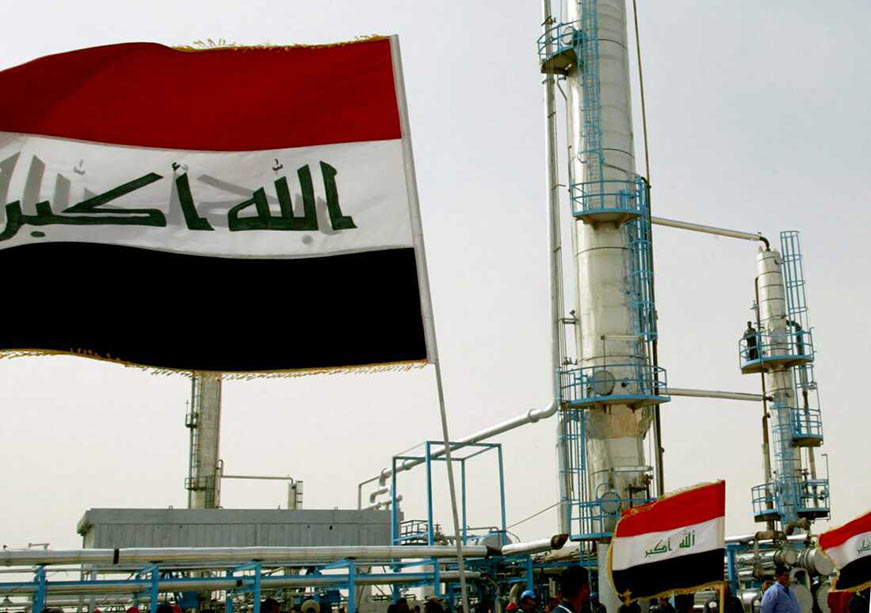
Expert Speak | 06 March, 2026
Iraq’s Lessons in Pursuit of Venezuelan Oil
Spotlight
- The American experience in revitalising the Iraqi oil sector carries lessons for its efforts in Venezuela.
- Endemic structural flaws of mismanagement, underinvestment, technological stagnation and regulatory disjoints undercut Venezuela’s potential in the near to medium term.
- Returns from the structurally fragmented Venezuelan oil sector today will not be commensurate with the massive investments needed.
While considering the likelihood and potential implications of Venezuela’s resources re-entering the global energy market under American aegis ,this article aims to examine the challenges faced in Iraq to underscore the practical limitations that structural dynamics can impose on the effective utilisation of existing hydrocarbon wealth within states.
The Throughline of Oil Resources
Despite the clear distinctions arising from the immediate triggers, the scale of the operation, the form of kinetic power used and the scope of the intervention, substantive parallels may be drawn between the United States (US) initiative termed Operation Absolute Resolve in Venezuela and Operation Iraqi Freedom, the 2003 US invasion of Iraq. Nowhere is this parallel more apparent than in the public stance of the US government regarding the respective oil resources of Iraq and Venezuela, two decades apart.
Two months prior to the launch of the ground offensive against Saddam Hussein’s Iraq, the US Department of Defense (DoD) and State Department (SD) officials are reported to have coordinated a task force whose primary objective was the protection of Iraq’s oil wells once the military campaign began. This illustrates the centrality of Iraq’s oil wealth to the 2003 campaign. In late January 2026, Secretary Marco Rubio made a comparable exposition about the US’ approach to Venezuelan oil reserves at a US Senate Foreign Relations Committee hearing. The principal takeaways from both contexts were notably similar. Oil was the central pre-occupation in both cases. The resource nationalism of the incumbent leaders challenged US national interests, and therefore had to be addressed; finally, the substantial oil reserves of both countries were presented as resources that could be more effectively managed under the US oversight.
While American motivations in both instances may be similar, Venezuela’s oil industry of January, 2026 is not objectively comparable to Iraq’s oil sector of January, 2003.
Despite inherent inefficiencies and corruption, the Iraqi oil sector under Saddam Hussein was a successful and extremely lucrative vertical of state revenue and power, despite facing sanctions post the Kuwait invasion. Its oil wells and exports filled Iraqi coffers consistently. At the time of the US invasion, Iraq produced close to 2.6 bn barrels per day (bpd). In contrast, Venezuela’s oil industry under Nicolás Maduro’s oil industry prior to January, 2026 pumped approximately 867,000 bpd – markedly lower than the country’s peak oil production of 3.5mn bpd in the late 1990s. Revitalising the Venezuelan oil industry, therefore, represents a far more challenging proposition given this disparity.
Lessons from Iraq
Studying the mistakes in Iraq could help identify the potential pitfalls US plans may face in Venezuela, and lead to better-informed assessments of future prospects.
First, the American focus in Iraq at that time, as it appears to be in Venezuela today, was on expanding the infrastructure required to increase the country’s export conduits rather than on integrating efficiencies within the sector itself. As a result, in project identifications and funding allocations, limited attention was paid to improving the upstream extraction processes which are fundamental to enhancing the efficient production of oil. By focusing on a short-sighted prioritisation of export earning bottom-lines, US planning did not adequately account for the technological upgrades Iraqi oil wells required.
Secondly, the US government earmarked funds to support the development of the Iraqi oilfields and facilitated the entry of US and allied private sector’s participation in the country, just as it is doing today in Venezuela based on the billions the Trump administration is encouraging the US oil majors to invest. Yet the inability of the investments to account for the instability and fratricidal nature of the Iraqi political and bureaucratic classes, led to ineffective resource allocations, poor implementations, and fund wastages. It is a story likely to be repeated in Venezuela’s politically fraught ecosystem.
Thirdly, the US and its allies entering Iraq at the time had no visibility into, and consequently no way to address, the rampant corruption triggered in part by an ad-hoc price control system. The result of this arbitrary system was siphoning and smuggling of locally produced oil for higher earnings on international black markets. Local officials were not only aware but also reported at the time as being actively involved in the process. This issue further led to instances of sabotage and insurgency born of both a profit motivation as also from the grievance of scarce and expensive availability of the oil for domestic consumption. Coupled with the disbanding of the Iraqi armed forces, a steady stream of well-trained militia prepared to disrupt lucrative extraction efforts. Not prioritising security through the integration of local forces was a costly mistake the US made in Iraq. It would be prudent not to repeat it in Venezuela.
Recognising and navigating these blind-spots took the Americans eight years to have Iraq reach its previous production highs of 2.6 mn bpd. Localised versions of these factors have persisted in the Venezuelan oil industry since the early 2000s.
Endemic Structural Flaws Within the Venezuelan Oil Ecosystem
A founding member of the Organization of the Petroleum Exporting Countries (OPEC), Venezuela possesses approximately 303 bn barrels of proven oil reserves, subject to re-assessments. This quantity translates to nearly 17 percent of the global oil share. OPEC and the International Energy Agency (IEA) continue to estimate Venezuela’s reserves marginally higher than Saudi Arabia’s at approximately 263 bn barrels of oil. However, the country’s once- promising trajectory toward emerging as an oil superpower comparable to several Gulf economies has been summarily derailed by a combination of factors. Resource wealth has commonly funded domestic politico-economic and even social agendas instead of being re-invested into improving the sector itself. Saddam Hussein’s Iraq was a classic case of this resource curse affliction. The duration and scale of the resultant underinvestment in Iraq’s oil sector, however, pales in comparison to the lack of investment in Venezuelan oil by the state since the coming of President Chavez, and then Maduro. President Chavez’s Decreto con Fuerza de Ley Organica de Hidrocarburos (Hydrocarbons Law) in 2007 undermined the economic foundations of the industry, reversing the foreign investments encouraged by the policy of Apertura Petrolera of the early 90s, which sought to revitalise the sector through foreign investments and private participation. These regulatory overhauls led to no investments for upgrades or maintenance of the oilfields for decades together. This state was worsened by rampant corruption and systematic mismanagement of national oil companies like the Petróleos de Venezuela (PDVSA). The debilitating impact of US sanctions on the country’s oil exports at this time, served the final blow to the sector. It is an industry hollowed out by these three structurally corrosive factors that the Trump administration hopes to revive in Venezuela today.
The Poor Economics of Venezuelan Oil
Venezuela’s oil resources would have had a marginal impact on the relatively over-supplied global oil markets prior to the ongoing war in the Middle East dramatically disrupting global energy trade. Blockages along the Strait of Hormuz and attacks on oil facilities in the Gulf, however, are expected to substantially increase oil prices given inelasticity of demand and potential increase in crisis-triggered-stockpiling. Under the circumstances, there could be a more positive outlook on the value of Venezuelan oil re-entering the global markets.
Yet, the highly viscous extra-heavy properties of Venezuela’s crude limit its global appeal even once the Americans start facilitating its sale actively. Very few countries globally have the refining capacity to process the thick sludge-like produce of the Venezuelan oil-fields. The economics of paying expensive freight for transporting low-grade crude over long-distances are unfavourable, particularly when adequate supplies of higher-quality crude are currently available from producers such as Guyana, traditional Middle Eastern suppliers, and potentially Russia following any Ukraine agreement. Additionally, estimates suggest that increasing Venezuelan production from the current level of about 1mbd to even 1.5mbd would require an investment of approximately US$20bn. Without a sustained and considerable increase in oil prices, it makes little economic sense for the US government or any of the private companies to underwrite the costs of the long-term investments needed to improve the infrastructure in Venezuela in order to make the sector profitable in the near to medium term.
“Ten years from now, twenty years from now, you will see: Oil will bring us ruin…”
Juan Pablo Perez Alfonso, the former Venezuelan Minister of Mines and Hydrocarbons and one of the founding members of OPEC, had famously derided the eventual implications of oil wealth. Likely an earnest lament, it is not perhaps an accurate or universal one. Examples such as Norway, the UAE, and Saudi Arabia demonstrate effectively why it is not the below-ground hydrocarbon resource itself but the above-ground factors of mismanagement, economic disjoints and policy fragmentation within the political economy of countries like Venezuela and Iraq that atrophy their growth. The whiplash of geopolitical pressures compound and accelerate these endemic domestic structural weaknesses. In Venezuela’s case, as was the case with Iraq, it is the systematic domestic mismanagement of its resources coupled with inequities of political agency that diminished the value of its natural wealth. American engagement in Venezuela’s oil sector may soon demonstrate, like it did in the US’ Iraqi sojourn, how deep-rooted these structural fractures are.
Cauvery Ganapathy is a Fellow at ORF Middle East.