 Global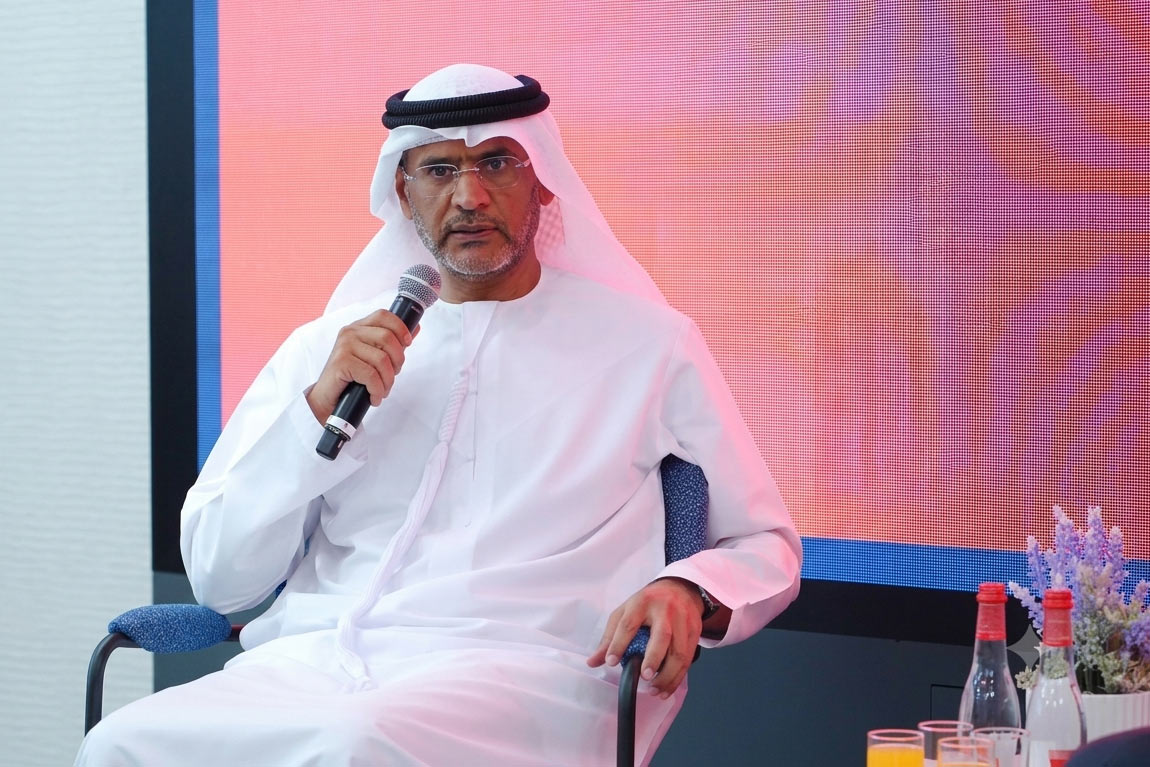
Expert Speak | 22 September, 2026
Reflections on Resilience: A Conversation with HE Nasser Al Shaikh
On 2 September 2026, ORF Middle East hosted a fireside chat with His Excellency Nasser Al Shaikh, chairman of Eshraq Investments and former director-general of Dubai’s Department of Finance. Against the backdrop of ongoing developments in the Middle East and their (geo)economic implications, particularly for a global hub and merchant city like Dubai, the conversation produced timely insights at the confluence of finance, international affairs, security, and trade.
The Banality of Geopolitics
It is not uncommon for geoeconomic nodes to sit on geopolitical fault lines. In 2024, the Baltics and East Asia—where the “Collective West” faces Russia and China, respectively—accounted for six of the 10 Organisation for Economic Co-operation and Development member states with the highest research-and-development spending as a share of their gross domestic product (GDP). While geopolitics acts as a constraint on multiple levels, including fiscally, with the right institutions, it can also spur the policies that ultimately drive growth.
Geography is stubborn. Yet, leaders can choose how best to adapt and leverage the advantages it offers. Geopolitics is but one aspect. Structurally limited arable land, freshwater reserves, and rainfall, as well as more frequent extreme climate events—from heatwaves to floods—are contingencies that the United Arab Emirates (UAE) has grown increasingly accustomed to managing. On the other hand, abundant energy resources and relatively easy access to the open sea are advantages it can capitalise on.
Geography is stubborn. Yet, leaders can choose how best to adapt and leverage the advantages it offers.
The art of navigating and adapting to risks is, in part, encapsulated by a word that has gained in currency: resilience. There are structural reasons behind this traction. Growth during hyper-globalisation—roughly from the 1980s to the 2000s—was achieved in an international environment shaped by a prevailing belief in positive-sum games and reflected in the twin expansion of global value chains and information technology, in sync with a degree of functional multilateralism. Growth in the 2020s happens in an environment where climate-related, man-made, and technology-induced shocks are normalised. At its core, the concept of resilience proceeds from the very notion of shocks.
Eppur Si Muove (And Yet It Moves)
In this context, the crisis engulfing the Middle East has prompted a wave of commentary questioning Dubai as a hub, a safe haven—or even an idea. In sum, it hovers around one question: all this time, has Dubai been a vision or a mirage?
Before 28 February 2026, Dubai was on a triumphal trajectory. Doubling metrics within two decades—or less—was a rule applicable across key domains. Its population doubled between 2011 and 2025 to more than 4.5 million. International passenger traffic at its principal airport doubled between 2009 and 2016; the facility became the world’s busiest in 2014 and handled nearly 100 million passengers in 2025. The market capitalisation of its stock exchange more than doubled between 2017 and 2024, with the general index reaching close to AED1 trillion (US$270 billion) at the end of 2025. Throughput at Jebel Ali—the only container port outside of East Asia to consistently rank in the global top 10—doubled between 2005 and 2025, moving from about 7.6 million Twenty-foot Equivalent Units (TEUs) to 15.5 million.
It is no wonder then that starting in the 2000s—around the time Goldman Sachs’s Jim O’Neil coined the term “BRICS”—Dubai became a symbol of the buoyant rise of emerging markets. “Dubai, Mumbai, Shanghai, or Goodbye,” as the saying of that time went.
Since then, on more than one occasion, the city has rebounded from severe setbacks. The global financial crisis of 2008 was one such episode. The COVID-19 pandemic that began in 2020 was another: Traffic through Dubai’s international airport collapsed from 86.4 million in 2019 to 25.9 million in 2020 (decreasing by 70 percent) before roaring back to 87 million in 2023.
Speaking for Oneself: Hawkishness and Pragmatism
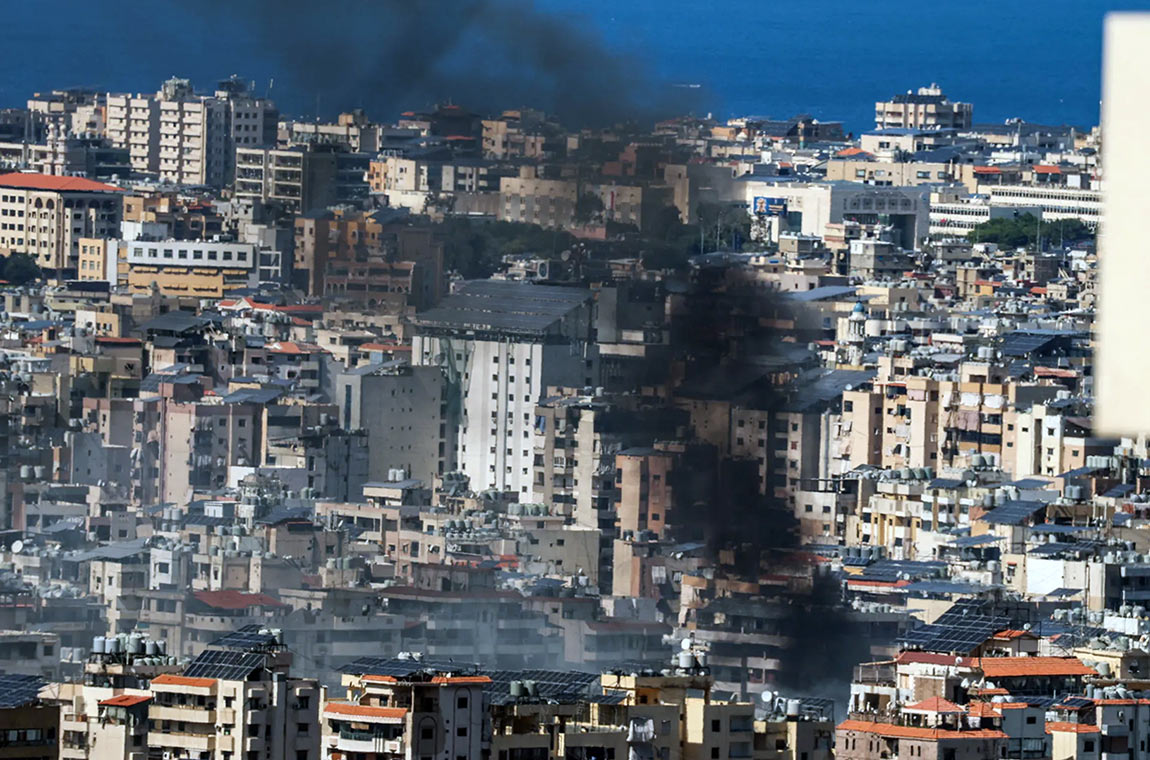
Notably, in a reference to the key importance of agency in producing and pushing one’s narrative, the word “story” pervaded Al Shaikh’s remarks. Noting that many reports have been questionable at best, Al Shaikh observed that the press sometimes described the UAE’s attitude as “hawkish.” This framing, he pointed out, ignored the gravity of Iran’s attacks on its neighbour’s territory. Within the six days that followed 28 February, the UAE absorbed a volume of attacks that rivalled over six years of Houthi strikes on Saudi Arabia.
In truth, he argued, the UAE’s attitude has been pragmatic. In June 2026, less than two weeks after Iran and the United States (US) agreed on a framework for bilateral talks (the oft-cited Memorandum of Understanding), the UAE was the first country to resume flights with Iran. Trade, through the containers processed in Jebel Ali or via dhows—the traditional wooden boats that have connected Dubai’s creek to Persian ports for centuries—similarly reopened. The authorities only suspended economic relations as a response to Iranian strikes on vessels belonging to the Abu Dhabi National Oil Company and UAE territorial waters. Regardless of the coincidence in timing, this was not an attempt to strangulate a regime but the calibrated response of a sovereign state choosing not to pursue commerce with a country engaging in hostile manoeuvres.
Some have, however, argued that the commercial ties between Dubai and Iran have created a form of solidarity in destiny between them. When Dubai served as one of the main windows between Iran and the global economy, did it not risk becoming dependent on its neighbour?
Here, Al Shaikh noted the decades-long presence of an estimated half a million Iranians in Dubai. Nevertheless, beyond the unacceptability of Iran’s behaviour and the response that national security imperatives have dictated, he emphasised that the relative weight of Iran in Dubai’s economy and trade has drastically diminished in the past 20 years. This can be explained by Dubai’s staggering growth and its opening up to new geographies, including Africa and India (one-third of humanity lives in these two blocs), Eurasia, and the Asia-Pacific area at large.
Jebel Ali after “Zero Dependence on Hormuz”
The importance of the Jebel Ali port and the surrounding free zone to Dubai’s economy—they account for over one-third of the Emirate’s GDP—has often been noted. As the port sits before the Strait of Hormuz, the implications of disruptions in the latter pose legitimate questions regarding the future of Dubai’s prosperity. In other words, what would be the outlook for Dubai’s economy if the Emirati motto “zero (dependence on) Hormuz” is to be taken at face value? Here, Al Shaikh made two observations.
First, Jebel Ali is only part of DP World’s story, which has become a prominent player in international logistics. Before the war, more than a tenth of global trade moved across its network. In the Gulf, and partly due to the 2026 crisis, DP World has notably intensified its in-land operations in synergy with Omani ports. Within the UAE, Dubai has diverted cargo through Khor Fakkan and Fujairah, and in July, it announced that it would build a new port and container terminal on the Gulf of Oman.
Second, the current situation in the Gulf cannot be treated as a new normal. Economically, neither airlifted food supplies nor land‑based alternatives (specifically, the convoy of lorries crossing Europe, North Africa and West Asia towards the Arabian Peninsula) offer a sustainable model—particularly when set against the cost‑effectiveness, efficiency, and scale of state‑of‑the‑art infrastructure such as the Jebel Ali port. In this context, the notion of “zero Hormuz” is best understood as a commitment to ensure that any disruption in the Strait will not affect UAE citizens’ and residents’ daily lives.
Basics and Fundamentals
In the end, resilience can be understood as the outcome of strong fundamentals in the face of increasingly unavoidable shocks—the fiscal, liquidity, and macroeconomic buffers touted by international financial institutions; the human capital accumulated; the infrastructure deployed across the national territory; the market fundamentals attracting investment into financial markets, real estate, and tourism; the international partnerships consolidated over time; and the policies and systems designed to ensure continuity of operations for businesses, safety for people, and a swift response from the government.
One could infer from Al Shaikh’s words that a corollary to the UAE’s mercantile pragmatism and rational attitude—grounded in international law, national security considerations, and a clear-eyed reading of the balance of power and of existing diplomatic and military options—has been a form of continuity and stability in commitments, informed by upstream strategising.
Dubai and the UAE should continue to write—and, where possible, control—their own stories.
As a result, Al Shaikh noted, the UAE will continue to embrace new connectivity routes—including the India–Middle East–Europe Economic Corridor (IMEC)—and strike new Comprehensive Economic Partnership Agreements. Due to the importance of logistical cooperation and political and security coordination with Arab Gulf neighbours, it will shore up the future of the Gulf Cooperation Council through an architecture of stronger bilateral diplomatic ties and cross-country network infrastructure. Its assessment of the global balance of power and regional dynamics, notably as informed by its reading of the global map of innovation and technology, will dictate a renewed commitment to its relationship with the US—and, likely, its growing partnership with India.
Most importantly, Al Shaikh said, facing a volatile world and a hegemon agitated by potent, unpredictable internal forces, Dubai and the UAE should continue to write—and, where possible, control—their own stories. This, too, forms part of resilience in the world we live in: knowing when to improvise and revising one’s copy as twists and turns emerge.
Akram Zaoui is Associate Fellow, Geopolitics, ORF Middle East.
The author acknowledges the use of Microsoft Copilot for language refinement prior to submission.