 Global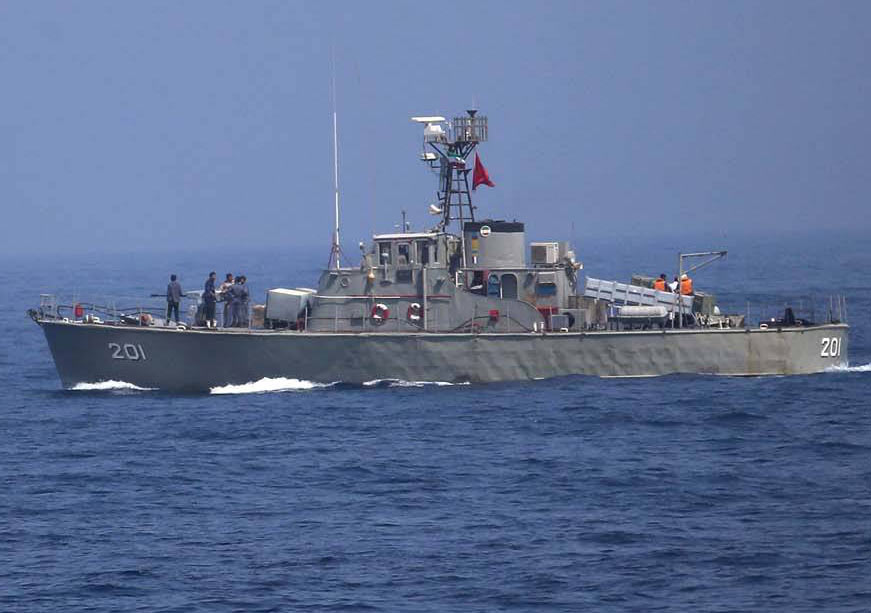
Expert Speak | 01 April, 2026
The Dilemma in Safeguarding the Strait of Hormuz
Spotlight
- The establishment of a military coalition to safeguard the Strait is increasingly regarded as justified, yet it risks entangling external actors in an asymmetric conflict
- Securing a UN mandate will likely encounter delays and obstruction, limiting the speed and scope of collective action
- Even if the coalition is successfully established, its efforts will struggle to provide sustainable security
Introduction
It is imperative that the Strait of Hormuz be safeguarded. The escalating costs of its blockade far exceed the fuel price at petrol stations and have begun to permeate into every segment of the global economy. A 22-nation joint statement, backed largely by European countries alongside the UAE and Bahrain, expressed “readiness to contribute to appropriate efforts to ensure safe passage through the Strait [of Hormuz]”. They also said they “welcome the commitment of nations who are engaging in preparatory planning.” Such a development raises questions regarding the possibility of a coalition to end the Iranian blockade on the Strait of Hormuz.
What is noteworthy is that the United Arab Emirates (UAE) and Bahrain, two countries which have consistently advocated for a diplomatic resolution to the dispute, have now been forced to pivot towards seeking a more proactive approach aimed at securing the Strait under a UN-supported coalition. This commentary seeks to examine the considerations underpinning such a broad-based effort.
It is a battle the Iranians will wage through asymmetric warfare techniques in a geographic space that they control, and in probable disregard for laws of conventional warfare.
In its essence, such a coalition would represent a group of countries that have been drawn into a war not of their own making, and whose interests and security have been held hostage by Iran through attacks on their territories or through the blockade of a Strait that constitutes a vital artery of global trade. In the foundational logic of its origin, such a coalition is not merely wholly justified, but is in many ways what is expected from states that are willing and able to defend themselves.
This framing, however, would look different through an Iranian lens. In any battle, gauging the perspective of the opponent, however pernicious it appears, is a necessary pre-requisite in order to strategise appropriately. In formulating their strategies to secure the Strait militarily, the UAE, Bahrain and any additional coalition member must, therefore, first contend with the fact that in this critical global chokepoint, they will be faced with the desperation of a regime that is fighting an existential battle. It is a battle the Iranians will wage through asymmetric warfare techniques in a geographic space that they control, and in probable disregard for laws of conventional warfare.
A UN Mandate for the Strait
The Kingdom of Bahrain, as a representative of the Arab Group in the UN Security Council (UNSC) for its temporary tenure this year and the next, has already demonstrated its diplomatic resolve towards Iran. A Bahrain-led resolution adopted by the UNSC in March stated that it “condemns in the strongest terms the egregious attacks” by Iran against Bahrain, Kuwait, Oman, Qatar, Saudi Arabia, the UAE and Jordan, determining they constitute “a breach of international law and a serious threat to international peace and security.” It further demands the “immediate cessation” of all attacks by Iran against these countries and calls on Tehran to comply fully with its obligations under international law, including the protection of civilians.
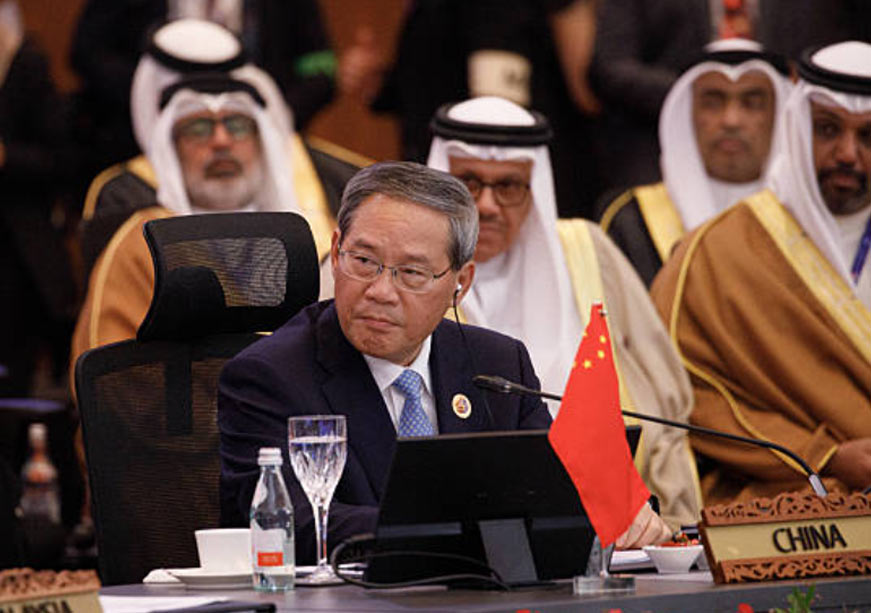
Now, Bahrain is reportedly drafting another resolution. The resolution is understood to aim at authorising the use of “all necessary means” in and around the Strait of Hormuz, as well as signalling readiness to impose measures, including targeted sanctions. However, such a struggle to gain international legitimacy may take longer than required. France has already proposed an alternative, more conciliatory draft resolution, while China and Russia are expected to veto Bahrain’s proposal.
The importance of an international backing for efforts to safeguard the Strait cannot be overstated, particularly as the costs are felt globally and Iran is inflicting punishment on the international community for attacks by countries it finds difficult to retaliate against directly.
Case for Military Coalition to Safeguard the Strait
It is important to distinguish between the degradation of Iranian missile capabilities and the deployment of forces and vessels to secure the Strait’s opening under a UN mandate. The degradation of Iran’s missile capabilities is a compelling objective to achieve any kind of semblance of peace and stability in a Middle East that refuses to live under the perpetual threat of Iranian missiles targeting their territories. Iran’s attacks on the Gulf countries, along with the closure of the Strait, will serve as its most potent bargaining chips in future international negotiations. The degradation of missile capabilities, which enables this leverage to persist, is therefore necessary for security to be restored in the Gulf.
Safeguarding the Strait through a UN approved military coalition, on the other hand, while absolutely necessary and justified, presents a different set of threats. The Iranian navy is reported to have already sustained significant losses. However, its asymmetric advantages remain. Consequently, any military solution to ending the blockade along the Strait today poses an exceptional challenge centred on three specific considerations associated with the complexity of littoral and amphibious warfare:
First, the geographic sweep of the stretch that needs to be secured for the blockade to be effectively broken is not restricted to the swathe of 90 nautical miles of what is recognised as the Strait of Hormuz. There are no guarantees at present that the Iranians would refrain from attacking vessels, based on their assessment of what constitutes a valid target with inimical interests, as soon as these enter the range of their missiles in the western Indian Ocean. Additionally, the threat posed by the Houthis, purportedly acting on behalf of Iranian interests, in the Red Sea spreading into this wider zone must also be considered, given Tehran’s threats to disrupt alternative energy trade routes, as it has done by targeting pipelines that bypass the Strait.
Secondly, a military coalition entering the Strait or the coastlines along the waterway would necessitate concentrating otherwise dispersed naval and military assets to collect within a much smaller radius of operation. Given that the Iranians control the northern coastlines along the Strait and have already demonstrated considerable expertise in launching asymmetric attacks from there, any assemblage of military personnel from the Gulf and other countries within that confined area, would expose them to much greater risks of Iranian attacks.
Third, mining of the seabed along the Strait remains the most potent threat. It is not one that any coalition would be immune from, and could result in loss of military personnel. There is now the possibility that the Iranians may conclude that merely the threat of mines is sufficient to deter passage through the Strait. Tehran would also be cognisant of the fact that mines in the Strait would equally jeopardise Iranian and friendly country passage through the strait, given that acoustic signatures of vessels cannot always reliably differentiate between friendly and non-friendly vessels. This may also explain why countries like Japan have minesweepers but are reluctant to participate actively in these exercises. However, the validity of these assumptions can only be tested in real time in the Strait, where the price of a mistaken hypothesis will, tragically, be paid in human lives.
Conclusion
The deterministic facts of geography mean that the coastline bordering the Strait of Hormuz will always be Iranian. Tehran, therefore, will always be able to exert effective control over that waterway in some form. Safe passage through the Strait by means of a military solution, therefore, may become an endless endeavour. The Iranians have found low-cost methods of imposing heavy costs on Gulf countries that are committed to an agenda of peace, stability and development for their populations. This divergence between the two sides is most amplified in the attendant risk-calculus and aversion to a protracted conflict.
The most viable and lasting version of peace without military hostilities in the Strait, therefore, will possibly come through a negotiated settlement. For the day after that negotiation, countries such as the UAE and Bahrain along with the other Gulf partners will have to build a unified approach to issues such as how risk insurance burdens for freight and transit could be mitigated. For the Red Sea to return to normalcy, for instance, commercial navigation resumed only after a definitive period of time without any attacks, and through the fulfilment of specific demands that provided assurances for safe shipping.
In the Strait, there is the possibility that Tehran may eventually seek to formalise an ‘arrangement’ whereby those recognising Iranian sovereignty would pay to pass through. Allowing any benefit to accrue to a country that has targeted neighbours who have consistently sought dialogue over military discord is an understandable anathema. Yet, any coalition, alongside the Gulf States, may have to consider a negotiated solution that entails some degree of a trade-off in the interest of definitively ending the blockade.
Mahdi Ghuloom, Junior Fellow, Geopolitics, ORF Middle East
Cauvery Ganapathy, Fellow, Climate and Energy, ORF Middle East