 Global
Expert Speak | 24 November, 2026
The Economics of Houthi Warfare
Spotlight
- A Houthi drone that costs between US$2,000 and US$20,000 can require a US$2.1 million interceptor, imposing disproportionate economic costs on militarily superior adversaries.
- Through taxation, oil sales, telecommunications, commercial networks, and territorial control, the Houthis have diversified their revenue streams and acquired a degree of financial autonomy beyond Iran.
- The economic viability of an armed non-state actor can remain detached from the economic prosperity of the population it governs. This exposes the limitations of conventional military and economic pressure.
From the 2019 attacks on Saudi Aramco’s oilfield and oil-processing facility to repeated strikes on Saudi airports and oil infrastructure in 2026, the Houthis (also known as Ansar Allah) have demonstrated an ability to sustain prolonged conflict against far wealthier and militarily superior adversaries. This raises an important question: how does an armed movement operating from a resource-constrained country do so? Cheap weapons are only part of the answer; the Houthis’ endurance also depends on external assistance, domestic revenue extraction, and the ability to shift much of the economic burden of warfare onto others.
Cheap weapons are only part of the answer; the Houthis’ endurance also depends on external assistance, domestic revenue extraction, and the ability to shift much of the economic burden of warfare onto others.
Development of Houthi Capabilities
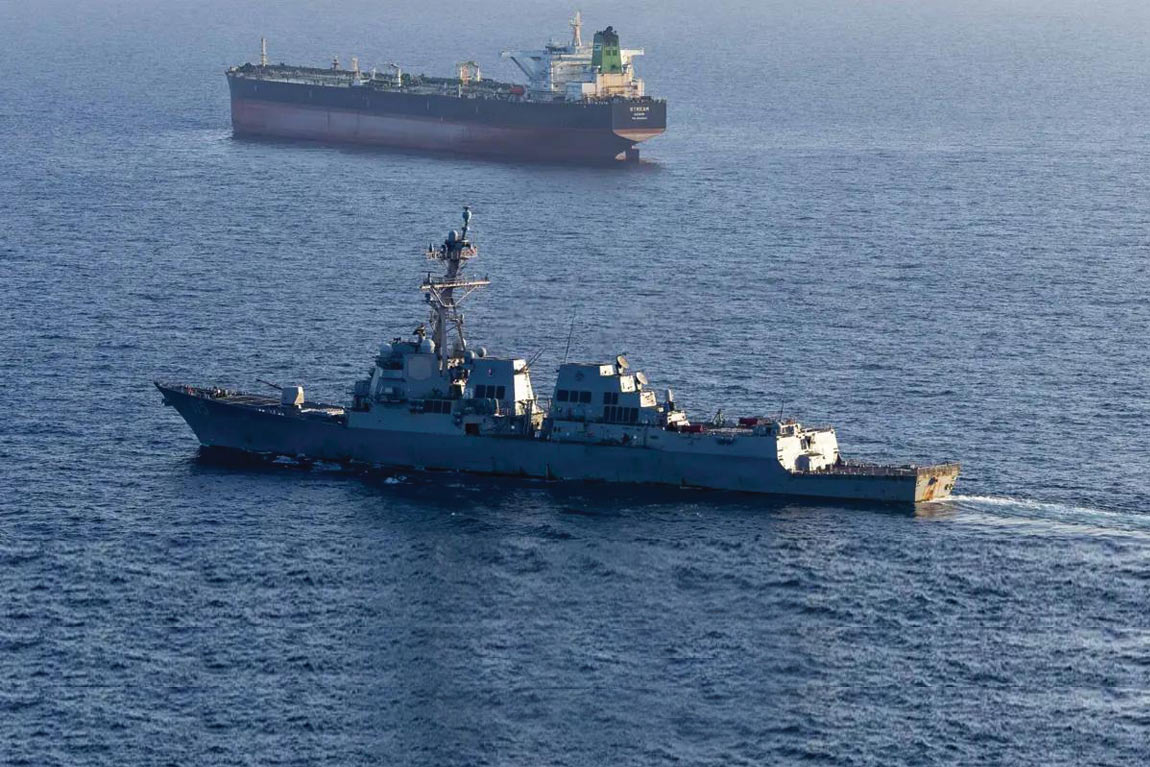
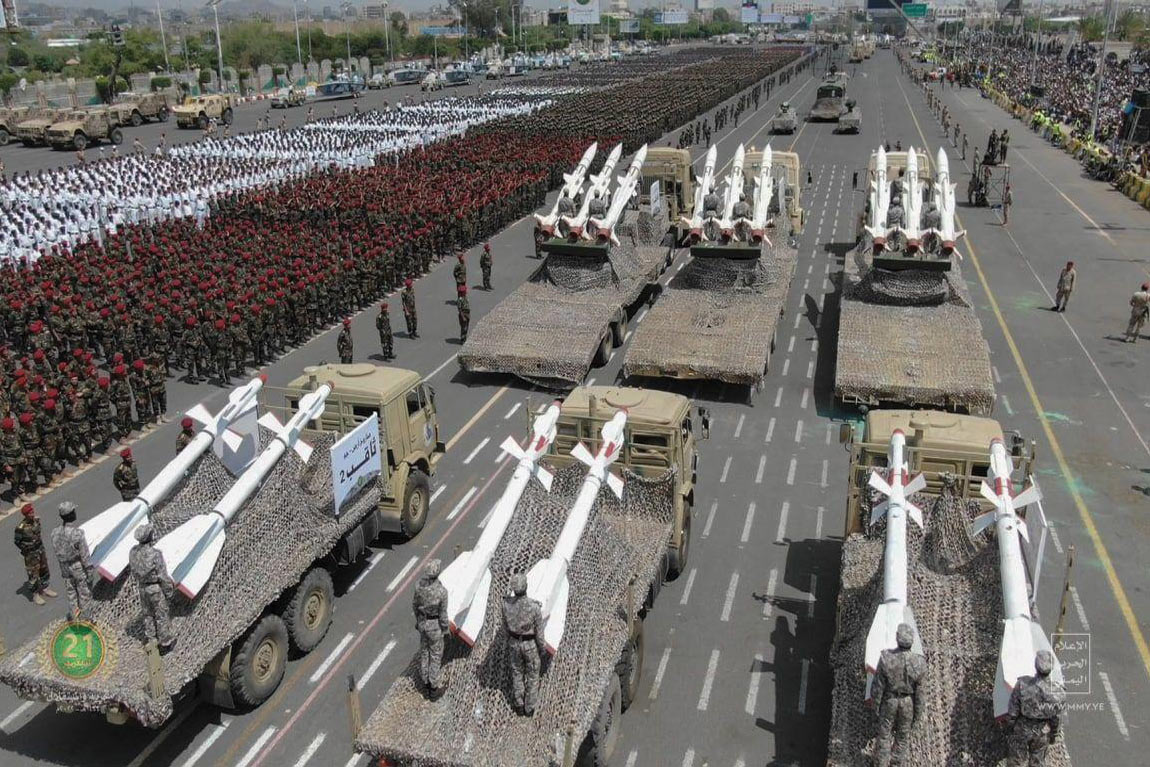
The drones employed by the Houthis are estimated to cost between US$2,000 and US$20,000 each, while the missiles used to intercept them can cost US$2.1 million. This price disparity helps explain how the Houthis can maintain a strike capability without the resources of a conventional military. Yet, their arsenal is considerably more expansive than cheap drones. It includes ballistic missiles, cruise missiles, anti-ship missiles, surface-to-air missiles, uncrewed aerial vehicles, landmines, and sea mines. The Houthis have used these weapons to target commercial shipping and naval forces in the Red Sea. The question is, how did an armed movement in Yemen acquire such capabilities in the first place?
Houthi military architecture was developed through years of Iranian military assistance, technology transfers, and increasingly sophisticated local production. External contributions have made sophisticated weapons more accessible by providing technology, expertise, and components that Houthis cannot readily produce domestically. This assistance has taken several forms—according to United Nations (UN) investigators, the Houthis have received weapons, technical training, and financial support from external partners, including Iran’s Islamic Revolutionary Guard Corps (IRGC), Iraqi armed groups, and the Hezbollah.
Parallelly, the Houthis have made considerable progress in developing indigenous military production capacity. While Iranian and Hezbollah specialists initially trained Houthi personnel to operate missile systems, Yemeni engineers subsequently developed local assembly capabilities. This accumulated technical knowledge can remain useful even when Iranian supply routes are disrupted. For example, while medium-range ballistic missiles they used to strike Israel are probably supplied directly by Iran, simpler artillery rockets and short-range ballistic missiles can be manufactured domestically. The Houthis remain dependent on imports for components such as turbojet engines and radar-homing seekers, though, with domestic production largely limited to simpler components and final assembly. However, this is still an economic benefit as, rather than relying exclusively on imported weapons, they can now manufacture and maintain some of their arsenal. Another key advantage is that the Houthis are sourcing equipment for domestic weapons production from beyond Iran, reducing their dependence on Iranian supplies. China has become an important commercial source. They are also exploring artificial intelligence (AI)-assisted weapons development, with Anthropic reporting that Yemen-based actors tried to use Claude to build guided weapons.
The Houthis’ military development did not begin with Iranian assistance. After their takeover of Sana’a in 2014, they gained access to the Yemeni government’s military stockpiles, which were adapted and supplemented with foreign technology. The Institute for Strategic Studies (IISS), for instance, documents how Soviet-designed surface-to-air missiles were repurposed using Iranian guidance technology.
The Houthis’ economic advantage, therefore, lies not in complete military self-sufficiency but the ability to combine inherited weapons, imported technology, and local production to reduce dependence on purchasing complete weapons systems.
Years of warfare have further shaped these capabilities. Confrontations with Saudi Arabia and at sea have given the Houthis considerable experience in adapting their tactics and weapons. When sophisticated Iranian weapons became harder to replenish in 2024, the movement relied more heavily on shorter-range missiles, domestically manufactured maritime drones, and unmanned surface vessels. This became an important unintended consequence of military pressure: rather than eliminating the Houthis’ ability to strike, it developed their domestic capabilities.
The Houthis’ economic advantage, therefore, lies not in complete military self-sufficiency but the ability to combine inherited weapons, imported technology, and local production to reduce dependence on purchasing complete weapons systems.
Financing Houthi Warfare
The Houthis-controlled parallel economy generates approximately US$2.5 billion annually in direct and indirect financial resources and associated costs. Separately, the United States (US) Treasury assessed that illicit oil sales yields over US$2 billion to them annually. Although the estimates cover different activities and cannot be combined, they emphasise the scale of the Houthis’ financial networks.
Territorial control allows the Houthis to collect customs duties, commercial taxes, and illicit levies. A 2026 Mokha Center study estimated that internal customs systems generate US$65–85 million for the Houthis annually. Control over ports provides another opportunity for extraction. Additional customs charges are imposed on goods entering Houthi-controlled territory from government-held areas, effectively taxing some imports twice. In September 2026, Houthi authorities announced reductions of up to 50 percent in selected port fees and taxes to attract importers to the Port of Hudaydah, which is under their control. By making Hudaydah more attractive, they hoped to redirect shipments away from routes subject to double customs duties. Lower charges could increase trade through the port and potentially raise overall collections. Such arrangements give the Houthis greater influence over commercial activity.
Beyond conventional taxation, the Houthis collect zakat (the obligatory Islamic charitable contribution) from areas under their control and impose a one-fifth levy on specified economic activities, including minerals, hydrocarbons, and fisheries, according to UN investigators. The movement also solicits contributions specifically for military campaigns, including missile and drone programmes, often through text messages.
Control over telecommunications provides another recurring income stream. The UN estimated approximately US$92 million in sector revenue, alongside reports of receipts from substantial international roaming and calling. Telecommunications companies have also been used to solicit public donations for military operations.
The Houthis have also expanded their economic control through property confiscations, corporate takeovers, and banking interventions. Authorities revoked 4,225 commercial-agency licences, with the Sana’a Center stating that these could be replaced by Houthi-affiliated businesses. Such measures do more than redirect business opportunities to politically connected individuals; they create a class of beneficiaries with a financial interest in preserving Houthi rule.
Oil represents another important revenue stream. According to the US Treasury, Iran both sells oil to the Houthis and supplies them with free monthly shipments. Houthi leaders reportedly sell fuel to Yemeni civilians at inflated prices and use the proceeds for personal enrichment. However, this model is facing growing pressure and Iranian oil exports in 2026 have fallen to a six-year low. Fuel imports through Houthi-controlled ports declined by 73 percent during January–May 2026, compared with the same period in 2025, constraining an important commercial revenue base.
Beyond these conventional sources, the Houthis are also trying to diversify commercial income through alternative logistical channels. They have sought to expand into aviation for both commercial revenue and logistics. As per the US Treasury, Houthi-affiliated businessman Muhammad Al-Sunaydar helped establish Barash Aviation and Sama Airline, two Sana’a-based companies intended to acquire commercial aircraft. The Treasury alleged that Barash Aviation sought aircraft to transport illicit cargo through Sana’a International Airport, while Sama Airline was intended to generate revenue through passenger services. These initiatives show the Houthis’ ability to pivot and aggressively expand their sources of income.
Iranian support remains an important source of financing for the Houthis that extends beyond direct financial transfers. The US Treasury mentions Iran-affiliated networks that facilitate payments to Houthis through financial intermediaries. These networks are critical because domestic revenue alone does not guarantee military capability—the Houthis must convert local collections into foreign currency, specialised components, and usable equipment. Iranian technology transfers and subsidised supplies reduce some acquisition costs, while commercial intermediaries facilitate procurement despite sanctions. Nevertheless, domestic revenues give the Houthis a degree of financial autonomy that they would lack if they relied exclusively on Tehran.
Houthi financing therefore extends beyond conventional taxation. Control over ports, commercial transactions, property, and fuel distribution allows the movement to generate revenue at multiple stages of economic activity. This system finances the organisation, rewards affiliated commercial networks, and concentrates economic power among the Houthi leadership, while shifting a substantial portion of the financial burden onto Yemen’s civilian population.
Conclusion
The Houthis offer a broader insight into the economics of armed non-state actors. The sustainability of such groups depends not only on the assets they own but also on their ability to mobilise resources, finance military expenditure, and outsource the costs of conflict. Their territorial control allows them to take on functions traditionally performed by the state, particularly revenue collection, without assuming comparable responsibilities for public welfare. External assistance can supplement domestic resources without removing organisational autonomy.
The most important lesson from the Houthi experience is that the economic viability of an armed movement is largely independent of the territory or citizens it governs.
The Houthi experience also exposes the limitations of conventional military and economic pressure. Destroying military assets does not necessarily dismantle the economic structures that enable them. Similarly, restricting external financing may not be very effective when armed groups have diversified their domestic revenue base.
The most important lesson from the Houthi experience is that the economic viability of an armed movement is largely independent of the territory or citizens it governs. An armed group can remain financially and militarily resilient even as the economy that sustains it deteriorates. While financial resilience cannot be confused with financial self-sufficiency, the survival of an armed group (unlike that of a functioning state) need not depend on the prosperity of its population.
Samriddhi Vij is Associate Fellow, Geopolitics, ORF Middle East.
The author acknowledges the use of Google Gemini 3.1 Pro for research purposes.