 Global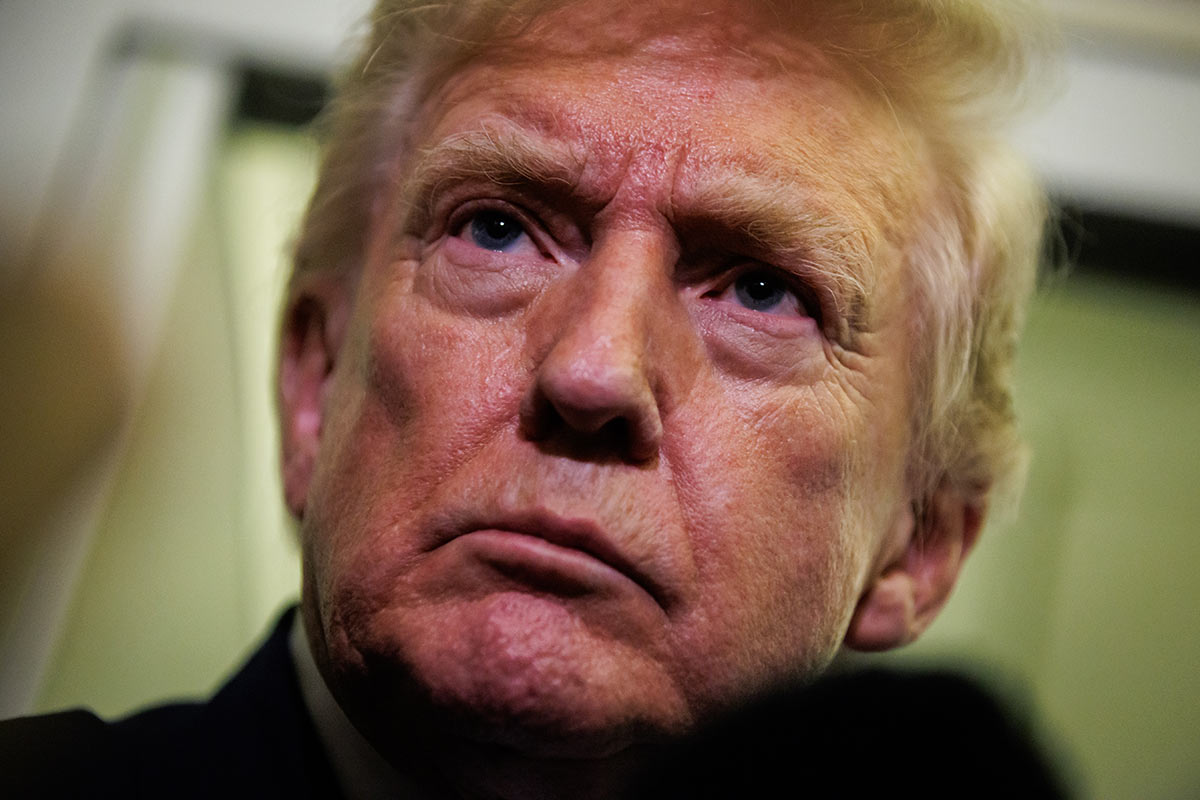
Expert Speak | 25 September, 2026
Trump’s Ultimatum Versus Iran’s Layered Insulation
Spotlight
- At the 81st United Nations General Assembly, US President Trump said that he is weighing whether to “annihilate” Iran, even as Tehran continues to build layers of problems to insulate the nuclear file that started the war.
- Iran has opened a second maritime chokepoint at Bab al-Mandeb, forced Saudi Arabia’s Hormuz bypass pipeline to go offline for 11 days, and struck Riyadh itself, multiplying the fronts Washington must manage.
- After months of fractured GCC positioning, Gulf states now appear to converge on one demand: to be dealt with as a bloc by Iran.
The 81st United Nations General Assembly (UNGA) in New York might prove to be one of the most consequential of Donald Trump’s presidency. Six weeks from the United States (US) midterm elections, his attendance at a platform he has long disdained collides with a stacked docket: the war on Iran, the Russia–Ukraine war, Arctic security, and stabilising US–China relations. Last year’s appearance ended in a self-declared “triple sabotage”—a stalled escalator, a dead teleprompter, and audio issues in the auditorium. Trump’s habit of discomfiting delegates continued this year: Cuba’s delegation walked out after he vowed that its government “will fall.”
The substance matters more than the theatre. In a 37-minute address, Trump confirmed that he is weighing a “big decision” on Iran: a deal after the midterm elections or to “annihilate the Islamic Republic” outright. Delivered at a forum built to prevent war, the threat landed as intended. Seven months in, the war has cost the Pentagon upwards of US$43 billion, pushed up domestic living costs, and produced a casualty count that the Pentagon’s own watchdog has been accused of undercounting—all while Tehran projects defiance, not exhaustion.
That contradiction is Trump’s own: a president who campaigned against forever wars, then made military supremacy his governing claim. Behind the podium diplomacy, Trump convened a broad Arab summit on 22 September comprising all six Gulf Cooperation Council (GCC) leaders, together with Iraq, Jordan, Syria, Lebanon, Türkiye, and Egypt. That is not evidence of resolve but of exposure: the wedge that Iran has driven between Arab states is deeper than the region allows itself to admit, even as Tehran builds layer upon layer of problems to insulate itself from the one objective Washington went to war for—Iran’s nuclear programme.
More Fronts, More Leverage
Iran’s decision to open a new front on the Red Sea through the Yemeni Houthis has landed a fresh problem on Trump’s negotiating table. On 10 September 2026, the Houthis seized Yemen’s Mokha port, capturing Perim island shortly after. These manoeuvres complete their control of Yemen’s entire Red Sea coastline and, with it, the Bab al-Mandeb corridor. Senior Islamic Revolutionary Guard Corps (IRGC) advisers were reportedly on the ground guiding the offensive—a direct intervention by Iran.
Layer Bab al-Mandeb’s closure onto the Strait of Hormuz disruption and the arithmetic turns stark. Each year, approximately 12 to 15 percent of global maritime trade worth more than US$1 trillion transits Bab al-Mandeb, while Hormuz carries around a quarter of global seaborne oil trade under normal circumstances. Bab al-Mandeb is equally the Suez Canal’s southern gateway, carrying a third of Europe’s imports and the bulk of East Africa–Europe–Asia trade.
Iran’s reach, in other words, now runs well beyond its own shores: the low-cost drones and speedboat “mosquito fleet” harassing Hormuz, Iran-aligned militias in Iraq with a record of striking US assets, and a decentralised IRGC command that forced US strikes on southern Iran in late July 2026.
The closure has also strangled the very bypass built to route around Hormuz. Saudi Arabia’s East–West pipeline, running from the Abqaiq Oil Field to the Red Sea port of Yanbu, was struck by drones launched from Iraq and shut down on 11 September. Operations resumed this week, but at a reduced rate. Houthi escalation has since reached Riyadh itself, with a ballistic missile intercepted over the capital on 19 September.
Iran’s reach, in other words, now runs well beyond its own shores: the low-cost drones and speedboat “mosquito fleet” harassing Hormuz, Iran-aligned militias in Iraq with a record of striking US assets, and a decentralised IRGC command that forced US strikes on southern Iran in late July 2026. Each of these incidents provided a fresh test—for Trump, for the region, and for Iraq’s untested new prime minister, Ali al-Zaidi, who must now police the very militias undermining his credibility. Even as this plays out, Iran is reportedly rebuilding damaged nuclear infrastructure at Parchin; however, the International Atomic Energy Agency (IAEA) has been unable to verify this for over six months.
The Bloc Iran Never Wanted
Iran’s widening war has not, until now, produced a unified Gulf response. Since it began on 28 February 2026, positioning across the GCC has been anything but consistent, but the past week’s statements out of New York hint at something different. The UAE has taken the hardest line against Tehran; Saudi Arabia has preferred diplomacy, wary of unravelling its 2023 rapprochement; Kuwait and Bahrain absorbed the worst of Iran’s retaliation across June; Qatar has served as the main US–Iran backchannel; and Oman condemned the US–Israeli military campaign at the outset before emerging as Iran’s preferred interlocutor on Hormuz. Anwar Gargash, diplomatic adviser to the UAE president, has conceded the lack of unity, admitting in April that Gulf cohesion during the escalation had fallen to “one of its lowest levels.”
That history makes the Saudi case worth dwelling on. On 11 September, Crown Prince Mohammed bin Salman personally asked Trump for direct US military support against the Houthis. Washington’s response—providing intelligence and targeting help, but no strikes—is a near-echo of Trump’s first term, when Iranian-linked drones targeted Saudi Arabia’s oil-processing capacity at Abqaiq and Trump told the world: “That was an attack on Saudi Arabia and that wasn’t an attack on us. But we would certainly help them.”
Against that backdrop, this week’s remarks by Gulf officials in New York read differently and converge on the same demand: to be dealt with as a bloc, not picked off individually. Gargash argued that Iran has not negotiated with its neighbours as equals: “The Iranians see themselves as a regional hegemon … We need a new mindset […] this sort of discussion—while it can happen at an Iranian-American level, it should also take place at an Iranian-Arab level.”
Geography aside, what unites both remarks is a shared insistence on the demand made in New York.
Meanwhile, Qatar’s foreign ministry spokesperson, Majed Al-Ansari, made the same case from the economic side, proposing interdependence between Iran and the Gulf as a collective foundation for long-term security, since the GCC will simply keep “living next to 90 million Iranians.” Geography aside, what unites both remarks is a shared insistence on the demand made in New York. It is equally the realisation that personal access to Trump does not necessarily translate into American reliability.
No Bandwidth Left
Trump does not, however, ignore his Gulf allies. In August 2026, he called off a “massive attack” on Iran at the behest of leaders from Riyadh, Abu Dhabi, and Doha. But restraint has not delivered results, nor has it circumvented the hard truth that the US’s own munitions stockpile has been severely depleted by over seven months of war. Tellingly, even Washington’s envoy struggled to pinpoint the direction produced by this week’s meetings in New York, mixed between threats and diplomacy. When asked what had been agreed on, Tom Barrack, the US ambassador to the Republic of Türkiye and special presidential envoy for Syria and Iraq, told reporters, “There’s a consensus that we need a way forward. That’s the only consensus.” Whether combined military and economic pressure can force Tehran’s hand remains an open question.
Trump, meanwhile, has scant bandwidth left to absorb the lesson: with the midterm elections six weeks away and his approval rating at a career-low 32 percent, his attention will increasingly focus on domestic constituencies, while conflict theatres abroad are left hanging.
Iran, for its part, is not waiting for an answer. Mohsen Rezaei, the IRGC veteran now running Iran’s Supreme National Security Council, has already laid down Tehran’s conditions: an end to the war on every front, unfrozen funds, a lifted naval blockade. Following Washington’s move on 23 September to ground Iranian airlines worldwide, Rezaei responded by threatening to paralyse neighbouring airports, should any regional state comply. Iranian resolve remains intact, which should worry the GCC states, which remain within firing distance. An Iran that believes it has outlasted American power will be no less dangerous a neighbour.
Trump, meanwhile, has scant bandwidth left to absorb the lesson: with the midterm elections six weeks away and his approval rating at a career-low 32 percent, his attention will increasingly focus on domestic constituencies, while conflict theatres abroad are left hanging.
Clemens Chay is Senior Fellow, Geopolitics, ORF Middle East.