 Global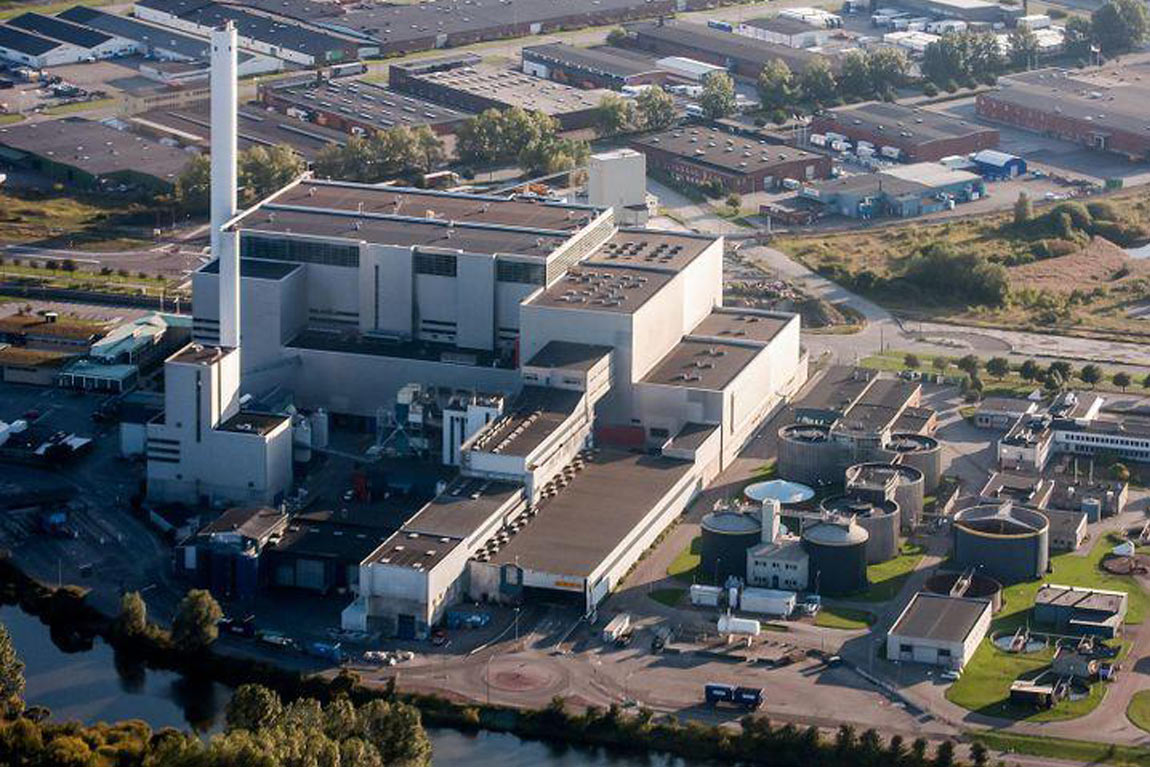
Expert Speak | 17 September, 2026
Waste Valorisation: Opportunities across Industrial, Critical-Mineral, and Food-Value Chains
Spotlight
- Waste valorisation extracts economic and strategic value from waste to complement raw material extraction but requires consistent regulations and targeted incentives.
- Municipal Solid Waste (MSW), and industrial and construction waste can be converted into Refuse-Derived-Fuel (RDF) to substitute fossil fuels in cement kilns, while organic waste can be converted through anaerobic digestion (AD) and pyrolysis into biogas and biochar for agriculture industries.
- Recovering metals from e-waste and batteries can create secondary supply chains that would act as buffers against geopolitical export controls and supply-chain bottlenecks.
Compounding population growth, rising urbanisation, and increasing income-driven consumption are accelerating waste generation. The World Bank projects that global waste generation will increase from 2.56 billion tonnes in 2022 to 3.86 billion tonnes by 2050.
Waste is a highly underutilised value stream that has substantial economic and environmental value, which can be harnessed through waste valorisation—transforming waste into useful products, new materials, or energy.
Successful waste valorisation programmes constitute a pillar of modern-day circular economy frameworks, reducing residual waste disposal, extending material life cycles, and establishing closed-loop feedstock for future industrial processes. Waste valorisation decreases reliance on raw resources, partly mitigating supply-chain dependencies and building localised secondary supply chains to enhance economic resilience and ease global resource constraints, even if marginally. It also reduces processing requirements and the carbon footprint of virgin material extraction.
Exploring Waste-Generated Value Streams
Municipal Solid Waste and Industrial and Construction Waste
Countries are increasingly investing in large-scale infrastructure projects to drive economic growth and urban transformation. These rely on essential inputs such as iron, steel, and cement for infrastructure construction. Production of these raw materials is highly energy- and carbon-intensive, with steel and cement accounting for over 50 percent of all industrial greenhouse gas emissions. Concurrently, economies are grappling with compounding municipal solid waste (MSW), industrial, and construction waste output.
Decarbonising heavy steel and cement industries can be achieved through circular-economy interventions. For steel, scrap recycling is widely used to bypass virgin ore extraction and divert industrial metals from landfills. Recycling one tonne of steel saves about 1.4 to 1.5 tonnes of iron ore and reduces carbon emissions by 58 percent.
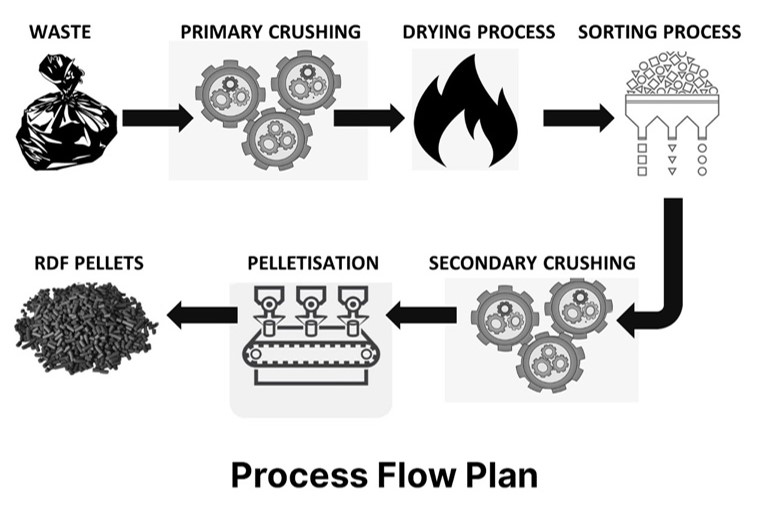
For cement, mechanical biological treatment (MBT) processes can be leveraged to convert diversified waste streams into refuse-derived fuel (RDF), an energy source that can substitute fossil fuels. The MBT process begins with mechanical pre-treatment to separate non-combustible items from combustible ones, followed by biological drying, mechanical sorting, and pelletisation of waste into refuse-derived fuel. RDF substitution can reduce landfill waste and greenhouse-gas emissions.
Current estimates suggest limited large-scale utilisation of RDF, composing less than 8 percent of waste treatment and disposal strategies in the Channel Islands, Costa Rica, Italy, Japan, and Mexico. This is largely because RDF faces cost-competitiveness challenges with fossil fuels, and modifying cement kilns to accommodate co-incineration requires high upfront capital investments. Furthermore, RDF viability remains contingent on feedstock quality and securing long-term industrial off-takers.
Figure 1: Refuse-Derived Fuel
Source: Rekart
Electronic Waste and Urban Mining
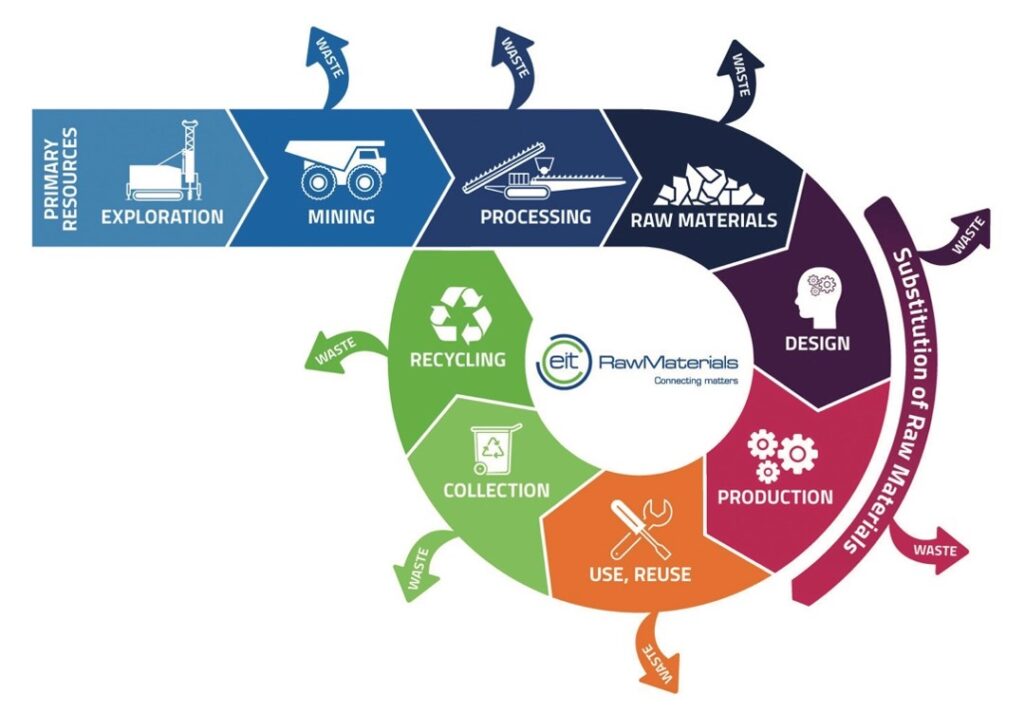
Growing energy-transition ambitions, data centre construction, and reliable defence production chains all depend on assured Critical Minerals (CRM) supply chains. China’s dominance across the entire CRM value chain means that countries remain tied to the vagaries of Chinese export-control policies to access these essential minerals. The lack of domestic reserves and meaningful refining and processing capabilities at scale globally presents an additional challenge of bypassing supply-chain disruptions. Although the moderate quantities of usable feedstock cannot reasonably replace the need and contribution from virgin mining, recovering CRMs from industrial materials and end-of-life electronic items can help supplement efforts to mitigate supply-chain vulnerabilities. By establishing regulatory policies that integrate recovery technologies, refining, and recycling into industrial frameworks, countries can embed circular-economy models within urban mining.
Mine-tailings, battery waste/spent batteries, and discarded electronic hardware are potentially recoverable. In 2022, only 14 billion kilograms of e-waste was recovered out of 62 billion kilograms of generated e-waste. Nearly 40–800 times more CRMs such as gold, copper, and rare earth elements (REEs) could be recovered from circuit boards, for instance, than what is available from primary mined ores. One tonne of mobile-phone circuit boards could generate nearly 100 gm of palladium and 300 gm of gold. Spent batteries could produce nearly 20 percent of cobalt, 5–10 percent of nickel and 5–15 percent of manganese. Improved recycling technologies have also led to lithium recovery rates potentially reaching nearly 90 percent.
Waste valorisation in the CRM space could also contribute to energy transition. Nearly US$600–800 billion of mining investments would be needed by 2040 to meet global net-zero emissions targets, given the amount of CRMs required for energy transition infrastructure. Estimates suggest that not developing recovery and recycling ecosystems would increase this amount by nearly 30 percent.
Figure 2: Circular Critical Minerals Value Chain: An Illustration
Source: Frances Wall, “The Circular Economy: A View from the Front.”
However, recycling cannot replace the need for new mineral supplies and virgin feedstock. Instead, waste valorisation can serve as a necessary bridge and complement the existing CRM supply chain. In addition to guarding against the social and environmental costs of additional mining, even if marginally, the urban mining process will ensure that the available CRM feedstock is used to its optimal capacity. This approach could also assist in establishing CRM traceability frameworks.
Organic and Food Waste
Food waste accounts for the largest share of MSW at 38 percent and contributes 6.8 percent to global emissions, but it is largely processed in landfills, releasing harmful methane. It also contains an abundance of nutrients, moisture, and microorganisms that can be transformed into high-value products. It can be managed through composting or serve as feedstock inputs for anaerobic digestion (AD) or pyrolysis to convert it into biochar. Biochar can be redistributed into high acidity soil as a substitute for chemical fertilisers. However, only 6 percent of waste globally is processed through AD or composted.
Developing localised and integrated AD and pyrolysis plants, alongside agriculture, food, and beverage facilities, is a cost-effective option to manage food waste. When supplemented with other renewable sources, biogas can help meet facility-level electricity demand, since electricity generated from biogas is minimal compared to conventional sources, if deployed on a larger scale. Onsite biogas plants would reduce the time and costs associated with transferring waste from production to management sites for sorting, thus complementing composting. However, the heterogeneity of food waste, which risks affecting the quality of feedstock that can be transformed into biogas, would need to be addressed.
Table 1: Waste Valorisation Across Sectors: Price, Purpose, and Potential
| Parameters | Waste Valorisation Technique | |||
| Anaerobic Digestion | Pyrolysis | MBT / RDF Pelletisation | CRM Recovery/Urban Mining | |
| Waste Type | Organic waste | Homogenous waste | Mixed waste | Electronic waste, batteries, industrial scrap, fly ash, mining residue |
| End Product | Biogas | Biochar, bio-oil, syngas | RDF | Recovered CRMs including copper, cobalt, lithium, nickel, REEs |
| Technological Maturity | Very High | Emerging | High | Medium |
| Waste Volume Reduction | 35–50 % | 50–90 % | 60–90 % | 25–40% |
| Land Requirement | Large | Small | Medium | Small |
| Pre-Treatment | Required | Required | Required | Required |
| Capital Cost | Medium-High | High | Medium-High | High (owing to high separation costs and low traces of the recoverable/usable elements) |
| Operation and Maintenance Costs | Medium-High | High | Medium-High | Medium-High |
| GHG Emissions | Least | Low | Low | Low (particularly in comparison to that generated by primary mining) |
| Social Opposition | Low | High | Medium | Low |
| Country Applications | Argentina, Italy, Japan, the United States (US), Belgium, Mexico, India, the United Kingdom (UK) | China, Germany, the US, Japan, South Korea, and the UK | Germany, Austria, Italy, Spain, Japan, and the US | China, Japan, South Korea, India, Canada, the US, Germany, and France |
| Broad Performance Metrics and Factors Affecting End Value | Biogas yield, energy efficiency, carbon retained in feedstock, fuel quality | Biochar, bio-oil, and syngas yield; energy efficiency, carbon efficiency, fuel quality | RDF yield, recovery rate, mass and volume reduction, pellet durability index, calorific value | Efficiency of the recovery techniques and purity of the material recovered |
Authors’ own, based on literature survey across the four sectors as cited.
Shared Challenges
Policy and Regulatory
The lack of consistent regulatory frameworks across collection, separation, aggregation, and processing hinders the quality and efficiency of waste conversion into strategic commodities and leads to operational uncertainty and investor hesitancy. Countries with high waste output and limited local recycling capacity have previously exported waste to nations with weaker waste regulations, shifting environmental and health burdens onto the latter.
Financial
Waste valorisation is highly capital intensive, resulting in expensive products that inhibit demand take-off. Waste-to-energy (WtE) is also energy intensive, relying on high temperatures for conversion into steam or heat. Financial viability is also complicated by feedstock variability. Nickel batteries, for instance, generate more valuable CRM, compared to lithium-iron phosphate batteries that have low comparative residual value. Differing scales and composition of waste also make it challenging to develop tailored pricing schemes.
Technical
Insufficient upstream waste collection and a lack of segregation processes may minimise energy output, as well as physical and economic returns, while raising facility pre-treatment costs. Competition for the finite amount of recoverable waste could negatively impact the economies of scale and the profit margins of projects. Similarly, given the need for assured secondary raw material supply, successful waste reduction and recycling may reduce long-term feedstock availability for WtE processes. However, along the waste hierarchy, WtE largely aims to process irrecoverable residual waste, serving as an alternative to landfilling, not recycling; therefore, facilities should be designed accordingly.
Recommendations
First, countries must establish regulatory foundations for recycling protocols and sustainable waste management systems. Establishing environmental baselines, landfill diversion targets, uniform treatment and quality standards, advanced waste sorting requirements, and automated technologies would help enhance output quality. At the household level, implementing mandatory waste-separation laws supplemented with smart bins can help facilitate waste treatment and enforce compliance. By leveraging the polluter-pays approach, governments can pass on costs to waste generators and dissuade wasteful habits.
Minimising lengthy transport processes would help improve economies of scale in waste recovery processes. The Basel Convention and Organisation for Economic Co-operation and Development (OECD) Control System, for instance, require informed consent for transboundary waste shipments, ensuring that waste is processed domestically.
Second, there must be financial incentives prior to commencing project implementation. Examples include feed-in tariffs (FITs), carbon credits, tax exemptions, renewable energy credits, and renewable heat payments. FITs, for instance, improve financial viability for AD projects by allowing biogas to be sold to the grid through long-term off-take contracts. Governments can also offset capital costs, allowing generation of multiple revenue streams. Additionally, establishing robust public–private partnership (PPP) frameworks with pre-defined risk-allocation models that offset feedstock supply risks and define revenue-sharing mechanisms will help attract private capital for waste processing facilities. Governments should encourage industrial symbiosis as well, where facilities are co-located with off-takes and designed to process localised waste streams.
At current levels of technological maturation, waste valorisation’s economic and environmental contribution lies what it helps recover from landfill and end-of-life materials, rather than any scaled substitution of virgin extraction or production. Out of the three high-potential waste-value streams, CRM recovery offers the greatest strategic potential, given the gaps in global mining capacity, concentrated supply-chain dependencies, and energy transition material demands, yet is constrained by technological maturity. Anaerobic digestion of organic waste recovery strikes a balance between high technological maturity, low social opposition, and smart processing for a high-volume waste stream, despite its financial returns being constrained by low-cost fossil fuel alternatives. Prioritising RDF co-processing alongside cement kilns ranks lowest strategically due to its reliance on a single off-taker. Since these trade-offs depend on country-level industrial profiles, tailored landscape analyses remain essential to informing targeted waste management strategies and PPPs.
Leigh Mante is Junior Fellow, Climate and Energy, ORF Middle East.
Cauvery Ganapathy is Fellow, Climate and Energy, ORF Middle East.