
 Global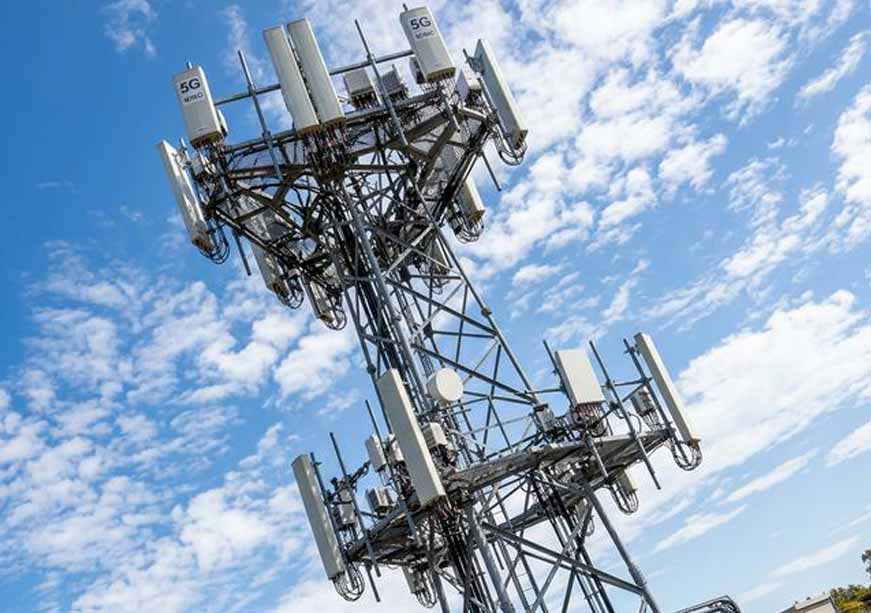
Commentaries | 27 August, 2026
Open RAN 2026: The Gap Between Promise and Practice
The telecommunications industry is witnessing a significant restructuring, with several large operators increasingly adopting Open RAN (Radio Access Network) and 5G in an effort to shift away from traditional vendor-locked RAN architectures. However, despite several efforts, including government subsidies and advocacy, commercial adoption remains surprisingly limited. To understand why, this piece traces Open RAN’s origins as a response to Chinese vendor dominance, examines developments over the past two years, and finally confronts the challenges that have kept commercial adoption at a standstill.
What Is Open RAN, and Why Was It Developed?
The RAN connects end-user devices to the network via cell towers and other radio equipment to transmit data. When a user makes a call, sends a text, or accesses mobile data, their device depends on the RAN to establish and maintain this wireless connection. In a traditional RAN setup, all network components — from the hardware to the software — are provided by a single vendor. By extension, the entire telecommunications industry, with its high barriers to entry, is dominated by a handful of large companies: vendors such as Huawei and Ericsson, and MNOs (Mobile Network Operators) such as AT&T and Verizon.
While this centralised approach simplified procurement for operators and promoted reliability, it also created vendor lock-in — limiting flexibility and customisation, stifling innovation, and burdening operators with high deployment and maintenance costs, further disincentivising the model.
Cisco defines O-RAN as “a nonproprietary version of the Radio Access Network (RAN) system that allows interoperation between cellular network equipment provided by different vendors.” With Open RAN, MNOs now have a wider range of cost-effective providers to choose from, as well as more efficient networks through standardised components, open interfaces, and the promotion of a multi-vendor ecosystem.
A primary driver for Open RAN is to relieve MNOs of the risk of data leaching from Chinese vendors such as Huawei. In 2019, Bloomberg reported that Vodafone had discovered hidden backdoors in Huawei equipment used in its Italian networks. Although Huawei denied the allegations, the incident intensified global scrutiny of the security of telecom infrastructure. Consequently, the Trump administration blacklisted Huawei on grounds of spying and urged Western allies to do the same, underscoring the importance of transparency in network components — particularly in the Indo-Pacific region.
Following a US$20 million pilot project launched in 2023, the Quad (the US, Australia, India, and Japan) announced support in 2026 for the first commercial deployment of Open RAN in the Pacific, with the network expected to be operational by early 2027. This deployment secures supply chain security by providing a cost-effective alternative to Chinese vendors, while simultaneously granting digital sovereignty to smaller Pacific Island nations historically overlooked by commercial Tier-1 operators. The demonstration effect deliberately positions Palau as a replicable model for other Indo-Pacific nations facing the same Huawei-or-nothing dilemma.
Momentum, Stalled Adoption, and the Rise of AI-RAN
However, despite the geopolitical momentum, Open RAN’s story has been a double-edged sword. While industry players have invested heavily in the technology, actual commercial adoption remains stalled, facing unresolved challenges.
By 2025, several large operators had made major efforts to further the adoption of Open RAN. Industry consortia such as the O-RAN Alliance and the Telecom Infra Project (TIP) reported at least 45 ongoing Open RAN deployments and trials, spanning 27 countries and 31 operators, as of mid-2025. This sentiment is reflected in AT&T’s US$14 billion deal with Ericsson, the largest commitment by any operator so far. Similarly, Bharti Airtel deployed 2,500 Open RAN sites in rural India with Mavenir. Rakuten Mobile in Japan continues to spearhead this push, operating a fully virtualised, cloud-native Open RAN network covering 98 percent of Japan’s population. The most concrete commercial milestone of this period came when AT&T completed the first live commercial call on its Open RAN network, using a Fujitsu 1-Finity radio unit connected to an Ericsson distributed unit. The incumbents adapted rather than collapsed. Ericsson and Nokia are now active O-RAN Alliance contributors and are winning Open RAN contracts, with the Open RAN market projected to grow at a 39.4 percent CAGR.
Despite all these efforts, the numbers tell a sobering story. In 2019, 21 percent of operators globally were in the initial phases of deploying open networking technologies. By late 2025, that figure stood at 22 percent. Six years of effort, government subsidies, and advocacy had produced a shift of just one percentage point in measurable adoption. GSMA Intelligence reported that Open RAN’s status as a technology priority was nearing an all-time low, with the market rife with scaled-back rollouts and delayed launches against forecasts that consistently failed to materialise. Omdia’s 2026 Open RAN Operator Survey found that roughly 40 percent of operators had meaningfully adopted O-RAN architecture, with 13 percent actively deploying it in production and 27 percent using O-RAN principles to guide future RAN evolution. Dell’Oro’s February 2026 Open RAN Report further exemplifies this tension: multi-vendor RAN is now expected to account for less than 5 percent of total RAN by 2030, down from the previous forecast of 5–10 percent.
As it turns out, multi-vendor interoperability — the core of the whole operation — proved harder in practice. Standards compliance does not automatically guarantee system-level interoperability. Operators found that achieving carrier-grade performance in multi-vendor configurations required significant integration work that no vendor’s sales cycle had reflected, and every additional vendor introduced further testing requirements and exposed accountability gaps. GSMA Intelligence’s operator survey identified performance as the predominant adoption barrier. Security risk also increases with disaggregation, as open interfaces and multiple vendors expand the attack surface, risking a data breach like the 2019 Huawei incident, while smaller ecosystem vendors are harder to audit. Expected cost savings proved elusive, with integration and testing costs often offsetting the savings from competitive hardware procurement.
By further extension, two departures compounded the pressure on smaller players. EchoStar, the greenfield Open RAN operator in the United States widely cited as a commercial proof-of-concept, exited the carrier business. Mavenir also exited the radio hardware business entirely to focus on AI software, removing one of the most pure-play advocates for the technology from the hardware layer.
The core technical obstacles have not been resolved. Multi-vendor interoperability remains the unfinished central project. The AT&T-Fujitsu milestone is one specific integration in a controlled deployment. Similarly, operational readiness is a genuine constraint: legacy telecom teams are not equipped for these cloud-native, software-defined networks, and the skills gap is not closed by capital investment alone.
The economic case also remains context-dependent. While cost savings are clearest in greenfield and rural deployments, the total cost of ownership case remains contested in dense urban macro networks. The ecosystem’s smaller vendors are under structural pressure, with contracts increasingly won by Nokia, Ericsson, Samsung, NEC, and Fujitsu — the players with the capital to absorb integration complexity.
AI-RAN is emerging as both a technical architecture and a strategic investment thesis, and Open RAN’s open interfaces are enabling it. The AI-RAN Alliance, formed in February 2024, is coordinating this convergence.
It was against this backdrop of stalled adoption and heavy investment that the most significant development emerged — not a deployment milestone, but a convergence. AI-RAN is emerging as both a technical architecture and a strategic investment thesis, and Open RAN’s open interfaces are enabling it. The AI-RAN Alliance, formed in February 2024, is coordinating this convergence.
Unlike traditional RAN’s fixed, rule-based algorithms, AI-RAN uses real-time machine learning models to optimise networks, transforming the base station into a revenue source by running telecommunications and AI inference workloads simultaneously. In October 2025, Nokia and NVIDIA announced a strategic US$1 billion partnership. Nokia’s AnyRAN software now runs on NVIDIA’s GPU-accelerated platforms, enabling base stations to handle 5G traffic and AI tasks at the same time.
Early 2026 functional tests with operators such as T-Mobile US and SoftBank successfully demonstrated concurrent video streaming, AI queries, and live 5G network operations all being managed on the same infrastructure. Even long-time rivals Ericsson and Nokia announced a joint initiative, signalling both a notable act of cooperation and a sign that the real momentum now lies in Open RAN’s convergence with AI.
Conclusion
Ultimately, Open RAN is more than a vehicle for commercial disruption; it also carries elements of strategy and standard-setting. While it has profoundly nudged the global telecom conversation towards interoperability and supply-chain diversification, actual commercial adoption remains limited compared to early, optimistic expectations. Open RAN is best understood as a selective deployment strategy rather than a universal replacement for traditional RAN, performing best in greenfield networks, rural coverage, strategic diversification, and geopolitically sensitive deployments — as illustrated by the Quad’s initiative in Palau.
Open RAN is best understood as a selective deployment strategy rather than a universal replacement for traditional RAN, performing best in greenfield networks, rural coverage, strategic diversification, and geopolitically sensitive deployments — as illustrated by the Quad’s initiative in Palau.
Together, Open RAN and AI-RAN are enabling telecom networks to capture high-value edge compute and AI workloads. While this has not made traditional vendors entirely a thing of the past, breaking down proprietary walls has permanently altered the industry. As the world moves toward a US$100 billion 6G future, open architecture is set to make the next generation of global connectivity software-defined, intelligent, and flexible.
This commentary originally appaered in Observer Research Foundation.