 Global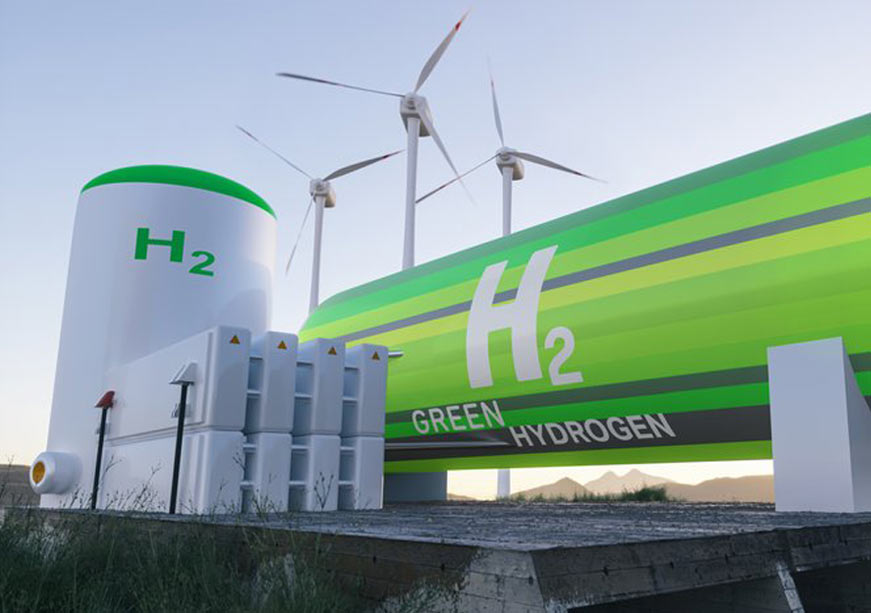
Expert Speak | 09 February, 2026
Green Hydrogen Prospects in the Gulf
Hydrogen offers the Gulf a path to climate leadership, post-oil industry, and export success via regional cooperation
Global fossil fuel production, greenhouse gas (GHG) concentration, and temperatures are hitting record highs despite endless debates at media-intensive global summits. As global efforts to solve the collective climate action problem falter, hydrogen presents the Gulf region with an excellent opportunity to drive regional climate cooperation and emerge as a global climate leader.
The Gulf Cooperation Council (GCC) member states are, in many ways, at the centre of the development. They collectively produce about 20 percent of global oil, and they are also particularly vulnerable to climate change. The region is heating up three times as fast as London, with scientists predicting life-endangering temperatures, and it faces extreme weather events. In response, the region’s governments are exploring alternatives to fossil fuels, with a growing interest in hydrogen, as it fits the region’s geographic advantages and enables post-oil industrial continuity.
Challenges for Hydrogen Adoption
Hydrogen may be produced with low to no emissions, using renewable energy (“green” hydrogen) or from natural gas, capturing the emitted CO2 (“blue” hydrogen). It can then be used as an energy source through burning or fuel cells, or as an input for the chemical industry, for example, to produce ammonia. Yet, hydrogen has failed to meet inflated expectations. This is mainly due to increased electrification, which has crowded out hydrogen in road transport and heating. In addition, while hydrogen has excellent energy density by mass, its energy density by volume is low, resulting in bulky fuel storage and complex logistics.
Green hydrogen, in particular, is still years away from becoming cost-competitive without a more substantial carbon pricing or taxation. It also consumes large amounts of water as a raw material, nearly 9kg of water per 1kg of H2— a problem that is particularly binding in water-scarce GCC states. Blue hydrogen, meanwhile, has its own challenges, including a currently low share of captured CO2, more gas-intensive production than “grey hydrogen,” and a trade-off between low emissions and low cost.
Recent resurgence of hydrogen
Despite its limitations, hydrogen has well-defined use cases in hard-to-abate sectors. These include the cement industry (about 7-8 percent of global CO2 emissions), metallurgy (7 percent), petrochemicals (about 14 percent of global oil consumption), as well as maritime shipping and aviation (combined about 15 percent). Hydrogen can replace oil and gas either directly as a fuel or through “power-to-X” processes that produce methane (“synthetic natural gas”), methanol, ammonia, and other hydrocarbon compounds, with applications from sustainable air fuel to fertilisers.
Moving up the value chain from uncompressed hydrogen to compressed hydrogen to liquefied hydrogen to derivative products like ammonia makes green hydrogen more viable, especially in the Gulf. While the added processing is costly energy-wise and decreases round-trip efficiency, thus compounding the high green energy demands of hydrogen production, it greatly increases energy density and transportability, especially as seaborne shipping remains the primary mode of transportation for Gulf producers in the absence of substantial pipeline networks to the major centres of demand in East Asia and Europe. Consequently, green hydrogen will inherit the same capacity constraints, added costs (over pipeline), and security concerns as the hydrocarbon sector. In addition, in the same vein as the petrochemical industry, domestic hydrogen processing into derivatives also keeps more value added in the region.
Globally, hydrogen is poised to play a significant role in decarbonisation efforts, as initiatives like the Breakthrough Agenda and the World Bank’s 10 GW Initiative demonstrate. Many countries have developed hydrogen strategies, projecting that most will be net hydrogen exporters by the middle of the century. China introduced a set of policies to boost hydrogen in industrial and transportation applications. Similarly, hydrogen plays a key role in the EU’s Green Deal and the US Inflation Reduction Act—although Trump is set on eliminating emissions-reduction incentives.
Yet, global green hydrogen production capacity, while quintupling from 82 thousand tonnes in 2019 to 399 thousand tonnes in 2024, faces a widening gap between ambition and implementation. Investment in production capacity is currently held back by high costs, limited demand due to economic lull and climate policy uncertainty. As a result, green hydrogen production will remain limited in the short term. As the Gulf enjoys comparative advantages regarding hydrogen as with fossil fuels (location, resources, cost, infrastructure, expertise), the gap between hydrogen aspiration and implementation presents an opportunity for the region.
Hydrogen in the Gulf: State and Potential
The GCC states possess abundant hydrogen potential. Geologically, the Arabian Peninsula is well-suited for underground storage. Geoeconomically, they enjoy a strategic location between the two markets that are projected to dominate GH demand in 2050—South and East Asia and Europe. In addition to export markets, GCC countries also feature robust domestic use cases, including large petrochemicals, metallurgy, cement, and shipping industries, as well as natural gas production that may use hydrogen as a green additive (although this use has limitations). A significant challenge is the requirement for large quantities of clean water to produce green hydrogen, which creates a massive demand for additional desalination capacity. This issue may be attenuated through direct seawater and wastewater electrolysis, a technological development where Gulf states could be at the forefront.
Not all Gulf states have the same geographic advantages, however. Saudi Arabia and Oman are blessed with a long Red Sea shoreline and an advantageous solar– and wind-energy combination. While the UAE lacks substantial wind-power potential, it is the only GCC country with a nuclear power plant that could potentially produce “pink hydrogen”. Qatar possesses LNG and blue hydrogen know-how and infrastructure, as well as a compact landmass that facilitates national implementation. However, its smaller solar and wind energy potential for green-hydrogen production and its shorter coastline compel it to focus on blue hydrogen in the short-term.
Current Policies and Projects
Consequently, the three GCC members developing GH projects are Saudi Arabia, the UAE, and Oman.
Saudi Arabia sees hydrogen as an important part of its industrial development strategy. A large-scale production facility, in cooperation with the US company Air Products, is scheduled to open at NEOM’s Oxagon in 2026. 4GW solar and wind production will produce up to 600 tons/day of green ammonia, while hydrogen research will be conducted in cooperation with King Abdullah University of Science and Technology (KAUST). This plant alone accounts for the bulk of the US$ 11 billion in investment spending on Gulf hydrogen projects until 2030. A new 4GW project in Yanbu, a joint venture between Acwa and the German EnBW, with engineering services from Spain and China, is slated to produce green hydrogen and green ammonia for export.
The UAE published the GCC’s first ‘Hydrogen Strategy’, calling hydrogen the “energy carrier of the future”. It targets 1.4 million tonnes of green hydrogen per year in 2031, an ambitious goal compared to the project pipeline. A DEWA/Siemens joint venture in Dubai was the first green-hydrogen production site in the GCC, producing 180 tonnes per year. Masdar, meanwhile, plans the production of 1 million tons of green hydrogen in 2030, half of it abroad. The UAE is also planning a dedicated hydrogen R&D centre, and is interested in innovative applications like green steel. As a natural gas producer but a net gas importer, the UAE can blend its existing gas industry with hydrogen to mitigate this dependency.
Oman pairs its green hydrogen ambition, such as hosting a Green Hydrogen Summit and launching Hydrom in 2022, with excellent natural advantages. This ecosystem is also meant to energise the country’s post-oil development effort, for example, in Dhofar and Duqm. Oman is a case study in how international cooperation could develop, both regionally, with a Saudi-Omani joint venture, and globally, with European and Chinese partners. In a holistic policy approach to the hydrogen value chain, Oman’s in-country-value strategy also plans the onshoring of manufacturing of industrial components.
Conclusion and Outlook
Climate-neutral hydrogen is indispensable to decarbonise hard-to-abate industries, and, for the Gulf, it presents the only way to harness its renewable energy potential for long-distance export and preserve its petrochemical and metallurgical industry with its vast physical and human capital in the post-oil era.
But current GCC commitments to GH can be tentative and changeable. Gulf countries still hesitate to spend, with only 20 cent investment in green energy for every dollar invested in fossil fuels. The critical challenge will thus be to keep a steady long-term focus and harness location factors for GH, even in the face of short-term challenges like cost advantages of fossil fuels and “grey hydrogen” and water shortage. To secure long-term success, a holistic strategy is needed, including supportive policies and investments along the value chain and a push for R&D. For example, the Gulf’s idiosyncrasies could make it a natural leader in research into seawater electrolysis and, especially for Qatar, methane pyrolysis (“turquoise hydrogen”).
All this necessitates a concerted, durable, inter-governmental effort, ideally through a dedicated GCC Green Hydrogen institution. This will help advance cross-border infrastructure and investment, joint support policies, and coordination of production, knowledge transfer, procurement, and collective negotiation of joint ventures and offtake agreements to offset demand risk. As both Saudi Arabia and the UAE are vying to become a global hydrogen hub, regional cooperation and coordination will be crucial to harness synergies and scale economies.
While current political and economic intra-GCC tensions make such cooperation appear distant and unrealistic, past successes in infrastructure (Dolphin Gas Pipeline, GCC Interconnection Authority) and commodity production (OPEC) show that cooperation is possible when interests are aligned. Oman, particularly, with its regional hydrogen joint ventures and reputation for conciliation, could become a leader in bringing the GCC countries together.
Whether the Gulf can become a global green-hydrogen hub will depend on its ability to advance regional cooperation and focus on long-term goals over short-term wins, even in the face of inevitable setbacks.
Frédéric Schneider is a Senior Fellow at the Middle East Council on Global Affairs.