 Global
Expert Speak | 25 February, 2026
Integration is the Arabs’ Best Shield Against Confiscation
The takeover of Venezuela and recent Israeli measures aiming at annexation of the West Bank demonstrate that barriers to the seizure of foreign resources have sharply lowered in international politics. Arab states should seize the paradoxical opportunity created by cascading geopolitical crises and move decisively to build comprehensive regional architectures that deepen integration, reinforce stability, and strengthen collective resilience.
2026 could well be remembered as the year the world entered a new era of confiscation. Claiming ownership over desired assets and enforcing such claims unilaterally are increasingly justified as acceptable in international politics.
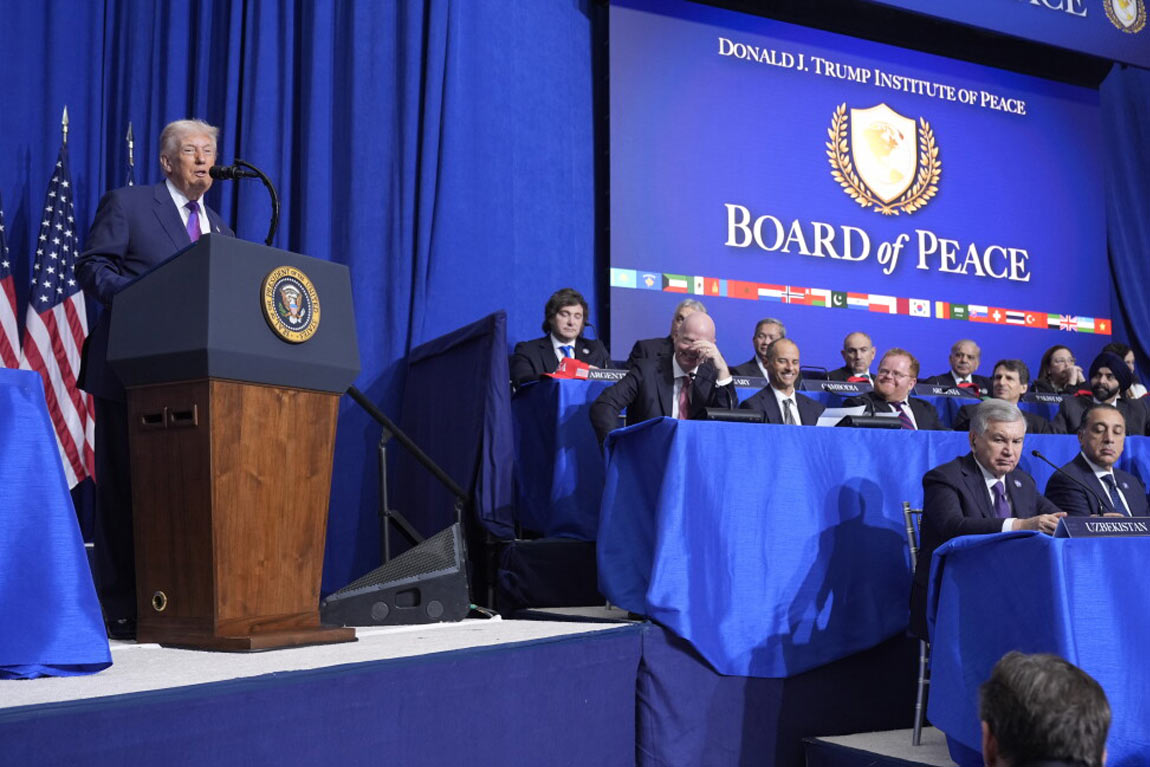
Some of the clearest illustrations of this emerging zeitgeist appear in speeches delivered by US President Donald Trump during his second term in office. At the press conference following the capture of Venezuelan President Nicolás Maduro in January 2026, he declared that Caracas “unilaterally seized and sold American oil”, claiming that “[t]hey took our property” and repeatedly asserted that the United States was going to “run” the country. On February 20, 2026, about a week after the US Energy Secretary toured oil production facilities with the Venezuelan acting president, Trump doubled down by saying: “We took 50 million barrels of oil”.
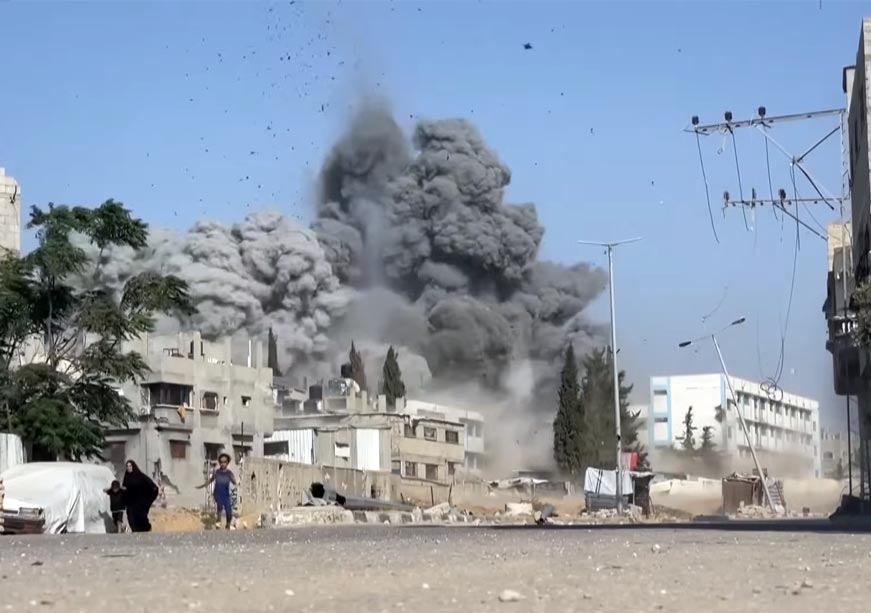
Elsewhere, Israeli actions in the West Bank provide another striking example of such unilateralism. The latest decisions taken by the Israeli security cabinet on February 8 indicate a pathway towards annexation, including measures to ease property acquisition in the West Bank, expand Israel’s authority to demolish construction across the territory, and consolidate control over religious sites.
A growing body of evidence points to a shift away from the primacy of market competition and towards the normalisation of coercive and confiscatory behaviour.
The blurring of boundaries in resource ownership leaves middle powers and small states increasingly exposed, as confiscation and the violation of international law become normalised. Yet, beyond domestic consolidation and reform, bilateral engagement, and commitment to multilateral mechanisms and fora, countries should urgently strengthen their collective deterrence and resilience by investing in regional architectures for collective security, economic integration, political dialogue, solidarity, and stability, based on a “neighbourhood-first” rationale.
In this context, the Arab region has strong incentives to act, both to reduce its vulnerability and to shape a more stable and autonomous regional order.
The Return of Confiscation in Global Politics
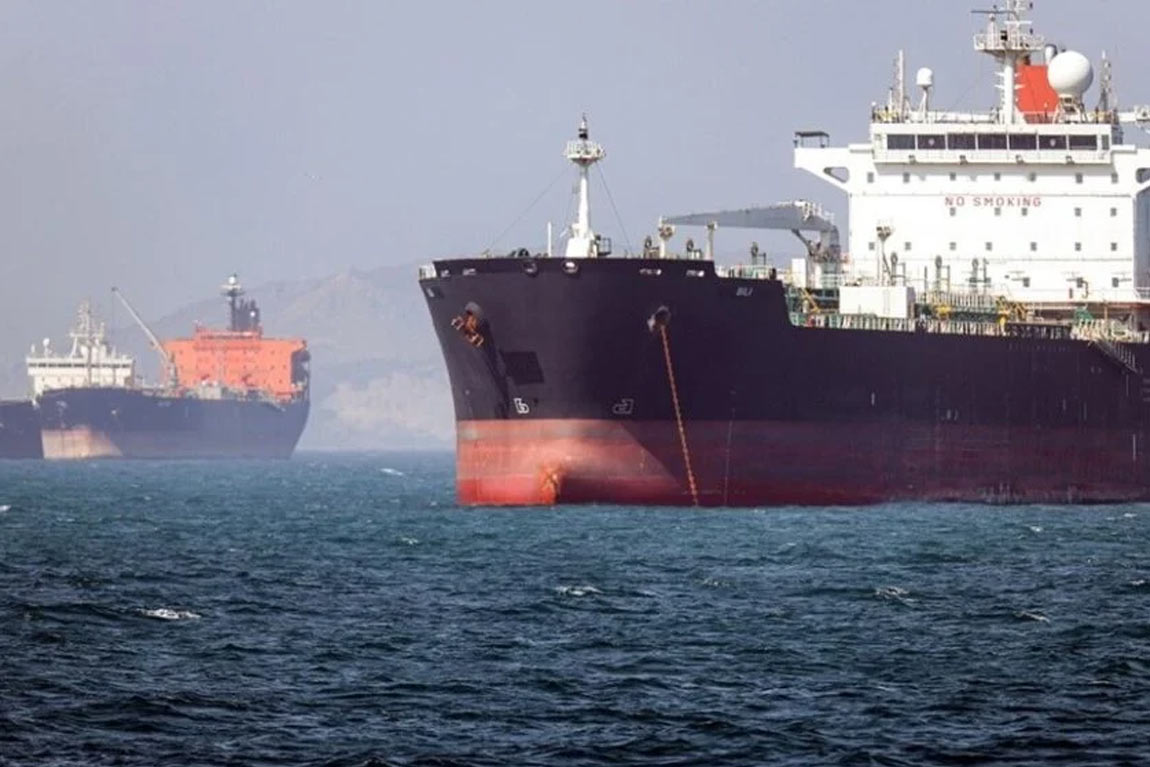
A growing body of evidence points to a shift away from the primacy of market competition and towards the normalisation of coercive and confiscatory behaviour. The US Navy seizure of vessels in the Caribbean, government-to-government minerals-for-security agreements that trade military protection for exclusive or preferential resource access with countries such as the Democratic Republic of the Congo, and novel arrangements between the administration and corporate giants in energy, finance, and technology all illustrate the decay of some of the key principles of the rules-based order and of the Washington Consensus of yesteryear.
These developments fit within what French economist Arnaud Orain calls “finitude capitalism” in his 2025 book Le monde confisqué (“The Confiscated World”). Orain argues that since the sixteenth century, global capitalism has oscillated between two phases. In “liberal capitalism,” confidence prevails that commerce and rules can generate shared prosperity. But in periods of “finitude capitalism,” pessimism takes hold, driven by acute awareness of the world’s physical limits, catalysing intensified competition between rival powers. Nations then resort to coercive measures to secure exclusive control over land, mines, sea lanes, energy reserves, and other finite resources. Colonial empires typically emerge during such phases.
The re-emergence of confiscation as a central paradigm in international economic relations unfolds as the result and against the backdrop of a broader radicalisation of geoeconomics. The Biden years were marked by debates over ally-shoring, economic resilience and economic security, and industrial policy aimed at increasing one’s foothold in markets, supply chains, and technological ecosystems. It has now become evident that these approaches are supplemented by the direct use of military force to seize assets and infrastructure. In Venezuela, like in Iran, armadas, build-up of warships, and gunboat deployments increasingly function as complements to export controls, investment screening, sanctions, subsidies, and tariffs.
Confiscation Clashes with the Increasing Arab Embrace of Markets
From an Arab perspective, confiscation has historically translated into traumatic experiences. Trump’s declarations echo the moment George H. W. Bush reportedly told King Hussein of Jordan, “I will not allow this little dictator to control 25 percent of the civilized world’s oil,” a statement that implied Iraq’s oil was not considered its own, but the West’s. Meanwhile, the confiscation of land remains a tool of ethnic and social engineering in the region, exemplified by past practices of the Assad regime in Syria and ongoing Israeli settler expansion in the occupied West Bank.
In periods of “finitude capitalism,” pessimism takes hold, driven by acute awareness of the world’s physical limits, catalysing intensified competition between rival powers.
The renewed prominence of confiscation as a governing paradigm also stands in stark tension with the market-oriented economic trajectories many Arab states claim to pursue. Across the region, this contradiction is evident. Morocco has consistently signalled openness to foreign investment and trade as drivers of its industrialisation. The Syrian government has repeatedly insisted it intends to break with the bureaucratic, cronyist, and “socialist“ practices of the Assad era. Across the Gulf, governments have embraced economic diversification, professionalised policymaking, and openness to foreign investment and trade, visions that depend on predictable rules, credible institutions, and the reliability of market mechanisms.
Similarly, traditional Arab commitment to market-driven international energy systems clashes with the logic of great-power confiscation. Since the onset of the Russia–Ukraine war, Arab countries, chief among them Saudi Arabia, have typically voiced frustration with the use of geoeconomic tools mobilised by advanced economies, including the imposition of price caps on Russian sales of oil, and proposals to use assets linked to Russia in order to finance Ukraine’s reconstruction and war efforts.
The 1973 “Arab oil embargo“, during which Arab members of the Organization of Petroleum Exporting Countries (OPEC) weaponised oil supplies in support of a political Arab cause, namely, that of Palestine, thus stands out as an exception rather than the norm. Since then, the position of Arab oil-producing states has rested on three pillars: first, sovereign control over natural resources, typically embodied in state-owned national oil companies (NOCs); second, the legitimacy of producer-led, evidence-based coordination to stabilise global energy markets through institutions like OPEC and the Gas Exporting Countries Forum (GECF); and third, the centrality of market mechanisms, particularly supply and demand, in determining oil prices.
The renewed prominence of confiscation as a governing paradigm also stands in stark tension with the market-oriented economic trajectories many Arab states claim to pursue.
Yet here lies a fundamental tension. In the Gulf, particularly, this market-based conception of international energy flows has coexisted with what might be called pro-hegemonic geoeconomics. Historically, the bulk of surplus generated by energy exports was recycled into US assets, goods, expertise, hardware, and services, in exchange for an implicit US security guarantee. Over time, this arrangement deepened into integration across energy, finance, and, more recently, emerging technologies like artificial intelligence (AI). The pattern reached its apex in May 2025, when Trump visited Qatar, Saudi Arabia, and the UAE, securing announcements of US$3.4 trillion in investments from the Gulf’s three largest economies into strategic sectors of the US economy. This represented both the acceleration and culmination of a decades-long dynamic in which GCC sovereign wealth has been deployed at scale to bet on, and benefit from, the economic, military and scientific potential of the United States.
Arab states thus face a fundamental contradiction: they champion market-based international order while depending for security on a great power that increasingly uses coercion to control resources and markets. The question is no longer whether such dependence is sustainable, but how quickly alternative frameworks can be built. This demands urgent reconsideration of regional cooperation as a hedging strategy against post-hegemonic global volatility.
Regional Architectures as Lifelines
The pro-hegemonic geoeconomic model that has served Gulf states for decades now appears insufficient as a bulwark against confiscation. Three limitations stand out. First, geoeconomic interdependence offers no guarantee of stability when geopolitical interests collide, even when underpinned by massive energy supplies and shared network infrastructure. The rupture between Europe and Russia following the invasion of Ukraine exemplifies this reality. Second, the collective bargaining power of OPEC and OPEC+ risks serious erosion as the US consolidates de facto control over Venezuela, which holds roughly a fourth of OPEC’s reserves, and threatens Iran, which accounts for a sixth. Third, the stock of investment held by Arab Gulf states in the US is dwarfed by that of US allies in Europe and Japan, limiting the Gulf’s geoeconomic leverage relative to other American partners.
Arab states thus face a fundamental contradiction: they champion market-based international order while depending for security on a great power that increasingly uses coercion to control resources and markets.
Recent events underscore how collective regional action can successfully push back against great power overreach. In January 2026, when the Trump administration intensified rhetoric about acquiring Greenland, an island rich in critical minerals, it was the coordinated response of European states that established clear red lines. European unity signalled that any attempt at territorial acquisition would trigger a collective response, effectively deterring unilateral action. Regional coordination and solidarity proved effective.
Similar approaches could be pursued in the Arab world. Emirati businessman Khalaf Ahmad Al Habtoor, a prominent voice in Gulf business circles, thus wrote in response to Trump’s threats to seize control of Venezuela, emphasising the urgency of strengthening the Arab League, keeping Arab capital and strategic assets within the region, and coordinating policies across Arab states. His intervention reflects recognition among Gulf economic elites that bilateral arrangements with Washington, however lucrative, cannot substitute for collective Arab capacity to resist coercion.
Steps taken toward regional integration in the Arab world must be complemented with far deeper instruments. Arab states need regional architectures capable of pooling sovereignty and presenting a unified front on areas vital for the region’s future. Such structures would not replace engagement with external powers but would enable negotiation from collective strength rather than fragmented vulnerability.
Akram Zaoui, Associate Fellow, Geopolitics, ORF Middle East.