 Global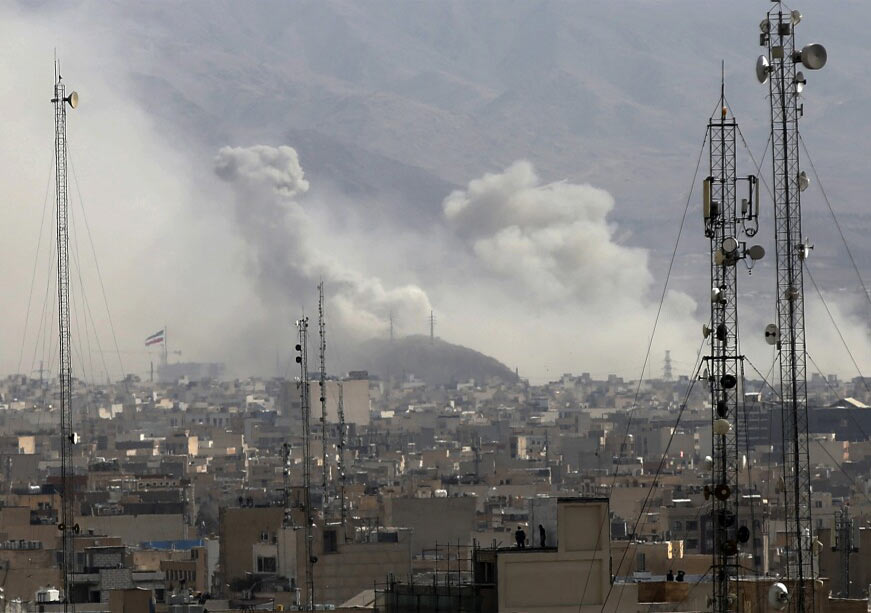
Expert Speak | 01 March, 2026
US-Israel Strikes on Iran: Experts React to “Operation Epic Fury”
On 28 February 2026, the United States and Israel launched coordinated military strikes on Iran. In an eight-minute video address, US President Donald Trump described the operation — dubbed “Operation Epic Fury” — as aimed at preventing Tehran from developing a nuclear weapon. Stating that his administration’s objective is to “defend the American people by eliminating threats,” Trump also acknowledged the risk of American casualties. Iran retaliated with strikes across the Middle East, and subsequent events culminated in the confirmed killing of Iranian Supreme Leader Ayatollah Ali Khamenei. ORF Middle East experts offer their quick takes on these unfolding developments below.
America’s Diplomatic Ruse and the Gulf’s Impossible Choice
The US-Israel strikes were not unexpected. Since January, Washington had been amassing the largest military presence in the Middle East since Operation Iraqi Freedom — the question was never if Trump would give the order, but when. This was true even as diplomacy played out: as the third round of indirect nuclear talks concluded in Geneva on February 26, Trump said he was “not thrilled,” even as Omani mediators claimed “significant progress” had been made. Unusually for a country that conducts diplomacy with discretion, Omani Foreign Minister Badr bin Hamad Albusaidi publicly declared the parties had “cracked that problem,” with Tehran agreeing to zero uranium stockpiling.
Whether Albusaidi sensed imminent danger and felt compelled to speak is debatable. What is clear is that American diplomacy was a ruse — mirroring last June’s “Operation Midnight Hammer,” when Washington struck Iranian nuclear sites after five rounds of negotiations, claimed to have “obliterated” Iran’s nuclear programme, and yet continued issuing threats.
Unusually for a country that conducts diplomacy with discretion, Omani Foreign Minister Badr bin Hamad Albusaidi publicly declared the parties had “cracked that problem,” with Tehran agreeing to zero uranium stockpiling.
The fundamental impasse was always unbridgeable: Iran could agree to halt weaponisation and reduce its enriched uranium stockpile, but it would never surrender its ballistic missile programme or dismantle its proxy network — precisely what Washington demanded it do. Strikes were the inevitable result.
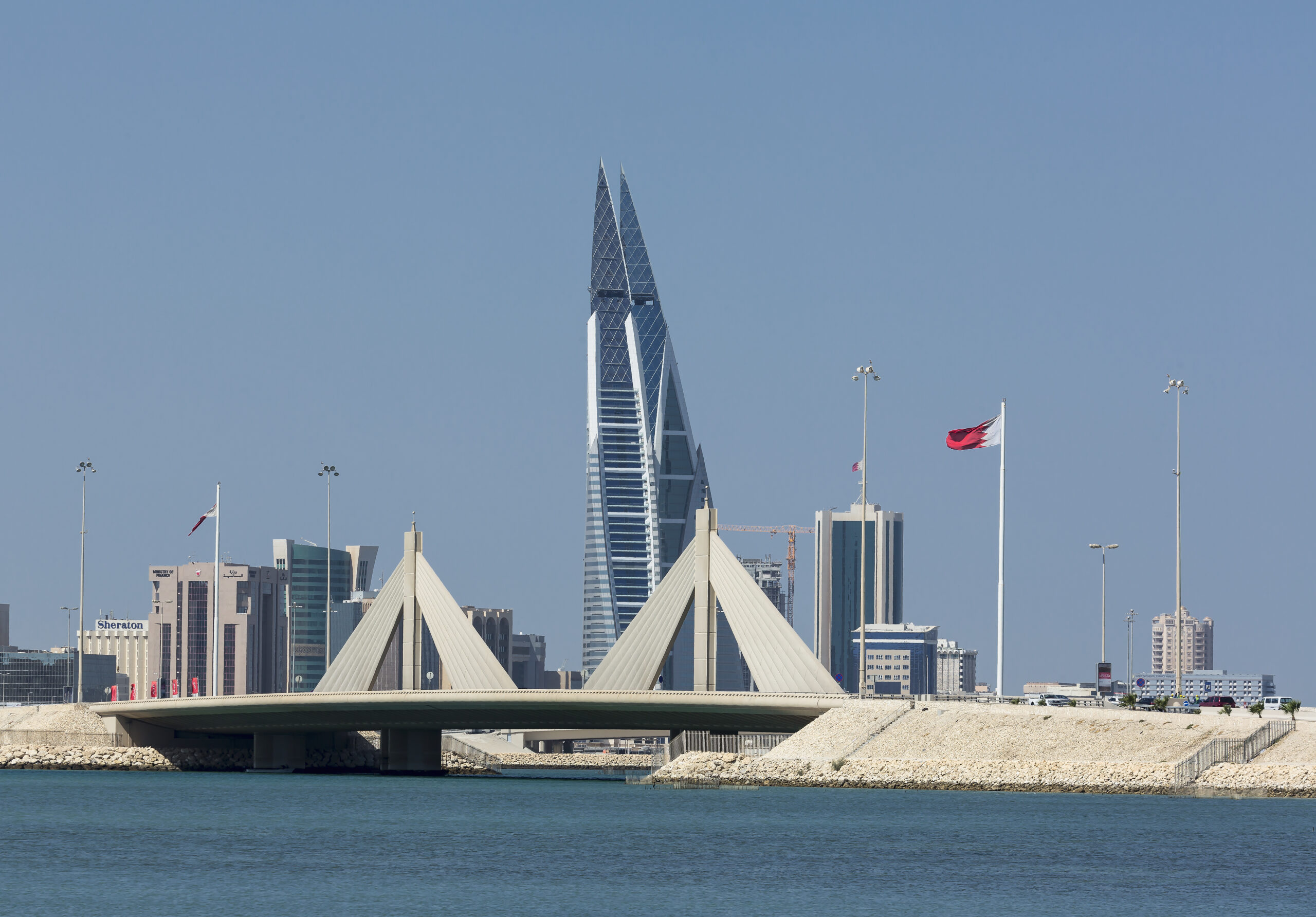
Iranian retaliation has extended beyond US bases to civilian infrastructure, with Riyadh, Bahrain’s Era Tower, and Dubai’s International Airport now in the crosshairs. With Trump calling for regime change — and Supreme Leader Ayatollah Ali Khamenei now confirmed killed — Tehran perceives this as a war of survival. This puts Gulf Arab states, which have spent years cultivating a détente with Iran, in an impossible position: pressure Washington to de-escalate, or condemn Iranian strikes and take the further step of formally aligning with the US-Israel campaign. Statements from regional capitals speak for themselves: the dismay of states with no good choices, caught between an aggressive Washington and a cornered, retaliating Tehran.
Clemens Chay, Senior Fellow, Geopolitics, ORF Middle East.
Why Iran Targeted Dubai: The Limits of Economic Deterrence
Operation Truthful Promise 4 — Iran’s retaliatory military campaign launched in response to the US-Israel strikes — was swift, calculated, and deliberately targeted. Its celerity indicates a premeditated strategy: strike where maximum global economic damage can be inflicted. Tehran chose Dubai coldly and rationally, understanding that threatening the nexus of global capital would instantly send markets into a panic and coerce the UAE to pressure Washington for immediate restraint.
For decades, Dubai has operated on one fundamental assumption: economic prosperity creates strong incentives for geopolitical stability. The emirate bet on transforming itself into an indispensable financial and logistical node. The underlying calculus was elegantly simple. Dubai reasoned that major global powers, possessing vested interests in the uninterrupted flow of capital and commerce, would collectively ensure the security of the emirate.
Tehran chose Dubai coldly and rationally, understanding that threatening the nexus of global capital would instantly send markets into a panic and coerce the UAE to pressure Washington for immediate restraint.
However, the recent escalations have exposed the inherent vulnerability of economically crafted stability when confronted by an asymmetric actor such as Iran. Facing acute domestic strain and overwhelming external attacks, Tehran recognised that anything short of a maximum impact retaliation could accelerate its collapse. For a regime fighting for survival, traditional cost-benefit analyses disintegrated.
Economic deterrence ultimately operates on shared rationality. It assumes all actors value financial preservation over ideological or existential imperatives. That premise appears to have failed. Despite the UAE ranking as one of Iran’s largest trading partners, interdependence did not restrain Tehran. For a state facing extinction, strategic constraints have become irrelevant. When survival becomes paramount, economic interdependence ceases to function as a deterrent and instead becomes a pressure point open to exploitation.
The lesson of the unfolding crisis is therefore unequivocal. When facing an adversary willing to unleash asymmetric chaos to ensure its own survival, the incentives of economic deterrence evaporate. As a result, there is no viable substitute for hard security.
Samriddhi Vij, Associate Fellow, Geopolitics, ORF Middle East.
Iran’s Closing Cycle: From Geopolitical Ascent to War of Survival
The war of survival the Iranian regime is fighting can be read through the lens of “closing cycles”: two supercycles, each comprising three sequential phases.
The first supercycle marked Iran’s consolidation of geopolitical reach along a land bridge to the Mediterranean. First, the US intervention in Iraq (2003–2011) empowered the political networks that Tehran had cultivated since the Iran–Iraq War (1980–1988). Second, from 2012 onwards, Syria’s civil war enabled Iran to entrench itself in the Levant. Third, the 2015 nuclear agreement (JCPoA) suggested the possibility of partial reintegration into the international order.
This ascent was followed by a rapid strategic reversal — the second supercycle. In 2018, Trump’s withdrawal from the JCPoA launched “maximum pressure,” reimposing sweeping sanctions. From 2020, the Abraham Accords and Azerbaijan’s victories in Nagorno-Karabakh strengthened Israel’s position in Iran’s immediate neighbourhood. After 7 October 2023, setbacks multiplied: Israel’s assassination of Ismail Haniyeh in Tehran (July 2024), the degradation of Hezbollah and the killing of Hassan Nasrallah (September 2024), the fall of the Assad regime (December 2024), and the 12-day war (June 2025). Tehran’s doctrine of “strategic patience” unravelled, leaving the regime exposed.
The US intervention in Iraq (2003–2011) empowered the political networks that Tehran had cultivated since the Iran–Iraq War (1980–1988).
The domestic arena deteriorated in parallel. Neither the “resistance economy” nor the pivot toward BRICS partners — chief among them China — could absorb the shock of sanctions. Successive waves of violently suppressed protests deepened the rupture between the regime and a society pushed to its limits.
With deterrence in shambles and diplomacy exhausted, Tehran may have concluded that confrontation was preferable to slow attrition. Nearly half a century after 1979, Iran frames this moment as a new “imposed war.” Whether the regime survives long enough to seek terms — as Khomeini once did to end the Iran-Iraq War — remains to be seen. If it does, a new, more favourable supercycle could yet emerge.
Akram Zaoui, Associate Fellow, Geopolitics, ORF Middle East.
Caught in the Crossfire: The Gulf’s Narrowing Path to De-escalation
The US-Israeli strikes on Iran, which killed several top commanders and Supreme Leader Ayatollah Ali Khamenei, have entrapped Gulf states in the crossfire of an escalating war.
Iran’s initial strikes focused on US military assets: an early strike targeted the American base in Juffair, Manama, followed by strikes on US facilities in the UAE, Saudi Arabia, Qatar, and Kuwait, with lesser success. Frustration in the Gulf has grown as attacks expanded to civilian infrastructure — hotels, residential buildings, and airports. The absence of bomb shelters and inadequate civil defence infrastructure compound the danger, with public protection largely limited to interceptions by national defence systems and instructions to shelter in place. Casualties are rising, and with them, pressure on Gulf governments to abandon their defensive, de-escalatory posture.
The absence of bomb shelters and inadequate civil defence infrastructure compound the danger, with public protection largely limited to interceptions by national defence systems and instructions to shelter in place.
Should Gulf states be drawn into the US-Israel campaign, the ramifications would be significant. Iran-aligned diaspora communities and Shia populations within the Gulf could be politically mobilised if Tehran frames the conflict as a direct war with its neighbours. Bahrain presents particular sensitivities: videos circulating on social media show Iran supporters celebrating attacks, with authorities reportedly detaining several individuals.
For now, Gulf states remain the war’s collateral damage. But they could become active participants should the cost of passivity outweigh the dangers of an Iran in transition. The immediate concern is starker still: it remains deeply unclear which channels of communication with Iran, if any, remain open.
Mahdi Ghuloom, Junior Fellow, Geopolitics, ORF Middle East.