 Global
Expert Speak | 10 March, 2026
Ten Days into the US-Israel Conflict with Iran: Experts React
Ten days into the United States (US)-Israel strikes on Iran, the conflict has entered a more entrenched phase. With air and maritime connectivity significantly disrupted and President Trump maintaining uncompromising rhetoric, Gulf leaderships find themselves navigating a precarious balance between containment and active self-defence. By 6 March, Gulf states reported more than 2,150 interceptions of Iranian drones, missiles, and fighter aircraft.
Meanwhile, Iran has moved swiftly to fill the vacuum left by Ayatollah Ali Khamenei’s assassination, with Mojtaba Khamenei — the Supreme Leader’s son — appointed as his successor, indicating the regime’s determination to project continuity despite ongoing strikes. Iranian President Pezeshkian’s 7 March apology for attacking neighbouring states had limited impact, as Gulf infrastructure continued to sustain strikes. As Israeli strikes set Iran’s oil facilities ablaze, crude prices have surged past US$100 a barrel , with the damage to energy infrastructure mirrored by volatility in global markets.
Observer Research Foundation (ORF) Middle East experts offer their concise analysis on the latest developments.
Succession in the Crossfire: Iran’s New Supreme Leader
The assassination of Ayatollah Ali Khamenei in a joint US-Israel airstrike has shaken the top echelons of the Islamic Republic for the first time since 1989. Yet the succession debate within Iran’s 88-member Assembly of Experts — a body of Shia clerics — had long been a site of intense internal power struggle.
The announcement of Khamenei’s son, Mojtaba Khamenei, as successor was unsurprising but atypical. Hereditary appointments are generally disapproved of within the clerical establishment as monarchical in character, and Mojtaba’s appointment appears to reflect wartime exigencies rather than clerical or ideological credentials. The aim is clear: to preserve continuity of power and decision-making during a moment of existential threat to the post-revolutionary order.
Little is publicly known about the new Supreme Leader, but he has operated in his father’s shadow for years and is deeply attuned to the Islamic Revolutionary Guard Corps (IRGC) — the regime’s foremost military force, which reports exclusively to the Supreme Leader and functions as a state within the state. His ties to the IRGC date back to the Iran-Iraq War, during which he served in the Habib Battalion alongside many of the officers now leading the current conflict.
Mojtaba is unlikely to be an unknown figure for Israeli and American intelligence — and both are expected to monitor closely as he and Ali Larijani — Secretary of Iran’s Supreme National Security Council and the country’s de facto wartime leader — effectively serve as Tehran’s strategic ‘think tank’ for the conflict. Within pro-regime circles, Mojtaba is expected to serve as a rallying figure and may attract broader nationalist support beyond these groups. Yet he will also inherit the sobering reality that a protracted war risks breaking the state as surely as any adversary. For now, his ascension will likely be framed within a revolutionary narrative — intensifying the conflict further and reducing the availability of potential exit strategies.
Kabir Taneja, Executive Director, ORF Middle East.
Trump’s War, America’s Burden, Israel’s Gain
Ten days in, this is clearly a conflict of attrition — one that tests which side concedes first. Tehran has deliberately expanded the conflict’s scope and cost, drawing in wider international involvement. It has demonstrated a willingness to endure: waves of missiles and drone strikes continue to emanate from the Islamic Republic, keeping neighbouring states on constant alert, even as the frequency of attacks has declined.
Between Washington and Tehran, both sides project defiance. But Iran is increasingly assuming the role of an absorber — sustaining American-Israeli assaults while continuing to launch regular strikes across the region. President Trump’s vacillating public comments suggest potential de-escalation avenues, yet his administration shows no readiness to back down — a stance that many analysts characterise as hubris.
That Republican Senator Lindsey Graham, one of Trump’s closest allies, has issued rare criticism of Israel for targeting oil facilities speaks volumes about the bind Washington finds itself in with Tel Aviv. This may be Trump’s war, but it risks becoming America’s burden — as Washington is increasingly drawn into supporting Israeli objectives. For Prime Minister Benjamin Netanyahu, this could be his most consequential war: one that, if successful, eliminates a generational adversary and reshapes the Middle East — both longstanding goals.
For Gulf states, two of which have normalised relations with Israel — Bahrain and the UAE — the war may have widened the distance from Iran, but it has also narrowed the space for new agendas with Israel, the principal beneficiary of this conflict and is positioned to emerge with the greatest strategic dominance.
Clemens Chay, Senior Fellow, Geopolitics, ORF Middle East.
Iran’s War Arithmetic: Cheap Offence Versus Expensive Defence
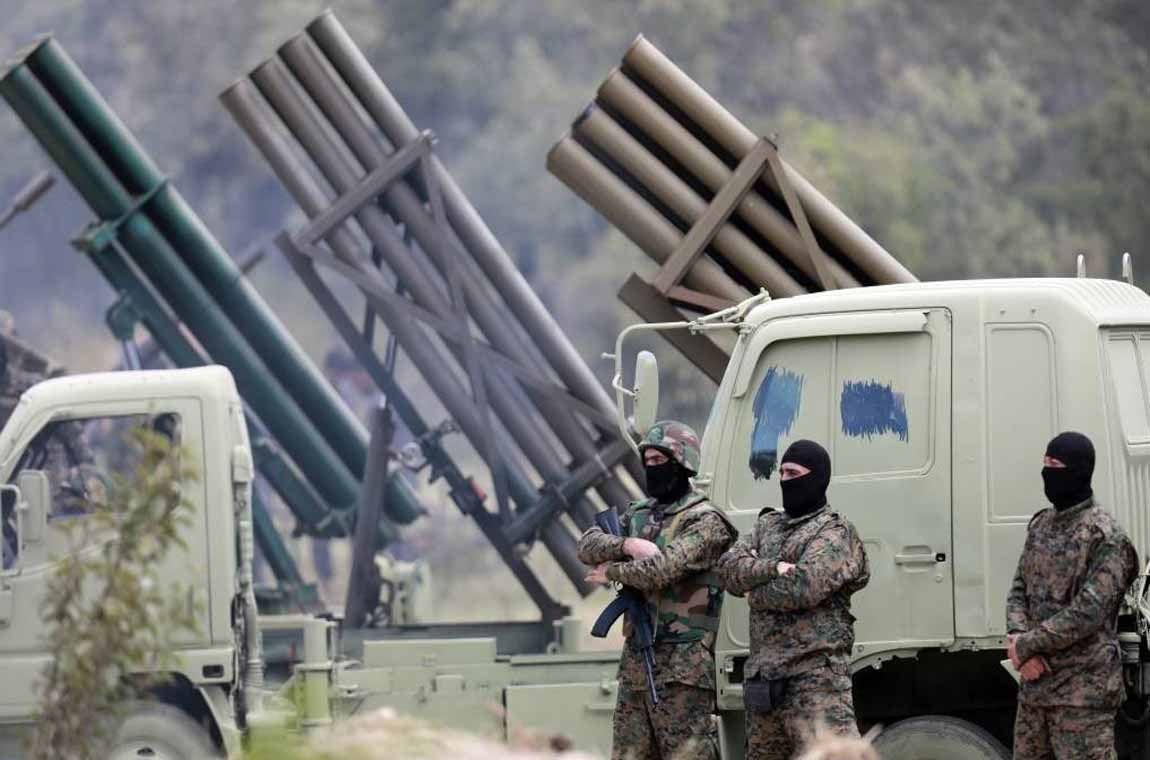
Iran is redefining the calculus of modern conflict by merging kinetic strikes with economic warfare. Rather than attempting to overpower superior military forces conventionally, Tehran is leveraging cost asymmetries to wage a calculated war of exhaustion—deploying inexpensive drones and decoys against vastly more expensive defence systems.
The arithmetic is stark. Iran’s Shahed-136 drones cost as little as US$20,000 per unit. Intercepting them forces adversaries to expend a Patriot missile at US$4 million, or a Terminal High Altitude Area Defense (THAAD) interceptor at US$12 million. This disproportionate exchange ratio places immense financial pressure on advanced militaries — the objective is not destruction but making sustained defence economically unsustainable over time.
Iran is amplifying this fiscal pressure through deception. Israeli forces recently released footage of an airstrike destroying what appeared to be an Iranian helicopter — only for analysts to identify it as a painted decoy, designed to trick attackers into expending multi-million-dollar precision munitions on a non-operational target. The reports remain unconfirmed, but if accurate, they suggest deliberate planning in deception — a calculated effort to deplete enemy resources without the use of live weaponry. The true target, in each case, is the opponent’s military budget.
The cumulative effect is by design: compelling wealthier regional adversaries to spend more resources defending their airspace than Iran invests in attacking it. Advanced defence architectures are being stress-tested not by a peer military, but by a strategy of persistent, low-cost attrition. In this paradigm, victory is not determined by territorial conquest or kinetic supremacy. It hinges on a single economic question: when facing sustained, inexpensive attrition, who exhausts its ammunition — and financial capacity — first?
Samriddhi Vij, Associate Fellow, Geopolitics, ORF Middle East.
Could War Catalyse Arab Geoeconomic Leverage?
When Iran began striking the Gulf Cooperation Council (GCC) member states — with particular emphasis on the UAE — its rationale was largely economic. The strikes were intended to inflict reputational damage worth billions of dollars, encouraging Gulf states to pressure Washington to seek an end to the conflict. Tehran calculated that GCC states would refrain from military retaliation for fear of escalation exacerbating their losses — a bet that now appears uncertain. Instead, Iran expected Gulf states to utilise their economic influence to press Washington for de-escalation.
That economic weight is considerable. GCC countries have been central to Trump’s agenda of restoring America’s “Golden Age” — illustrated by the US$3.4 trillion pledged during his May 2025 regional tour and the US$4.2 billion committed to the Board of Peace. Sovereign wealth funds have also engaged in major business deals with Trump associates, reinforcing the perception that financial ties translate into direct political access.
Yet many observers note that this geoeconomic weight has played little role in shaping Washington’s consideration of Gulf security concerns — a striking gap between financial leverage and political influence.
That may be changing. Reports of coordinated action by three Gulf states to reconsider part of their overseas investment commitments — which reportedly drew the attention of the Trump administration — served as a pointed reminder of the leverage GCC sovereign wealth can wield. Coordinated measures could amplify this significantly. As Gulf monarchies are reminded of a shared condition and destiny under military assault, deeper geoeconomic integration — potentially extending to the wider Arab world — could translate into joint investment strategies and the prioritised allocation of capital within the region, thereby transforming financial weight into genuine strategic leverage.
Akram Zaoui, Associate Fellow, Geopolitics, ORF Middle East.
Warning Systems and the Gulf’s New Normalcy
Amid ongoing waves of Iranian strikes across the Gulf, some residents have sought to evacuate, while most have stayed put — partly because flights are severely disrupted, but equally because Gulf threat warning systems have proved effective and reliable. The interception of over 2,000 Iranian drones, missiles, and projectiles is the most visible measure of this, but it does not fully account for why Iran has failed to wreak havoc across the Gulf. In the absence of bomb shelters — unlike Israel — early warning systems have been sufficiently effective to allow relatively normal daily life to continue.
Bahrain has consistently warned citizens through nationwide sirens and across all media platforms as threats arise and subside. The UAE and Qatar have relied on phone alerts. These measures were partly stress-tested — including in Kuwait — before the war, as signs of regional confrontation became apparent. A full unification of these systems across GCC states is now essential — and there are signs of this materialising, with the GCC Emergency Meeting of Crisis and Operations Officials convened on 6 March 2026.
Community shelters have been prepared in some countries, and civil defence teams have demonstrated resilience in containing fires from debris throughout the Gulf. It is the assurance of advance warning — to go indoors, away from windows — that has kept life as functional as wartime circumstances allow, sustaining economies and reducing the psychological burden of full-day sheltering.
Looking ahead, Gulf states will likely intensify investment on early warning infrastructure during and after this conflict. It has proved to be not merely a security measure, but an economic and psychological lifeline.
Mahdi Ghuloom, Junior Fellow, Geopolitics, ORF Middle East.