 Global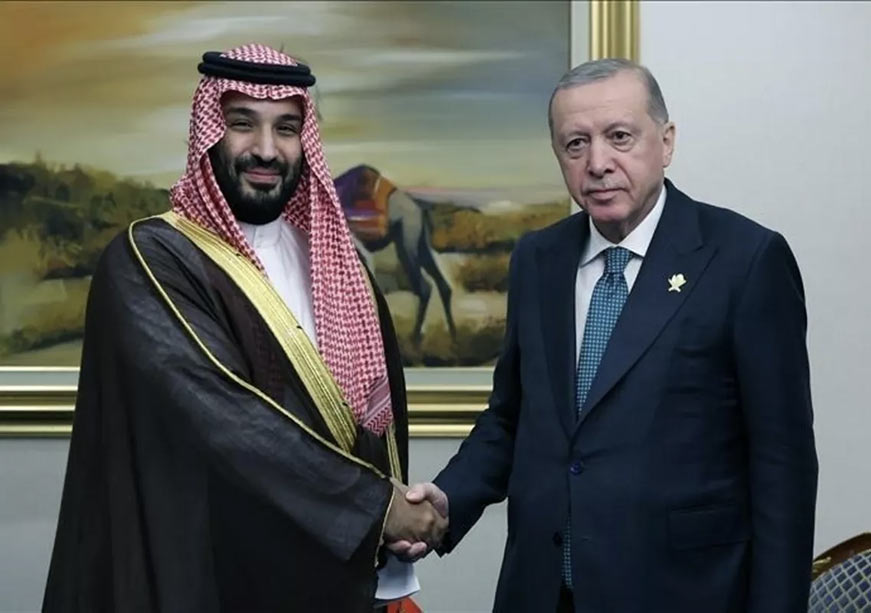
Expert Speak | 18 March, 2026
Saudi Arabia, Türkiye, and Geoeconomic Stabilisation
Spotlight
- The conflict engulfing the Middle East underscores the importance of building architectures that foster regional resilience and stability and provide alternative supply routes.
- Geoeconomics offers pathways to advance this objective and should be leveraged to structure institutionalised dialogue and expand connectivity—assets that can prove valuable in times of crisis.
- As the region’s most consequential economic actors, Saudi Arabia and Türkiye are well positioned to anchor a new geoeconomic architecture for growth, stability, and resilience.
When Turkish President Recep Tayyip Erdoğan visited Crown Prince Mohammed bin Salman of Saudi Arabia in Riyadh, on February 3 2026, the first area of bilateral cooperation highlighted in the joint statement concluding the meeting was “economy, trade, and investments”. The emphasis was not accidental. Both leaderships have largely derived their domestic legitimacy from their capacity to deliver economic transformation—an endeavour that is closely tied to the prospects of regional stability.
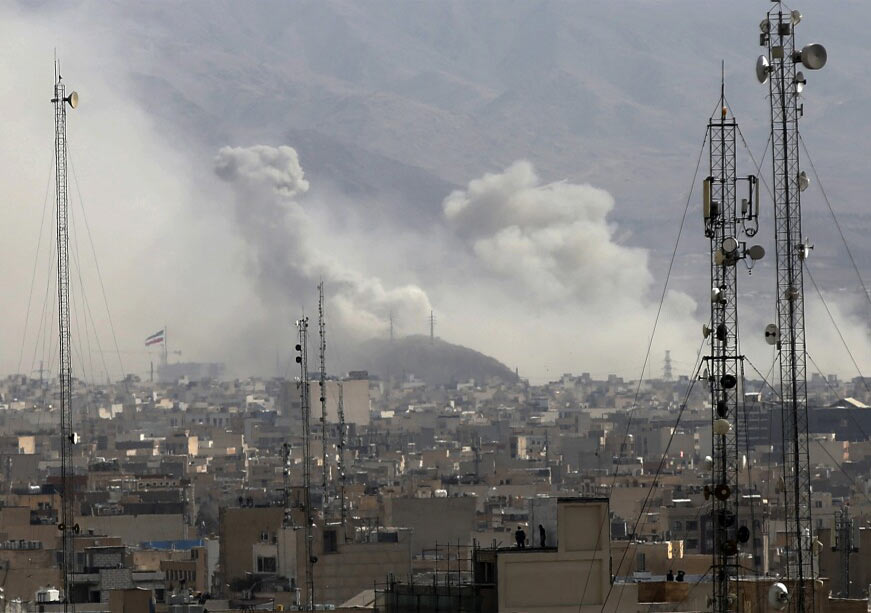
Yet, the war now engulfing the Middle East serves as a stark reminder of the destabilising effects of geopolitics on regional economies: Gulf countries have lost tens of billions of dollars in revenue, while Türkiye has faced mounting pressures on inflation, asset prices, and current account.
Beyond immediate developments over which regional states have limited control, the current context underscores the need for institutionalised mechanisms and alternative supply routes to mitigate volatility. It also provides an opportunity to advance geoeconomic integration, defined as economic integration grounded in geostrategic convergence.
Beyond immediate developments over which regional states have limited control, the current context underscores the need for institutionalised mechanisms and alternative supply routes to mitigate volatility.
Saudi Arabia and Türkiye, alongside other Gulf states, could play a pivotal role in advancing this agenda across a strategic axis stretching from the Indian Ocean to the Eastern Mediterranean and the Black Sea, with positive spillovers for the Levant—still reeling from years of crises and shocks and once again caught in the crossfire.
Regional Heavyweights, Regional Responsibilities
The economic weight of Saudi Arabia and Türkiye carries what may be described as geoeconomic responsibility towards the broader region—namely, the responsibility to leverage economic instruments to achieve positive political goals such as regional peace and security. Three factors stand out in this regard: the size of their economies, their manufacturing capabilities, and their role in global financial governance.
Türkiye and Saudi Arabia are the largest and second largest economies respectively of the Middle East. Türkiye’s nominal gross domestic product (GDP) was estimated at roughly US$ 1.6 trillion in 2025 (the 16th worldwide), whereas the Saudi output stood at close to US$ 1.3 trillion the same year (19th).
Their industrial bases are significant, positioning them as potential structuring poles for manufacturing value chains across the Levant. In 2024, Saudi Arabia and Türkiye recorded manufacturing outputs of US$ 200 billion and US$ 230 billion respectively, levels that exceeded those of larger economies such as Canada and Spain.
The scale of the two economies has propelled them into an active role in global governance, fostering not only a sense of responsibility for global commons beyond their borders, but also the technocratic capability to shape multilateral agendas. They are the two only Middle Eastern economies that are members of the G20, a 21-member body which has been central to global governance since the 2008 global financial crisis. Türkiye is a founding member of the Organisation for Economic Co-operation and Development, an international organisation that produces economic analysis and public policy recommendations for its 38 member states—primarily developed economies—and beyond. Saudi Arabia occupies a distinctive position in global financial institutions: alongside only six other major economies, it is represented by its own Executive Directors on the boards of both the International Monetary Fund and the World Bank.
Consolidation, Reform, and the Potential for Geoeconomic Dialogue
Beyond their size, three trajectories feeding into a coherent reordering of power—authority centralised at home, mobilised in service of economic transformation, and projected in the near abroad(s) and beyond—provide the foundation upon which geoeconomic engagement can be constructed.
In Saudi Arabia, King Salman’s accession to the throne in 2015 paved the way for Mohammed bin Salman’s rapid rise to the positions of Crown Prince in 2017 and Prime Minister in 2022.
Politically, consolidation has unfolded through the progressive centralisation of power. President Erdoğan has secured no fewer than seventeen nationwide electoral victories since 2002. In Saudi Arabia, King Salman’s accession to the throne in 2015 paved the way for Mohammed bin Salman’s rapid rise to the positions of Crown Prince in 2017 and Prime Minister in 2022.
On the economic front, both heads of government share a national-developmentalist conception of the social contract resting on the promise of achieving ambitious economic targets articulated through national “visions”, such as Saudi Vision 2030 and the “Century of Türkiye” agenda. These visions have translated into high investment rates, largely driven by construction and public spending in infrastructure. Gross fixed capital formation reached 31% of GDP in Türkiye—the second highest share among major economies after China—and 29% in Saudi Arabia, a level equivalent to that of Indonesia, in 2024.
In foreign policy, heightened ambition and growing self-confidence have translated into greater assertiveness, often with a distinct geoeconomic dimension. In Libya, Türkiye’s 2019 agreement with the internationally-recognised, Tripoli-based government provided a legal and geoeconomic rationale for its intervention, securing maritime claims in the Eastern Mediterranean while reopening prospects for hydrocarbon exploration and construction contracts. For both Saudi Arabia and Türkiye, other markers of international ambition abound in geoeconomically salient domains such as global air connectivity, participation in development assistance, and engagement with the Global South, notably Africa and emerging Asia.
Towards Interoperable Domestic Geoeconomic Architectures
Over time, Saudi Arabia and Türkiye authorities have established pillars of economic statecraft that may facilitate their geoeconomic interlocution and support a stabilising role.
First, both countries have cultivated technocratic elites who could serve as essential intermediaries in an institutionalised geoeconomic dialogue. Türkiye has a strong tradition of economic expertise, exemplified by internationally recognised figures such as Daron Acemoglu, Dani Rodrik, and Kemal Derviş. Following President Erdoğan’s victory in the 2023 general elections, the reappointment of economist Mehmet Şimşek as Minister of Finance reassured investors of a return to greater macroeconomic orthodoxy. In Saudi Arabia, over the management of more than one-sixth of global proven oil reserves and the revenues derived from fossil fuel trade has necessitated the development of sophisticated expertise in energy, finance, and law.
Second, sovereign wealth funds (SWFs), often regarded as the geoeconomic instruments par excellence, represent a powerful avenue for fostering Saudi-Turkish convergence, particularly given the recent evolution of both countries’ sovereign investment ecosystems. Since 2015, Saudi Arabia has transformed the Public Investment Fund as the main tool of Vision 2030 and placed it under the aegis of the Council for Economic and Development Affairs chaired by Mohammed bin Salman. Türkiye joined the cohort of countries with a SWF created in 2016 – the Türkiye Wealth Fund (TWF) is now reportedly as large as Abu Dhabi’s Mubadala. Coordinated strategic sectoral investments in co-localised defence, manufacturing, research, and start-up ecosystems could enable SWFs to serve as anchors of long-term and strategic integration between the two economies.
Saudi Arabia has transformed the Public Investment Fund as the main tool of Vision 2030 and placed it under the aegis of the Council for Economic and Development Affairs chaired by Mohammed bin Salman.
Third, connectivity represents a major avenue for geoeconomic integration, as the Middle East seeks to position itself as a hub at the confluence of Eurasia and the Indo-Pacific. Two projects have the potential to contribute to a deeper integration from the Gulf to the Eastern Mediterranean and Black Sea. The first route is the 1,200-km, US$ 25-billion Development Road, promoted by Iraq as a way to connect Europe to Asia. The second is the land corridor connecting Türkiye to the Gulf via Syria and Jordan, which is expected to reopen in 2026. If regional powers are able to channel their ambitions through mechanisms and platforms that foster healthy co-opetition, the change of regime in Syria still has the potential to act as catalyst for regional dialogue and integration and a significant source of cooperation among Middle Eastern states.
An Arab-Turkish Commonwealth for Regional Stability
The three pillars of a geoeconomic dialogue between Saudi Arabia and Türkiye outlined can be expanded to the wider region. Qatar and the United Arab Emirates (UAE) provide instructive examples: both have institutionalised head-of-state–level dialogue mechanisms with Ankara, expressed commitment to the Development Road initiative, and deployed their SWFs across diverse Turkish assets, including through partnerships with the TWF. In 2025, Qatar and Türkiye joined the UAE-led Integrated Industrial Partnership for Sustainable Economic Development, an initiative that also includes Bahrain, Egypt, Jordan, and Morocco as members.
In 2025, Qatar and Türkiye joined the UAE-led Integrated Industrial Partnership for Sustainable Economic Development, an initiative that also includes Bahrain, Egypt, Jordan, and Morocco as members.
Such arrangements should be complemented by a broader regional geoeconomic architecture composed of active and ambitious platforms, co-led and co-owned by regional states, and structured around key themes of geoeconomic relevance such as climate adaptation, critical infrastructure, cybersecurity, defense, financial stability, food security, health, innovation, logistics and trade.
While attention remains focused on the immediate consequences of the war engulfing the region and the closure of the Strait of Hormuz, and confidence between Gulf states and Iran has eroded, the crisis underscores the strategic importance of deeper integration across the landmass spanning the Arabian, Mediterranean, and Red Seas. The area requires far greater collective investment to foster a more resilient Middle East.
Akram Zaoui is an Associate Fellow, Geopolitics at ORF Middle East.