 Global
Occasional Paper | 31 March, 2026 Download Report (PDF)
Rethinking Resilient Food Systems: Mitigating Food Supply Chain Shocks in the MENA Region
Food systems in the Middle East and North Africa (MENA) region face various structural vulnerabilities and external shocks due to the region’s high dependence on food imports, exposure to geopolitical tensions, resource scarcity, and rising fiscal pressures, which have made food supply chains increasingly fragile. Recent bottlenecks caused by conflicts, commodity price volatility, and logistics and climate-related stresses have underscored the urgency of building resilient food systems. This paper explores the risks confronting food supply chains in the MENA region and evaluates pathways to strengthen resilience through the Drivers–Pressures–State–Impact–Response (DPSIR) framework. The paper offers policy recommendations that emphasise diversified sourcing corridors, resilient logistics and storage networks, enhanced regional cooperation, improved risk-financing mechanisms, climate-adaptive domestic production, and stronger food governance systems.
Attribution: Shruti Jain and Leigh Mante, “Rethinking Resilient Food Systems: Mitigating Food Supply Chain Shocks in the MENA Region,” ORF Occasional Paper No. 532, Observer Research Foundation, March 2026.
Introduction
Food security exists when all people have continuous physical and economic access to sufficient, safe, and nutritious food that meets dietary needs and preferences for a healthy life.[1] It is defined by four pillars: 1) the physical availability of food; 2) economic and physical access to food; 3) food utilisation; and 4) the stability of these components over a period of time. Achieving food security relies on maintaining the integrity of food systems—the interconnected elements and activities involved in the production, processing, distribution, and preparation of food.[2] As these systems are increasingly vulnerable to disruptions, the concept of food system resilience—the capacity to provide sufficient, appropriate, and accessible food over time and across levels in the face of shocks—becomes critical. [3]
In the Middle East and North Africa (MENA), food system resilience is under constant pressure. The region is home to approximately 519 million people and is projected to grow at an annual rate of 1.7 percent, with populations increasingly shifting from rural to urban areas.[4],[5],[6] The region has long suffered from food insecurity due to limited arable land and water resources, geopolitical tensions and conflict, economic instability, structural poverty, and intensifying climate shocks. Together, these factors increase reliance on food imports and expose the region to disruptions in trade corridors, constraining access to safe, affordable, and nutritious food. Food supply chain shocks refer to external disruptions that restrict food availability, access, and nutrition, either temporarily or over prolonged periods.[7]
Differences in economic development and political stability across MENA countries shape their existing capacities to absorb and adapt to shocks in the food supply chain. Given the rise and prolonged duration of regional conflicts, combined with aggravated droughts and water scarcity, strategising how to maintain food system resilience amidst external shocks is crucial.
Table 1: MENA Countries: Overview
| Country | Population, Total (2024) | Income-Level and Fragility (World Bank) | Oil-Importer/Oil-Exporter Status | Global Food Security Index 2022 Ranking out of 113 | Employment in Agriculture (% of Total Employment) | Agriculture, Forestry, and Fishing (Value Added to GDP) |
| Algeria | 46,814,308 | Middle-Income | Developing Oil Exporter | 68 | 9% (2023) | 13.1 % (2023) |
| Bahrain | 1,588,670 | High-Income | Oil Exporter | 38 | 1% (2023) | 0.3% (2023) |
| Djibouti | 1,168,722 | Middle-Income | Developing Oil Importer | – | 1% (2023) | 2.6% (2024) |
| Egypt | 116,538,258 | Middle-Income | Developing Oil Importer | 77 | 19% (2023) | 13.7% (2024) |
| Iran | 91,567,738 | Middle-Income | Developing Oil Exporter | – | 14% (2023) | 13% (2024) |
| Iraq | 46,042,015 | Middle-Income with Conflict | Developing Oil Exporter | – | 8% (2023) | 3.4% (2024) |
| Israel | 9,974,400 | High-Income | – | 24 | 1% (2023) | 1.3% (2024) |
| Jordan | 11,552,876 | Middle-Income | Developing Oil Importer | 47 | 3% (2023) | 5.1% (2024) |
| Kuwait | 4,973,861 | High-Income | Oil Exporter | 50 | 2% (2023) | 0.5% (2024) |
| Lebanon | 5,805,962 | Middle-Income with Conflict | Memorandum | – | 3% (2023) | 1.0% (2023) |
| Libya | 7,381,023 | Middle-Income with Conflict | Memorandum | – | 9% (2023) | 1.7% (2024) |
| Malta | 574,346 | High-Income | – | – | 1% (2023) | 0.2% (2023) |
| Morocco | 38,081,173 | Middle-Income | Developing Oil Importer | 57 | 30% (2023) | 10.1% (2024) |
| Oman | 5,281,538 | High-Income | Oil Exporter | 35 | 6% (2023) | 2.6% (2024) |
| Qatar | 2,857,822 | High-Income | Oil Exporter | 30 | 2% (2023) | 0.3% (2024) |
| Saudi Arabia | 35,300,280 | High-Income | Oil Exporter | 41 | 3% (2023) | 2.5% (2024) |
| Syria | 24,672,760 | Low-Income with Conflict | Memorandum | 113 | 15% (2023) | 43.1% (2022) |
| Tunisia | 12,277,109 | Middle-Income | Developing Oil Importer | 62 | 13% (2023) | 9.3% (2023) |
| United Arab Emirates | 10,876,981 | High-Income | Oil Exporter | 23 | 1% (2023) | 0.7% (2023) |
| The West Bank and Gaza | 5,289,152 | Middle-Income with Conflict | Developing Oil Importer | – | 6% (2022) | 5.7% (2022) |
| Yemen | 40,583,164 | Low-Income with Conflict | Memorandum | 111 | 29% (2023) | 28..7% (2018) |
Source: Authors’ own, using data from the World Bank[8],[9],[10] and Economist Impact[11]
Methodology
The geographical scope of the MENA region in this paper includes Algeria, Bahrain, Djibouti, Egypt, Iran, Iraq, Israel, Jordan, Kuwait, Lebanon, Libya, Malta, Morocco, Oman, Qatar, Saudi Arabia, Syria, Tunisia, the United Arab Emirates, the West Bank and Gaza, and Yemen. The region is analysed using the World Bank’s cross-sectional classifications of income, hydrocarbon status, and conflict; (1) higher-income countries, including Qatar, the UAE, Kuwait, Saudi Arabia, Bahrain, and Oman; (2) middle-income countries, including developing oil-exporting Algeria and Iran and oil-importing Jordan, Egypt, Tunisia, Morocco, and Djibouti; (3) middle-income, conflict-affected countries, including oil-exporting Libya and Iraq and oil-importing Lebanon and the West Bank and Gaza; and (4) low-income, conflict-affected countries, including Syria and Yemen (see Table 1).
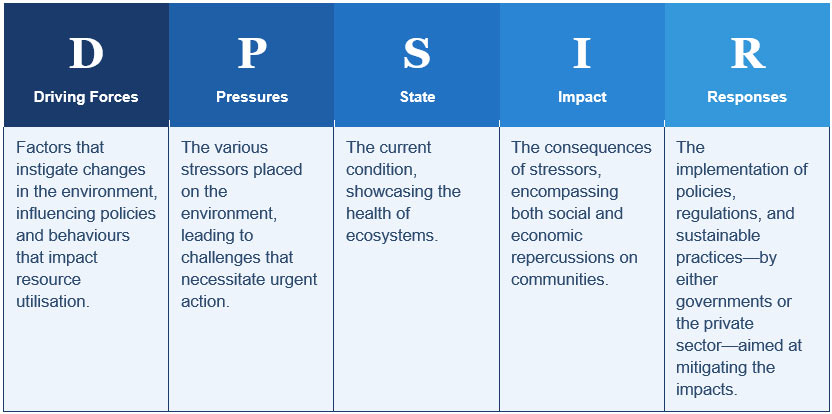
The paper utilises the DPSIR framework (Driving Forces–Pressures–State–Impact–Responses) to evaluate factors influencing MENA’s food supply chain shocks and responses. This framework links environmental stressors to market-led shocks, which affect food supply chain stability in the region. Driving forces include structural environment that render MENA’s food systems vulnerable, such as demographic trends, agro-climatic conditions, the food-energy-water nexus, and political economy dynamics. Pressures that impact affordability, access, and availability arise from external events such as geopolitical conflicts and pandemics.
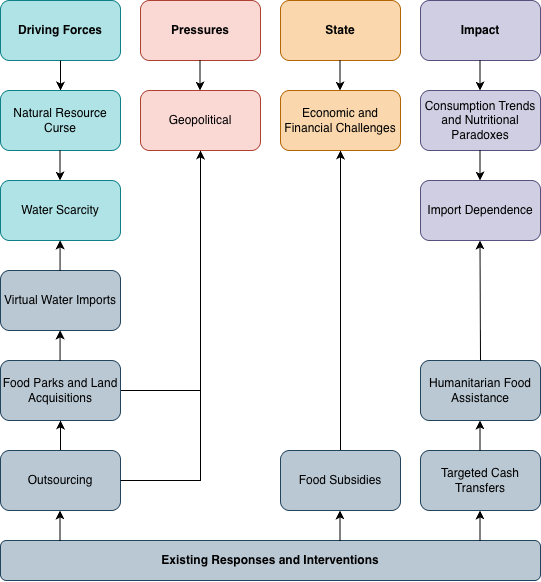
The paper utilises the World Bank’s Logistics Performance Index variables to measure trade and logistics pressures, such as shipping disruptions, and chokepoints, varying across MENA countries. The ‘state’ measures the present conditions following the environmental stressors, including economic and financial challenges affecting food inflation and storage losses. ‘Impact’ includes economic macro-implications, such as rising energy consumption for access to potable water, nutritional trends, high import bills, longer shipping durations, and food wastage. ‘Responses’ measures the current mechanisms that reduce pressures and mitigate impacts—this includes food and water import diversification, logistics capacity building, price stabilisation, and resource optimisation. Based on these findings, the paper suggests policy recommendations tailored to MENA countries.
Figure 1: DPSIR Framework
Source: Authors’ own
Figure 2: DPSIR Methodology
Source: Authors’ own
Structural Vulnerabilities and Contextual Realities Shaping MENA Food Systems
Water Scarcity
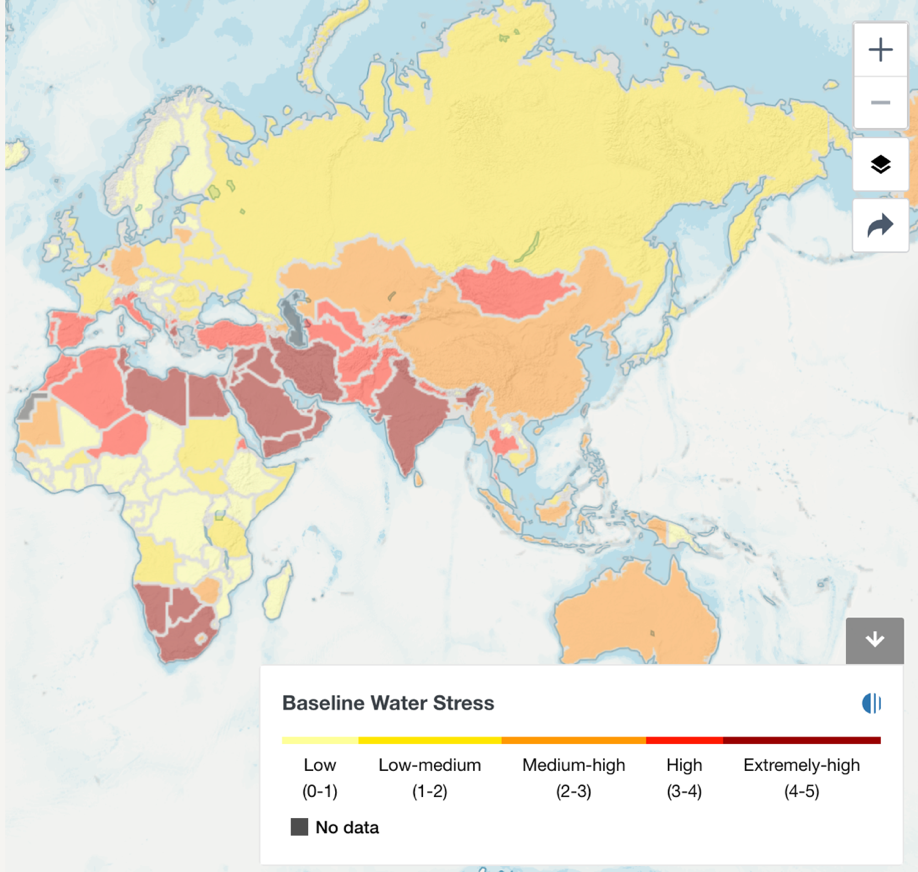
The MENA region faces acute water scarcity, driven by climate change and its limited share—around 1 percent—of global freshwater resources.[12] Rising demand from agriculture, industrialisation, energy production, and urbanisation is placing increasing stress on water supplies, with consumption in Gulf Cooperation Council (GCC) countries exceeding 500 litres per person per day.[13] Some of the most water-stressed countries include Kuwait, Cyprus, Oman, Qatar, and Bahrain.[14] By 2050, it is estimated that two-thirds of MENA countries will have less than 200 cubic meters of renewable water resources per capita per year, compared to 7,000 cubic meters in other regions.[15]
Figure 3: Water Stress Rankings
Source: Aqueduct Country Rankings[16]
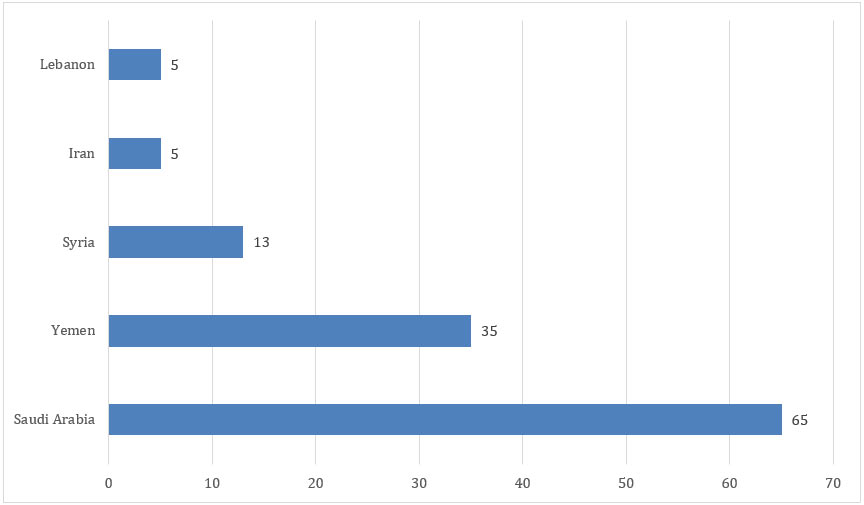
Water scarcity in the MENA region is undermining food systems. As approximately 70 percent of agriculture is rain-fed, water scarcity leads to an overall decline in agricultural production and changes in crop types.[17] Saudi Arabia is projected to have the largest losses in agricultural productivity, with about a 65 percent reduction from current levels by 2050.[18] In the same period, the Republic of Yemen and the Syrian Arab Republic are projected to lose 35 percent and 13 percent of their agricultural production. Similarly, Iran and Lebanon will lose about 5 percent of their production. Water scarcity will also impact the crop baskets, with the replacement of staples with less water-intensive crops. For instance, the government of Egypt has reduced the legal rice cultivation area due to water shortages and Saudi Arabia plans to phase out wheat and corn production to secure water availability.[19] Water scarcity’s impact on the agricultural sector has also extended to the livelihoods of the producers, especially smallholder farmers. It has been observed to potentially trigger migration in the MENA region to urban centres.[20]
Many MENA countries currently rely on desalinated water for immediate consumption. Saudi Arabia holds some of the world’s largest desalination plants, including the Al Jubail facility, which produces over 1.4 million cubic meters of water daily. The Saline Water Conversion Corporation produces about 20 percent of the world’s desalinated water.[21] Increased adoption of desalination, however, has drawbacks; foremost is the increase in salinity levels in the Gulf and Red Sea, which has a detrimental impact on the marine biodiversity, species persistence, fisheries, and coastal communities. Moreover, desalination leads to heightened use of energy—Saudi Arabia alone consumes about 300,000 barrels of oil per day to power the plants.[22] Additionally, the large, fixed nature of desalination facilities and their integration into industrial and domestic systems heightens their vulnerability to kinetic attacks, as demonstrated in the Israel-US-Iran conflict.[a],[23] Therefore, the region must look at long-term sustainable solutions to address growing water scarcity concerns.
Figure 4: Agricultural Production Losses by 2050
Source: World Bank, 2023[24]
The Natural Resource Curse
Certain North African countries are endowed with fertile land and free-flowing water resources, yet this has reinforced the ‘resource curse’, increasing the risk of conflict over resource governance, inhibiting progress towards resilient food systems, and heightening water insecurity.[25] Transboundary management and control of the region’s scarce water resources have historically represented a centre of geopolitical competition. The Nile River, which flows through Ethiopia and Egypt, exemplifies these tensions, with competing national demands. Despite dialogue coordination efforts led by the African Union, the European Union, and the US, the countries failed to close a binding agreement. Ethiopia prefers a flexible and sovereign approach to dam management, while Egypt prefers fixed legal guarantees.[26] Amidst the diplomatic gridlock, Ethiopia inaugurated its Grand Ethiopian Renaissance Dam (GERD) in 2025, which it pursued unilaterally to secure a domestic and exportable power source, support domestic agriculture, and enhance regional influence. However, the dam poses risks to downstream water access in Egypt and Sudan. Egypt’s agriculture sector consumes 79 percent of Egypt’s freshwater withdrawals. Given projected population increases in Egypt coupled with increasing drought, domestic water shortages are expected to intensify.[27]
Despite access to land and water resources for agriculture, these countries have fallen short in developing holistic food systems due to a manifestation of the resource curse combined with external influence. Donors and the global community have encouraged policies that favour monocropping strategies for cash crop exports, which have depleted water as well as land grabbing, where land is transferred from smallholder farmers to foreign investors and enterprises.[28],[29] These strategies have historically dominated the MENA region’s food security agenda, as seen in Morocco and Tunisia. Land monopolisation for the commercial production of hybrid non-local varieties has exhausted soil and depleted water availability in Morocco. Likewise, the influx of agricultural investments in the Tunisian village of “El-Ititez 1” for jojoba production and export has depleted land and water.[30]
Pressures: Headwinds for Food Security and Food System Resilience
Geopolitical Impacts and Tensions
The rise in global shocks, including the COVID-19 pandemic and geopolitical tensions like the Russia-Ukraine war and US-Israel-Iran conflict, has threatened food value chain stability and negatively impacted household capacity to cope, leading to compromised nutritional outcomes. MENA countries exhibit varying degrees of vulnerability to food supply chain shocks, depending on political-economic instability, hydrocarbon dependency, and food import percentages.
- COVID-19 Pandemic
The COVID-19 pandemic destabilised food value chains on both the supply and demand sides and increased food prices. Although countries experienced similar impacts, such as labour and raw material shortages, the severity of impacts is distinguishable between high- and middle- to lower-income countries.[31] During the pandemic, high-income countries experienced supply-driven impacts such as logistical bottlenecks and supply chain disruptions, while lower-income countries saw demand-driven impacts as a result of a loss of income and increased linkages to poverty, which reduced their purchasing power and altered their capacity to make nutritious food consumption choices.[32]
In the MENA region, the beginning of the pandemic affected food availability less than during the 2008 economic crisis. Conversely, food security dimensions of accessibility and utilisation shifted to a much larger extent. Food accessibility was restricted by changes in food transport costs, food assistance distribution mechanisms, and food shortages in supermarkets and compounded by economic uncertainty, abrupt job losses, and food price hikes.[33] This relationship was more pronounced in lower-income countries, which experienced greater income-responsiveness due to rising poverty and reduced income levels, contributing to a contraction in food consumption demand.[34] To illustrate, the pandemic contributed to over 10 million full-time job losses in the MENA region, influencing household capacity to adapt to changes in food prices.[35]
- Russia’s War in Ukraine and US-Israel Conflict with Iran
Russia’s war in Ukraine exacerbated food insecurity already intensified by the COVID-19 pandemic and ongoing interregional political instability, conflict, or economic reform. Following the invasion, prices of food commodities and fertiliser surged, as both are major exporters of wheat, maize, rapeseed, sunflower seeds, and sunflower oils, as well as key fertiliser macronutrients. [36],[37] The ongoing US-Israel-Iran conflict threatens to replicate patterns observed during the Russia-Ukraine war.
The Russia-Ukraine war has resulted in rising energy prices further exacerbating fertiliser costs, since natural gas is essential for its production.[38] Likewise, delays in Liquefied Natural Gas (LNG) production and the closure of the Strait of Hormuz as the US and Israel attacked Iran on 28 February immediately raised Middle East urea prices.[39] Furthermore, countries deploying modern technologies to optimise agricultural operations are also experiencing increased costs because of the Russia-Ukraine war since technologies rely on stable energy resources.[40] In the short-term, higher oil prices and fuel shortages have raised production costs, contributing to increased food prices.[41]
MENA’s reliance on Ukraine for nearly one-third of its cereal imports heightened vulnerability to supply disruptions.[42] However, food availability vulnerabilities varied according to the political and economic context of each country. Middle-income countries like Algeria and Jordan experienced moderate vulnerability due to lower export dependence levels. They responded to the shock by diversifying trade partnerships to maintain the trade flow of staple cereal products.[43] Developing oil-importing countries like Egypt and Tunisia were moderately vulnerable due to high import dependence rates compounded by growing populations in Egypt and internal political conflicts in Tunisia. They overcame food availability pressures by expanding food storage capacities and wheat production infrastructure or securing food aid from Gulf states.[44] Lower- to middle-income countries with conflict, like Lebanon, Libya, and Yemen, were highly vulnerable to the crisis due to multiplied effects from internal political-economic instability and food aid reliance which was entangled in delayed shipments.[45]
Conflicts within MENA can damage infrastructure, impose roadblocks or sanctions, and disrupt the movement of goods, weakening food supply chains. For example, the closure of key maritime chokepoints during the Israel-US-Iran conflict compromised agricultural deals, leaving exports headed to MENA stranded at port due to heightened freight costs.[46] Food also becomes less accessible in conflict zones. Increasing political instability can lead to neglect of the agriculture sector, resulting in a lack of support for farmers seeking agricultural support, credit, or insurance.[47]
Current Scenario of the MENA Economies
- Economic and Financial Challenges
As MENA countries are high food importers, geopolitical pressures and external shocks to food value chains can impact domestic food prices. Domestic food prices in the region are also vulnerable to currency depreciation, especially for conflict-prone areas such as Yemen and Lebanon, as a weaker local currency increases retail food prices and reduces disposable incomes. For instance, due to ongoing conflicts and climate effects in Lebanon, the average food inflation in 2025 remained as high as 23.9 percent.[48]
Crude oil and agricultural commodity prices are closely correlated, as oil is a key input in agricultural processing and transportation.[49] Higher oil prices spill over to higher prices for transport and fertiliser, which leads to an increase in retail food prices. Volatility in oil prices can directly affect the countries’ exchange rates, fiscal capacity, and subsidies. Thus, with decreasing oil prices for oil exporters such as Algeria or Iraq, currency weakness and spikes in food inflation were observed.[50] Additionally, a correlation between biofuel and crude oil prices was established, in which biofuel became more competitive as crude oil prices increased—leading to higher food prices, particularly for sugar, maize, and vegetable oils.[51] To combat high inflation, several MENA countries have resorted to high food subsidies, which impact fiscal costs in the long term.[52] Countries such as the UAE, Algeria, and Egypt adopted new price ceilings and loosened import restrictions, which eased domestic inflation but came at a cost of declining government revenue.[53]
Table 2: Food Inflation in Select MENA Countries 2025
| Country | Food Inflation 2025 (Year on Year %) |
| Lebanon | 23.9 |
| Egypt | 6.9 |
| Tunisia | 5.7 |
| Morocco | 0.4 |
| Jordan | 0.8 |
| Saudi Arabia | 1.5 |
| UAE | 0.4 |
Source: Trading Economics[54]
Investment in agriculture and food value chains is crucial to ensure food system resilience. It creates multiplier effects for allied sectors and enhances food production efficiency. Sector investments improve food supply chains, promoting regional and international connectivity.[55] In most MENA countries, however, food security is threatened by insufficient public and private investment in agriculture. For North African countries, the average share of agriculture in government expenditure is above the global average; however, this number is relatively small when considering the share of agriculture in the region’s Gross Domestic Product (GDP). The Food and Agriculture Organization’s Agriculture Orientation Index (AOI)[b] indicates that, except for Kuwait, all MENA countries demonstrate lower agriculture expenditure than their GDP weight. On average, the AOI for North African countries remains low, while the index remains highest in three Gulf Cooperation Council (GCC)[c] countries—Kuwait, the UAE, and Bahrain.[56] Lebanon, Algeria, and Egypt have some of the lowest AOI in the region.
In addition to investment in agriculture and agricultural value chains, rapid climate change in MENA requires scaling up adaptation finance for the adoption of climate-smart agriculture (CSA). In the region, the main source of funding is public, in the form of grants and funds. The fund, however, has been primarily targeted at mitigation rather than adaptation, which is required for the adoption of CSA.[57] While a large percentage of farmland was under small-scale management, only about 1.5 percent of climate finance was received for small-scale agri-food systems in the region.
Table 3: AOI Index for MENA Countries
| Country | AOI Index (2019-21) |
| Algeria | 0.20 |
| Bahrain | 0.58 |
| Egypt | 0.11 |
| Iran | NA |
| Iraq | NA |
| Jordan | 0.13 |
| Kuwait | 1.18 |
| Lebanon | 0.08 |
| Libya | NA |
| Mauritania | 0.25 |
| Morocco | 0.30 |
| Oman | 0.25 |
| Qatar | NA |
| Saudi Arabia | 0.31 |
| Sudan | NA |
| Syrian Arab Republic | 0.23 |
| Tunisia | 0.35 |
| United Arab Emirates | 0.61 |
| Yemen | NA |
| Somalia | NA |
Source: FAO[58]
Impact of the Drivers and Pressures on Food Resilience in MENA
- Import Dependence
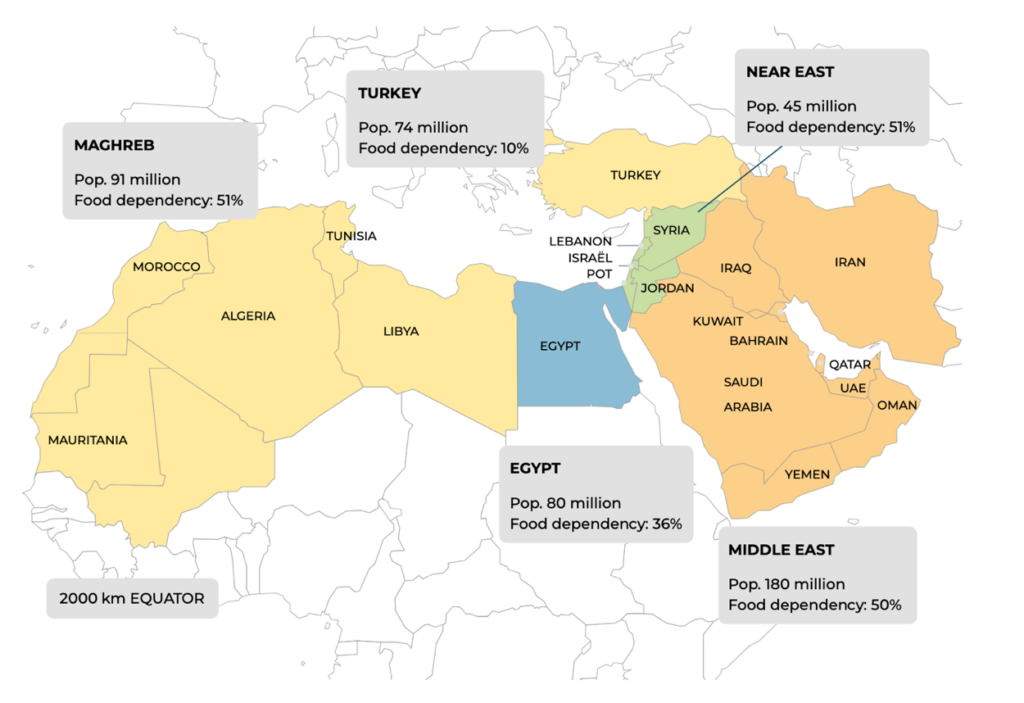
Climate change-driven impacts on lower agricultural production in the MENA region accounted for a rise in food prices. As food demand remains inelastic, an increase in food prices will not lower its demand. In order to match the reduction in supply and fulfil its domestic consumption, the MENA region is increasingly turning to imports.[d],[59] In 2024, the GCC countries imported US$60 billion worth of agri-food and seafood, with an annual growth rate of 6.7 percent. Among the exporters, India was the largest supplier with 12.6 percent of exports, followed by Brazil with 11 percent, the US with 5.7 percent, and the Netherlands with 7.8 percent export share.[60]
There is a growing gap between agricultural supply and demand in the region. The region already has one of the highest cereal dependencies in the world, which is coupled with growing food subsidies and decreasing availability of land and water. Figure 5 shows the share of kilocalories consumed that are sourced from imports. A decrease in agricultural production in the region could lead to a loss of about US$50 billion in net agricultural exports by 2050.[61] Growing import dependence could also expose the region to price volatility, as MENA countries would be susceptible to geopolitical and global climate shocks.
Figure 5: Share of Kilocalories Supplied by Imports in MENA Countries
Source: INRAE, CIRAD[62]
- Consumption Trends and Nutritional Paradox
Urbanisation, geopolitical risks, and income growth have reshaped consumption patterns in the MENA region.[63] Urban households with higher disposable incomes consume more processed food, fats, sugar, fruits, vegetables, dairy products, and animal-sourced proteins; in rural households, diets still include staples such as maize, rice, millet, and cassava.[64] This implies that the dietary consumption patterns of rural households are more at risk of getting impacted by growing environmental stressors, leaving them with limited alternatives for their nutritional intake. Additionally, with greater dependence on processed food through imports, diets have become less micronutrient-rich and more calorie-dense, especially among children and adolescents.[65]
The MENA region also faces a double burden of malnutrition, driven by unequal access to nutritious food: undernutrition persists in rural communities and North African countries, while obesity is more prevalent among middle- and upper-income groups in urban centres and Gulf countries.[66] According to the FAO, around 52 million individuals in the region face chronic undernutrition, while 58 percent of adults are obese.[67] The MENA region also displays extremes in the food security spectrum—while the UAE and Israel perform well with scores above 74 in the Food Security Index 2022, Syria and Yemen are the worst-performing countries globally with scores of 36.3 and 40.1.[68]
Evaluation of Existing Response Mechanisms
1. Supply-Driven Responses from Oil-Exporting Countries
Given high food import dependencies, several GCC countries have outsourced their food production through land acquisitions and diversified trade partnerships. Gulf countries such as the UAE, Saudi Arabia, Qatar, and Kuwait have acquired over half a million hectares in several African economies such as Sudan, Egypt, and Ethiopia.[69] Table 4 indicates the current size under contract for crops in several GCC countries, with UAE and Saudi Arabia emerging as leading investors in African land deals. Explorations to expand the UAE’s footprint in farm deals are also ongoing in Latin America—UAE-based investors are exploring land deals in Mexico and Colombia.[70]
Table 4: Land Deals for Crops in Africa by GCC Countries (in Ha)
| Country | UAE | Saudi Arabia | Qatar | Kuwait |
| Egypt, Arab Rep. | 119331 | 42000 | Nil | Nil |
| Ethiopia | 11000 | 322286 | Nil | Nil |
| Namibia | 220 | Nil | Nil | Nil |
| Sierra Leone | 23500 | Nil | Nil | Nil |
| Sudan | 65400 | 21271 | 203081 | 189777 |
| Morocco | 561 | 1200 | Nil | Nil |
| Congo, Rep. | 19000 | Nil | Nil | Nil |
| Kenya | Nil | 40468 | 40000 | Nil |
| Mauritania | Nil | Nil | 3200 | 3200 |
| Algeria | Nil | Nil | 1811 | Nil |
Source: Land Matrix[71]
The UAE is increasingly leveraging its developed transport logistics (through sea, air, and road) to strengthen its food supply chains—it initiated the construction of a new US$150-million project to expand the Jebel Ali port in 2024.[72] This has given rise to triangular partnerships between the GCC countries, South Asia, and Africa for ensuring food security, wherein the GCC countries complement Africa’s land and labour with capital and logistics.
Despite the growing trend of outsourcing food production, research indicates that this approach can have adverse effects on food security, especially in the rural regions.[73] In several cases where land acquisitions occur without adequate consideration or compensation to local communities, it has often contributed adversely to the social fabric and the environment. Similarly, in several African nations, while land acquisitions led to an increase in non-local staple crop production, they decreased the dietary diversity in local communities.[74] In many cases, land acquisitions do not take Environmental, Social and Governance (ESG) indicators into consideration, exacerbating existing sustainability-related concerns for local communities. Thus, while outsourcing food production can enable several countries to access and ensure food supply chains, they need to be supported with transparency and adherence to ethical standards. Acquiring nations must ensure robust governance and nullify the negative impacts faced by local communities. This can be achieved by ensuring that local communities are well-compensated and provided alternative livelihoods as well as better use of ESG metrics.
Further, other means to outsource food production and processing include investing in food parks and food corridors, as well as strengthening trade agreements. The UAE and India have agreed to set up a food corridor and several food parks to centralise production and process shipping to the UAE.[75] UAE-based companies are also investing heavily in Asian and African countries to build food-security infrastructure in the form of cold storage, terminals, and logistics hubs. Similarly, in the I2U2 framework (India-Israel-UAE-US), leaders’ statement committed to investing about US$2 billion to construct in India and provide climate-smart technologies to reduce food wastage and increase yields.[76]
The Saudi Agricultural and Livestock Investment Company (SALIC), a subsidiary of its sovereign wealth fund (Public Investment Fund), is investing in agribusinesses across countries to support sustainable food supply systems. It is acquiring assets in regions such as South America and Australia to increase access to essential imports such as livestock.[77] Additionally, the country is investing up to US$700 million to develop special economic zones and infrastructure in Africa for several sectors, including agricultural goods.[78]
The MENA countries have also signed several trade agreements which enable trade diversification, cut tariffs, and improve trade that would ease large-scale food imports. For instance, the European Free Trade Agreement between European countries and GCC states provides preferential trading conditions for the import of agricultural products.[79] The UAE’s Comprehensive Economic Partnership Agreements (CEPA) with countries such as India, Indonesia, Türkiye, Cambodia, and Jordan covers tariff reduction, particularly for imports of staples, processed food, rice, sugar, and meat.[80] Similarly, the US has FTAs with several MENA countries, such as Bahrain, Jordan, Oman and Morocco, for enhanced agri-food access.[81] Additionally, Morocco, Egypt, Tunisia and the North Africa region have ongoing trade agreements with the EU for improved access to agricultural goods, particularly for cereals.[82]
As a long-term strategy for ensuring resilient food supply chains, investing in food parks and dedicated corridors is more stable, as it addresses the ‘missing middle’ in supply chains. Investment in infrastructure development is also characterised by lower risks than outsourcing production through the acquisition of farmlands, as overseas farmland control is often paired with conflict and ethical constraints. In addition, trade agreements follow a rules-based system with better transparency and shock-proof mechanism.
2. Demand-Driven Responses to Food Supply Chain Shocks by Oil-Importing Countries
In response to the COVID-19 pandemic, a 2022 study by El-Shal et al. on social safety nets and food security during the pandemic highlights how vulnerable households responded to shocks by smoothing consumption or income.[83] Declines in income, rising unemployment, and increasing poverty altered food consumption patterns. When smoothing consumption, households reduced or shifted spending, often selling assets or substituting towards cheaper staples at the expense of more nutritious foods such as fruits and vegetables.[84] Conversely, when smoothing income, households responded by relying on precautionary savings or social safety nets like cash transfer programmes.[85] During the pandemic and in other cases, emergency cash transfers in the region resulted in improved short-term food security, but effects fade in the medium to long term without complementary interventions. To illustrate, Lebanon’s humanitarian cash assistance programme improved dietary intake during the programme, but this impact was weakened post-completion.[86]
In response to shocks from the Russia-Ukraine war, oil-exporting countries such as Algeria, Libya, and GCC states were able to leverage additional hydrocarbon revenues from the rise in fuel prices to mitigate the food crisis.[87] Countries without oil-export revenues have mitigated war impacts by replacing food subsidies with social safety programmes. Middle-income countries like Egypt and Algeria instituted such programmes targeting the poor. In the absence of subsidies, food aid from international organisations or neighbouring GCC countries provided a short-term solution, especially for lower-income countries in conflict like Syria, Lebanon, and Libya.[88] However, declining humanitarian funding underscores the limits of relying on external assistance over the long term.[89]
Overall, the MENA region has relied on subsidies to stabilise prices and buffer against economic shocks. However, subsidies are increasingly more challenging to sustain due to shrinking fiscal spaces and soaring debt levels.[90] For example, many MENA countries subsidise agricultural inputs such as seeds and fertilisers, which account for a large share of public spending and further drive debt in countries like Egypt, Jordan, and Tunisia.[91] Untargeted subsidies mostly benefit higher-income farmers and households, perpetuating inequality. For instance, although food subsidy targeting in Egypt has improved, more than half of the households in the wealthiest 20 percent reap the benefits. Likewise, in Tunisia, the wealthiest households receive three times the per capita amount received by the poorest from food and energy subsidies.[92] While international lending institutions such as the International Monetary Fund (IMF) have placed pressure on energy subsidy reform, subsidies on food staples have hardly shifted due to fear of social unrest and gaps in governance that inhibit the potential for reform.[93] This creates inefficiencies, since subsidies cause market distortions, where lower food prices lead to higher demand, overconsumption, and misguided production increases.
Historically, MENA countries have leveraged participation in the virtual water market[e] to supplement domestic food production and strengthen food security.[94] Water-scarce countries import water-intensive agricultural products to reduce internal resource burdens and meet local food demands. However, this strategy’s effectiveness and sustainability is determined by import diversification levels, internal alignment between domestic agricultural and international trade policies, and adequate valuation of tradeoffs between domestic production and imports.
Egypt’s strategy, for instance, has evolved towards fostering imports of high-demand wheat, maize, and soybeans from Eastern Europe, South America, and the US supplemented by a self-sufficiency policy to produce 50 percent of wheat internally.[95] This dual diversification and domestic production strategy should theoretically ensure a degree of protection from volatile international markets. However, Egypt’s heavy dependence on Russia and Ukraine for wheat tested its strategy’s resiliency, prompting further supply diversification and refocusing imports towards commodities with less exposure to shocks. In contrast, Morocco was historically a net-importer of virtual water in the form of cereal from Europe and Latin America. However, recent years have seen reduced virtual water imports due to an export-oriented agricultural policy favouring economic gain from the production of high-value fruits and vegetables. The production of these crops is reliant on water-intensive irrigation methods and may thus be unsustainable in the long run as the country depends on increasingly precarious rainfall.[96]
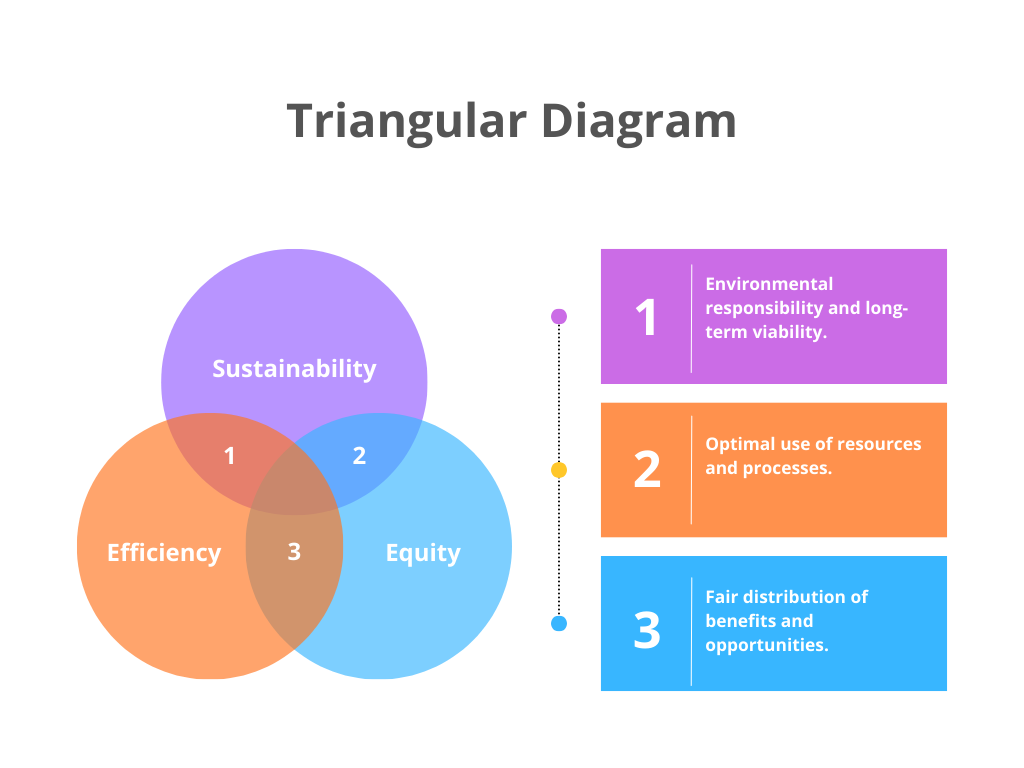
Figure 6: Evaluation of Trinity of Response Mechanisms
Source: Authors’ own
Table 5: Current Responses to Food Supply Chain Shocks
| Response Type | Response | Sustainability | Efficiency | Equity |
| Demand-Driven | Targeted Cash Transfers[97] | Unsustainable in the long-term without sustainable livelihood pathways | Efficient for temporary shocks because it improves consumption, access, and food security temporarily (e.g., Lebanon, Yemen, Jordan) | Requires adequate targeting to prevent negative spillovers like tensions between vulnerable groups excluded from the cash transfer |
| Food Subsidies[98] | Unsustainable in the long-term, but challenging to reform in the short-term | Inefficient because it increases fiscal burden and diverts resources away from other public services, and causes economic distortions | Despite improvement, food subsidies tend to benefit middle- and high-income groups (e.g., in Egypt and Tunisia) | |
| Humanitarian Food Assistance[99] | Unsustainable in the long-term; requires complementary initiatives to achieve resilience | Efficient for temporary shocks because it maintains food access | Damaged infrastructure, insecurity, and fuel shortages impede equitable food distribution and access | |
| Virtual Water Imports | Sustainable in the long-term when paired with water cost valuation, climate-resilient food production, and diversification of import sources | Efficient for regulating domestic water and energy-use | Potential inequity in water-exporting countries if trade is not aligned with the true cost of water | |
| Supply-Driven | Outsourcing | Unsustainable in the long term due to costs associated with ethical and ESG constraints | Efficient for building supply chains with customized consumption requirements | Inequitable due to negative impact on local communities |
| Food Park and Land Acquisitions | Sustainable in the long-term due to filling the ‘missing middle’ gap in infrastructure development | Efficient for building alternate routes and shock-resilient supply chains | Equitable with mutual regional benefits | |
| Trade Diversification | Sustainable due to rules-based agreements for diversified trade partners | Efficient for ensuring alternate trade partners | Equitable with mutual benefits for trade partners |
Source: Authors’ own
Policy Recommendations
This analysis shows that political stability and economic capacity define shock impact intensity and coping capacity.[100] Pursuing self-sufficiency is not feasible for most MENA countries given the diversity in food demands, land, and water constraints. Thus, mitigating food supply chain shocks to sustain resilient food systems and safeguard food security requires multi-pronged solutions that sustain food supply and ensure that consumers retain physical and financial access to food. The following recommendations are tailored to the political and financial capacity of MENA countries, incorporating supply and demand-driven strategies.
1. Reallocate capital, water, land, and technological resources.
High-Income Economies
High-income, oil-exporting countries with strong sovereign wealth funds and economic diversification imperatives such as the GCC should strategically distribute financing between infrastructure, training, and research and development for sustainable food systems.[f] This cluster has the financial capacity and political will to catalyse innovation for food security and food system modernisation.[101] Agriculture comprises less than 3 percent of GDP for each country, so achieving self-sufficient production is highly unrealistic given climate restraints and the diversity of consumer demand (see Table 1).
Despite abundant capital, investments are heavily skewed towards agri-technologies such as vertical and indoor farming, which primarily produce high-value crops like leafy greens and do not meet broader food basket needs or nutritional standards.[102] Moreover, many popular agri-technologies are imported from temperate regions and are energy-intensive, requiring additional optimisation to meet local heat and humidity conditions.[103]
Agri-tech investments should be directed towards fostering research and development and optimising locally-rooted production of drought-tolerant crop varieties, open-field farming, and net houses, and improving food storage and reducing food loss and waste. Continuing to engage in virtual water trading will help complement forthcoming trade partnerships and reduce domestic dependency on water-intensive food production.[104] Exploring the feasibility of cleaner fuel alternatives like solar for desalination would also help reduce extra energy burdens.
Middle-Income Economies
Middle-income, oil-exporting countries like Algeria and Iran can leverage additional state expenditures from oil-revenue spikes to absorb shocks to food supply chains. Middle-income, oil-importers like Egypt, Morocco, and Tunisia, where the agricultural share of GDP wavers between 9 and 14 percent, must balance the expansion of agricultural production with economic and resource depletion implications. Countries like Egypt and Morocco have expanded agricultural operations for economic development purposes, yet they must balance high-value crops for export versus fostering local subsistence farming and cover-cropping for domestic consumption.[105],[106]
Furthermore, incorporating water-energy-food considerations (WEF) in policy planning is crucial to ensure energy and agriculture do not compete for limited water resources. Overcoming water scarcity limitations requires an integrated water management approach focused on demand-side management through agricultural subsidy reform, alignment of siloed policies, and diversification of virtual-import sources towards affordable and stable food suppliers. Redesigning agricultural subsidies to reflect the true value and costs of water use would incentivise efficient farming practices and smarter water resource allocation.
Aligning agriculture, trade, and social safety net policies would enable a flexible government response, preventing an over- or under-reaction during food supply chain shocks. Since food import diversification capacity can be constrained by the concentration of international suppliers, these countries should also invest in climate-resilient agricultural practices. For instance, enhancing efforts to improve soil fertility and management would help bridge this gap.[107] Although Jordan is home to a modernising food production system, the nutritional outcomes of refugee groups must be considered in food system planning.[108] Given Djibouti’s minimal agricultural production and high food insecurity from undernourishment and rising obesity, the country must leverage its successful ventures to develop social safety nets and wean off food aid dependency.[109]
Middle-Income, Conflict-Affected Economies
Middle-income, conflict-affected, oil-importing countries like Libya and Iraq must optimise resource distribution, improve agricultural sector productivity, and develop targeted social safety net policies. For both countries, agriculture composes less than 5 percent of GDP. In Libya, food insecurity stems from a lack of economic access rather than availability. In the short-term, food security will be best addressed through humanitarian assistance, but investments in drought-resistant technologies for production in the drylands will help improve long-term food security.
In Iraq, the potential for increasing wheat yield is high. As the country recovers from conflict, directing investments towards climate-smart agriculture to improve yields will help close the wheat import and production gap. Developing targeted social policies would also improve food access.[110] Lebanon is also recovering from conflict and contending with an influx of refugees suffering from malnutrition. While present government investment towards agriculture is low, existing resources can be reallocated away from crops produced beyond the local full self-sufficiency level to be exported into low-self-sufficiency, high-nutrition, low-resource-intensive crops which would reduce reliance on foreign imports.[111] The ongoing conflict in the West Bank and Gaza necessitates immediate policy attention towards enabling physical access to food aid and vouchers.
Low-Income, Conflict-Affected Economies
With declining foreign aid and reduced efforts from regional institutions, conflict-affected, low-income countries like Syria and Yemen can turn to European partnerships to fill the funding gap for emergency food aid in the short-term. However, this risks creating a new system of dependency. Thus, leveraging the capacity of local and regional actors to deliver food donations and wean off donor-driven humanitarian assistance in the long-term is crucial. Partnering with the private sector to develop infrastructure that links displaced communities to financing mechanisms that will grant them access to food also presents a viable option.[112] Shifting reliance on food aid dependency through policies that strengthen economic livelihoods in the agriculture sector would also help increase food access in the long-term.[113]
2. Invest in quality infrastructure and reduce trade bottlenecks.
High-Income Economies
For high-income MENA economies such as the GCC countries, most perform relatively well in terms of trade logistics. According to the World Bank’s Logistics Performance Index (LPI) 2023, the UAE tops the MENA list with a score of 4.0 out of 5.0, followed by Israel (3.6), Bahrain (3.5), Qatar (3.5), and Saudi Arabia (3.0).[114] Except for the UAE, the rest of the high-income countries’ scores range from 3.6 to 3.5, above the global average of 3.0. However, despite the above-average global benchmark, the region faces barriers due to chokepoints in trade routes. Freight volatility is common for trade routes connecting MENA countries, and crucial bottlenecks include the Red Sea and the Strait of Hormuz.
For the GCC countries, their strategic geographical location can be leveraged to access alternative trade routes, reduce logistical hurdles, and ensure food security for the region. The region can accrue benefits from Asia, Africa, and Europe through enhanced investments in infrastructure and dedicated trade corridors. Countries such as the UAE, Saudi Arabia, and Qatar, have already enhanced their operations to find alternative routes and connect to Asia through the Jebel Ali port, the King Abdullah port, and the Hamad port. Land connectivity in the region has also been strengthened by the Gulf Railway project, which seeks to connect the GCC countries (from Kuwait to Oman) and reduce reliance on maritime trade.[115] The GCC Railway Project can provide alternative gateways that can reduce the time spent and wastage for perishable goods by preventing congestion and cost-heavy re-routing in the region.
The project can be further integrated into the proposed economic corridors, such as the India-Middle East-Europe Economic Corridor (IMEC) and the Middle East-Africa Corridor, to ensure a cost-effective ship-to-rail transit network that supplements the existing maritime and road routes between India, the UAE, Saudi Arabia, Jordan, Israel, and Europe. The Saudi railway network is already planned to connect with the UAE’s Etihad Rail at Ghuwaifat, leaving a missing link of 300 km from al-Haditha in Saudi Arabia to Haifa in Israel.[116] The integration into proposed and existing economic corridors can provide dual-coast access for African routes through not only the UAE but also Saudi Arabia and Oman. The Corridor can include dedicated food terminals that handle grains, cold storages, and harmonised customs.
Middle-Income Economies
Unlike high-income MENA economies, middle-income countries such as Djibouti, Egypt, Lebanon, Jordan, Tunisia, Morocco, Algeria, Iraq, Iran, and Libya have weaker linkages in terms of customs clearances and transport-related infrastructure. Except for Egypt, other countries in the bracket have LPI ranks lower than 3.0 and consistently lag in clearance times, documentation, and predictability.[117]
On the customs clearance end, fast lanes and single-window systems can be built to provide faster clearances. Sanitary and Phytosanitary certificates (SPS) can be digitalised to allow a quicker paperless clearance procedure. Further, middle-income MENA countries can leverage inland food corridors, allowing economies to cushion maritime shocks. The 90-km-long Djibouti Regional Economic Corridor (DREC) connects Djibouti to Ethiopia and is key in ensuring food security for the country.[118] The functioning corridor can enhance sourcing diversification for other MENA countries and be extended to Egypt as a bridge hub, connecting Red Sea ports to the Mediterranean region. Similarly, grain ports, inland clearance hubs, silos and SPS testing facilities can be built along North Africa, catering to Morocco, Algeria, Tunisia, Libya, and Egypt.
Low-Income Economies
For low-income MENA countries like Yemen and Syria, LPI scores are among the lowest globally, which translates into higher costs and longer transit times. Both Yemen and Syria are heavily reliant on imports to meet the demand for food; thus, it becomes more crucial for the economies to ensure robust supply chains for agricultural goods. In Yemen, severe conflicts in the region have led to the destruction of cranes at the Al Hodeidah port and a ban on commercial containers.[119] This diverted shipping traffic to Aden, which has not only added pressure on a single port and double taxation but also underutilisation of other ports.
The long-term solution lies in restoring the countries’ logistics infrastructure through public-private partnerships (PPPs), which can mobilise private capital when budgets are limited. This includes viability funding where capex is publicly funded and the terminals and food storage nodes are run privately under lease to stabilise operations. In 2025, Syria signed an agreement worth US$800 million with a UAE-based logistics company to rebuild the country’s maritime infrastructure, enhance modernisation of terminal operations, streamline cargo handling, and facilitate smoother trade.[120] The solution, however, requires added efforts towards mediation to ensure the safe movement of goods and removal of import restrictions on the Yemeni and Syrian ports.
3. Leverage market-based instruments to manage price and supply volatility.
Commodity markets are considered crucial in determining price transparency, improving product quality, reducing market risk, and reducing transaction costs.[121] In the MENA region, only a few countries have commodity exchanges for agricultural goods—including the Egyptian Commodity Exchange (Egycomex) and the Iran Mercantile Exchange. The establishment of a MENA Commodity Exchange can benefit from better price signals, risk transfers, and standardised contracts.
For several MENA countries, food wastage comes from a lack of storage and logistics; a structured commodity exchange can crowd-in investment to warehouses and meet quality standards. The warehouse receipt system allows stored agricultural commodities to serve as collateral against financial instruments. The system enables farmers to make sales throughout the year instead of a particular season. It also allows governments to procure from certified warehouses faster during a crisis. For large importers, hich include most MENA countries—exchanges through the derivatives markets provide management of price risk during price spikes. Malawi is an example of how an import-reliant country mitigated food security risks by using hedging instruments. The country bought physical call options for maize, which enabled price protection and delivery of 60,000 metric tons of maize during price spikes.[122] The commodity exchange markets, however, require an effective regulatory mechanism to prevent market manipulation.[123] Thus, building commodity exchanges requires MENA economies to have a robust and stable regulatory mechanism in place. Other challenges associated with utilising price mechanisms include a lack of financial knowledge, technical capacity and physical infrastructure.
Conclusion
The MENA region’s arid environment and limited arable land drive limited domestic food production, resulting in a reliance on food imports to meet local demand.[124] This import dependence renders the region vulnerable to geopolitical and environmental pressures. MENA’s comparatively low ranking on the Global Food Security Index for adaptation and sustainable development further underscores the need to build holistic food system resilience strategies.[125] Given the variability of food supply chain shocks, undertaking a proactive approach is crucial to mitigate short-term impacts and safeguard long-term food security. This includes optimising climate-resilient food production where applicable, enabling food access through structured social policies, and strengthening food trade corridors, storage, and infrastructure to complement domestic food availability.
In anticipation of shocks, increasing food availability and nutrition can be accomplished by reallocating capital towards R&D for drought-resistant and nutritious crop varieties, harnessing virtual water trade in high- and middle-income MENA countries, and investing in climate-smart agriculture in arable middle-income economies. In lower- to middle-income conflict-affected countries, pre-emptively developing targeted and robust social safety net policies to improve access, especially among vulnerable refugee groups, is crucial. Moreover, sustaining local economic activities amidst conflict, in addition to cash transfers, would help maintain food access.
Food supply chains can be protected and enhanced by improving infrastructure, which can allow reliable flows, affordability, less spoilage, and stability. MENA economies must invest in the digitalisation of port operations, identify alternative routes to minimise time, integrate into inter-regional trade corridors, and leverage inland transportation through the GCC Railway Project. Dedicated modern food terminals with grain handling, cold storage, and harmonised customs can further smooth the supply chains. Focus can be laid on strengthening customs clearance and leveraging viability funding with public-private partnerships to rebuild and operationalise trade infrastructure. Commodity Exchanges are relevant for the region to combat price risks and prevent food wastage. The efforts, however, need to be supplemented with strong regulatory frameworks and robust infrastructure. Despite the region’s high import dependence, targeted efforts can strengthen MENA countries’ responses and mitigate food insecurity during food supply chain shocks.
Shruti Jain is Associate Fellow, Centre for Development Studies, ORF.
Leigh Mante is Junior Fellow, Energy and Climate Change Programme, ORF Middle East.
All views expressed in this publication are solely those of the authors, and do not represent the Observer Research Foundation, either in its entirety or its officials and personnel.
Endnotes
[a] In March 2026, the United States attacked a desalination plant in southern Iran, and Iran retaliated by attacking a desalination facility in Bahrain.
[b] Defined as agriculture’s share of government expenditure divided by agriculture’s value-added share of GDP.
[c] The GCC countries are the UAE, Saudi Arabia, Qatar, Kuwait, Bahrain, and Oman.
[d] Some 40 percent of MENA’s current food requirements is being supplied by imports.
[e] This concept refers to the amount of water used in the production of traded agricultural goods and explains the amount of water indirectly traded between countries.
[f] The GCC’s most active Sovereign Wealth Funds include the Saudi Public Investment Fund, the Qatar Investment Authority, the Abu Dhabi Investment Authority, Mubadala, ADQ, and the Kuwait Investment Authority.
[1] World Bank, “What is Food Security?,”
https://www.worldbank.org/en/topic/agriculture/brief/food-security-update/what-is-food-security.
[2] Food and Agriculture Organization of the United Nations, “Resilient Food Systems: A Proposed Analytical Strategy for Empirical Applications,” The State of Food and Agriculture, 2021, https://openknowledge.fao.org/server/api/core/bitstreams/3a34460a-d46a-461e-ace5-c9c814b78b61/content.
[3] D.M. Tendall et al., “Food System Resilience: Defining the Concept,” Global Food Security, 2015, https://doi.org/10.1016/j.gfs.2015.08.001
[4] World Bank, “Open Data,” https://databank.worldbank.org/reports.aspx?source=2&country=MEA#
[5] Waqar Akram, Zakir Hussain, and Sultan Adeel, “Water and Food Security in the Middle Eastern and North African Countries,” in The Water, Climate, and Food Nexus, ed. Mohamed Behnassi et al., (Springer Cham, 2024), pp 33-58, https://doi.org/10.1007/978-3-031-50962-9_3.
[6] Ahmed Jaa and Khaled Abdelghany, “The Story of Five MENA Cities: Urban Growth Prediction Modeling Using Remote Sensing and Video Analytics,” Cities 118 (2021), https://doi.org/10.1016/j.cities.2021.103393.
[7] Iona Huang et al., “Resilience of Food Supply Systems to Sudden Shocks: A Global Review and Narrative Synthesis,” Global Food Security 44 (2025), https://doi.org/10.1016/j.gfs.2025.100842.
[8]World Bank, “World Bank Country and Lending Groups,” https://datahelpdesk.worldbank.org/knowledgebase/articles/906519#High_income
[9] World Bank, “Employment in Agriculture (% of Total Employment Estimate),” https://data.worldbank.org/indicator/SL.AGR.EMPL.ZS.
[10] World Bank, “Agriculture, forestry, and fishing, value added (% of GDP),” https://data.worldbank.org/indicator/NV.AGR.TOTL.ZS?most_recent_year_desc=true.
[11] Economist Impact, “Global Food Security Index 2022,” https://impact.economist.com/sustainability/project/food-security-index/.
[12] International Water Management Institute (IWMI), “Middle East and North Africa,” IWMI, https://www.iwmi.org/where-we-work/mena/
[13] Safaa El Tayeb El-Kogali, “From Scarcity to Sustainability: The GCC’s Journey Towards Water Security,” World Bank, March 26, 2024, https://www.worldbank.org/en/news/opinion/2024/03/26/from-scarcity-to-sustainability-the-gcc-s-journey-towards-water-security
[14] World Resources Institute, “Aqueduct Country Ranking,” Aqueduct, https://www.wri.org/applications/aqueduct/country-rankings/
[15] IWMI, “Middle East and North Africa.”
[16] World Resources Institute, “Aqueduct Country Ranking.”
[17] Khaled Ezzeldin, Daniel Adshead, and Paul Smith, Adapting to a New Climate in the MENA Region: An Assessment of Physical Risk Management and Climate Adaptation Finance in the MENA Region, United Nations Environment Programme Finance Initiative, January 2023, https://www.uncclearn.org/wp-content/uploads/library/Adapting-to-a-new-climate-MENA.pdf
[18] Edoardo Borgomeo et al., The Water-Energy-Food Nexus in the Middle East and North Africa: Scenarios for a Sustainable Future, Washington, DC: World Bank, 2018, https://documents1.worldbank.org/curated/en/927041530193545554/pdf/127749-WP-28-6-2018-1-16-49-WeBook.pdf
[19] Rehab Ismail, “Facts About Water Resources and Rationing in Egypt,” EgyptToday, March 2, 2018, https://www.egypttoday.com/Article/1/44255/Facts-about-water-resources-and-rationing-in-Egypt.
[20] D. J. Wrathall, J. Van Den Hoek, A. Walters, and A. Devenish, “Water Stress and Human Migration: A Global, Georeferenced Review of Empirical Research,” Land and Water Discussion Paper 11, Rome: FAO, 2018
[21] Lisa Barrington, “Inside the World’s Biggest Water Desalination Plants,” Reuters, October 13, 2020, https://www.reuters.com/business/environment/inside-worlds-biggest-water-desalination-plants-2020-10-13/
[22] Hany Ghanem, “Facing Scarcity, the Gulf’s ‘Smart Water’ Future Lies in Desalination,” Atlantic Council (MENASource), July 17, 2025, https://www.atlanticcouncil.org/blogs/menasource/gulf-water-scarcity-deslination/
[23] Priyanka Shankar, “How Targeting of Desalination Plants Could Disrupt Water Supply in the Gulf,” Al Jazeera, March 8, 2026, https://www.aljazeera.com/news/2026/3/8/how-targeting-of-desalination-plants-could-disrupt-water-supply-in-the-gulf#:~:text=Bahrain%20has%20said%20an%20Iranian,and%20the%20US%20and%20Israel.
[24] Borgomeo et al., The Water-Energy-Food Nexus in the Middle East and North Africa
[25] Sarah Namany, Rajesh Fovindan, and Tareq Al-Ansari, “Operationalising Transboundary Cooperation Through Game Theory: An Energy Water Food Nexus Approach for the Middle East and North Africa,” Futures, 2023, https://doi.org/10.1016/j.futures.2023.103198.
[26] Ahmed Morsy and Tsedenya Girmay, “With Ethiopia’s GERD Active, Tensions Mount Along the Nile,” Middle East Council on Global Affairs, September 2025, https://mecouncil.org/blog_posts/with-ethiopias-gerd-active-tensions-mount-along-the-nile/.
[27] Yaniv Cohen, “Egypt Has a Water Problem—and No, It’s Not Only the GERD,” Atlantic Council (MENASource), June 2021, https://www.atlanticcouncil.org/blogs/menasource/egypt-has-a-water-problem-and-no-its-not-only-the-gerd/.
[28] Mina Devkota, Rachid Mrabet, Rachid Moussadek, and Yigezu Atnafe Yigezu, “Conservation Agriculture in the Drylands of the Middle East and North Africa (MENA) Region: Past Trends, Current Opportunities, Challenges and Future Outlook,” 2022, https://doi.org/10.1016/bs.agron.2021.11.001.
[29] Sara Razai, “‘Food Security’ vs ‘Food Sovereignty’ – North Africa,” War on Want, September 2020, https://waronwant.org/news-analysis/food-security-vs-food-sovereignty-north-africa
[30] Razai, “‘Food Security’ vs ‘Food Sovereignty’ – North Africa.”
[31] Yousef Abu Nahleh, Budur Al Ali, Hind Al Ali, and Shouq Alzarooni, “the Impact of COVID-19 on Supply Chain in UAE Food Sector,” Sustainability 15, no. 11 (2023), https://doi.org/10.3390/su15118859?urlappend=%3Futm_source%3Dresearchgate.net%26utm_medium%3Darticle
[32] Dina Mandour, “Covid-19 and Food Security Challenges in the MENA Region,” Sustainable Development Goals and External Shocks in the MENA Region: From Resilience to Change in the Wake of COVID-19, 2021, https://erf.org.eg/app/uploads/2021/05/1620313433_573_1330312_65dinamandourupdatedpaper.pdf.
[33] Abu Nahleh et al., “The Impact of COVID-19 on Supply Chain in UAE Food Sector.”
[34] Mandour, “Covid-19 and Food Security Challenges in the MENA Region.”
[35] Assem Abu Hatab, Lena Krautscheid, Mohamed Elsayied, and Franklin Amuakwa-Mensah, “COVID-19 risk perception and food security in the MENA region: evidence from a multi-wave household survey,” Food Security, 2024, https://doi.org/10.1007/s12571-024-01470-z.
[36] Eckart Woertz, “The MENA Region and the New Geopolitics of Food,” Italian Institute for International Political Studies, November 2022, https://www.ispionline.it/en/publication/mena-region-and-new-geopolitics-food-36828.
[37] Mohammad Al-Saidi, “Caught off Guard and Beaten: The Ukraine War and Food Security in the Middle East,” Frontiers in Nutrition, no. 10 (2023), https://doi.org/10.3389/fnut.2023.983346.
[38] Al-Saidi, “Caught off Guard and Beaten.”
[39] Joseph Glauber, “The Iran War: Potential Food Security Impacts,” IFPRI, 2026, https://www.ifpri.org/blog/the-iran-war-potential-food-security-impacts/.
[40] Anna Kozielec, Jakub Piecuch, Kamila Daniek, and Lidia Luty (2024), “Challenges to Food Security in the Middle East and North Africa in the Context of the Russia-Ukraine Conflict,” Agriculture 14, no. 1 (2024), https://doi.org/10.3390/agriculture14010155.
[41] Kozielec et al., “Challenges to Food Security in the Middle East and North Africa in the Context of the Russia-Ukraine Conflict.”
[42] Walter Leal Filho et al., “How the War in Ukraine Affects Food Security” Foods 12, no. 21 (2023), https://doi.org/10.3390/foods12213996.
[43] Al-Saidi, “Caught off Guard and Beaten.”
[44] Al-Saidi, “Caught off Guard and Beaten.”
[45] Al-Saidi, “Caught off Guard and Beaten.”
[46] Rajendra Jadhav, “Indian Basmati Held Up at Ports and in Transit as Iran War Halts New Deals,” Reuters, March 3, 2026, https://www.reuters.com/world/india/indian-basmati-held-up-ports-transit-iran-war-halts-new-deals-2026-03-03/.
[47] Kozielec et al., “Challenges to Food Security in the Middle East and North Africa in the Context of the Russia-Ukraine Conflict.”
[48] FEWS NET, “Lebanon Key Message Update: November 2025,” https://fews.net/middle-east-and-asia/lebanon/key-message-update/november-2025/print
[49] N. T. Hung et al., “Oil Prices and Agricultural Commodity Markets,” PubMed Central (2021), https://pmc.ncbi.nlm.nih.gov/articles/PMC8434820/
[50] Ding Chen, Umar Muhammad Gummi, Shan-bing Lu, and Asiya Mu’azu, “Modelling the Impact of Oil Price Fluctuations on Food Price in High and Low-Income Oil Exporting Countries,” Agricultural Economics – Czech 66, no. 10 (2020): 458–468, https://www.agriculturejournals.cz/pdfs/age/2020/10/03.pdf
[51] “The Relationship between Fuel, Biofuel and Food Prices: Methods and Outcomes,” EconStor no. 32 (2018), https://www.econstor.eu/bitstream/10419/203211/1/1039828027.pdf
[52] Roberta Gatti et al., “Altered Destinies: The Long-Term Effects of Rising Prices and Food Insecurity in the Middle East and North Africa”, Washington, D.C, World Bank Group, 2023,
[53] Roberta Gatti et al., “Altered Destinies”
[54] Trading Economics, https://tradingeconomics.com/
[55]Yongzhi Zhao and Yangfen Chen, “Global Patterns of Agricultural Investment and Food Security: Evidence from the fDi Markets Database,” Foods 12, no. 9, 2023, https://pmc.ncbi.nlm.nih.gov/articles/PMC10178774/
[56] “Repurposing Agricultural Subsidies for Sustainable and Resilient Food Systems in MENA”, Food and Agriculture Organization of the United Nations, Cairo, 2024, https://openknowledge.fao.org/server/api/core/bitstreams/9741b205-d4c7-4033-b1ff-698374140faf/content
[57] Khaled Ezzeldin, Daniel Adshead, and Paul Smith, “Adapting to a New Climate in the MENA Region: An Assessment of Physical Risk Management and Climate Adaptation Finance in the MENA Region”, UN Environment Programme Finance Initiative, January 2023, https://www.uncclearn.org/wp-content/uploads/library/Adapting-to-a-new-climate-MENA.pdf.
[58] “Repurposing Agricultural Subsidies for Sustainable and Resilient Food Systems in MENA”, Food and Agriculture Organization of the United Nations, 2024, https://openknowledge.fao.org/handle/20.500.14283/cd3613en.
[59] INRAE and CIRAD, “Middle-East and North Africa Food Dependency through 2050,” GlobAgri, https://globagri.org/anmo/
[60] Government of Canada, Agriculture and Agri-Food Canada, “Sector Trend Analysis: Trade Overview—Gulf Cooperation Council,” https://agriculture.canada.ca/en/international-trade/reports-and-guides/sector-trend-analysis-trade-overview-gulf-cooperation-council
[61] Borgomeo et al., The Water-Energy-Food Nexus in the Middle East and North Africa
[62] INRAE and CIRAD, “Middle-East and North Africa Food Dependency through 2050.”
[63] Saifeldin Daoud Abdelrhman, “The Food Security Dynamic in MENA Countries: How Should Policies be Distinctive?,” Security Policy Paper, March 15, 2023, https://doi.org/10.26735/WBUF6491
[64] Ayaanurshad Rashd Swesi, “An Analysis of Food Consumption Patterns and Determinants in Developing Countries,” Gradiva Review Journal 11, no. 8 (2025), https://gradivareview.com/wp-content/uploads/2025/08/36.GRJ8511.pdf
[65] United Nations Children’s Fund (UNICEF), MENA Nutrition Situational Analysis 2024: Full Report (UNICEF Middle East and North Africa, 2024), https://www.unicef.org/mena/media/25606/file/MENA%20Nutrition%20Situational%20Analysis%202024-%20Full%20report.pdf
[66] Anna Kozielec, Jakub Piecuch, Kamila Daniek, and Lidia Luty, “Challenges to Food Security in the Middle East and North Africa in the Context of the Russia–Ukraine Conflict,” Agriculture 14, no. 1 (2024), https://doi.org/10.3390/agriculture14010155.
[67] Food and Agriculture Organization of the United Nations, Yemen Overview (Rome: FAO, 2017), http://www.fao.org/countryprofiles/index/en/?iso3=YEM
[68] Economist Impact, Global Food Security Index 2022: Global Report (London: The Economist Group, 2022), https://impact.economist.com/sustainability/project/food-security-index/reports/Economist_Impact_GFSI_2022_Global_Report_Sep_2022.pdf.
[69] U.S.-U.A.E. Business Council, Sector Update: Food, https://usuaebusiness.org/wp-content/uploads/2024/11/SectorUpdate_FoodReport_Web.pdf
[70] GRAIN, “From Land to Logistics: UAE’s Growing Power in the Global Food System,” https://grain.org/en/article/7170-from-land-to-logistics-uae-s-growing-power-in-the-global-food-system
[71] Land Matrix, “Land Matrix Global Observatory: Map,” https://landmatrix.org/map/
[72] “From Land to Logistics: UAE’s Growing Power in the Global Food System,”
[73] Blekking, Aassouli, and Jureidini, “Food Security and Large-Scale Land Acquisitions by Sovereign Wealth Funds,” Agriculture and Food Economics 12 no. 28 (2024), https://doi.org/10.1186/s40100-024-00320-y
[74] Blekking, Aassouli, and Jureidini, “Food Security and Large-Scale Land Acquisitions by Sovereign Wealth Funds.”
[75] UAE Ministry of Foreign Affairs, “UAE and India Sign Agreements for Investment Cooperation across Multiple Sectors,” January 2024, https://www.mofa.gov.ae/en/missions/new-delhi/media-hub/embassy-news/uae-and-india-sign-agreements-for-investment-cooperation-across-multiple-sectors
[76] The White House, “Joint Statement of the Leaders of India, Israel, United Arab Emirates, and the United States (I2U2),” July 14, 2022, https://bidenwhitehouse.archives.gov/briefing-room/statements-releases/2022/07/14/joint-statement-of-the-leaders-of-india-israel-united-arab-emirates-and-the-united-states-i2u2/
[77] Public Investment Fund (PIF), “How PIF Is Pioneering New Solutions for Sustainable Agriculture,” June 2025, https://www.pif.gov.sa/en/news-and-insights/news-network/2025/how-pif-is-pioneering-new-solutions-for-sustainable-agriculture/
[78] “Saudi Arabia’s Vision Invest Puts $700 Million in Africa’s Arise,” Bloomberg, September 10, 2025, https://www.bloomberg.com/news/articles/2025-09-10/saudi-arabia-s-vision-invest-puts-700-million-in-africa-s-arise
[79] European Free Trade Association (EFTA), “EFTA-GCC Free Trade Agreement Enters into Force on 1 July 2014,” June 2014, https://www.efta.int/media-resources/news/efta-gcc-free-trade-agreement-enters-force-1-july-2014
[80] UAE Ministry of Economy & Tourism, “UAE-India Comprehensive Economic Partnership Agreement,” https://www.moet.gov.ae/en/cepa_india
[81] American Chamber of Commerce in Jordan, “Free Trade Agreement (FTA),” https://amcham.jo/free-trade-agreement-fta/
[82] European Commission, Directorate-General for Agriculture and Rural Development, Agri-Food Trade: Morocco, 2023, https://agriculture.ec.europa.eu/system/files/2023-05/agrifood-morocco_en.pdf
[83] Amira El-Shal, Eman Moustafa, Nada Rostom, Yasmine Abdelfattah, “Social Safety Nets and Food Insecurity in the Time of COVID-19: Selected MENA Countries”, no. 247 (2022), https://www.afd.fr/sites/default/files/2022-05-10-51-31/Social-Safety-Nets-and-Food-Insecurity-in-the-Time-of-COVID-19.pdf .
[84] Mandour, “Covid-19 and Food Security Challenges in the MENA Region.”
[85] El-Shal et al., “Social Safety Nets and Food Insecurity in the Time of COVID-19.”
[86] Anis Ben Brik, “Assessing the Impact of Cash Transfer Programmes: Socioeconomic Outcomes in the MENA Region: A Systematic Review,” Social Policy and Society, December 2025, https://doi.org/10.1017/S1474746425101267
[87] Al-Saidi, “Caught off Guard and Beaten.”
[88] Al-Saidi, “Caught off Guard and Beaten.”
[89] Laith Alajloui and Jasim Murad, “Effects of US Foreign-Assistance Reductions in the Middle East,” International Institute for Strategic Studies, 2025, https://www.iiss.org/online-analysis/online-analysis/2025/03/effects-of-us-foreign-assistance-reductions-in-the-middle-east/.
[90] Oumeyma Chelbi, “MENA Food Subsidies Are Here to Stay – For Now,” Middle East Council on Global Affairs, 2025, https://mecouncil.org/publication/mena-food-subsidies-are-here-to-stay-for-now/
[91]Nejla Ben Mimoune and Hana Elshehaby, “Food Insecurity in the Middle East and North Africa,” Middle East Council on Global Affairs, 2023, https://mecouncil.org/publication/food-insecurity-in-the-middle-east-and-north-africa/.
[92] Federica Alfani, Maria Eugenia Genoni, and Johannes Hoogeveen, “MENA: Uniform Cash Transfers Are Better than Subsidies,” World Bank Blogs, 2022, https://blogs.worldbank.org/en/arabvoices/mena-uniform-cash-transfers-are-better-subsidies
[93] Chelbi, “MENA Food Subsidies Are Here to Stay – For Now.”
[94] Heather Elaydi, “Factsheet: Virtual Water Trade in the WANA Region,” WANA Institute, https://wanainstitute.org/sites/default/files/fact_sheets/Virtual_Water_1.pdf
[95] Ahmed Tayia, Alexandra M. Collins, Michael Gilmont, “The Role of Virtual-Water Decoupling in Achieving Food-Water Security: Lessons from Egypt, 1962-2013,” Water International 47 no. 7 (2022), https://www.tandfonline.com/doi/full/10.1080/02508060.2022.2133835#d1e557
[96] Richard King, “The Water Footprints of Global Food and Agriculture Trade: Why the ‘Virtual Water’ Use Hidden in Supply Chains Is Critical to Sustainability,” Chatham House, 2025, https://www.chathamhouse.org/sites/default/files/2025-12/2025-12-19-water-footprints-global-food-agriculture-trade-king.pdf
[97] Anis Ben Brik, “Assessing the Impact of Cash Transfer Programmes on Socioeconomic Outcomes in the MENA Region: A Systematic Review,” Social Policy and Society, 2025, https://doi.org/10.1017/S1474746425101267
[98] Federica Alfani, Maria Eugenia Genoni, and Johannes Hoogeveen, “MENA: Uniform Cash Transfers Are Better than Subsidies,” World Bank Blogs, 2022,
https://blogs.worldbank.org/en/arabvoices/mena-uniform-cash-transfers-are-better-subsidies.
[99] UNESCWA, “Assessing Food Systems in the Arab Region,” 2024,
https://www.unescwa.org/sites/default/files/pubs/pdf/assessing-food-systems-arab-region-english.pdf.
[100] M. Anis Salem and Natasha Banks, “Toward Arab Food Security,” The Cairo Review, 2020, https://www.thecairoreview.com/essays/toward-arab-food-security/#:~:text=Having%20reliable%20food%20in%20stock,challenges%20across%20the%20MENA%20region.%20Mitigating%20shocks%20to%20the%20food%20supply%20chain%20requires%20developing%20comprehensive%20policy%20frameworks.
[101]Rami Zurayk, Fidele Byiringiro, and Reem Nejdawi, “Assessing Food Systems in the Arab Region,” United Nations ESCWA, 2025, unescwa.org/publications/assessing-food-systems-arab-region?__cf_chl_tk=sAbxqMZ5XcjwNho1ZiwYm26u9VYzVkkB3Oo1OflPR9k-1765949546-1.0.1.1-JXsqCoPjxMXzyi.ZdLdSXm.Dpum5Qy.gVv_RiC5krqA.
[102] Valentina Olabi, “GCC Agri-Nutrients: Ensuring Food Security in an Environmentally-Conscious World,” Gulf Petrochemicals and Chemicals Association, September 27, 2024, https://gpcachem.org/2024/09/27/gcc-agri-nutrients-ensuring-food-security-in-an-environmentally-conscious-world/
[103] ORF Middle East, “Roundtable Roundup: AgriFoodTech in the UAE,” ORF Middle East, 2025, https://orfme.org/event/roundtable-roundup-agrifoodtech-in-the-uae/
[104] Elizabeth Stifel, “The Quiet Power of Virtual Water Trade in Shaping Global Resource Dynamics,” IWMI, 2025, https://www.iwmi.org/news/the-quiet-power-of-virtual-water-trade-in-shaping-global-resource-dynamics/.
[105] Martin Keulertz and Rabi Mohtar, “The Water-Energy-Food Nexus in Libya, UAE, Egypt and Iraq,” Istituto Affari Internazionali, 2022.
[106] Aida Delpuech and Arianna Poletti, “Preserving Oases’: The Fight for Water by Moroccan Farmers,” Al Jazeera, November 11, 2022, https://www.aljazeera.com/news/2022/11/11/preserving-oases-the-fight-for-water-for-morocco-farmers#:~:text=%E2%80%9CMorocco%20is%20among%20the%20world’s,expense%20of%20local%20subsistence%20farming.
[107] Delpuech and Poletti, “Preserving Oases’.”
[108] Zurayk, Byiringiro, and Nejdawi, “Assessing Food Systems in the Arab Region.”
[109] United Nations ESCWA, “Arab Food Security Monitoring Framework: Country Reviews,” 2021, https://www.unescwa.org/sites/default/files/pubs/pdf/arab-food-security-country-reviews-english.pdf.
[110] United Nations ESCWA, “Arab Food Security Monitoring Framework: Country Reviews.”
[111] Bassel Daher et al., “Food Security under Compound Shocks: Can Lebanon Produce Its Own Mediterranean Food Basket?,” 2022, https://doi.org/10.3389/fsufs.2022.969248.
[112] Allison Lombardo and Stewart Patrick, “The Painful, Seismic Shift in Humanitarian Aid—and What’s Next?,” Carnegie Endowment for International Peace, 2025, https://carnegieendowment.org/research/2025/12/the-painful-seismic-shift-in-humanitarian-aidand-whats-next?lang=en.
[113]Mohammed Ghaleb Al-Wahbani, “The Impacts of Declining International Aid on the Humanitarian and Economic Situation in Yemen,” SEMC, 2025, https://reliefweb.int/report/yemen/impacts-declining-international-aid-humanitarian-and-economic-situation-yemen.
[114] Jean-François Arvis et al., Connecting to Compete 2023: Trade Logistics in an Uncertain Global Economy: The Logistics Performance Index and Its Indicators, Washington, DC: World Bank, 2023, https://lpi.worldbank.org/sites/default/files/2023-04/LPI_2023_report.pdf
[115] The Daily Tribune (TDT), “$250 Billion Gulf Railway Ranked Third Largest Mega Project in the World, According to Statista,” GCC Railway, September 9, 2024, https://www.gccrailway.com/250-billion-gulf-railway-ranked-third-largest-mega-project-in-the-world-according-to-statista-the-daily-tribune/
[116] PwC Middle East, “Trade Corridors,” PwC Middle East, Middle East Economy Watch, April 2024, https://www.pwc.com/m1/en/publications/middle-east-economy-watch/april-2024/trade-corridors.html
[117] Arvis et al., Connecting to Compete 2023
[118] Global Center on Adaptation, “Djibouti Regional Economic Corridor,” https://gca.org/gca-project/djibouti-regional-economic-corridor/
[119] Arab Urban Development Institute, “The Gulf Railway,” https://araburban.org/en/infohub/projects/?id=10271
[120] IntelliNews, “Syria Signs $800mn Strategic Deal with DP World to Upgrade Ports,” IntelliNews, July 14, 2025, https://www.intellinews.com/syria-signs-800mn-strategic-deal-with-dp-world-to-upgrade-ports-390901/
[121] “Role of Agricultural Commodity Exchanges in Promoting Agricultural Sustainability: A Systematic Review of Evidence, Indicators, and Challenges,” Journal on Innovation and Sustainability RISUS 16 (no.3), https://doi.org/10.23925/2179-3565.2025v16i3p238-248, pp. 238-248
[122] Julie Barbet-Gros, “Hedging Food Price Risks in a World of Uncertainty,” World Bank Blogs (Let’s Talk Development), December 12, 2013, https://blogs.worldbank.org/en/developmenttalk/hedging-food-price-risks-world-uncertainty
[123] Shahidur Rashid, “Agricultural Commodity Exchange and Market Development: What Have We Learned?,” Conference Paper, 29th International Conference of Agricultural Economists, Milan, Italy, August 8–14, 2015, https://www.researchgate.net/publication/283018014_Agricultural_Commodity_Exchange_and_Market_Development_What_Have_we_Learned
[124] Nejla Ben Mimoune and Hana El Shehaby, “Breaking the Cycle: How Can the MENA Region Tackle Food Insecurity?,” Middle East Council on Global Affairs, 2023, https://mecouncil.org/wp-content/uploads/2023/02/MECGA_Issue-Brief-12_Nejla-Ben-Mimoune-Hana-Elshehaby_Final-WEB.pdf.
[125] Anna Kozielec, Jakub Piecuch, Kamila Daniek, and Lidia Luty, “Challenges to Food Security in the Middle East and North Africa in the Context of the Russia–Ukraine Conflict,” Agriculture 14, no. 1 (2024): 155, https://doi.org/10.3390/agriculture14010155.