 Global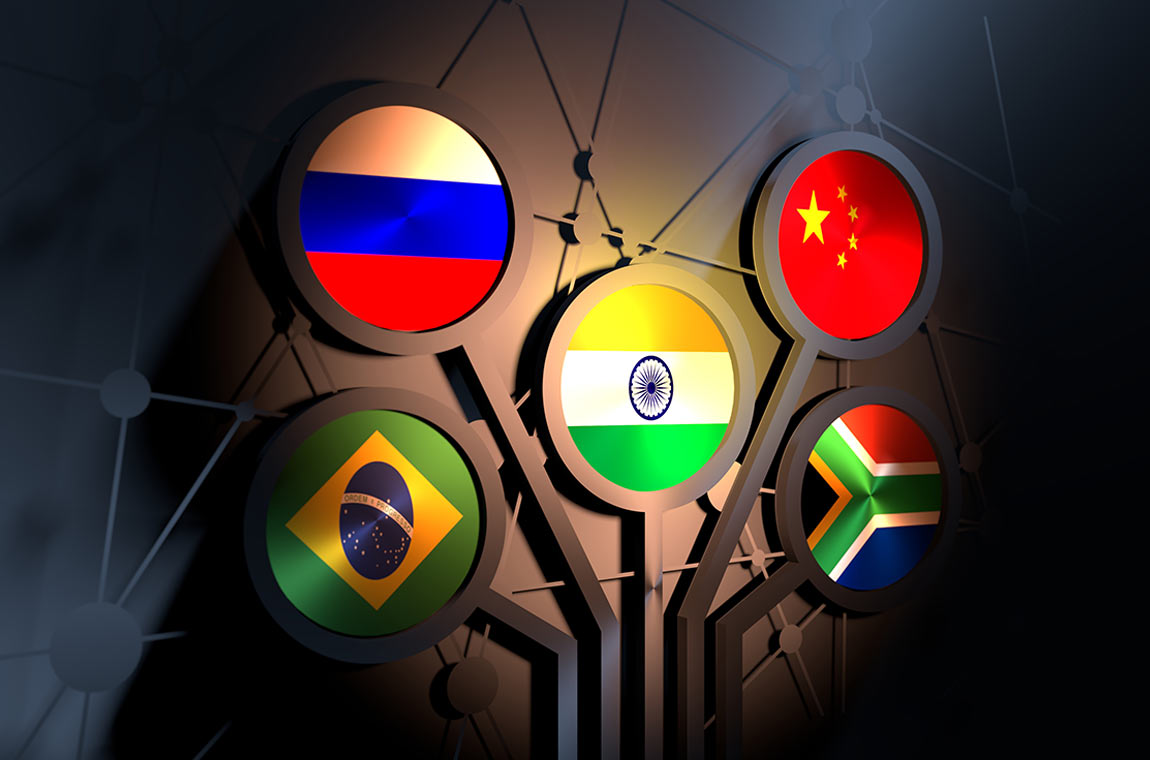
Expert Speak | 22 May, 2026
Building in the Rupture: The World’s New Alignments
The following excerpt is from Chapter 2 — ORF Global Quarterly: Disruption and Recalibration.
Less than a year after Canadian Prime Minister Mark Carney declared that Canada’s old relationship with the United States (US)—anchored in deep economic integration and close security cooperation—was “over,”[1] he delivered a forceful message at Davos in January 2026. He argued that the “fiction” of the international rules-based order, in which powerful states exempt themselves at will and trade rules are “enforced asymmetrically,” had been laid bare. The “bargain,” as he described it—an American-led order underwriting a stable financial system, collective security, and the multilateral frameworks long relied upon by middle powers—was now in “rupture.”[2]
These strong words follow a shock delivered by US President Donald Trump shortly after taking office in January 2025: a declaration of American “economic independence” through the introduction of “Liberation Day” tariffs in April, imposing a 10-percent baseline rate on all countries and subjecting those with trade surpluses vis- à-vis the US to sharply higher rates.[3] Jarring as it was, the move should not have come as a surprise—it flowed directly from the “America First” policies Trump had initiated during his first term, from January 2017 to January 2021, when his administration framed its foreign policy doctrine as “principled realism.”[4] Whereas that first term tested the boundaries of the liberal order, his second has challenged them more aggressively, explicitly linking economic policy to national security under the rubric addressing “unfair and unbalanced trade.”[5] This framing has provided justification for tariffs imposed not only against rivals, but also against some of the US’s closest allies.
Trump’s unreliability as a guarantor of the liberal order has become a generative force in its own right. His first term catalysed smaller groupings anchored in a “Free and Open Indo-Pacific” framework, while his second, still unfolding, has not only accelerated those minilateral initiatives, but also pushed allies, and in some cases adversaries, into lateral arrangements with partners they might previously have considered unlikely or unnecessary. The reality is that “America First” under the Trump administration has functioned as a structural force rather than empty rhetoric—one that has prompted state actors to exercise agency by prioritising their own national interests.
Dismantling Multilateralism
Between Trump’s first and second terms, his administration’s key priorities have remained consistent: a focus on America’s immediate neighbourhood—codified in the November 2025 National Security Strategy[6] as the “Western Hemisphere”—and hostility toward external threats such as Iran, alongside what the same document terms “non-Hemispheric competitors,” a thinly veiled reference to Beijing. Yet Trump 2.0 has introduced a sharper edge. For Europe, the transatlantic divide has widened not only through Washington’s studied ambivalence toward NATO commitments, but also through its conspicuous omission of Russian responsibility for the war in Ukraine—a conflict the European Union (EU) regards as an existential threat.[7] The implications were made plain by Defense Secretary Pete Hegseth at the 2025 Shangri-La Dialogue in Singapore: while America would “continue to be an Indo- Pacific nation,” the administration’s “peace through strength” strategy would only endure if European allies assumed “greater ownership” of their own security.[8] The message, delivered in Asia, was directed squarely at Brussels.
“‘America First’ has functioned as a structural force rather than empty rhetoric—one that has prompted state actors to exercise agency by prioritising their own national interests.
What is evident in Trump 2.0 is not a recalibration but a repudiation of multilateral norms, alliance obligations, and the assumption that American power and global stability are mutually reinforcing. The tariffs present the most visible manifestation of this shift: economic instruments deployed with a force that strains alliances, increases the cost of doing business in an era of globally mobile capital and innovation, and risks undermining the dollar’s reserve-currency status along with the deep, liquid markets that have long sustained American financial primacy.[9] These are not the trade-offs of a country confident in its hegemony; they are the choices of one that has concluded that global leadership now costs more than it yields.
In this environment, multilateralism is effectively being dismantled. The global order is left to operate only where it serves Washington’s immediate interests—underscored most starkly by the Presidential Memorandum authorising US withdrawal from 66 international organisations and UN entities.[10] While this trajectory has roots in Trump 1.0, the second term has abandoned any pretense of soft power altogether: the closure of USAID, long a cornerstone of American diplomatic influence, signals an administration that has substituted persuasion with coercion and financial leverage. What remains is a world in which the architecture of collective problemsolving is being eroded from within by the very power that constructed it.
Trump 1.0 & 2.0: Withdrawal from Major International Organisations and Frameworks
Building in the Rupture
Where multilateralism erodes, alternative interstate arrangements have thrived. Minilateralism—what Moises Naím[11] influentially described as bringing together “the smallest possible number of countries needed to have the largest possible impact”— has shifted from the margins of diplomatic practice to its centre. Such groupings are not new to Washington. Indeed, minilateralism has experienced a “golden age” since the emergence of the Indo-Pacific construct, with US-linked initiatives spanning security, trade, critical minerals, infrastructure, and governance expanding markedly across the Obama, Trump, and Biden administrations.[12]
What distinguishes the current moment is not merely the proliferation of minilaterals, but the simultaneous dismantling of the multilateral architecture alongside which they once operated. The Quad, the quadrilateral dialogue between the US, Japan, Australia, and India, drew on concepts developed during the Bush and Obama administrations before being formally revived under Trump’s first term as a cornerstone of an Indo-Pacific security architecture.[13] The USJapan- Philippines Trilateral,[14] which conducted a Multilateral Maritime Cooperation Activity (MMCA)[15] as recently as February 2026, reflects the same logic: targeted coalitions designed to project deterrence in contexts where broader multilateral frameworks lack the speed or cohesion to respond effectively.
Trump’s support for such arrangements is conditional rather than principled. Minilateral groupings that advance American interests—or where allies have sufficiently cultivated favour with Washington—receiving backing; those that do not are treated as expendable. AUKUS, the multibillion-dollar submarine partnership between Australia, the United Kingdom (UK), and the US established under the Biden administration, illustrates this dynamic. In October 2025, Washington moved to review the supply and delivery of nuclear-powered attack submarines, with officials signalling little reason to share what they described as a “crown jewel asset.”[16] The arrangement’s strategic logic— containing China, binding allies, and projecting Indo-Pacific resolve—remained intact. What shifted was the calculus of America’s perceived returns.
It is within this transactional environment, where American pressure is exerted through economic coercion rather than diplomatic persuasion, that alignments are shifting in unexpected ways. BRICS, once a loose coalition of the world’s fastest-growing economies, has acquired new coherence as a collective hedge against US tariffs, with growing consideration of bilateral trade agreements denominated in national currencies to mitigate dependence on the dollar.[17] Its expansion to 10 full members, with nine additional nations designated as partner countries, has broadened the bloc’s reach, though its heterogeneity imposes real limits on cohesion.[18] A common thread across this disparate membership, however, is the shared imperative to respond to and manage the consequences of American dominance. This unity has produced tangible diplomatic movement: Chinese President Xi Jinping, Indian Prime Minister Narendra Modi, and Russian President Vladimir Putin aligned closely at the Shanghai Cooperation Organisation summit in September 2025.[19] Most striking is the recalibration between China and India— longstanding adversaries whose border tensions remain unresolved—who nonetheless pledged to strengthen economic ties, with Beijing agreeing to increase supplies of rare-earth minerals to New Delhi.[20] This development is perhaps the clearest indicator of how profoundly Trump’s pressure has reshaped the strategic landscape.
Nonetheless, the Global South’s response is not merely reactive. For many developing nations, the erosion of US-led multilateralism has accelerated a recalibration already underway; it is rooted less in outright opposition to the Western order than in frustration with its asymmetries. Their shared agenda centres on what IBSA—the trilateral dialogue among India, Brazil, and South Africa, revived after a 14-year hiatus at the G20 in Johannesburg in November 2025—has long termed “reformed multilateralism”: development financing without political conditionality, fairer representation in international institutions, and trade beyond dollar dependency.[21] South African President Cyril Ramaphosa articulated this posture precisely: “We must position ourselves as co-architects of a more representative and responsive multilateral system.”[22] In 2026, that co-architecture is already underway—organised, directional, and no longer contingent on Washington’s approval.
Barely halfway through Trump’s second term, the damage to American partnerships and alliances is already measurable. Confronted with US economic coercion, partners have moved to bypass or hedge against Washington with a speed and breadth that would have seemed improbable just years ago. Trilateral free trade talks between China, Japan, and South Korea—stalled since 2012, in part because Tokyo and Seoul are close US allies—have regained renewed momentum.[23] India, subjected with an additional 25 percent tariff in retaliation for its continued purchase of Russian oil, accelerated negotiations toward what has been described as the “mother of all deals” with the EU—a reciprocal tariff reduction agreement poised to create the world’s largest free trade zone by population.[24] Canada, perhaps the most aggrieved party, has pursued the widest range of lateral bilaterals via Carney’s state visits at the start of 2026: deepening ties with China, thawing a long-frozen relationship with India, and attracting Qatari investment in infrastructure and artificial intelligence.[25] These are not improvised reactions—they represent the early architecture of a post-American economic order.
An Orwellian Tale
George Orwell warned in 1946 that political language is designed not to illuminate but to obscure—that abstract slogans become useful precisely because their vagueness allows them to justify almost anything. “America First” exemplifies this dynamic in the contemporary moment. On the surface, it appears to embody principled realism; in practice, it signals something more radical: not simply that the US will prioritise its own interest—as all states do—but that American interests are deemed categorically more valuable than those of any partner, ally, or institution. Orwell’s most enduring formulation applies with uncomfortable precision: “all animals are equal, but some animals are more equal than others.”
That logic carries significant consequences. Trump’s tariff policy pursued two central ambitions: to restore American manufacturing by bringing blue-collar jobs back home, and to loosen China’s grip on global production. Both objectives have backfired. Instead of redirecting supply chains to US soil, the uncertainty generated by Trump’s volatile tariff regime accelerated an existing shift of manufacturing out of China and into Vietnam—a relocation driven by companies hedging against unpredictability rather than investing in America.[26] Meanwhile, his repeated threats to withdraw from NATO have eroded whatever reassurance his administration’s security commitments might otherwise provide to allies already seeking alternatives to American guarantees. Across the Global South, the longdeferred project of reformed multilateralism has acquired new urgency gaining momentum precisely in the space Washington has vacated. The world is not waiting for America’s return; it is constructing around its absence.
Clemens Chay is Senior Fellow, Geopolitics, ORF Middle East.
[1] Jessica Murphy, Ali Abbas Ahmadi and Bernd Debusann, “Canada PM Mark Carney Says Old Relationship with US ‘is Over’,” BBC News, March 28, 2025, https://www.bbc.com/news/articles/c5y41z4351qo.
[2] “Davos 2026: Special Address by Mark Carney, Prime Minister of Canada,” World Economic Forum, January 20, 2026, https://www.weforum.org/stories/2026/01/davos-2026-special-address-by-mark-carney-prime-minister-of-canada/.
[3] Kira Schacht, “Who’s Winning Under Trump’s Tariff Policy?,” DW, March 30, 2026, https://www.dw.com/en/who-iswinning- under-trump-tariffs-global-trade-data-driven-journalism/a-76303601.
[4] “President Donald J. Trump at the United Nations General Assembly: Outlining an America First Foreign Policy,” US National Archives, September 20, 2017, https://trumpwhitehouse.archives.gov/briefings-statements/president-donald-jtrump- united-nations-general-assembly-outlining-america-first-foreign-policy/.
[5] “America First Trade Policy,” White House, January 20, 2025, https://www.whitehouse.gov/presidential-actions/2025/01/ america-first-trade-policy/.
[6] “National Security Strategy of the United States of America,” White House, November 2025, https://www.whitehouse. gov/wp-content/uploads/2025/12/2025-National-Security-Strategy.pdf.
[7] Giuseppe De Vita, “Kaja Kallas: Russia is An Existential Threat to EU Security,” Brussels Morning, January 22, 2025, https://brusselsmorning.com/kaja-kallas-russia-is-an-existential-threat-to-eu-security/65257/.
[8] “Remarks by Secretary of Defense Pete Hegseth at the 2025 Shangri-La Dialogue in Singapore,” US Department of War, May 31, 2025, https://www.war.gov/News/Speeches/Speech/article/4202494/remarks-by-secretary-of-defensepete- hegseth-at-the-2025-shangri-la-dialogue-in/.
[9] “Breaking Down Trump’s 2025 National Security Strategy,” Brookings, December 8, 2025, https://www.brookings.edu/ articles/breaking-down-trumps-2025-national-security-strategy/.
[10] “Withdrawing the United States from International Organizations, Conventions, and Treaties that Are Contrary to the Interests of the United States,” White House, January 7, 2026, https://www.whitehouse.gov/presidentialactions/ 2026/01/withdrawing-the-united-states-from-international-organizations-conventions-and-treaties-that-arecontrary- to-the-interests-of-the-united-states/.
[11] Moises Naím, “Minilateralism,” Foreign Policy, June 21, 2009, https://foreignpolicy.com/2009/06/21/minilateralism/.
[12] Sarah Teo, “The Rise and Endurance of Minilaterals in the Indo-Pacific,” Lowy Institute, December 27, 2024, https://www.lowyinstitute.org/the-interpreter/rise-endurance-minilaterals-indo-pacific.
[13] Lindsey Ford, “The Trump Administration and the ‘Free and Open Indo-Pacific,” Brookings, May 2020, https://www. brookings.edu/wp-content/uploads/2020/05/fp_20200505_free_open_indo_pacific.pdf.
[14] Lisa Curtis and Ryan Claffey, “U.S.-Japan-Philippines Trilateral Cooperation,” CNAS, March 2026, https://s3.us-east-1. amazonaws.com/files.cnas.org/documents/Trilateral_IPS_Mar2026_Final.pdf.
[15] This is the second MMCA of 2026, following a similar activity with Australia, the Philippines, and the US.
[16] Lana Lam, “What is Aukus, the Submarine Deal Between Australia, the UK and US?,” BBC News, October 21, 2025, https://www.bbc.com/news/articles/cgr589k5yleo.
[17] Shanthie Mariet D’Souza, “A Reality Check for BRICS and the Lofty Dedollarisation Agenda,” Lowy Institute, November 18, 2025, https://www.lowyinstitute.org/the-interpreter/reality-check-brics-lofty-dedollarisation-agenda.
[18] “BRICS Expansion and the Future of World Order: Perspectives from Member States, Partners, and Aspirants,” Carnegie Endowment for International Peace, March 31, 2025, https://carnegieendowment.org/research/2025/03/ brics-expansion-and-the-future-of-world-order-perspectives-from-member-states-partners-and-aspirants.
[19] “Xi, Putin and Modi Close Ranks Against West at Regional Summit in China,” Le Monde with AFP, September 1, 2025, https://www.lemonde.fr/en/international/article/2025/09/01/xi-putin-and-modi-close-ranks-against-west-atregional- summit-in-china_6744926_4.html.
[20] Vishnu Som, “China’s Minerals Offer to India: Banishing the Ghost of Galwan?,” NDTV, August 19, 2025, https://www.ndtv.com/world-news/chinas-promise-to-address-indias-rare-earth-needs-just-business-or-strategicrealignment- 9114003.
[21] Ministry of Foreign Affairs of Brazil, “India-Brazil-South Africa (IBSA) Dialogue Forum 11th Trilateral Ministerial Commission Meeting,” September 22, 2023, https://www.gov.br/mre/en/contact-us/press-area/press-releases/indiabrazil- south-africa-dialogue-forum-ibsa-11th-trilateral-ministerial-commission-meeting-new-york-22-september-2023.
[22]22 Sudhi Ranjan Sen, Daniel Carvalho, S’thembile Cele, and Bloomberg, “Trump’s Attacks Push India, Brazil, South Africa Closer Together,” Fortune, November 23, 2025, https://fortune.com/2025/11/23/trump-pushes-brazil-india-southafrica- together-ibsa-forum-g20-tariffs/.
[23] Tai Wei Lim and Peng Er Lam, “China-Japan-South Korea Trilateral Summit,” East Asia Institute, August 25, 2025, https://research.nus.edu.sg/eai/wp-content/uploads/2025/09/EAIBB-No.-1837-China-Japan-S-Korea-Trilateral- Summit-2025-synopsis_exsum.pdf.
[24] “Here’s Why the India-EU Trade Pact is the ‘Mother of All Deals’,” World Economic Forum, February 5, 2026, https:// www.weforum.org/stories/2026/02/india-eu-mother-of-all-trade-deals-what-to-know/.
[25] Ian Austen, “As Carney Travels the Globe for New Alliances, He Looks Away on Human Rights,” March 17, 2026, https://www.nytimes.com/2026/03/17/world/canada/canada-carney-alliances-human-rights.html.
[26] Andy Lin, Nguyen Xuan Quynh, Spe Chen and Claire Jiao, “China’s Pivot to Vietnam Blows Hole in Trump’s Made-in- USA Plan,” March 30, 2026, https://www.bloomberg.com/graphics/2026-vietnam-trump-tariffs-supply-chain/.