 Global
Expert Speak | 28 May, 2026
A Levantine Path to Gulf Resilience
Spotlight
- Geopolitical and logistical disruption have strengthened the case for closer engagement between Arab Gulf and Arab Levant countries.
- Strategic political positioning that signals reliability has spurred new investment pledges from the Gulf to the Levant.
- Financial, institutional, and security constraints may hamper these plans, underscoring the importance of national leadership and stronger institutions conducive to development.
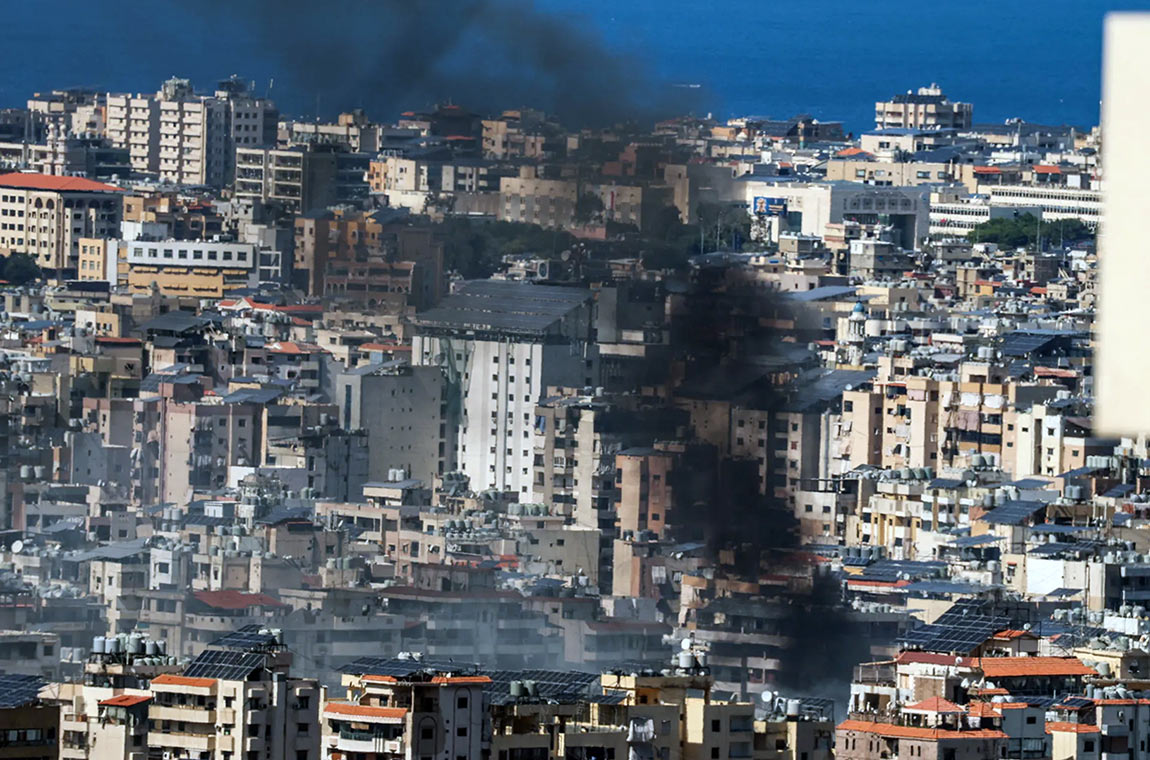
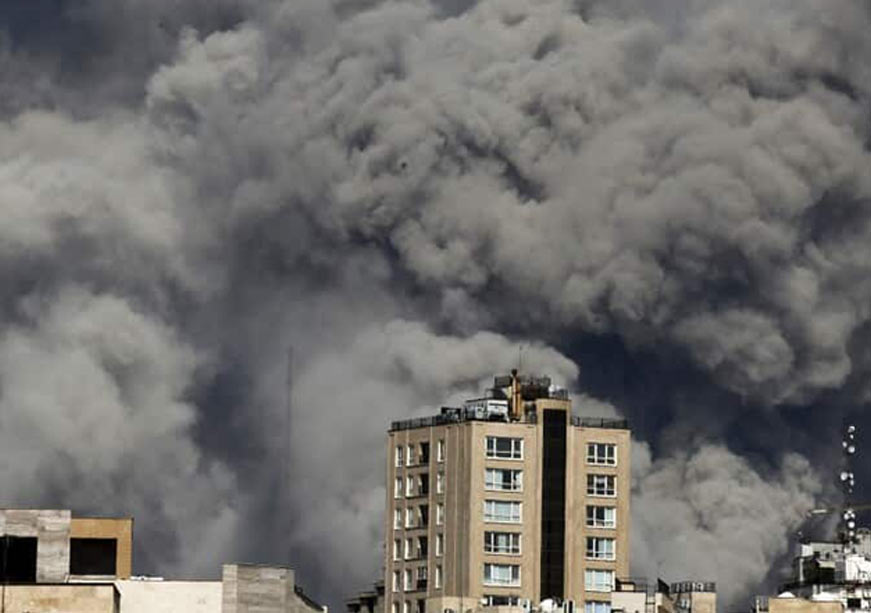
The landmass comprised between the Arabian-Persian Gulf and the Arabian Sea, on one side, and the Red and Mediterranean Seas, on the other, now finds itself durably squeezed between the radical, self-centred, zero-sum conceptions of homeland security currently espoused in Tehran and Tel-Aviv. In concrete terms, all countries in the Gulf cooperation council (GCC) and the Arab Levant have been on the receiving end of bombing, drone and missile attacks, or military intelligence operations from Iran or Israel since October 7.
Strikes against Gulf monarchies and the blockade of the Strait of Hormuz have strikingly illustrated this. In their aftermath, two crucial questions have arisen for the GCC states. The first relates to the reliability and safety of the supply routes tying the GCC to the rest of the world. The second is political, and relates to the perceived clarity of positions expressed by foreign nations vis-à-vis Iran’s actions towards its neighbours. The ensuing examination led GCC countries to express renewed interest in their Arab depth. A land bridge to the Mediterranean, the Levant stands to be leveraged as a strategic space for the collective resilience of Arab West Asia.
In particular, Egypt, Jordan, and Syria seem well positioned to reap the benefits of what may be termed geoeconomic stabilisation. This refers to a situation in which security and strategic considerations lead countries to politically direct economic resources into the infrastructure, financial, and productive sectors of like-minded states, with the aim of advancing mutual economic and political benefits, including stability. Such recalibration could prove valuable, as Levant countries have long grappled with fragility, conflicts, and high levels of macroeconomic, financial and social vulnerability, all aggravated by the ongoing crisis. Nevertheless, institutional weakness, high levels of regional tensions, and skewed political economies, threaten to derail the expected benefits from increased commitments toward the Levant.
The New Logic of Regional Logistics
Part of the answer to the logistical conundrum born out of post-October 7 regional geopolitics lies in the GCC itself. The reboot of GCC supply chains and transportation systems has led to renewed emphasis on the importance of circumventing Hormuz and reducing reliance on the conduit. Against this backdrop, notions like redundancy and resilience are gaining traction.
Naturally, the Arabian Peninsula offers a diversity of overtures to high seas, shaping the distribution of energy infrastructure beyond the Arabian-Persian Gulf. Through the Arabian Sea, Oman’s oil and gas directly flow to Asian customers. Similarly, Saudi Arabia has leveraged access to the Red Sea, tapping the 1,200km-long East-West pipeline (or Petroline) to pump crude from Abqaiq to the port of Yanbu. Throughout the crisis, the 400km-long Abu Dhabi Crude Oil Pipeline has channelled roughly half the United Arab Emirate’s (UAE) pre-war exports from Habshan through the port of Fujairah. Beyond fuel, trucks and wagons have carried fertilisers to Saudi Arabia’s west coast.
As a result, plans to increase resilience can partly rely on GCC territory and integration across the bloc. New initiatives in this regard include the planned doubling of Abu Dhabi’s ADNOC’s export capacity through Fujairah by 2027; a logistics corridor linking the UAE’s Sharjah to the Omani ports of Duqm, Salalah and Sohar; and a multimodal trade bridge between Sharjah and the Saudi city of Dammam. The Gulf railway project, approved in 2009 to link Kuwait City to Muscat across the territory of all GCC members, has also received fresh impetus.
Bridges to the Mediterranean and Networked Resilience
The crisis has also underscored the key importance of physical connectivity beyond the GCC, notably towards the Mediterranean. While the push towards the Eastern Mediterranean and Levant are not new, the case for it has been reinforced since February 28.
The Mediterranean separates the GCC from European (and North American) customers and suppliers. Thus, lorries transiting through Egypt have delivered food to Gulf markets, which collectively import about 85 percent of their needs. Shipping companies have activated land routes across Jordan. Saudi oil has been transported from Yanbu to the Mediterranean through SUMED, a 320km-long pipeline crossing northern Egypt. Established in 1974, SUMED, now a joint venture between investors including Saudi Aramco, Mubadala Energy, and QatarEnergy, provides a noteworthy case of joint GCC investment into network infrastructure feeding into regional resilience. Tankers of Iraqi oil have also reportedly been shipped through the port of Baniyas, in Syria, at a time Baghdad’s exports through the Gulf have been virtually reduced to zero.
The crisis has also underscored the key importance of physical connectivity beyond the GCC, notably towards the Mediterranean. While the push towards the Eastern Mediterranean and Levant are not new, the case for it has been reinforced since February 28.
Against this backdrop, interest in the Levant has grown, as countries in the subregion seek to monetise their geography. This is not occurring in isolation. In 2023, the India-Middle East-Europe Economic Corridor (IMEC) was designed to link India to the North Atlantic via the Arabian Peninsula and the Eastern Mediterranean, including Jordan. Since then, Egypt and Lebanon have voiced their interest in joining IMEC.
Israel’s aggressive posture following October 7, combined with the fall of the Assad regime in December 2024, has created new impetus for Arab economic coordination. In July 2025, Dubai’s state-owned DP World announced a US$800 million investment in the Syrian port of Tartous. Later in November, Türkiye’s ministry of Trade announced the upcoming reopening of a land trade route to the GCC via Syria and Jordan. Then, in February 2026 — just weeks before the Gulf crisis erupted — Saudi entities backed by the Public Investment Fund pledged US$2.8 billion towards Syrian infrastructure, including two airports and fibre-optic cables.
A Geoeconomic Momentum
By the same token, the Gulf crisis could provide fresh political impetus for investment in connectivity across the Levant — an option already made attractive by deepening engagement between Levant countries and GCC states. In a speech criticising the Arab League for its inaction, the diplomatic advisor to the UAE president Anwar Gargash singled out Egypt, Morocco and Syria for their constructive stance. In April, Syria’s president Ahmed al-Sharaa undertook a Gulf tour spanning Riyadh, Doha, and Abu Dhabi. Egypt’s Abdelfattah el-Sisi likewise toured four Gulf capitals in March before returning to Abu Dhabi in early May to inspect an Egyptian fighter jet detachment deployed there. Meanwhile, Cairo has deepened diplomatic coordination with Ankara and Riyadh, consolidating ties with the Middle East’s three largest economies simultaneously. Jordan, too, has signalled strong alignment with Gulf partners: it has issued joint statements with Gulf states (Oman excepted) condemning Iranian attacks, and co-sponsored two UN Security Council resolutions alongside GCC members.
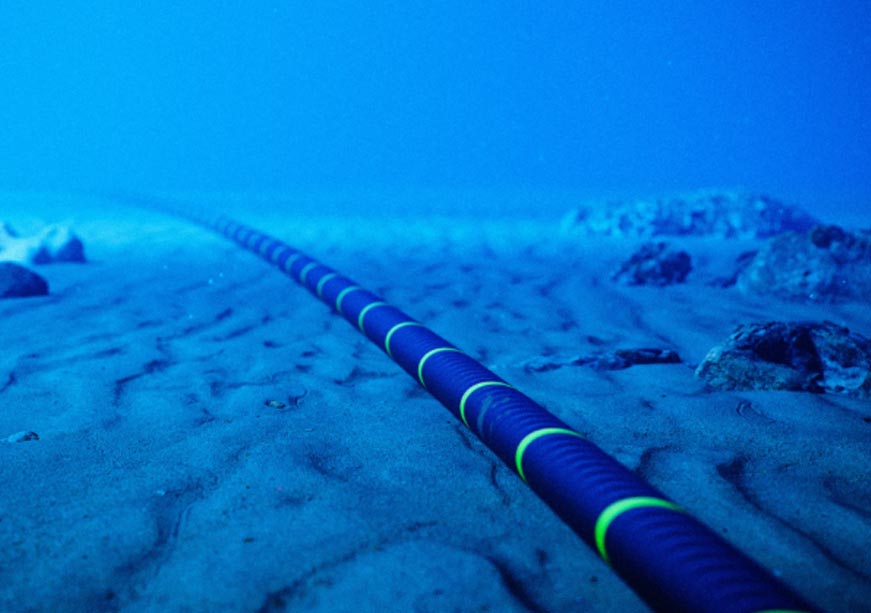
Gulf states have also expressed interest in overland data cables to Europe, driven by the vulnerability of Red Sea subsea cables to attack — a risk that threatens digital connectivity across the region.
This has laid the ground for deeper Gulf engagement across the Levant. In April, Jordan and the UAE inked a US$2.3 billion agreement establishing a joint venture between Abu Dhabi sovereign fund L’IMAD and Jordanian public stakeholders to develop a national railway network, while Saudi Arabia’s transport minister signalled that his country was studying a rail link to Türkiye via Jordan and Syria. In May, following a UAE-Syria investment forum in Damascus, UAE real estate developer Emaar — whose principal shareholders are Dubai sovereign funds Dubai Holding and the Investment Corporation of Dubai — announced plans to invest up to US$18 billion in Syria. Gulf states have also expressed interest in overland data cables to Europe, driven by the vulnerability of Red Sea subsea cables to attack — a risk that threatens digital connectivity across the region. In this respect, the Levant corridor, offers a critical terrestrial alternative to an undersea backbone that has proven dangerously exposed.
Obstacles on the Road
These developments point to a highly positive-sum dynamic: Gulf states are simultaneously pushing to secure new transport corridors through the Levant and diversify their revenue streams from it. Yet there are good reasons for caution. First, the projects described remain ink on paper. Second, similar initiatives have sometimes lingered for years or even decades without materialising. Third, their implementation would depend on the fiscal capacity of Gulf states currently facing economic disruptions. Fourth, the institutional ability of Levant countries to deliver on such ambitions is far from assured. Large-scale projects of this kind risk compounding the fragility of weak institutions — spurring unhealthy competition for major contracts and further distorting political economies toward rent-seeking. Fifth, the underlying business case is not self-evident: the Mediterranean, for instance, is no obvious route to reach the Asian consumers who absorb over 80 percent of GCC energy exports. Finally, regional tensions — above all, sustained pressure from Iran and Israel — remain a serious obstacle to implementation.
That said, the case for regional connectivity rests precisely on the imperative for Levant countries to break the doom loop in which they are trapped — and to do so through collective resilience. At this critical juncture, whether pro-growth coalitions can seize these opportunities will depend, in large part, on the vision of national leaderships, and on the fortune that attends them.
Akram Zaoui is an Associate Fellow, Geopolitics at ORF Middle East.