 Global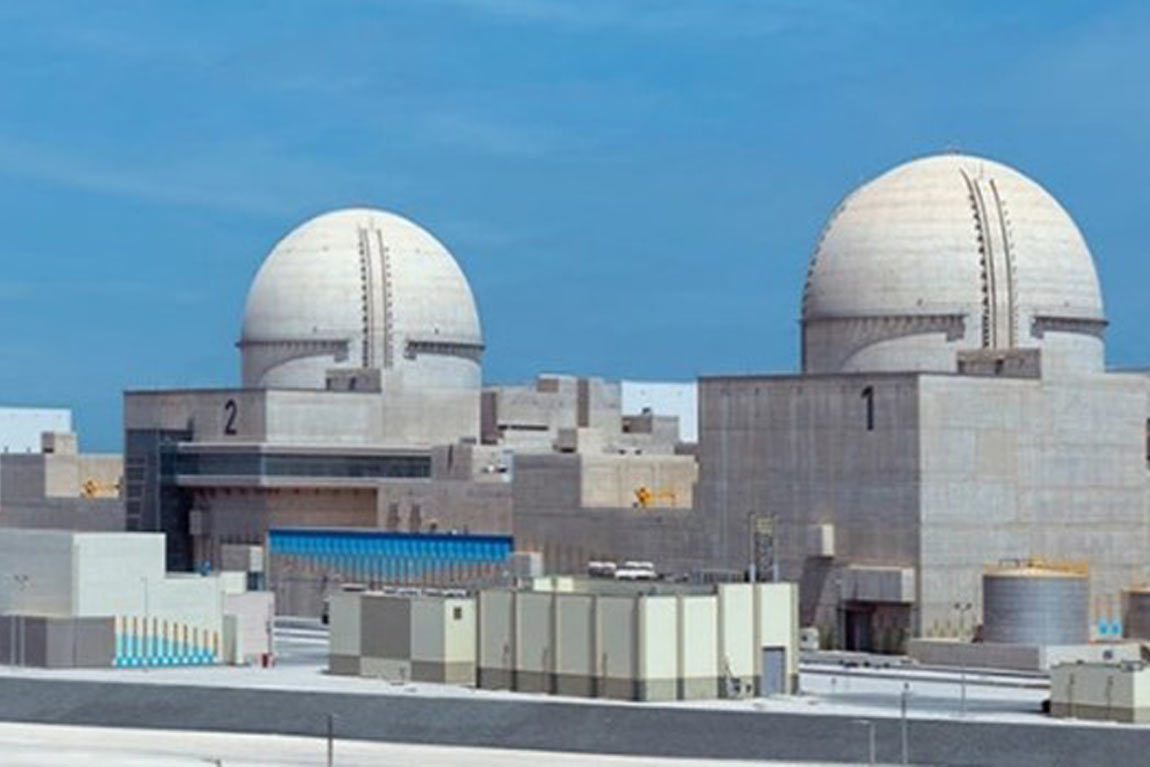
Expert Speak | 12 October, 2026
Building an Improved Nuclear Ecosystem: The UAE’s Strategic Opportunity
Spotlight
- As the first nation in the Arabian Gulf with an operational civil nuclear programme, it is incumbent upon the UAE to develop a responsible and effective template and framework for nuclear energy adoption.
- The attacks on energy infrastructure during the ongoing Middle East conflict make improved safety standards a priority.
- Formulating a regional architecture to coordinate on nuclear issues needs to be a primary consideration in the UAE’s conduct of international diplomacy.
Against a deteriorating strategic environment marked by growing concerns regarding countries in the Middle East embarking on a less-encumbered path to fulfil their nuclear ambitions, the value of the United Arab Emirates’ (UAE) stated commitment to non-proliferation becomes salient. As the country considers starting the second phase of its civil nuclear programme with the building of four new nuclear reactors in addition to its Barakah plant, it must also invest in further demonstrating its role as a responsible actor in the domain.
Central to this would be four foundational solutions to address prevailing concerns in the domain, related—but not limited—to physical safety, a lack of binding regional cooperative agreements, inadequate public awareness, and the absence of a skilled workforce.
First, the UAE could situate nuclear plants underground and enhance their structural resilience through heat-resistant external metal fortifications.
Better Safety Standards and Protocols
Any discussion regarding nuclear energy must address the susceptibility of nuclear plants to accidents and deliberate kinetic attacks. This is particularly important given the attacks on the Barakah Nuclear Plant in May 2026 during the ongoing Middle East war. International experience, from Chernobyl to Fukushima Daiichi to Zaporizhzhia (reportedly), prove that the only effective safety protocols are preventive ones. In addition to incorporating passive structural safety features such as the new Generation-IV reactors; integrating redundancy into the plant design through back-up generators that could continue powering the plant’s equipment, including reactor cooling systems, in the event of an interruption or failure of the onsite main power source; and locating the nuclear plants in mountainous terrain that is relatively more resilient to kinetic attacks due to the multiple layers that would need to be breached, the UAE could consider four other steps to build resilience and ensure the safety of its nuclear plants. These could establish a model for the wider region as well.
First, the UAE could situate nuclear plants underground and enhance their structural resilience through heat-resistant external metal fortifications. The impact of such measures on the physical and chemical dynamics of the reactors and the plant’s ambient conditions would, of course, need to be factored in.
Second, the UAE could consider integrating silicon carbide cladding into the design of these plants to reduce the outflow of radiation in the event of a leak.
Third—although this could prove challenging and even prohibitively expensive to sustain—the military could station permanent air-defence modules around the nuclear plant’s location to provide additional protection against aerial threats.
Second, the UAE could consider integrating silicon carbide cladding into the design of these plants to reduce the outflow of radiation in the event of a leak.
Fourth—perhaps counterintuitively more complicated than the other steps because of the pervasiveness of this particular threat—the UAE could ringfence the cybersecurity systems that nuclear plants depend upon for their operational work. A framework that allows for data back-up and access codes to be stored across multiple layers of security in a distributed fashion could potentially make system breaches more challenging.
The systemic integration of all four measures, customised to the circumstances of individual countries, could offer nuclear energy installations a reasonable degree of safety and security. The UAE could undertake this pursuit not just to improve its own nuclear installation security but to develop a repository of best practices to share with other countries of the region.
Building a Regional Cooperative Architecture
The Middle East conflict has arguably exposed multiple gaps in the region’s cooperative architectures. Yet, it should be considered whether countries of the region may cooperate when it comes to something as serious as preventing nuclear accidents and proliferation. To this end, the UAE could consider proposing the creation of a region-specific regulatory framework that strictly adheres to international non-proliferation agendas while being tailored for the frameworks of the member countries. Two related areas of focus could be coordinated fuel sourcing and safe storage and the mandatory adoption and adherence of best practices in waste management. In 2025, experts from Princeton University made a case for the creation of a cooperative consortium to serve, in part, as a regional nuclear fuel bank. The argument built on Iran’s proposal regarding the creation of a regional nuclear enrichment consortium with the Gulf states during Tehran’s 2025 nuclear negotiations with the United States (US). The UAE could revive these discussions, which might lead to the most viable iteration—that is cognisant of new regional realities—of such a model of cooperation, once the ongoing conflict in the region begins to settle. While the experts’ proposal predates the outbreak of the 2026 Middle East conflict, which arguably ripped through many assumptions of the manageability of the nagging distrust between the regional actors, the rationale underpinning the proposal is as robust—if not more—today.
Two related areas of focus could be coordinated fuel sourcing and safe storage and the mandatory adoption and adherence of best practices in waste management.
Initiate Public Awareness and Information Dissemination Programmes
The UAE, in concert with partners around the region, must work towards developing an open and informed public discourse around the subject of nuclear energy. Opacity begets suspicion. Nuclear energy already operates within an understandable matrix of anxiety and concerns, given its association with proliferation concerns as well the potential for devastating consequences of any accidents or attacks on it due to its radioactive nature. The UAE should therefore work towards building a national programme to generate more awareness about the value of nuclear energy to the country’s economic, energy, and national resilience frameworks. The programme should be based on an open dissemination model where advances in technology that can address concerns regarding the potential security risks could be shared with the public to institute faith in the safe adoption of the form. It must also work towards sharing with the public and the global community a list of safety and compliance protocols the country has committed to and building a secure, transparent framework that provides reasonable visibility on the UAE’s commitments and practices in the field of waste management and decommissioning. This kind of transparency would help instil greater faith in an energy form that traditionally evokes mistrust.
The programme should be based on an open dissemination model where advances in technology that can address concerns regarding the potential security risks could be shared with the public to institute faith in the safe adoption of the form.
Create a Skilled Workforce
Localisation of talent and development of a skilled workforce are indispensable in any effort to develop civilian nuclear capacity. The UAE must make a concerted effort towards building a talent pool in parallel—if not prior to—putting together other elements of the value chain. A successful awareness-building campaign would be foundational to the creation of such a human resource pool to sustain the industry from within the country. Every technological advancement, historically, has been built through talent. Such an edifice needs not only homegrown but also international talent that is willing to relocate to the host country. A welcoming ecosystem that facilitates the movement and absorption of international workers is essential to achieve this. The UAE should therefore start addressing the domestic skills gap and emerge as a template as well as a repository of human resource development in the nuclear sector. This could also benefit the wider Gulf region.
Every technological advancement, historically, has been built through talent. Such an edifice needs not only homegrown but also international talent that is willing to relocate to the host country.
Conclusion
The plausibility of these solutions needs to be considered, given the varying levels of trust and competition between countries in the Gulf today and the stalemates in existing regional cooperative frameworks. The inherent distrust as well as the differentiated capabilities and agendas within the region complicate many of the assumptions that these proposals are built upon. Yet, the UAE must make the effort to initiate these solutions, as much in its own interest as in that of regional security. The fallout of nuclear accidents rarely remains restricted to the primary location. Therefore, regardless of any internal disagreements and contestations, it is in the interest of every country in the region to adopt best practices and create solutions that mitigate the risk of accidents as well as help capitalise on the opportunities that this energy form holds. The UAE has an opportunity today to chart that path.
Cauvery Ganapathy is Fellow, Climate and Energy, ORF Middle East.